What is online marketing?
Online marketing is promoting a business on the internet to attract customers. It uses tools like websites, Google search, social media, email, and ads to help people find you, trust you, and take action - such as calling, visiting, booking, or buying.
Online Marketing for Restaurants

The 3 Outcomes to Optimize
Online marketing for restaurants is simply how you get found and chosen online - before a guest ever walks in, calls, or places an order. Most customers decide where to eat after a quick search, a quick scan of photos, or a quick look at reviews. Your job is to make that decision easy- show up in the right places, look credible, and give people a clear next step.
What online marketing means
For restaurant owners, online marketing isn't about going viral. It's about improving three outcomes -
1. Discovery (getting found) - People need to see you when they search things like "best tacos near me," "breakfast spot," or "pizza delivery." Discovery happens mainly through Google Search, Google Maps, and local listings.
2. Decision (getting chosen) - Once they find you, they judge fast. They look at your star rating, recent reviews, food photos, menu, pricing, and whether your hours are accurate. Decision is about trust and clarity.
3. Repeat (getting them back) - The most profitable marketing is bringing customers back. This is where email, text, loyalty, and social follow-through matter. If you can turn one-time visitors into regulars, your marketing becomes cheaper and more predictable.
The simplest way to think about it
Online marketing is your restaurant's front door on the internet. When someone finds you, they should immediately see -
- Who you are (type of food, vibe, and what you're known for)
- Where you are and when you're open (accurate hours and location)
- Why you're worth trying (reviews, photos, and credibility)
- How to buy (call, reserve, order online, or get directions)
If any of those are unclear - or worse, wrong - you lose customers before you ever get a chance to serve them.
The beginner mindset
If you're new to online marketing, don't start by spending money on ads or trying to become a content creator. Start by building a simple system -
- Make sure your restaurant can be found (Google + listings)
- Make sure it looks trustworthy (reviews + photos)
- Make it easy to take action (website + ordering/reservations)
- Create a repeat loop (email/text)
That's the foundation. Once it's in place, every post, promo, and ad works better - because you're sending people to an online presence that converts.
Step 1. Set Up Your Online Foundation
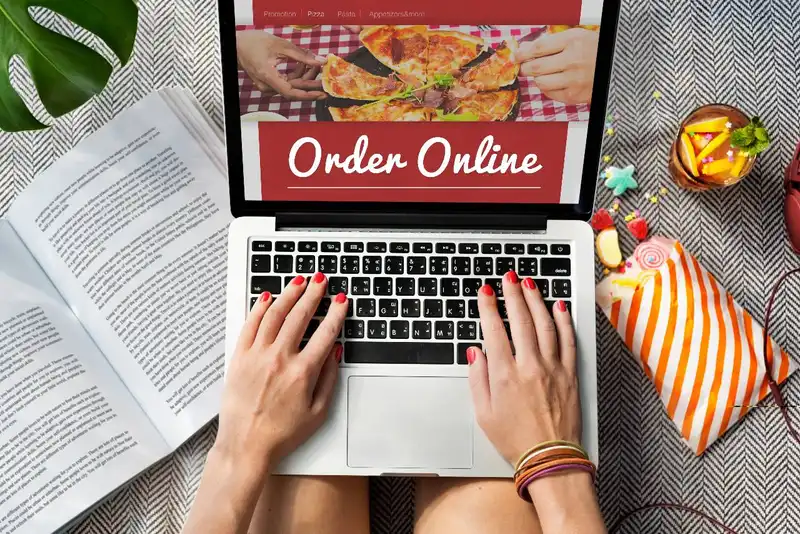
Before you spend time posting on social media or money on ads, make sure your restaurant's online foundation is solid. Think of this as the basic setup that helps customers find you, trust you, and take action fast. If these basics are missing, you'll lose potential guests even when your marketing is working.
Start with your website
You don't need a fancy website to start, but you do need a place online that answers customer questions quickly. At minimum, your site should include -
- Restaurant name and concept (what you serve, what you're known for)
- Address and service area
- Phone number with click-to-call
- Hours (accurate and updated)
- Menu that's easy to read on mobile (avoid tiny PDF menus if possible)
- Pricing signals (even a few price points helps set expectations)
- Ordering and reservation links (if you offer them)
- Key photos (best-selling items, dining room, exterior sign)
If you have multiple locations, each location should have its own page with the correct address, phone number, and hours. That matters for local search.
Make mobile the priority
Most restaurant searches happen on a phone. Your online foundation should be "thumb-friendly." Do a quick test - open your site on your phone and ask, "Can I find the menu, hours, and directions in 10 seconds?" If not, simplify. Also make sure -
- Buttons are easy to tap
- Text is readable without zooming
- Pages load quickly (slow pages lose customers)
One of the biggest beginner mistakes is inconsistent business info across the internet. Your Name, Address, and Phone number (NAP) should match exactly on -
- Website
- Google Business Profile
- Yelp and other review sites
- Apple Maps and Bing
- Delivery apps
- Facebook/Instagram profiles
Even small differences (like "St." vs "Street" or an old suite number) can confuse customers and weaken local visibility.
Build your "action path"
Online marketing works when the next step is obvious. Decide what you want customers to do most often -
Dine-in. Directions + hours + photos + reservation button
Takeout. Order online link + clear pickup instructions
Delivery. Delivery links + delivery zone + best items for delivery
Your foundation should guide customers toward that action with clear buttons and links - no searching, no guessing.
Once these basics are set, every future step (Google optimization, reviews, social media, ads) will produce better results because you're sending customers to a clean, credible, easy-to-use online presence.
Step 2. Optimize Your Google Business Profile
If you only improve one thing in your online marketing, start with your Google Business Profile (the listing that shows up on Google Search and Google Maps). For most restaurants, this is the number 1 driver of "high-intent" traffic - people actively looking for somewhere to eat right now. A strong profile helps you show up more often, look more trustworthy, and get more actions like calls, direction requests, reservations, and online orders.
Claim and complete the basics first
Make sure your profile is claimed and verified, then confirm the essentials are accurate -
- Business name (match your signage and website)
- Address and pin location (double-check it's placed correctly on the map)
- Phone number (use a number that's always answered during open hours)
- Hours (including holiday or special hours)
- Website link (or ordering/reservation link if you don't have a full website yet)
Incorrect hours and wrong map pins are two of the fastest ways to lose customers.
Choose the right categories and attributes
Google uses your primary category to understand what you are and when to show you. Choose the closest match (ex. "Pizza restaurant," "Mexican restaurant," "Coffee shop") and add relevant secondary categories if they truly apply.
Then add attributes that matter to guests, such as -
- Dine-in / takeout / delivery
- Outdoor seating
- Reservations
- Wheelchair accessible
- "Serves lunch" / "Serves dinner"
- Payment options
These help you appear in filtered searches and answer questions before they're asked.
Add the links that drive revenue
Many restaurants forget this part. Make it easy for customers to act -
- Add your menu link
- Add your online ordering link (direct ordering if possible)
- Add your reservation link (if you take reservations)
Don't make customers hunt for the next step - Google will send them somewhere else if it's easier.
Photos are a decision-maker. Upload high-quality images of -
- Best-selling items (clear, well-lit, close-up)
- Dining room and vibe
- Exterior storefront/signage (helps people find you)
- Team or kitchen moments (adds trust)
Keep adding new photos regularly. Fresh photos signal your business is active and reliable.
Post updates like a simple routine
Google Posts are underrated. You can post -
- Limited-time offers
- Events and specials
- New menu items
- Seasonal hours or announcements
You don't have to post daily. Even once a week or every other week keeps your profile active and gives searchers a reason to choose you now.
Watch for common profile mistakes
Avoid these beginner problems -
- Wrong hours or holiday hours not updated
- Missing menu or ordering links
- Few photos (or only stock images)
- Ignoring the Q&A section (customers can post questions publicly)
- Not responding to reviews (even quick responses help)
Once your Google Business Profile is complete and maintained, you'll usually see more visibility and more customer actions - without spending a dollar on ads.
Step 3. Build Trust With Reviews

For restaurant owners, reviews aren't just "nice to have." They directly impact whether people choose you - especially on Google. Most customers will compare a few places quickly and pick the one that looks safest - strong star rating, recent reviews, and a pattern of friendly responses. The good news is you don't need a complicated strategy. You need a repeatable process that happens every week.
Reviews do three big jobs for your online marketing -
- They create trust fast. A customer who doesn't know you uses reviews as a shortcut.
- They influence visibility. A well-reviewed restaurant tends to perform better in local search results.
- They provide free feedback. Patterns in reviews tell you what to improve, what to highlight, and what customers value most.
The easiest way to get more reviews is to ask at the right moment - when a guest is happy and the experience is fresh. Keep it simple -
1. Train staff on one line - "If you enjoyed everything today, would you mind leaving us a quick Google review? It really helps."
2. Use a QR code at checkout - Put it on receipts, table tents, or the host stand with a clear label like "Leave a Google Review."
3. Follow up for online orders - Add a short post-visit message via email/text (if you collect contact info) with a direct review link.
Important- don't pressure guests, don't offer rewards in exchange for reviews, and don't only ask certain types of customers. Keep it consistent and honest.
How to respond to reviews
You don't need long replies. You need timely, professional responses that show future customers you care.
For positive reviews -
- Thank them
- Mention one detail if they shared it
- Invite them back
For negative reviews -
- Stay calm and polite (never argue)
- Acknowledge the issue
- Offer a next step (invite them to contact you directly)
- If appropriate, mention you're working on it
A simple response can protect your reputation even when the review is unfair, because future customers will judge how you handled it.
Turn reviews into your marketing content
Reviews can also power your marketing -
- Quote short review lines on social media (with permission if needed)
- Use common compliments in your website copy (ex. "fast service," "large portions," "family-friendly")
- Identify your "hero items" based on what people mention most
Once a week, check -
- New reviews on Google (and major platforms you use)
- Star rating trend
- Common complaints (speed, accuracy, pricing, cleanliness, service)
Reviews are one of the fastest ways to improve both your visibility and your conversion. When you build a simple system to get them and respond to them, your online marketing gets easier - because trust starts working for you automatically.
Step 4. Pick 1-2 Social Channels
A common beginner mistake is trying to do social media everywhere at once. You don't need to be on every platform. You need one or two channels you can do consistently, with a simple system that connects to real business goals (more visits, more orders, more repeat customers). Social media works best when it supports what you already set up - your Google presence, your menu, your ordering link, and your reviews.
Choose the right platform
Pick your channels based on your restaurant type and your ability to create content -
- Instagram is great for photos, short videos, and menu items. Strong for most restaurants.
- Facebook is strong for local communities, events, families, and older demographics.
- TikTok can work well if you're willing to do simple short videos (kitchen clips, plated food, staff moments).
If you're brand new, a simple combo is Instagram + Facebook, since you can often post the same content to both.
Follow a weekly posting structure
Instead of guessing what to post, rotate through four simple categories -
1. Food - best sellers, new items, specials, close-up shots, short prep videos
2. People - team highlights, behind-the-scenes, owner messages, kitchen moments
3. Proof - reviews, customer photos, busy dining room, sold out signs, community shoutouts
4. Promos - limited-time offers, slow-day boosts, bundles, lunch specials, happy hour, catering
A beginner-friendly schedule could be -
- 3 posts per week
- 3 to 5 short stories per week
- 1 short video per week (even 10-15 seconds is enough)
Consistency matters more than volume.
Make the "next step" obvious
Every post should make it easy to take action. Use clear calls-to-action like -
- "Tap for directions"
- "Order online here"
- "Call to reserve"
- "View the menu"
- "Stop in today - we're open until 9"
Also make sure your bio/profile includes -
- Your address
- Your hours
- Your ordering/reservation link (one link that goes to the right place)
Use simple local tactics that actually help
You don't need complicated growth hacks. Do these basics -
- Use your location tag on every post
- Tag nearby landmarks/neighborhood names in captions
- Reply to comments and messages quickly
- Repost customer stories (with permission)
- Highlight your best items repeatedly (don't assume people saw it once.
When social media follows a simple system, it becomes a reliable marketing tool - not a daily guessing game.
Get Started with Smart Data Capture
Optimize Your Marketing Efforts with Altametrics
Step 5. Capture Customers for Repeat Business
One of the biggest mistakes restaurant owners make is relying only on "new customer" marketing. Getting new guests is important - but the real profit comes from repeat visits and repeat orders. Email and text marketing help you do that because they let you stay in touch with customers directly, without depending on algorithms or paying for ads every time.
Social media followers are helpful, but you don't truly control who sees your posts. Email and text lists are different - if you collect them properly, you can reach customers whenever you need to - especially when you have -
- a slow day to fill
- a new menu item
- a limited-time offer
- an event or holiday push
- a seasonal special
Even a small list can make a big difference if you use it consistently.
How to collect emails and phone numbers (simple methods)
Start with easy, low-friction collection points -
In-store sign-up. Put a small sign at the register or table. Get specials + updates. Join our list.
QR code sign-up. A QR code that leads to a simple form is quick for guests.
Online ordering opt-in. If you offer online ordering, add an opt-in during checkout (make it clear and compliant).
Wi-Fi sign-in (optional). If you have guest Wi-Fi, you can use it as a sign-up opportunity.
To encourage sign-ups, offer something simple and sustainable, like -
- a free add-on on the next visit
- early access to specials
- a monthly giveaway (no pressure, just a reason to join)
What to send (keep it predictable)
Beginners don't need complicated campaigns. A simple plan is -
Email (1x per week or every other week) -
- one offer or special
- one "what's new" update
- clear CTA - order, reserve, or visit
Text (2-4x per month) -
- short, time-sensitive messages
- slow-day boosts (ex. Today only)
- limited-time specials
Keep messages short, clear, and easy to act on.
The simple repeat system
Your goal is to create a loop -
1. Guest visits once
2. You capture contact info
3. You send simple value (specials, updates, reminders)
4. They return
If you build this repeat system, your online marketing becomes less stressful because you're not starting from zero every week - you're working with an audience you already earned.

Must-Read Content

Restaurant marketing 101
Restaurant Marketing 101 - The Simple Plan to Get More Customers

Restaurant promotion ideas
Restaurant Promotion Ideas That Increase Sales

Food delivery promotions
Food Delivery Promotions That Drive More Orders

Digital marketing for restaurant
Digital Marketing for Restaurant Owners

Restaurant marketing strategies
Restaurant Marketing Strategies
Frequently Asked Questions
How can I get more Google reviews without sounding pushy?
Ask right after a good experience, keep the request short, and use a QR code at checkout. Make it optional and simple.
What should restaurants post on social media?
Rotate four categories- food (best sellers), people (team/behind-the-scenes), proof (reviews/customer photos), and promos (specials/events).
How often should a restaurant post on social media?
A simple beginner target is 3 posts per week, a few stories, and 1 short video weekly if possible. Consistency matters more than volume.
What should I send in restaurant emails or texts?
Keep it simple - one offer or update, a clear time window, and one call-to-action (order, reserve, or visit).