What are par levels in restaurant inventory?
Par levels are target stock levels for each item. They help restaurants know how much of a product should be kept on hand based on expected usage, delivery timing, and safety stock needs. Well-set par levels help reduce both overstocking and stockouts.
Restaurant Inventory Management and Best Practices

Inventory Management in a Restaurant Setting
Restaurant inventory management is the process of tracking, controlling, and using the food, beverages, packaging, and supplies your business needs to operate. On the surface, that may sound simple. You buy products, store them, use them, and reorder when needed. But in practice, inventory management is much more than keeping shelves full.
For a restaurant owner, inventory management is one of the clearest ways to understand where money is being spent and where profit is being lost.
A lot of operators think inventory is just about doing a weekly count. That is only one part of it. Counting tells you what you have on hand at a specific moment. Managing inventory means building a system that helps you answer bigger operational questions -
- How much product are you actually using?
- Are you ordering too much or too little?
- Are items being wasted, over-portioned, spilled, spoiled, or stolen?
- Are your menu prices still aligned with current ingredient costs?
- Is cash being tied up in products that are sitting too long?
That is why inventory management should be treated as a control system, not just a back-office task.
Set Clear Inventory Procedures
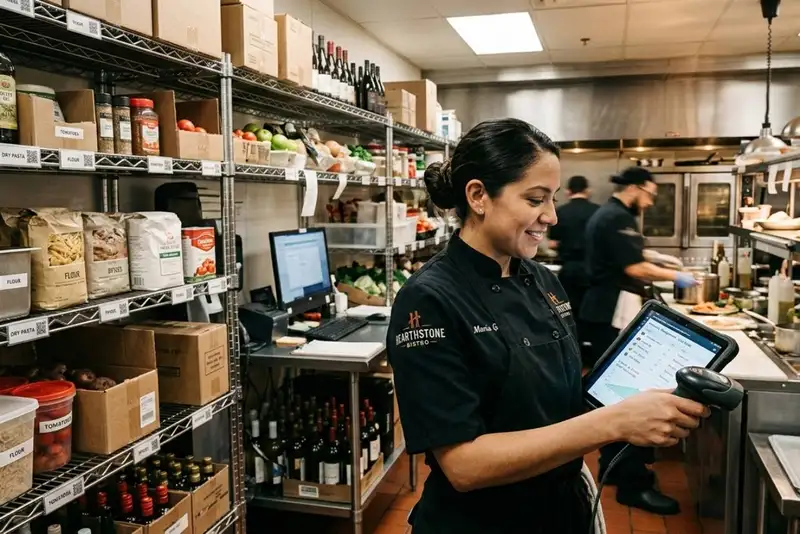
Many restaurant owners want better inventory results, but they try to fix the numbers before fixing the process. That usually leads to frustration. If the counting method changes every week, if products are named differently by different team members, or if no one is fully responsible for the process, the data will never be reliable enough to improve decisions.
That is why strong inventory management starts with clear procedures.
The first step is standardization. Every inventory item should have a consistent name, unit of measure, and storage location. For example, chicken breast should not be listed as "chicken" one week, "raw chicken" the next, and "protein" somewhere else in another report. The same goes for units. If one person counts cases, another counts pounds, and another counts individual packs, the numbers become difficult to compare and easy to misread.
Clear organization is also important. Inventory should be grouped by area, such as walk-in cooler, freezer, dry storage, bar, and paper goods. Products should be stored in assigned places so counting is faster and more accurate. If items are scattered, moved often, or stored inconsistently, count errors become much more likely.
The next step is assigning ownership. Inventory management should not be treated like a shared responsibility that belongs to everyone and no one. Specific team members should be responsible for counting, checking deliveries, monitoring waste, and reviewing variances. That does not mean only one person should understand the system. It means accountability needs to be defined clearly.
Written procedures are also essential. A restaurant should have simple, repeatable instructions for how inventory is counted, when it is counted, how waste is recorded, how deliveries are verified, and how shortages or discrepancies are reported. Without written processes, staff tend to rely on memory, habit, or personal preference, which creates inconsistency over time.
This is especially important in restaurants with multiple managers, shift leaders, or locations. A process that exists only in someone's head is not a real system.
Count Inventory the Right Way
Inventory counts only help your restaurant when they are done accurately and consistently. Many restaurants count inventory, but the process is often rushed, inconsistent, or handled differently from week to week. When that happens, the numbers may look complete, but they are not dependable enough to support better decisions.
To make inventory counts useful, restaurant owners need a repeatable system. The goal is not just to record what is on the shelf. The goal is to create data you can compare over time to identify waste, shortages, over-ordering, and cost problems.
1. Use a Consistent Counting Schedule - Inventory should be counted at the same time and under the same conditions each period. For many restaurants, a full count is done weekly, often at the end of the business week before new orders are placed. Some items may need more frequent checks. High-cost proteins, alcohol, seafood, and fast-moving produce often benefit from daily or midweek spot checks.
Consistency matters because inventory numbers are only meaningful when they can be compared fairly from one period to the next.
2. Count in a Fixed Order by Storage Area - Inventory should always be counted in the same sequence, such as walk-in cooler, freezer, dry storage, bar, and paper goods. This helps reduce missed items, double-counting, and confusion during the process. It also makes the counting routine easier to train and repeat across managers or locations.
3. Use Standard Units of Measure - Each item should be counted using the same unit every time. If one person counts by case, another by pound, and another by individual package, the numbers become harder to compare and easier to misread. Standard units make inventory data cleaner and more useful.
4. Handle Partial and Open Items Carefully - Open containers, partial cases, and prepped products should be estimated using a consistent method. This part of the count is where a lot of small errors happen. The more disciplined the estimating process is, the more accurate the inventory record becomes.
5. Review Unusual Numbers Before Finalizing - A count should not end when the sheet is filled out. If a number looks unusually high, low, or out of line with recent sales, it should be checked again. Reviewing unusual results helps catch errors before they affect purchasing, food cost analysis, or variance reporting.
When inventory is counted the right way and on the right schedule, it becomes more than a routine task. It becomes a practical tool for controlling cost and improving restaurant operations.
Use Inventory Data to Control Food Cost, Waste, and Variance
Taking inventory is important, but the real value comes from what you do with the numbers afterward. If counts are recorded and then ignored, inventory becomes a time-consuming routine instead of a management tool. The purpose of inventory data is to help restaurant owners understand where products are going, where money is being lost, and where operations need tighter control.
That is where food cost, waste, and variance come in.
1. Compare What Was Used to What Should Have Been Used - One of the most useful ways to analyze inventory is to compare actual usage to theoretical usage. Actual usage is what your inventory records show was truly consumed during a given period. Theoretical usage is what should have been used based on sales and recipe standards.
If the restaurant sold 100 burgers and each burger is supposed to use one patty, the theoretical usage is 100 patties. If inventory records show the kitchen actually used 112 patties, that gap matters. It may point to over-portioning, waste, spoilage, theft, incorrect counts, or recipe inconsistency.
2. Watch Variance Closely - Variance is the difference between expected usage and actual usage. This is one of the clearest signals that something in the operation needs attention. A small variance may be normal. A repeated or growing variance is usually a warning sign.
For example, if cheese, oil, liquor, or protein consistently shows higher actual usage than expected, owners should not treat that as random noise. It usually means there is a process issue behind it.
3. Use Waste Tracking to Find Preventable Losses - Waste should be measured, not guessed. Products are lost in many ways- spoilage, over-prep, overcooking, dropped items, expired ingredients, and returned dishes. Without a waste log, these losses often disappear into the overall food cost number and never get addressed directly.
Tracking waste by item and reason helps owners see patterns. That makes it easier to correct prep levels, train staff, adjust pars, or improve storage practices.
4. Turn Inventory Reports Into Action - Inventory data should lead to decisions. If an item is overused, investigate portion control. If spoilage is rising, review ordering and rotation. If certain products keep running out, revisit par levels and purchasing timing.
Inventory data is most valuable when it helps owners move from assumption to evidence. Instead of guessing why margins are shrinking, they can use actual numbers to identify the cause. That is what makes inventory management practical. It gives restaurant owners a clearer view of cost problems before those problems become much harder to fix.
Improve Purchasing, Receiving, and Storage Practices
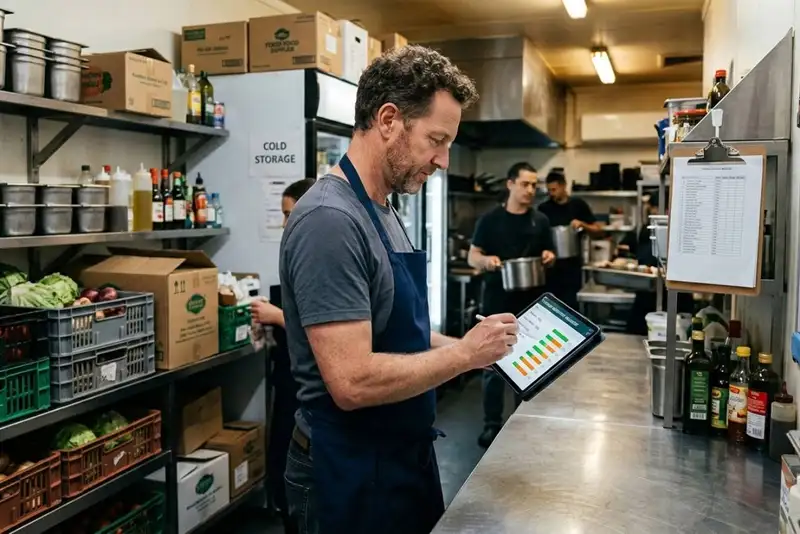
Good inventory management does not start when someone begins counting shelves. It starts earlierwhen products are ordered, delivered, checked, and stored. If purchasing, receiving, and storage are handled poorly, inventory problems are built into the system before service even begins.
That is why these three areas deserve close attention.
1. Order Based on Need, Not Habit - Many restaurants fall into routine ordering. The same products are ordered in the same amounts each week, regardless of actual sales patterns, seasonality, promotions, or current stock on hand. That approach often leads to over-ordering, spoilage, and cash tied up in slow-moving inventory.
A better practice is to order based on actual need. That means looking at current inventory levels, recent sales trends, par levels, vendor lead times, and upcoming business conditions before placing each order. The goal is to bring in enough product to support service without filling storage with unnecessary excess.
2. Set and Use Par Levels Carefully - Par levels help create consistency in ordering. They define the target amount of each item the restaurant should keep on hand based on expected usage and reorder timing. But pars only work if they are reviewed and adjusted regularly.
If par levels are too high, the business may overstock and increase spoilage risk. If they are too low, stockouts become more likely. Good par setting depends on demand, shelf life, delivery schedules, and menu usage.
3. Check Deliveries Before Accepting Them - Receiving is one of the most overlooked control points in restaurant operations. Deliveries should be checked for quantity, product quality, pricing accuracy, and any visible damage or substitution. If this step is rushed or skipped, incorrect or low-quality products can enter the building and create cost issues immediately.
The invoice should match what was actually received, not just what was ordered.
4. Store Products for Visibility and Control - Once products are received, they need to be stored in a way that supports both food safety and inventory accuracy. Items should be labeled, dated, rotated properly, and placed in assigned locations. First-in, first-out practices help reduce spoilage. Organized shelves make counting faster and reduce the chance of forgotten or duplicated stock.
Purchasing, receiving, and storage are not separate from inventory management. They are part of it. When these steps are handled with discipline, restaurants reduce waste, improve accuracy, and create a stronger foundation for every inventory decision that follows.
Transform Your Restaurant Operations Now!
Effortless Inventory Tracking with Altametrics!
Train Your Team to Follow Inventory Best Practices
Inventory management usually breaks down for one simple reason- the process depends too much on one person and not enough on team habits. A restaurant may have a manager who understands counts, ordering, and waste control very well, but if the rest of the staff handles products inconsistently during daily operations, inventory accuracy will still suffer.
That is why training matters. Inventory is not only a manager task. It is a team discipline.
1. Teach Staff How Daily Habits Affect Inventory - Many inventory problems begin during normal shifts, not during the weekly count. Over-portioning, poor labeling, skipped waste logs, careless receiving, and weak stock rotation all affect the final numbers. Staff need to understand that inventory is not just about products sitting on a shelf. It reflects what happens in prep, service, storage, and cleanup every day.
When employees understand how their actions affect food cost and waste, they are more likely to follow procedures with purpose.
2. Standardize Training on Core Inventory Behaviors - Training should cover the specific habits that support inventory control. These usually include proper portioning, recipe adherence, labeling and dating, first-in, first-out rotation, delivery checks, waste recording, and storage organization. If these practices are explained differently by different managers, consistency becomes difficult.
Clear, repeatable training creates a more stable system.
3. Make Accountability Clear Without Making It Punitive - Inventory control works best when expectations are defined clearly. Team members should know who is responsible for counting, who checks deliveries, who records waste, and who reviews shortages or inconsistencies. At the same time, the process should not feel like a trap designed to blame employees for every variance.
The goal is to build awareness and ownership, not fear. People follow systems more consistently when they understand the reason behind them.
4. Reinforce the Process Regularly - Inventory training should not happen once and disappear. Procedures need to be reinforced during onboarding, shift coaching, manager handoffs, and operational reviews. Restaurants are busy environments, and standards can drift quickly if they are not repeated.
A strong inventory system should work on every shift, not just when the most experienced manager is present. That is the real test. When the whole team follows the same methods, inventory becomes more accurate, more useful, and much easier to improve over time.
Use Technology to Make Inventory Management More Accurate
Technology can make restaurant inventory management faster, more accurate, and easier to maintain, but only when it supports a disciplined process. Software does not fix weak habits on its own. If counts are inconsistent, waste is not recorded, or receiving is poorly controlled, technology will simply organize bad data more efficiently. That is why the best results come when restaurants combine clear inventory procedures with tools that reduce manual work and improve visibility.
1. Reduce Manual Errors With Digital Inventory Tools - Manual spreadsheets and paper count sheets can work for a time, but they often create avoidable problems. Numbers are entered differently by different people, formulas break, units get mixed, and version control becomes messy. Inventory software helps standardize item names, units of measure, count templates, and reporting. That reduces data entry mistakes and makes counts more consistent across periods.
2. Connect Inventory to Sales and Recipe Data - One of the biggest advantages of technology is integration. When inventory tools connect with POS data and recipe costing, owners can compare actual product usage against theoretical usage more easily. This makes it easier to spot variance, over-portioning, missing product, or menu items that are no longer priced correctly for current ingredient costs.
Without integration, teams often spend too much time pulling numbers from separate systems and trying to reconcile them manually.
3. Track Waste, Transfers, and Usage More Clearly - Technology can also improve visibility beyond the basic count. Waste logs, transfer records, prep tracking, and usage reports help owners understand why inventory numbers move the way they do. Instead of only knowing that food cost is high, they can start identifying whether the issue is spoilage, over-prep, inaccurate receiving, poor portion control, or internal loss.
4. Improve Oversight Across One or Multiple Locations - For multi-unit operators, technology becomes even more valuable. Standardized inventory systems make it easier to compare counts, purchasing patterns, waste trends, and variances across locations. That helps owners and operators identify where procedures are strong, where coaching is needed, and where costs are drifting.
The best systems help restaurant owners count more consistently, analyze data more clearly, and respond faster to cost problems. When used the right way, technology turns inventory management from a repetitive chore into a more practical and scalable control system.
Streamline Your Inventory. Order Smartly.
Start Simplifying Your Orders with Altametrics
Must-Read Content

How to calculate average inventory
How to Calculate Average Inventory for Restaurants

Control restaurant food cost
How to Control Restaurant Food Costs

How to calculate food cost percentage
How to Calculate Food Cost Percentage

Inventory costs
Inventory Costs Explained for Restaurant Owners

Food cost for restaurants
How to Lower Food Cost for Restaurants
Frequently Asked Questions
How does poor inventory management affect cash flow?
Poor inventory management ties up cash in products that are over-ordered, slow-moving, or wasted before use. It also increases the risk of emergency purchases and missed sales, which puts more pressure on already tight restaurant margins.
How can restaurant owners reduce inventory waste?
Owners can reduce inventory waste by improving ordering accuracy, setting realistic par levels, training staff on portion control, tracking waste by item and reason, using proper storage and rotation methods, and using inventory management software.
What inventory categories should a restaurant track?
Most restaurants should track food, beverages, paper goods, cleaning supplies, and key operating supplies. Some also separate high-cost categories like meat, seafood, alcohol, and disposables because those items often have a bigger impact on margins.
What type of technology helps with restaurant inventory management?
Helpful technology includes inventory management software, POS systems with inventory integration, recipe costing tools, purchasing and vendor management systems, waste tracking tools, mobile counting apps, barcode scanners, and reporting dashboards. These tools improve accuracy, visibility, and decision-making.