What is the best delivery model for a restaurant?
The best model depends on the business. Third-party marketplaces can help generate demand quickly, direct ordering can improve customer ownership, and in-house delivery can offer more control. The right choice depends on order volume, trade area, labor capacity, and margin goals.
How to Set Up Food Delivery for Restaurants

Why Food Delivery Needs a Clear Operating Plan
The main goal of adding food delivery is simple - increase sales without adding more seats. But in practice, delivery changes how your entire operation runs. It affects kitchen timing, labor allocation, order accuracy, and how quickly guests receive their food. Without a clear plan, delivery can create more problems than profit.
Many restaurant owners start delivery by turning it on through a third-party app and letting orders flow in. The issue is that delivery orders don't behave like dine-in orders. They often come in bursts, require packaging, and depend on external drivers. If your team is not prepared, this leads to longer ticket times, missed items, and frustrated customers.
A structured operating plan helps you control three key areas -
1. Order Flow Control - Delivery introduces a second (or third) stream of orders alongside dine-in and takeout. Without defined rules, your kitchen can get overwhelmed. A clear plan determines how orders are received, prioritized, and routed to avoid bottlenecks during peak hours.
2. Execution Consistency - Delivery removes the chance to fix mistakes in real time. There is no server to catch missing items before the food reaches the guest. That means your process must be consistent every time - from prep to packaging to handoff. Small errors quickly turn into refunds and negative reviews.
3. Margin Protection - Delivery comes with added costs- commissions, packaging, and sometimes higher labor demand. If these are not accounted for upfront, increased sales can still reduce profitability. A plan ensures pricing, menu selection, and operational flow support healthy margins.
Before adding or scaling delivery, owners should step back and define how it will work inside their four walls. That clarity is what turns delivery from a reactive process into a reliable part of the business.
Decide What Type of Delivery Model Fits the Business
The main goal of choosing a delivery model is not just to "get orders." It is to select a setup that aligns with your margins, operational capacity, and growth goals. Not every delivery model works the same way, and the wrong choice can create unnecessary costs or operational strain.
There are three primary delivery models restaurant owners should evaluate -
1. Third-Party Marketplace Delivery
This includes platforms that handle customer acquisition, ordering, and driver logistics.
What it solves -
- Immediate access to a large customer base
- No need to manage drivers
- Faster setup with minimal technical effort
What to watch -
- Commission fees can significantly impact margins
- Limited control over the customer relationship
- Visibility depends on platform algorithms and competition
Restaurants looking to generate demand quickly or fill gaps in slower dayparts.
2. Direct Ordering + Third-Party Drivers
Customers order directly from your website or app, but delivery is fulfilled by external driver networks.
What it solves -
- More control over pricing and customer data
- Lower commission compared to marketplaces
- Ability to build direct customer relationships
What to watch -
- Requires a strong online ordering experience
- Still dependent on third-party driver availability
- Marketing responsibility shifts to the restaurant
Restaurants focused on margin protection and long-term customer ownership.
3. In-House Delivery
The restaurant manages its own drivers, vehicles, and delivery process.
What it solves -
- Full control over delivery experience and timing
- No third-party commission fees
- Direct relationship with customers
What to watch -
- Higher labor and insurance costs
- Scheduling and driver management complexity
- Limited delivery radius compared to large platforms
Restaurants with consistent order volume and defined delivery zones.
How to Choose the Right Model
Instead of asking "Which model is best?", ask -
- Are you trying to increase order volume quickly?
- Do you need to protect margins on every order?
- Can your current team handle additional operational complexity?
- Do you want to own the customer relationship long-term?
Most restaurants don't rely on just one model. A common approach is using third-party platforms for visibility while building direct ordering channels over time.
Efficient Ordering at Your Fingertips
Experience Flawless Inventory Management with Altametrics
Build a Delivery Menu That Holds Up in Transit
The main goal of a delivery menu is not to offer everything. It is to offer the items that travel well, arrive consistently, and still protect margin after packaging, commissions, and refunds are considered. This is where many restaurants make an expensive mistake. They upload the full dine-in menu, assume more choice will drive more orders, and then deal with soggy food, missing modifiers, longer ticket times, and disappointed customers.
Delivery changes how food is experienced. Guests are not eating the meal seconds after it leaves the kitchen. There is travel time, holding time, and handling time. That means your best dine-in item is not always your best delivery item.
Start by evaluating each menu item through three filters.
1. Travel durability - Ask whether the item can maintain temperature, texture, and presentation for 15 to 30 minutes. Fried foods may lose crispness. Ice cream and delicate desserts may not hold. Sauced items may become messy in transit. If the item declines quickly, it may not belong on the delivery menu.
2. Operational simplicity - Delivery orders often come in during peak periods. Items with too many modifiers, complicated builds, or last-minute finishing steps can slow down the line and increase error risk. A good delivery menu should be easy for the kitchen to execute under pressure.
3. Margin strength - Every delivery item should be reviewed for profitability. Some dishes carry high packaging costs or low contribution margins once platform fees are applied. High-volume delivery is not always good business if the menu mix is weak.
A smarter approach is to build a tighter menu with items that are proven performers off-premise. That may include bowls, sandwiches, pizzas, pasta, or combo meals that package well and are easy to assemble. It can also mean removing items that create too many complaints.
Set Up Order Flow Between the Platform and the Store
The main goal of delivery order flow is simple- move each order from the customer to the kitchen and out the door with as little friction as possible. If this part of the system is not clear, even a strong menu and a good team will struggle. Order flow problems create some of the most expensive delivery mistakes - missed tickets, delayed prep, duplicate orders, and confused handoffs.
The first decision is how orders will enter the store. Some restaurants use POS integration, where delivery orders flow directly into the same system as dine-in and takeout. Others rely on tablets from third-party platforms. Integrated order flow is usually easier to manage because it reduces manual entry and lowers the risk of missed tickets. Tablet-based setups can still work, but only if someone is clearly assigned to monitor them at all times.
Next, define what happens after the order arrives. Who confirms it? Where does the ticket print? Which station starts the order? When should the food be fired based on estimated driver arrival? These steps should not be left to guesswork. Delivery needs a standard process so the team knows exactly what to do every time.
Timing matters here. If food is prepared too early, quality drops while it waits. If it is prepared too late, driver wait times increase and customers receive cold food. The goal is to align kitchen timing with pickup timing as closely as possible.
It also helps to separate delivery orders operationally when volume grows. Dedicated prep screens, staging areas, or pickup shelves can reduce confusion and keep the line organized during rush periods.
The key point is that delivery order flow should be designed, not improvised. Restaurant owners should be able to trace every step from order acceptance to handoff. When that flow is clear, the team works faster, errors drop, and delivery becomes more manageable during busy hours.
Prepare the Kitchen and Staff for Delivery Execution
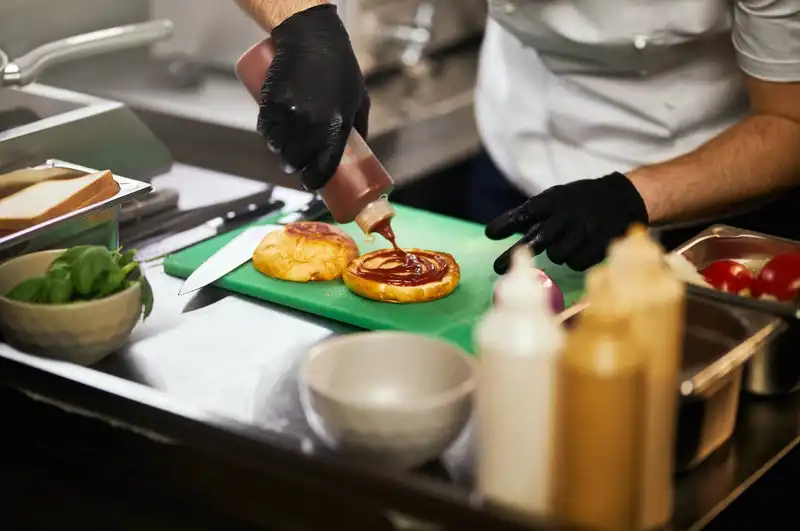
Adding delivery does not just add more tickets. It changes how the kitchen and front-of-house operate throughout the shift. The main goal is to make delivery part of the workflow without allowing it to disrupt dine-in service, takeout, or overall kitchen rhythm. That requires clear roles, defined processes, and realistic staffing expectations.
The first step is to decide how delivery orders will move through the line. If the same team is handling dine-in, takeout, and delivery without a clear system, bottlenecks are almost guaranteed during peak periods. Owners should define where delivery orders are prepared, who checks them, and where they are staged for pickup. Even a simple setup works better when everyone follows the same routine.
It also helps to assign responsibility at key points in the process -
1. Order monitoring - Someone needs to watch incoming delivery orders, confirm timing, and make sure tickets are not missed.
2. Kitchen execution - The back-of-house team should know when delivery orders are prioritized and how they fit into the broader ticket flow.
3. Accuracy checks - Before handoff, a team member should verify items, modifiers, sauces, utensils, and drinks. This step matters because once the order leaves, the restaurant loses the chance to correct mistakes.
4. Pickup coordination - Drivers need a clear pickup point so staff are not stopping production to answer repeated questions or search for bags.
Staffing should also be reviewed honestly. Delivery can increase volume without increasing seating, but it still adds labor pressure. Packaging, labeling, staging, and driver interactions take time. If owners do not adjust labor planning, the team may look fully staffed on paper while still falling behind operationally.

Packaging and Handoff Procedures
The main goal of packaging and handoff is not just to get food out the door. It is to make sure the order arrives complete, intact, and in the best condition possible. A well-cooked meal can still turn into a poor guest experience if the packaging leaks, the drinks spill, or the driver picks up the wrong bag.
Packaging should be treated as part of food quality control. Each container needs to match the item being packed. Hot foods should retain heat without trapping so much steam that texture breaks down. Cold items should stay separated from hot items when needed. Sauces, toppings, and fragile ingredients should be packed in a way that protects presentation and reduces mess during transit.
Owners should also standardize a few important packaging decisions -
1. Use the right container for each item-Not every menu item fits the same packaging. Containers should support temperature, portion size, and product stability during travel.
2. Label orders clearly - Each bag should be easy to identify by name, ticket number, or platform. This reduces pickup confusion and makes handoff faster.
3. Seal the order when possible - Tamper-evident seals or stickers help protect the order and build customer confidence.
4. Control small-item errors - Drinks, sauces, utensils, napkins, and condiments are common miss points in delivery. A final checklist can reduce expensive mistakes.
Handoff procedures matter just as much. Drivers should know exactly where to go, where orders are staged, and how pickups are confirmed. If there is no clear process, staff lose time answering questions, and the risk of mix-ups increases.
The bigger point is that packaging and handoff are not minor details. They are part of the delivery system. When restaurants standardize these steps, they reduce complaints, protect food quality, and create a more reliable off-premise experience. In delivery, the guest often judges the entire brand through the bag that reaches their door.
Set Pricing, Fees, and Performance Expectations
The main goal of delivery pricing is not just to stay competitive. It is to make sure each order still makes financial sense after commissions, packaging, discounts, and added labor are factored in. Many restaurant owners look at delivery sales growth and assume the channel is working. But higher sales do not always mean higher profit.
Delivery adds costs that dine-in does not carry in the same way. Third-party commissions can take a meaningful share of each order. Packaging costs rise because containers, seals, bags, and drink carriers become part of the transaction. Promotions and app-based discounts can further reduce margin. On top of that, delivery often creates extra labor tasks, even if headcount does not increase.
This is why pricing should be intentional. Owners need to look at delivery menu pricing, fees, and order minimums together rather than treating them as separate decisions.
A few questions help frame this correctly -
1. Does the menu price reflect delivery economics? - Some restaurants keep the same price across all channels. Others adjust delivery pricing to account for higher fulfillment costs. The right decision depends on customer expectations, local competition, and margin pressure.
2. Are fees and discounts being used strategically? - Promotions can help drive trial, but frequent discounting can train customers to wait for lower prices. Delivery should not rely on constant discounting to stay active.
3. Is the average order value strong enough? - Low-ticket orders are harder to support once commissions and packaging are applied. Bundles, add-ons, and minimum thresholds can help improve order economics.
4. What does success actually look like? - Order count alone is not enough. Restaurants should define success using metrics such as contribution margin, refund rate, average ticket, and repeat order behavior.
Delivery pricing should be built around business reality, not just platform visibility. A restaurant can be busy on delivery and still lose ground financially. Clear pricing rules and realistic performance expectations help owners grow the channel without weakening the business underneath it.
Track the Right Metrics
The main goal of delivery reporting is not to collect more numbers. It is to identify what is helping the business grow and what is quietly reducing profit or hurting execution. Once delivery is live, restaurant owners need a simple way to measure whether the setup is actually working.
A good starting point is to track performance in four areas.
1. Sales and demand - Look at delivery order volume, average check, peak order times, and sales by daypart. This helps owners understand when delivery is strongest and whether demand is growing in a healthy way.
2. Execution quality - Track ticket times, order completion rate, missing item complaints, refunds, remakes, and negative delivery-related reviews. These numbers show whether the restaurant can consistently execute the orders it is accepting.
3. Cost and margin - Review food cost, packaging cost, labor impact, commission expense, and net sales contribution. This is where many delivery programs look weaker than expected. Strong sales do not matter much if margins are being lost through avoidable costs.
4. Menu performance - Measure which items drive volume, which items drive profit, and which items create the most complaints. A menu item that sells well but causes frequent refunds or slows the line may not be worth keeping.
The most important thing is to review delivery data consistently. Owners do not need a complicated dashboard to improve performance. Even a weekly review of a few core numbers can lead to better decisions. For example, low average check may point to a need for bundles or add-ons. High refund rates may show a packaging or accuracy problem. Poor ticket times may signal a staffing or prep flow issue.
Delivery works best when it is adjusted over time. Menus change. Demand patterns shift. Costs move. What worked in the first month may not work six months later.
Must-Read Content

Best food delivery app
Best Food Delivery App for Restaurants
Third party delivery
Third Party Delivery KPIs Every Restaurant Owner Should Monitor
Types of delivery services
Types of Delivery Services for Restaurants
Third party delivery service
How to Choose the Right Third Party Delivery Service for Your Restaurant
Frequently Asked Questions
How can restaurants reduce delivery mistakes?
Restaurants can reduce errors by creating a clear order flow, assigning team responsibilities, using accuracy checks before handoff, labeling bags correctly, and standardizing packaging procedures. Small process improvements often prevent missing items and wrong orders.
What metrics should restaurants track for delivery?
Restaurants should track order volume, average check, ticket times, refund rate, missing item complaints, packaging cost, labor impact, commission expense, and net contribution. These numbers help owners understand both demand and profitability.
What is the biggest mistake restaurants make with delivery?
One of the biggest mistakes is treating delivery like a simple add-on instead of a separate operating system. Without clear workflows, menu strategy, pricing logic, and staff preparation, delivery can create sales but still damage service and profit.
What makes a menu item good for delivery?
A good delivery item maintains temperature, texture, and presentation during travel. It should also be simple to prepare, easy to package, and strong enough in margin to support delivery-related costs such as commissions, packaging, and refunds.