What is the difference between first-party and third-party delivery?
First-party delivery is managed by the restaurant using its own drivers and systems. Third-party delivery relies on an outside platform or logistics partner to handle some or all of the delivery process. The biggest differences are control, cost structure, and customer ownership.
Types of Delivery Services for Restaurants

The 4 Main Types of Delivery Services
When restaurant owners think about delivery, the conversation often starts with apps. But delivery is not limited to one format, and not every model works the same way. In practice, restaurants usually choose from four main types of delivery services, each with a different balance of cost, control, customer reach, and operational complexity.
Understanding these models is important because delivery performance is shaped by the structure behind it. The same restaurant can see very different results depending on who owns the order, who handles the driver, who controls the customer relationship, and who absorbs the service costs.
1. First-Party Delivery - First-party delivery means the restaurant manages delivery itself. Orders may come in through the restaurant's own website, app, or phone line, and the restaurant uses its own drivers to complete delivery.
This model gives operators the most control. The restaurant owns the guest interaction, delivery standards, branding, and customer data. At the same time, it also creates the most internal responsibility. Labor, scheduling, insurance, routing, and driver performance all become part of the operation.
2. Third-Party Marketplace Delivery - This is the model most operators know best. Third-party marketplace platforms allow restaurants to list their business on an app where customers can discover, order, and receive delivery through the platform's driver network.
The main benefit is reach. These services can generate visibility and order volume quickly. The trade-off is cost. Marketplace commissions and fees can significantly reduce profit per order, and the restaurant typically has less control over the customer relationship.
3. Third-Party Logistics or White-Label Delivery - In this model, the restaurant keeps the customer-facing order channel, but a third party handles the actual delivery. In other words, the restaurant owns the order, while an outside partner provides the driver network.
This can help operators maintain brand ownership without building an in-house delivery team. However, it usually works best when the restaurant already has demand and does not need a marketplace to generate traffic.
4. Hybrid Delivery Models - A hybrid model combines two or more delivery approaches. For example, a restaurant may use marketplace apps to reach new customers while also offering direct ordering with either in-house or white-label delivery for repeat business.
This model can create more flexibility, but it also requires stronger systems and clearer processes to manage multiple channels effectively.
First-Party Delivery
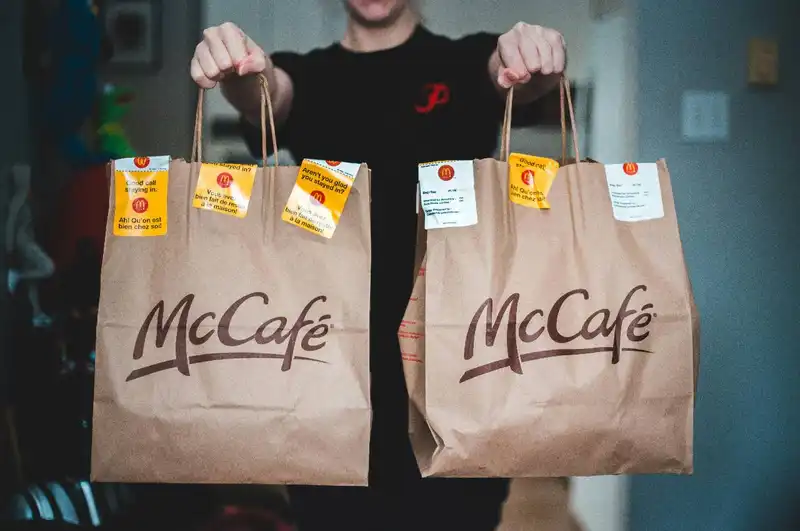
First-party delivery means the restaurant handles delivery using its own drivers instead of relying on an outside platform to complete the order. For restaurant owners, this model offers the most control, but it also requires the most internal coordination.
Why some restaurants choose first-party delivery
The biggest advantage is ownership. The restaurant controls the order from the moment it is placed to the moment it reaches the customer.
Key benefits include -
- More control over the guest experience
- Stronger brand consistency during delivery
- Direct access to customer data and order history
- No third-party marketplace commission on each order
For restaurants that already have loyal customers and strong direct demand, this can be a major advantage.
What the restaurant takes on
The cost savings from avoiding marketplace commissions do not mean delivery becomes simple or cheap. The responsibility shifts inward.
That usually includes -
- Hiring and scheduling drivers
- Managing payroll, insurance, and labor costs
- Defining delivery zones and expected delivery times
- Handling call-outs, delays, and driver performance issues
- Making sure delivery does not disrupt kitchen flow or in-store service
Where this model works best
First-party delivery tends to work best when a restaurant has -
- Consistent order volume
- A tight and manageable delivery radius
- Enough labor flexibility to support drivers
- A strong reason to own the customer relationship
This model gives restaurants more control over service, branding, and customer data. But it also adds more moving parts to the operation.
Efficient Ordering at Your Fingertips
Experience Flawless Inventory Management with Altametrics
Third-Party Marketplace Apps
For many restaurant owners, third-party marketplace apps are the fastest way to start offering delivery. These platforms put the restaurant in front of customers who are already searching for food, comparing options, and ready to place an order. That built-in demand is the main reason marketplace delivery has become such a common model.
Why restaurants use marketplace apps
The biggest advantage is visibility. Instead of relying only on existing customers to order directly, restaurants can appear where large volumes of customers are already browsing.
Key benefits include -
- Faster access to a larger customer base
- Built-in customer discovery and search visibility
- Delivery infrastructure already in place
- Less need to hire and manage in-house drivers
- Easier entry into delivery without building a full direct-order system
For restaurants trying to increase order volume or expand awareness in their area, that reach can be valuable.
Where the model gets expensive
The trade-off is cost. Marketplace apps can help generate demand, but that demand often comes with meaningful fees that reduce margin on each order.
Common pressure points include -
- Commission fees on orders
- Additional service or transaction fees
- Promotions or discounts needed to stay competitive in-app
- Less control over final customer pricing and profitability
For owners, this means higher sales do not always translate into stronger profit.
The operational challenge
Marketplace delivery also limits control in a few important areas -
- The platform often owns most of the customer relationship
- Driver performance can affect the guest experience
- Restaurants may have less access to customer data
- Brand loyalty may shift toward the app instead of the restaurant
Marketplace apps can be useful when the goal is reach and order generation. But restaurant owners need to evaluate them carefully. The real question is not just how many orders the app brings in. It is whether those orders create profitable growth after fees, execution issues, and reduced customer ownership are factored in.
Third-Party Logistics
Third-party logistics, often called white-label delivery, gives restaurants a middle-ground option. The restaurant keeps control of the ordering channel, while an outside delivery partner handles the driver and drop-off. In simple terms, the restaurant owns the customer-facing experience, but does not need to build its own driver team.
How this model works
Orders usually come through the restaurant's -
- Website
- Mobile app
- Direct online ordering system
Once the order is placed, a third-party logistics provider completes the delivery.
Why some restaurants prefer it
This model can help restaurants protect more of the customer relationship while reducing the staffing burden of in-house delivery.
Main advantages include -
- The restaurant keeps its own branding
- Customer data stays closer to the business
- No need to recruit and schedule delivery drivers
- Less dependence on marketplace apps for fulfillment
For restaurants with repeat customers and strong direct ordering, this can be a practical fit.
The main limitations
White-label delivery does not create demand on its own. Unlike marketplace apps, it does not put the restaurant in front of new customers browsing for options.
Challenges often include -
- No built-in discovery or traffic
- Delivery fees still affect order economics
- Service quality still depends on an outside driver network
- Direct ordering must already be strong enough to support volume
Where it fits best
This model tends to work best for restaurants that -
- Already have an online ordering system
- Want to keep more control over branding
- Need delivery support without adding in-house driver labor
The main value of white-label delivery is flexibility. It lets restaurants offer delivery through their own channel without taking on full delivery operations themselves.
Hybrid Delivery Models

A hybrid delivery model combines more than one delivery approach instead of relying on a single system. For many restaurant owners, this is the most practical option because it allows the business to use each model for a different purpose.
How hybrid delivery works
A restaurant might -
- Use marketplace apps to reach new customers
- Offer direct ordering on its own website for repeat guests
- Use in-house drivers in a limited radius
- Use white-label delivery when direct orders are too high for internal staff
This creates more flexibility than choosing only one model.
Why restaurants use hybrid models
The main advantage is balance. Restaurants do not have to depend entirely on marketplace visibility, but they also do not need to build every part of delivery internally.
Key benefits include -
- Better access to new customer demand
- More control over repeat-order channels
- Greater flexibility during busy periods
- More options for managing delivery costs by order source
This model can help owners separate demand generation from delivery execution.
The challenge with hybrid models
The benefit of flexibility also creates more complexity.
Common risks include -
- Staff confusion across multiple order channels
- Inconsistent pricing or menu availability
- More complicated reporting and performance tracking
- Higher risk of missed orders or slower execution if systems are not aligned
Hybrid delivery works best for restaurants that have enough order volume to justify multiple channels and enough operational discipline to manage them well.

How to Evaluate Which Delivery Model Fits Your Restaurant
Choosing a delivery model should be based on operational reality, not just what feels most popular or easiest to launch. The right choice depends on what your restaurant can support and what the business needs most right now.
1. Margin sensitivity - Start with the numbers. Ask how much fee pressure your menu can absorb without weakening profitability. If margins are already tight, a high-commission model may increase sales while reducing actual return.
2. Order volume and demand stability - Look at whether your restaurant already has steady demand or still needs help getting discovered. Restaurants with strong repeat traffic may benefit more from direct or white-label models, while those trying to expand reach may lean on marketplace apps.
3. Operational capacity - Delivery adds workload to the kitchen, front counter, and service flow. Consider whether your team can handle driver coordination, packaging standards, order timing, and guest issue resolution without creating new bottlenecks.
4. Customer ownership - Decide how important it is to control the guest relationship. If customer data, loyalty building, and repeat order behavior matter to your growth strategy, that should influence the model you choose.
5. Delivery range and service expectations - Not every restaurant needs the same coverage. A compact trade area with strong local density may support in-house delivery. Wider delivery zones may require outside logistics support.
The best delivery model is usually the one that solves your most immediate business problem without creating larger operational strain. For some restaurants, that means reaching more customers. For others, it means protecting margin, improving control, or reducing complexity. The decision becomes clearer when the model is evaluated against the actual demands of the business.
Must-Read Content

Best food delivery app
Best Food Delivery App for Restaurants

Third party delivery
Third Party Delivery KPIs Every Restaurant Owner Should Monitor

Third party delivery service
How to Choose the Right Third Party Delivery Service for Your Restaurant

Food delivery for restaurants
How to Set Up Food Delivery for Restaurants
Frequently Asked Questions
What type of restaurant benefits most from first-party delivery?
Restaurants with strong repeat business, consistent local demand, and a manageable delivery radius often benefit most from first-party delivery. This model is usually a better fit when the business has enough volume and staffing stability to support delivery internally.
Why do some restaurants use a hybrid delivery strategy?
Restaurants use hybrid delivery to combine the strengths of different models. For example, they may use marketplace apps for discovery and direct ordering for repeat customers. This can help balance growth, margin protection, and operational flexibility.
How do delivery services affect menu pricing?
Different delivery models often require different pricing strategies. Restaurants may need to account for commissions, packaging costs, and delivery-related labor when setting prices. The goal is to protect margins without making menu prices uncompetitive.
How should restaurant owners measure delivery performance?
Owners should look at more than order count. Useful metrics include profit per order, average ticket size, delivery time, refund rate, customer complaints, repeat order rate, and how delivery affects kitchen throughput and labor efficiency.