What's the biggest food safety risk in catering?
Time and temperature abuse. Packing, transport, and setup are common moments where hot food cools down or cold food warms up.
HACCP for Catering

Overview
HACCP stands for Hazard Analysis and Critical Control Points. In simple terms, it's a way to spot food safety risks before they turn into problems - then put clear controls in place to prevent them. Instead of relying on "be careful," HACCP gives your team a repeatable system- identify what could go wrong, control it at the most important steps, and prove you did it.
For catering, HACCP matters even more because you're not just cooking and serving in one controlled kitchen. You're often preparing food in one place, moving it to another, holding it for a period of time, and serving it in an environment you don't fully control. That adds extra risk in three big ways -
1. Time + temperature risks increase. Food may sit during packing, loading, transport, or setup. If hot food drops too low or cold food warms up, bacteria can grow fast.
2. The environment changes. Off-site locations may have limited handwashing, uneven refrigeration, wind/dust outdoors, crowded kitchens, or shared prep areas that raise contamination risk.
3. More handoffs happen. Catering usually involves more steps and more people touching food, prep cooks, packers, drivers, event staff, sometimes even the client. Each handoff is another chance for mistakes.
A key concept in HACCP is a control point - a step where you can prevent or reduce a hazard. In catering, a control point might be -
- Cooking to a safe internal temperature
- Cooling quickly and correctly
- Keeping food hot or cold during transport
- Preventing allergen mix-ups with labeling and separation
Some control points are so important that if they fail, the food may become unsafe. Those are called Critical Control Points (CCPs). For many caterers, CCPs often include cooking, cooling, reheating, hot holding, and cold holding. The goal is not to create paperwork. The goal is to focus on the steps that protect your customers the most.
Simple Process Flow Chart
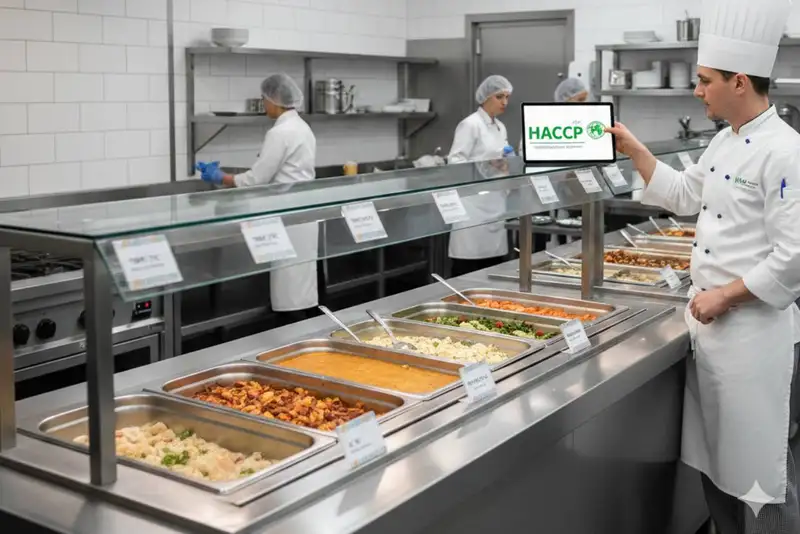
Before you can control food safety risks, you need to see your process clearly. That's what this step is, write down your catering flow from start to finish, using simple steps your team actually follows. HACCP works best when it matches real life - not an ideal process that never happens during a busy weekend.
Start by listing every step food goes through for a typical catering order. Most caterers have a flow that looks like this -
Receiving - Storage - Prep - Cooking - Cooling (if needed) - Reheating (if needed) - Packing - Transport On-site Setup - Holding/Service - Leftovers/Return/Clean-up
Now make it practical by adding the details that matter in catering -
- Where is food stored (walk-in, reach-in, hot box, ice bath)?
- When does food leave temperature control (during packing, staging, loading, setup)?
- How long is transport, and what equipment protects temperature (hot boxes, cambros, refrigerated van, coolers with ice packs)?
- Who handles food on-site, and where do they wash hands, store utensils, and keep allergens separated?
A simple way to map this is a one-page "flow chart" you can make in 10 minutes -
1. Write the steps in order on paper.
2. Under each step, add the location (kitchen, loading area, van, venue).
3. Add a note for time (how long it usually takes).
4. Add a note for temperature control (hot, cold, or room temp exposure).
Do this for your most common menu types, because risks change depending on what you serve. At minimum, map -
- Hot entrees and sides (risk - cooling, reheating, hot holding)
- Cold ready-to-eat foods like salads, deli trays, sushi-style items (risk - cold holding, cross-contamination)
- Desserts with dairy or eggs (risk - cold holding, allergen control)
This map becomes your HACCP foundation. Once you can see the full flow, it's much easier to spot the danger moments and decide where controls matter most.
Common Catering Hazards
Once you've mapped your flow, the next step is to ask a simple question at each stage - what could make this food unsafe right here? In HACCP, these risks are called hazards. For catering, the biggest hazards usually fall into four groups.
Biological hazards (germs that cause illness)
These are the most common risk in catering. The biggest driver is time and temperature abuse - food staying too warm or too cool for too long. Watch for -
- Food sitting out during prep, packing, staging, loading, or setup
- Slow cooling after cooking (large pans, deep containers, stacked containers)
- Reheating that doesn't get hot enough, especially when rushing
- Hot holding that drops too low or cold holding that creeps up during transport
- Cross-contamination from raw proteins, dirty hands, or shared tools
Chemical hazards (cleaners, sanitizers, allergens, and unsafe materials)
Chemical hazards often come from the environment and handling -
- Cleaner or sanitizer getting into food from spray bottles, un-rinsed surfaces, or buckets
- Improper sanitizer concentration in wiping cloth buckets
- Storing food in non-food-safe containers
- Allergens are also often treated as a chemical hazard because they can cause serious reactions
Physical hazards (foreign objects)
These are things that don't belong in food -
- Broken plastic from containers or lids
- Metal from damaged utensils or can openers
- Glass from light fixtures or bottles
- Packaging pieces like twist ties, staples, or bits of film
Allergen hazards (cross-contact and labeling failures)
Catering has higher allergen risk because of buffet setups, shared utensils, and last-minute changes. Common issues include -
- Wrong or missing labels
- Using the same tongs/spoons across dishes
- Prep on shared surfaces without proper cleaning
- Mixing up trays during packing and delivery
A helpful way to keep this simple is to mark the hot spots in your flow map. For many caterers, hazards spike at - cooling, reheating, packing, transport, and on-site service. These are the steps where controls matter most, and where you'll focus your HACCP plan next.
Typical CCPs for Caterers
After you list the hazards, the next step is to decide where you'll control the biggest ones. In HACCP, these key steps are called Critical Control Points (CCPs). A CCP is a point in your process where you must control the risk to keep food safe. If a CCP fails, you may not be able to fix the food later.
A simple way to choose CCPs is to ask this at each step -
1. Can a hazard be prevented, eliminated, or reduced here?
2. If this step goes wrong, could the food become unsafe?
3. Is there a later step that would fix it? (If not, it may be a CCP.)
For catering businesses, CCPs are often tied to temperature control because off-site work creates more chances for food to drift into unsafe ranges. Common CCPs for caterers include -
CCP 1. Cooking - Cooking is a CCP when you need to destroy harmful bacteria. This matters for items like poultry, ground meats, eggs, and cooked sauces.
CCP 2. Cooling - Cooling is a CCP for caterers because you often prep in advance. Cooling too slowly is one of the easiest ways to create risk, especially with large batches.
CCP 3. Reheating - If you cool food and later reheat it for an event, reheating becomes a CCP. "Warming it up" isn't enough - reheating must be fast and hot.
CCP 4. Cold Holding - Cold foods like salads, deli trays, dairy-based items, and desserts must stay cold through packing, transport, and service. Cold holding is often a CCP in catering because ice melts, lids get opened, and events run long.
CCP 5. Hot Holding - Hot holding is a CCP for chafers, hot boxes, and buffet lines. Hot food can cool down during travel and setup, especially if the venue power or equipment isn't reliable.
Transport isn't always labeled a CCP, but in catering it's often a critical control step because it protects hot and cold holding. If your biggest risk happens during travel or setup, you may treat transport as a CCP in your plan.
Safe Targets
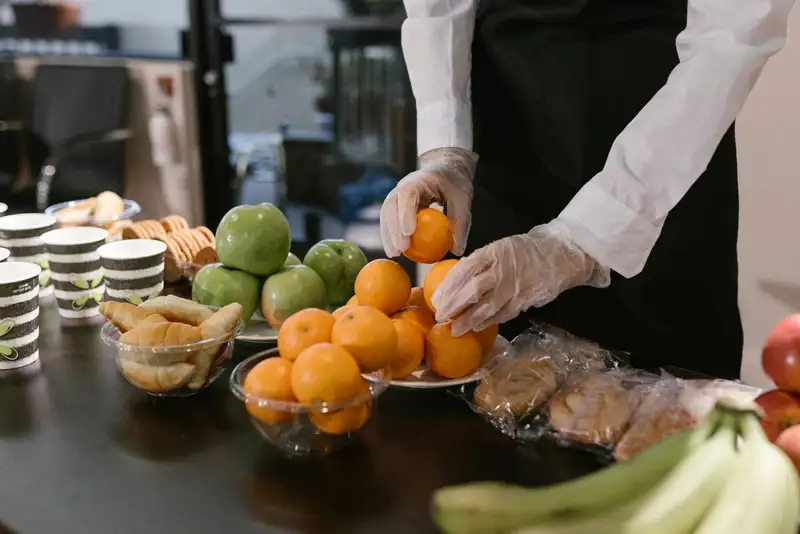
Once you know your Critical Control Points (CCPs), you need critical limits. A critical limit is a clear rule that tells your team - this is the minimum (or maximum) we must meet to keep food safe. If you miss the limit, you don't guess - you take a corrective action.
For catering, the most useful critical limits are usually time and temperature, because those are the controls most likely to fail during packing, transport, and service.
Here are simple, widely used limits to build your plan around -
Hot holding (buffet line, hot box, cambro)
- Keep hot foods at 135 F (57 C) or higher.
- Check temps at setup and then on a set schedule (example, every 1-2 hours).
Cold holding (coolers, refrigerated units, cold displays)
- Keep cold foods at 41 F (5 C) or lower.
- Use ice packs/ice baths and keep lids closed as much as possible.
Cooking (internal temperatures)
Cooking targets vary by food, but your plan should list the specific foods you serve most -
1. Poultry. 165 F (74 C)
2. Ground meats. 155 F (68 C)
3. Seafood / whole cuts of beef, pork, lamb. 145 F (63 C)
4. Egg dishes held hot, 155 F (68 C)
Cooling (if you cook ahead)
Cooling is where catering operations often struggle. Use a clear rule -
- Cool from 135 F - 70 F within 2 hours, and 70 F - 41 F within 4 more hours (total 6 hours).
- Use shallow pans, smaller portions, and allow airflow in the cooler.
Reheating (for hot service)
- Reheat previously cooked and cooled foods to 165 F (74 C) quickly (commonly within 2 hours), then hold at 135 F+.
Sometimes a venue setup makes perfect temperature control hard. In those cases, many operations use time as a control for certain foods -
- Mark when food is taken out of temperature control and discard after a set time limit (commonly 4 hours), based on your local rules and approved procedures.
The key is consistency- choose limits that match your equipment and menu, write them down, and train your team to follow the same rules every event. Next, you'll set up simple monitoring so these limits don't get missed.
Elevate Food Safety, Simplify Compliance!
Experience Seamless Food Safety with Altametrics!
Monitoring
Critical limits only work if you actually check them. Monitoring is the routine your team uses to confirm - temps, times, labels, and sanitation controls are staying on track. The goal is not to create a stack of paperwork. The goal is to catch problems early - before food is served.
Focus on the controls that break most often in off-site food service -
1. Temperatures at CCPs - cooking, cooling, reheating, hot holding, cold holding
2. Time out of temperature control - staging, loading, transport, setup, service
3. Allergen controls - labels, separate storage, separate utensils on the line
4. Sanitation basics - sanitizer buckets/test strips, clean gloves/handwashing access, clean utensils and surfaces
When to monitor (simple checkpoints)
Pick monitoring points that match your workflow. Many caterers use these checkpoints -
1. Before packing - confirm food is at the correct hot/cold temp before it leaves the kitchen.
2. At loading - quick check of hot box/cooler temps and that lids are secure.
3. On arrival - verify temps again before setup starts.
4. After setup - confirm buffet or service line temps once everything is in place.
5. During service - re-check on a schedule (example- every 1-2 hours, or more often outdoors).
Who monitors (make it someone's job)
Monitoring fails when everyone is responsible. Assign roles -
- Kitchen lead checks cook, cool, reheat temps.
- Packing lead checks labels, allergens, hot/cold staging.
- Driver or event lead checks arrival/setup/holding temps.
Tools that make monitoring easier
- A reliable probe thermometer (and backups)
- A surface thermometer (optional but helpful)
- Cooler/hot box thermometers (built-in or portable)
- Labeling system (allergen tags, item names, time stickers)
- Sanitizer test strips
Use short forms with only the essentials -
1. Item + temp + time + initials
2. A checkbox for "labels verified" and "allergen separation"
If your monitoring is simple and built into the flow, it becomes a habit - without slowing service. Next, you'll define exactly what to do when a check fails so staff don't have to guess.
What to Do When Something Goes Off Track
Even with a solid plan, things will go wrong sometimes- traffic delays, a cooler left open, a chafer that won't stay hot, a tray that gets mislabeled. HACCP works because it tells your team exactly what to do next. These steps are called corrective actions - clear instructions for fixing the problem (or safely stopping service) when a critical limit isn't met.
A good corrective action has three parts -
1. Fix the immediate issue (protect the food right now)
2. Decide what happens to the food (save it safely or discard it)
3. Prevent it from happening again (quick note on the cause)
Here are practical corrective actions for common catering situations -
If hot food is below 135 F (57 C)
- If it's still within your safe time window and you can fix it quickly - reheat to 165 F (74 C), then return to hot holding at 135 F+.
- If you can't reheat safely (no equipment, too slow, uncertain time), discard.
- Immediate fixes, close hot box, replace fuel, reduce pan depth, use lids, rotate fresh product.
If cold food is above 41 F (5 C)
- Move it back to cold control (ice bath, cooler, refrigeration) and re-check temperature.
- If it's been above the limit too long (based on your time policy), discard.
- Immediate fixes, add ice packs, keep lids closed, use smaller batches on the line, replenish from a cold reserve.
If cooling is too slow
- Split into shallow pans, reduce batch size, use ice wands, increase airflow in the cooler, and restart the cooling clock.
- If the food can't meet cooling limits - discard.
If labels or allergens are wrong
- Stop service of that item immediately.
- Identify the food, re-label correctly, and prevent cross-contact (new utensils, clean surface).
- If you cannot confirm allergen status - do not serve.
How to document it fast
Write. What happened + what you did + initials/time. One line is enough if it's clear.
Corrective actions remove guessing under pressure. Next, you'll learn how to verify your system is working and keep records simple.
Create, Implement, and Execute Multiple Daily Checklists
Streamline Your Operations with Altametrics
Must-Read Content
Haccp guidance
HACCP Guidance for Restaurant Prep Stations
Haccp principles
HACCP Principles Explained for Restaurant Owners

Haccp for cafes
HACCP for Cafes - A Simple Start-to-Finish Setup
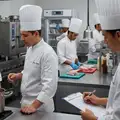
Haccp method
HACCP Method for Restaurant Kitchens

Haccp compliance
HACCP Compliance for Hotels
Frequently Asked Questions
What does HACCP mean for a catering business?
HACCP is a simple system to identify food safety risks in your process and control them at the most important steps, especially time and temperature.
What are common Critical Control Points (CCPs) for caterers?
Cooking, cooling, reheating, hot holding, and cold holding are the most common CCPs in catering operations.
What temperature should hot foods be held at during catering?
Hot foods should generally be held at 135 F (57 C) or higher during holding and service.
What temperature should cold foods be held at during catering?
Cold foods should generally be held at 41 F (5 C) or lower through packing, transport, and service.