What are the biggest cross-contamination risks at prep stations?
Hands, shared tools, dirty surfaces, drips from raw proteins, and switching tasks without cleaning and sanitizing.
HACCP Guidance for Restaurant Prep Stations

What HACCP Means at the Prep Station
HACCP stands for Hazard Analysis and Critical Control Points. In simple terms, it's a way to run your kitchen so food safety isn't based on "hoping people do the right thing." Instead, you identify where problems can happen, set clear controls, and check that those controls are working.
At a restaurant prep station, HACCP is less about paperwork and more about daily behavior and setup. Prep is where raw ingredients are opened, trimmed, mixed, portioned, and staged. That makes it one of the easiest places for cross-contamination to spread - especially when multiple menu items, tools, and employees share the same area.
Cross-contamination usually happens through a predictable chain -
- Hands move from one task to another without proper washing.
- Tools (knives, boards, tongs, scoops) get reused between raw and ready-to-eat foods.
- Surfaces (cutting boards, counters, scales, handles) carry residue from raw proteins, dirty produce, or allergens.
- Containers and labels get swapped, reused, or left uncovered - causing drips, mix-ups, or unsafe holding.
HACCP at the prep station focuses on breaking that chain with controls that are easy to train and easy to verify. In most restaurants, the prep station is not always a "critical control point" (CCP) the way final cooking temperatures might be. But it's still a high-risk control point - meaning small mistakes can affect many servings quickly.
The goal is to make prep stations organized, separated, and repeatable -
- Clear task separation (raw vs ready-to-eat)
- Reliable cleaning and sanitizing between tasks
- Time and temperature rules during staging
- Labeling and storage that prevents drips, mix-ups, and allergen cross-contact
When HACCP is working at prep, your team doesn't need to guess. They know what belongs where, what gets cleaned when, and what gets checked every shift - so cross-contamination becomes the exception, not the norm.
Identify Your Prep Station Hazards
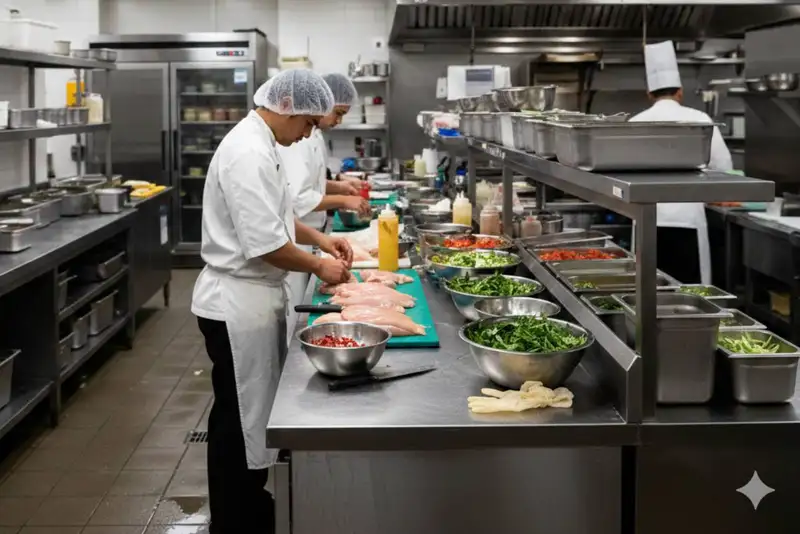
Before you can prevent cross-contamination, you need to be clear on what risks actually exist at each prep station. In HACCP terms, this is the "hazard analysis" step. A hazard is anything that can make food unsafe. At prep, hazards usually fall into three buckets - biological, chemical, and physical - and a single station can have more than one at the same time.
Biological hazards are the most common in restaurants. These include bacteria and viruses that can transfer from raw meat, poultry, seafood, and eggs to ready-to-eat foods like salads, sauces, sliced produce, and cooked proteins. Biological risk goes up when food sits out too long, when staff switch tasks without washing hands, and when tools or boards are reused between raw and ready-to-eat prep.
Chemical hazards often come from sanitizer misuse and allergen cross-contact. For example, if sanitizer is too strong, not rinsed when required, or stored near food, it can contaminate ingredients. Allergen hazards are also chemical in HACCP terms because the "hazard" is a specific substance - like peanuts, dairy, wheat, soy, eggs, fish, or shellfish - ending up in the wrong dish through shared tools, shared containers, or shared gloves.
Physical hazards include anything you wouldn't want a guest to bite into- fragments of plastic wrap, packaging, broken utensil pieces, metal shavings, bandages, or even staples from boxes. These hazards often come from rushed opening procedures, damaged equipment, or sloppy storage.
To make this actionable, do a quick "hazard map" by station -
1. Raw protein station - highest biological risk (drips, splashes, contaminated tools)
2. Produce station - biological risk from unwashed produce and dirty sinks, physical risk from twist ties, stickers
3. Ready-to-eat/cold prep station - highest cross-contamination risk because food won't be cooked again
4. Sauce/mix station - allergen cross-contact risk (shared ladles, blender parts, containers)
5. Portioning/packaging station - time/temperature risk if food is staged too long; physical risk from packaging
Once you know which hazards are most likely at each prep station, you can set controls that match the real risk - rather than relying on generic rules that don't fit your kitchen.
Set Up Prep Station Zones
The fastest way to reduce cross-contamination at prep is to design your stations so the "wrong" food never shares the same space, tools, or workflow. In HACCP terms, zoning is a control that prevents hazards from spreading. In real restaurant terms, it's how you keep raw protein juice from ending up on lettuce, sauce ladles, or gloves that touch ready-to-eat items.
Start by defining three simple zones -
1. Raw Zone (High-Risk)
- Raw chicken, beef, seafood, eggs, and anything that will be cooked later
- Dedicated cutting board, knives, trays, and containers
- Dedicated sink or wash process for raw-only tools (if possible)
2. Ready-to-Eat Zone (RTE)
- Salads, produce that's already washed and prepped, sandwich builds, garnishes, cooked proteins that are being portioned
- This zone should never receive raw protein, raw packaging, or raw prep tools
- If it touches RTE food, it stays in this zone
3. Allergen-Control Zone (When Needed)
- Used for menu items with higher allergen risk (nuts, dairy-heavy sauces, gluten prep, shellfish handling)
- Dedicated utensils and containers, clearly labeled
- Prep allergen items at a separate table or at a scheduled time with a full reset before switching tasks
Next, make zoning visible and easy to follow. The best systems are the simplest -
- Color-code boards, knives, tongs, and towels (and train the meaning)
- Label containers by zone ("RAW ONLY," "RTE ONLY," "ALLERGEN")
- Store raw proteins below ready-to-eat items, even during staging
- Use sheet pans or bus tubs to keep ingredients contained and prevent drips
Workflow matters as much as physical space. Build a one-way flow whenever possible -
(1) Receiving (2) Storage (3) Raw prep (4) Cooking (5) Ready-to-eat prep (6) Service/packaging.
When your team works in that direction, you reduce the number of times someone has to switch gears and risk carrying contamination backward.
If your kitchen has limited space and stations must be shared, use the order-of-operations rule -
Prep ready-to-eat foods first, then produce, then raw proteins last - followed by a full clean-and-sanitize reset. This single rule prevents the most common cross-contamination pattern- raw prep happening first and "poisoning" the station for everything that follows.
Time and Temperature Controls During Prep
Cross-contamination isn't the only risk at prep stations. Time and temperature issues can make food unsafe even when your tools and zones are perfect. HACCP guidance at prep focuses on one goal - keep food out of the danger zone as much as possible, and prove you did.
Most prep problems happen when ingredients sit out "just for a bit" and that bit turns into 30-90 minutes during a rush, shift change, or large batch prep. This is especially risky for TCS foods (time/temperature control for safety), like cooked rice, pasta, cooked meats, dairy-based sauces, cut tomatoes, leafy greens, and many prepared items held cold.
Use these practical controls -
1) Prep in small batches - Instead of pulling a full case of product to the station, pull what you can prep in a short window. Keep the rest in refrigeration. This reduces both temperature exposure and the chance of spills or drips.
2) Use "keep-cold" setups at the station - For cold prep, set pans in ice baths, use chilled inserts, or keep backup product in the cooler and refill as needed. Cold-holding is much easier to maintain when containers are shallow and kept covered between grabs.
3) Set a maximum "out of refrigeration" rule - Create a clear house standard, such as - "TCS food can be out for prep only, then back in the cooler immediately when not actively working." If you use time as a control, you need a simple way to track it - labels, timers, or a manager check. The key is consistency, not complexity.
4) Know when probe temps matter - You don't need to temp every item constantly, but you should temp -
- Cooked proteins being cooled or portioned
- Large batches of sauces or soups during cooling
- Cold items staged for assembly lines (to confirm they stayed cold)
5) Prevent temperature creep during staging - Staging is where good prep turns into a violation. Keep lids on containers, avoid overfilling station inserts, and rotate product back to refrigeration during slow periods.
Time and temperature controls work best when they are built into station routines - what gets pulled, how it's held, when it's checked, and what happens if it's been out too long. That's how you stop "quick prep" from becoming unsafe food.
Cleaning and Sanitizing
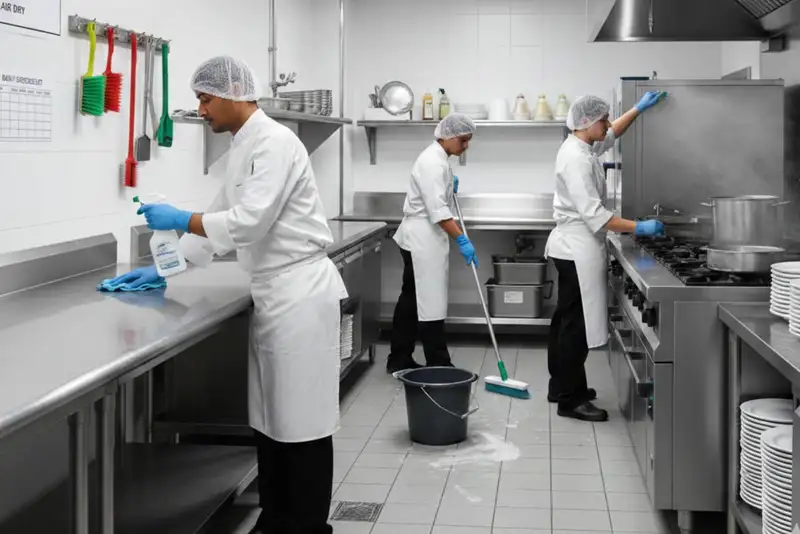
At prep stations, most cross-contamination happens because people confuse looks clean with is safe. HACCP guidance separates two steps that both matter - cleaning removes food debris and grease; sanitizing kills germs that remain on the surface after cleaning. If you skip cleaning, sanitizer can't work well. If you skip sanitizing, you leave contamination behind.
A reliable prep station reset should be simple and repeatable. Use a standard sequence your team can memorize -
(1) Scrape (2) Wash (3) Rinse (4) Sanitize (5) Air-dry
That's the between-task reset. It should happen whenever you switch between -
Raw - ready-to-eat
Allergen - non-allergen
Dirty produce - washed/ready produce
One protein type - another (especially poultry to anything else)
Make sanitizing measurable. Restaurants get into trouble when sanitizer is "set and forget." Build these controls into the station routine -
- Use test strips to confirm concentration at least once per shift (and any time a bucket is refilled)
- Follow contact time (surfaces must stay wet long enough for the sanitizer to work)
- Replace sanitizer buckets on a schedule (or sooner if they get cloudy or contaminated)
- Keep wiping cloths stored properly (in sanitizer solution when not in use, if that's your system)
Prevent the "dirty tool loop." Even with good zones, contamination spreads when tools float between tasks. Assign tools to zones and give staff a clear rule- if a utensil touches raw food or a dirty surface, it goes to the wash area - no exceptions.
Also focus on high-touch items that are often missed during resets -
- scale buttons and touch screens
- refrigerator handles
- squeeze bottles and caps
- spice containers and scoops
- drawer pulls, cart handles, and speed racks
Finally, build cleaning into the prep workflow instead of treating it as an extra chore. Keep a stocked station - labeled spray bottles (if allowed), clean towels, extra boards, and a clear bus tub for "dirty tools." When the tools and supplies are right there, the reset becomes faster than cutting corners.
Elevate Food Safety, Simplify Compliance!
Experience Seamless Food Safety with Altametrics!
Personal Hygiene and Glove Practices
Even with perfect station zones and sanitizing routines, cross-contamination still happens when hands and gloves become the delivery system. HACCP guidance treats personal hygiene as a primary control because prep work involves constant contact with food, tools, containers, and high-touch surfaces.
Start with handwashing rules that are specific and enforceable. A general sign that says "wash hands" isn't enough. Managers should train and coach the exact triggers that matter most at prep stations -
- Before starting prep and after any break
- After handling raw proteins, eggs, or dirty produce
- After touching trash, phones, aprons, hair/face, or cleaning chemicals
- After switching tasks (raw - ready-to-eat, allergen p non-allergen)
- After handling dirty dishes or wiping down surfaces
The goal is to prevent hands from moving hazards from one zone to another.
Next, set clear expectations for glove use. Gloves can help, but they can also create a false sense of safety. Gloves are not "magic." They're only effective when employees change them at the right time and keep them clean.
Use these simple glove rules at prep -
- Gloves never replace handwashing. Wash hands before putting on gloves.
- Change gloves when you change tasks, especially when moving to ready-to-eat food.
- Change gloves after touching non-food surfaces (phones, doors, fridge handles, trash, cleaning tools).
- Do not wash or sanitize gloves to "reuse" them - replace them.
For many restaurants, controlling bare-hand contact with ready-to-eat foods is a major compliance focus. If your local code requires gloves or utensils for ready-to-eat items, make it non-negotiable and provide tools that make compliance easy (tongs, deli tissue, portion scoops).
Uniform habits matter too. Aprons and towels can spread contamination quickly -
- Use clean aprons for ready-to-eat prep when possible
- Don't wipe hands on aprons
- Keep towels separated by purpose (hand drying vs surface wiping)
- Store personal items away from prep areas
Finally, train staff to treat the prep station as a controlled environment. The rule is simple - hands and gloves should only touch what the current task requires. When you combine clear handwashing triggers with smart glove use, you eliminate one of the biggest cross-contamination causes in restaurants.
Labeling, Storage, and Allergen Controls
Prep stations fall apart fast when containers aren't labeled, ingredients aren't covered, or items are staged in the wrong place. HACCP guidance here is simple - prevent mix-ups, prevent drips, and prevent allergen cross-contact - all with clear station rules your team can follow every shift.
Start with labeling. Labels are not just for the walk-in. They matter at the station because prep areas move quickly and ingredients often look similar. At minimum, every prepped item should have -
- Item name (no abbreviations that confuse new staff)
- Prep date/time (or a clear use by date/time based on your policy)
- Initials (who prepped it, so managers can coach patterns)
For staged items on the line or in cold prep, add time-out labels when applicable so product doesn't sit too long during busy periods.
Next, tighten storage habits at the station -
- Keep food covered whenever it's not actively being used
- Use shallow pans for cold items to hold temperature better
- Store raw proteins below ready-to-eat items - even during staging
- Never stack open containers where drips can fall into food
- Keep finished/prepped items in a "clean zone" away from raw packaging and dirty produce
Allergen control needs its own rules because "a little bit" still counts. Treat allergen cross-contact like a contamination risk, not a customer preference. Practical controls include -
- Dedicated tools and containers for common allergens (especially nut sauces, dairy-heavy mixes, gluten-containing prep, shellfish handling)
- An allergen-only scoop/ladle stored in the container, not in a shared utensil bin
- A clearly marked allergen prep area or scheduled allergen prep time with a full station reset afterward
- Separate squeeze bottles and clear labels (e.g., "contains dairy")
One of the most common failures is "shared container contact" - using the same gloved hands or utensils to reach into multiple bins. Set a rule - one utensil per container, and if the utensil touches the wrong food or surface, it goes to dish.
Finally, reduce look-alike mistakes. Store similar items apart (regular vs gluten-free buns, dairy vs non-dairy sauces) and use bold labels. The goal is a station that makes the safe choice the easy choice.
Create, Implement, and Execute Multiple Daily Checklists
Streamline Your Operations with Altametrics
Must-Read Content
Haccp principles
HACCP Principles Explained for Restaurant Owners

Haccp for cafes
HACCP for Cafes - A Simple Start-to-Finish Setup
Haccp method
HACCP Method for Restaurant Kitchens

Haccp compliance
HACCP Compliance for Hotels

Haccp for catering
HACCP for Catering
Frequently Asked Questions
How should I separate raw and ready-to-eat prep in a small kitchen?
Use clear zones, dedicated tools, and an order-of-operations rule - ready-to-eat first, raw last, then full reset.
What handwashing rules should restaurant managers enforce most?
After handling raw foods, switching tasks, touching trash/phones/doors, cleaning, and before touching ready-to-eat food.
What time and temperature mistakes happen most during prep?
Leaving TCS foods out too long, staging large batches, and not using keep-cold setups like ice baths or small pans.
What's the simplest daily prep station checklist?
Check station zoning, sanitizer setup, tool separation, labels/lids, and cold holding/staging practices each shift.