What are the most common OSHA-related safety risks in restaurants?
Common restaurant safety risks include slips, trips, falls, burns, cuts, lifting injuries, electrical hazards, and chemical exposure. These risks often develop during normal operations, which is why regular inspections and training are important.
Restaurant OSHA Compliance Checklist

Overview
OSHA compliance is important in restaurants because safety problems are not occasional disruptions. They are built into the pace and structure of daily operations. In one shift, employees may carry hot food, handle sharp knives, mop wet floors, lift heavy boxes, clean with chemicals, and move quickly through crowded spaces. That combination creates constant exposure to risk. For restaurant owners, OSHA compliance is not just about meeting a legal requirement. It is about building a workplace that is safer, more stable, and easier to manage.
Restaurants face a high volume of routine hazards. Slippery floors, burns from grills and fryers, cuts during prep, strains from lifting, and falls in storage areas are all common problems. These incidents may seem small in isolation, but they add up quickly. One injury can lead to lost labor hours, schedule changes, workers' compensation claims, manager time spent on follow-up, and lower team morale. If the same type of injury happens more than once, that usually points to a process issue rather than bad luck.
That is where OSHA compliance becomes practical. It gives restaurant owners a structured way to review safety risks, train employees, maintain safer working conditions, and document what the business is doing to reduce preventable harm. In other words, OSHA compliance helps turn safety from a reactive task into a repeatable management process. Instead of only responding after someone gets hurt, owners can build routines that reduce the chances of injuries happening in the first place.
Hazard Identification and Workplace Safety Assessments
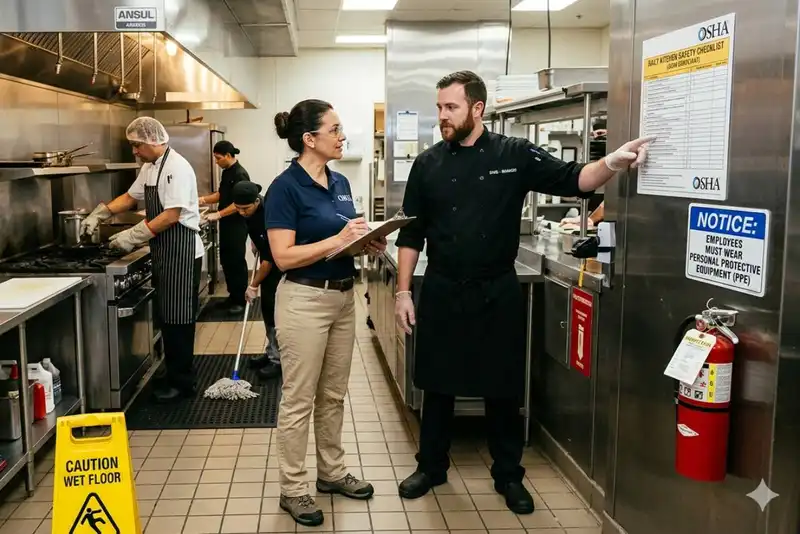
Restaurant owners can make OSHA compliance more practical by turning hazard reviews into a simple, repeatable checklist. The goal is to identify risks before they lead to injuries, schedule disruptions, or costly corrective action. Instead of waiting for an accident to reveal a problem, owners should review the workplace regularly and look for the most common safety issues in each area of the restaurant.
Use this checklist as a routine inspection guide -
1. Check floors and walkways
- Look for water, grease, food debris, or loose mats
- Make sure walkways stay clear during prep, service, and deliveries
- Confirm anti-slip mats are placed where needed and are in good condition
2. Review hot equipment areas
- Inspect grills, fryers, ovens, and warming stations for burn risks
- Make sure employees have enough space to move safely around hot surfaces
- Check that handles, guards, and warning practices are working properly
3. Inspect knives and prep stations
- Confirm knives are stored safely when not in use
- Check whether cutting stations are clean, stable, and not overcrowded
- Look for signs of dull tools, unsafe handling, or rushed workflow
4. Assess storage areas
- Make sure heavy items are not stored too high
- Check shelves for overloading or unstable stacking
- Confirm employees can reach products safely without climbing unsafely
5. Review chemical safety
- Verify cleaning chemicals are labeled correctly
- Make sure chemicals are stored away from food and prep supplies
- Check that spill response materials and SDS access are available
6. Inspect electrical and equipment safety
- Look for damaged cords, overloaded outlets, or broken plugs
- Check that equipment is functioning properly and not creating trip or shock hazards
7. Ask employees about recurring risks
- Identify problem areas by shift, task, or station
- Document hazards and assign follow-up action
This checklist works best when completed consistently. A weekly or monthly review helps restaurant owners spot patterns, fix issues faster, and build a safer workplace over time.
Elevate Food Safety, Simplify Compliance!
Experience Seamless Food Safety with Altametrics!
Employee Safety Training Requirements
Employee safety training is one of the most important parts of restaurant OSHA compliance because even a well-organized workplace can become unsafe if employees are not trained to handle daily tasks correctly. Restaurants move fast, and many injuries happen during routine work- carrying hot food, using knives, lifting stock, cleaning spills, or handling chemicals. For restaurant owners, training should not be treated as a one-time onboarding formality. It should be a repeatable process that helps employees work safely under real operating conditions.
A practical training checklist can help owners stay consistent -
1. Train employees on job-specific hazards
Review the risks tied to each role. Line cooks may need guidance on burn prevention, fryer safety, and knife handling. Dish staff may need training on wet floors, chemical use, and lifting racks. Servers may need training on slips, carrying heavy trays, and navigating crowded aisles.
2. Cover the most common restaurant injury risks
Make sure employees understand how to prevent slips, trips, falls, cuts, burns, and lifting injuries. These are common hazards in restaurants and should be reviewed clearly and often.
3. Include chemical safety training
Train employees on how to read labels, use cleaning products correctly, locate Safety Data Sheets, and respond to spills or exposure incidents.
4. Explain emergency procedures
Employees should know what to do in case of a fire, injury, equipment malfunction, or evacuation. Training should include who to notify and where emergency supplies are located.
5. Reinforce safe work habits regularly
Safety training should continue after onboarding. Use shift meetings, manager check-ins, and retraining after incidents to keep expectations clear.
6. Document all training
Keep records of who was trained, when the training happened, and what topics were covered. Documentation supports accountability and helps show that safety procedures are being communicated.
For restaurant owners, training is not just about compliance. It is a way to reduce preventable injuries, improve daily consistency, and give employees the confidence to work safely in a high-speed environment. When safety expectations are taught clearly and reinforced often, compliance becomes easier to maintain.
Personal Protective Equipment (PPE)
Personal protective equipment, or PPE, is an important part of restaurant OSHA compliance because it helps reduce injury risk during everyday tasks. In restaurants, employees work with sharp tools, hot equipment, slippery floors, cleaning chemicals, and heavy items. PPE does not replace safe procedures or training, but it adds another layer of protection when hazards cannot be fully removed. For restaurant owners, the goal is to make sure the right equipment is available, used correctly, and maintained consistently.
A practical PPE checklist can help owners review the basics -
1. Identify where PPE is needed
Review each work area and task. Food prep stations may require cut-resistant gloves. Grill, fryer, and oven stations may need heat-resistant gloves. Cleaning tasks may require aprons, gloves, or eye protection depending on the chemical used. Wet or fast-moving work areas may require slip-resistant footwear.
2. Match PPE to the actual hazard
Do not assume one type of protective equipment works for every task. Owners should make sure employees are using the correct PPE for the job being performed, especially when handling hot surfaces, chemicals, or sharp tools.
3. Make PPE easy to access
Protective equipment should be stored where employees need it, not locked away or placed far from the task area. If PPE is inconvenient to reach, employees are less likely to use it consistently.
4. Train employees on proper use
Employees should know when PPE is required, how to wear it correctly, and when it needs to be replaced. This is especially important for gloves, aprons, and any protective gear used during cleaning or food prep.
5. Inspect PPE regularly
Check for worn gloves, damaged aprons, missing equipment, or items that no longer provide proper protection. Replace damaged PPE quickly so safety standards do not decline over time.
6. Reinforce PPE expectations during daily operations
Managers should watch for whether PPE is actually being used during busy shifts, not just during training or inspections.
PPE is most effective when it is treated as part of normal operations. When the right equipment is available and consistently used, it helps reduce injuries and supports a safer workplace overall.
Chemical Safety and Hazard Communication
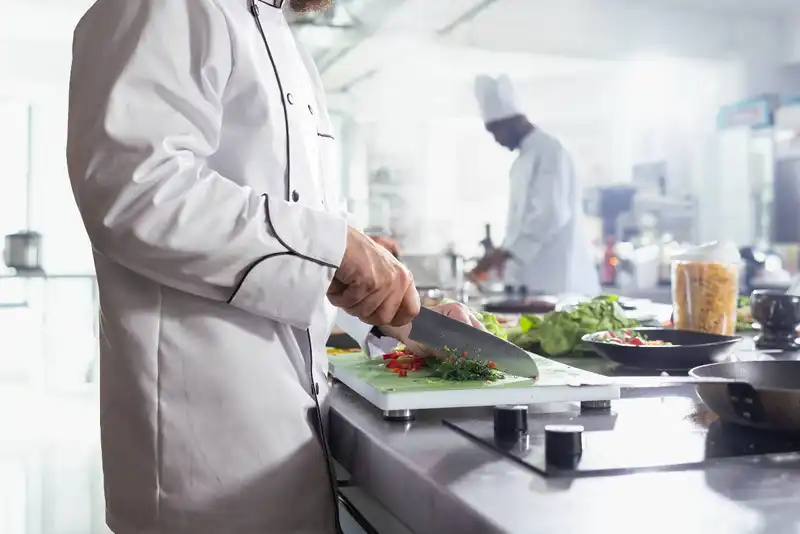
Chemical safety is a key part of restaurant OSHA compliance because cleaning products are used every day in nearly every area of the business. Degreasers, sanitizers, dish chemicals, delimers, and disinfectants all help maintain cleanliness, but they also create risk when they are stored, labeled, or used incorrectly. For restaurant owners, chemical safety is not just about preventing a rare incident. It is about controlling a routine risk that affects kitchen staff, dish teams, janitorial tasks, and managers across every shift.
A practical chemical safety checklist can help owners stay organized -
1. Verify all chemicals are labeled correctly
Every spray bottle, container, and secondary dispenser should be clearly labeled. Employees should be able to identify what the chemical is and avoid mixing or misusing products by mistake.
2. Store chemicals away from food and prep supplies
Cleaning products should never be kept near ingredients, packaging, utensils, or food-contact items. Separate storage helps reduce the risk of contamination and accidental misuse.
3. Keep Safety Data Sheets (SDS) accessible
Employees should be able to locate Safety Data Sheets for every chemical used in the restaurant. These sheets provide critical information about handling, exposure risks, protective equipment, and emergency response.
4. Train employees on safe chemical handling
Staff should know how to dilute products correctly, use the right amount, avoid unsafe mixing, and follow the manufacturer's instructions. Training should also explain what to do if a chemical spills or contacts skin or eyes.
5. Review required protective equipment
Some cleaning tasks may require gloves, aprons, or eye protection. Owners should confirm that employees have the proper PPE and understand when it is required.
6. Inspect chemical storage and usage regularly
Check for leaking containers, damaged labels, improper storage, and expired or unidentified products. Small issues in chemical handling can become larger safety problems if they are not corrected quickly.
Hazard communication works best when it is part of daily operations, not just compliance paperwork. When chemicals are labeled, stored properly, supported by SDS access, and backed by clear training, the restaurant reduces risk and creates a safer workplace for every employee.
Create, Implement, and Execute Multiple Daily Checklists
Streamline Your Operations with Altametrics
OSHA Recordkeeping and Injury Logs
OSHA recordkeeping is an important part of restaurant safety because it helps owners move beyond isolated incidents and track patterns over time. In a busy restaurant, it is easy to treat each injury as a one-time event. A cook gets burned during a rush. A dishwasher slips near the sink. A stock employee strains a shoulder while lifting a delivery. But when these events are documented consistently, owners can see whether the same hazards are happening repeatedly. That makes recordkeeping a practical tool for improving operations, not just a compliance task.
A simple recordkeeping checklist can help restaurant owners stay organized -
1. Determine whether OSHA recordkeeping applies to your business
Not every restaurant has the same recordkeeping obligations, but owners should know whether they are required to maintain OSHA injury and illness records based on business size and reporting rules.
2. Document every workplace incident promptly
Even when an incident seems minor, record the date, time, location, employee role, what happened, and what action was taken. Delayed reporting often leads to missing or inaccurate details.
3. Maintain injury and illness logs when required
If your restaurant is required to keep OSHA logs, make sure entries are completed accurately and updated as needed. Incomplete logs can create compliance problems and reduce the value of the information.
4. Keep records of safety training
Track who received training, what topics were covered, and when the training took place. This helps show that safety expectations were communicated and reinforced.
5. Save inspection and corrective action records
If a manager identifies a hazard during a walkthrough, document what was found, what was corrected, and when the issue was resolved.
6. Review records for trends
Look for repeated injuries by type, location, task, or shift. If multiple incidents involve the same station or process, the issue may be operational, not random.
Strong recordkeeping creates visibility. It shows where injuries are happening, where training may be falling short, and where safety controls need improvement. When records are clear and consistent, OSHA compliance becomes easier to manage and safety decisions become more data-driven.
Emergency Preparedness and Response Planning
Emergency preparedness is a core part of restaurant OSHA compliance because not every safety issue can be prevented completely. Fires, severe burns, chemical exposure, equipment malfunctions, medical emergencies, and evacuation situations can happen even in well-run restaurants. What matters is whether employees know how to respond quickly and correctly. For restaurant owners, emergency planning should be practical, visible, and easy for staff to follow under pressure.
A simple emergency preparedness checklist can help owners review the basics -
1. Confirm emergency exits are clear and accessible
Walk all exit routes and make sure they are not blocked by boxes, equipment, or furniture. Employees should
be able to exit quickly from kitchen, storage, and dining areas without confusion.
2. Check fire safety equipment
Make sure fire extinguishers are visible, accessible, and inspected on schedule. Staff should know where extinguishers are located and which types are appropriate for kitchen fires, especially grease-related hazards.
3. Maintain first-aid supplies
Keep first-aid kits stocked, easy to reach, and appropriate for the size of the operation. Managers should regularly check for missing or expired items.
4. Train employees on emergency response procedures
Staff should know what to do if there is a fire, burn injury, fall, chemical splash, electrical issue, or medical emergency. Training should include who to notify, when to call emergency services, and how to protect others nearby.
5. Post emergency contact information
Important numbers and response instructions should be easy to find. This may include emergency services, poison control, utility contacts, and internal management contacts.
6. Review incident response after emergencies happen
If an emergency occurs, document what happened, what response steps were taken, and whether procedures need to be improved.
Emergency planning is not just about worst-case scenarios. It is about reducing confusion during high-stress situations and helping employees respond in a way that limits harm. When exits are clear, supplies are ready, and response steps are understood, the restaurant is in a stronger position to protect both staff and operations.
Must-Read Content
Haccp system
How to Build a HACCP System for Your Restaurant

Incident management process
Incident Management Process for Restaurants

Osha reporting requirements
OSHA Reporting Requirements for Restaurants

Workplace incident report
What to Include in a Restaurant Workplace Incident Report

Incident management best practices
Incident Management Best Practices for Restaurants
Frequently Asked Questions
What should be included in restaurant safety training?
Restaurant safety training should cover job-specific hazards, slip and fall prevention, knife safety, burn prevention, chemical handling, lifting procedures, emergency response, and the correct use of personal protective equipment. Training should be reinforced regularly, not just during onboarding.
What types of workplace injuries happen most often in restaurants?
The most common restaurant injuries include slips and falls, cuts from knives or equipment, burns from hot surfaces or oil, lifting strains, and injuries caused by crowded workspaces. Many of these incidents happen during routine tasks.
What documentation should restaurants keep for workplace safety?
Restaurants should maintain safety training records, incident reports, hazard inspection notes, equipment maintenance records, and chemical Safety Data Sheets. These documents help track safety practices and support compliance reviews.
How often should a restaurant conduct safety inspections?
Restaurants should conduct safety inspections on a regular schedule, such as weekly or monthly, depending on the operation. High-risk areas like kitchens, dish stations, storage rooms, and chemical areas should be reviewed consistently to catch problems early.