What is a workplace incident report?
A workplace incident report is a written record of an event that affected employee safety, operations, equipment, or the work environment. In a restaurant, it is used to document what happened, who was involved, where it occurred, what response was taken, and what follow-up may be needed.
What to Include in a Restaurant Workplace Incident Report

The Importance of Workplace Incident Reports
In a restaurant, incidents happen fast. A cook slips near the prep line. A server cuts a hand while polishing glassware. A delivery is stacked unsafely in the walk-in. A manager breaks up a conflict between employees during a rush. In many cases, the immediate problem gets handled, and the team moves on. But if the incident is not documented properly, the business loses something important- a reliable record of what actually happened.
That is why workplace incident reports is important. They create a factual, time-stamped account of an event while details are still fresh. For restaurant owners, that record is useful for much more than internal paperwork. It supports safety reviews, helps managers respond consistently, and gives the business a clearer foundation for follow-up decisions.
First, it improves accuracy. Restaurants are fast-moving workplaces with multiple shifts, changing teams, and constant operational pressure. If an incident is only discussed verbally, details can change quickly. One employee may remember the time incorrectly. Another may leave out what happened right before the event. A manager may forget what action was taken that same day. A written report reduces that risk by capturing the facts early.
Second, it supports accountability. Owners need to know whether managers followed procedure, whether hazards were addressed immediately, and whether the same problems are showing up more than once. For example, if several reports mention wet floors near the dish area, poor lighting in a back hallway, or repeated knife injuries during prep, that points to an operational issue, not just an isolated event. Without reporting, those patterns are much harder to see.
Third, incident reports help protect the business during follow-up. A workplace injury may later involve workers' compensation, medical treatment, insurance questions, HR review, or legal scrutiny. In those situations, vague memory is not enough. Owners need a report that shows when the event happened, who was involved, what was observed, and what response took place. Even when the incident seems minor at first, the documentation can become important later.
There is also a clear operational reason to take reporting seriously. Workplace incidents affect more than the people directly involved. They can interrupt service, reduce labor availability, damage equipment, create food safety risks, slow production, and increase costs. A short-staffed shift caused by an injury does not just affect one person. It can affect ticket times, guest experience, overtime, and manager workload for the rest of the day.
Start With the Basic Incident Details
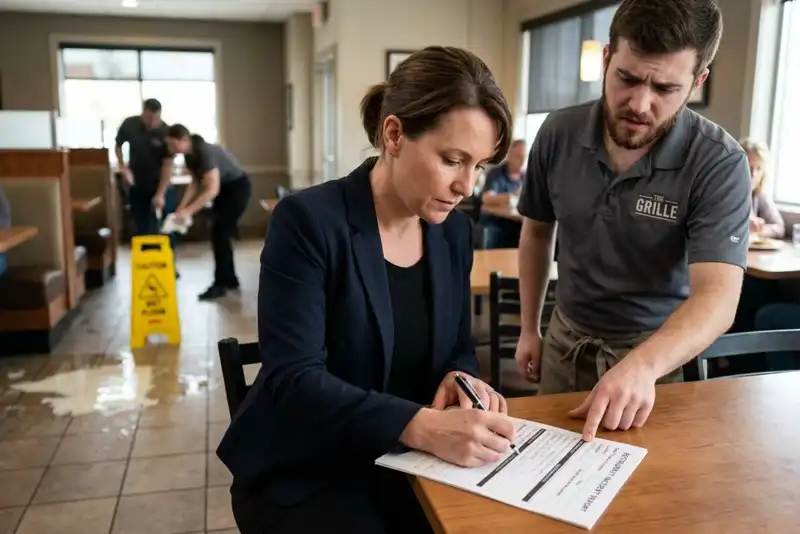
The first part of a workplace incident report should capture the basic facts of the event. This may seem simple, but it is one of the most important parts of the entire document. If these details are missing, inaccurate, or too vague, the rest of the report becomes harder to trust and harder to use.
There are several key details that this section of the report should always include -
1. Date and time - the exact day and time the incident happened so managers can connect it to the correct shift, staffing level, and operating conditions.
2. Specific location - the exact area where the incident occurred, such as the fry station, walk-in cooler, dish pit, host stand, or back door, not just a broad label like "kitchen" or "front of house."
3. Type of incident - whether the event involved a slip, fall, cut, burn, lifting injury, equipment issue, chemical exposure, altercation, or near miss.
4. Shift or daypart - whether it happened during opening, lunch, dinner rush, closing, or another period that may explain workload and pace.
By recording these details early, restaurant owners can build stronger reports and make better operational decisions later. For example, if several incidents happen near the dish area during closing shifts, that may point to a repeated cleaning or floor safety issue. If burns happen most often during peak service, the owner may need to review line setup, training, or staffing coverage. Basic details are not just administrative information. They help owners spot patterns that affect safety, labor efficiency, and daily operations.
This section should also include any immediate environmental conditions that help explain the situation. A wet floor, poor lighting, blocked walkway, leaking equipment, or crowded prep area may all be relevant. In restaurant operations, the surrounding conditions often matter just as much as the final incident itself. A report that only says an employee fell is incomplete. A report that explains the fall happened near the service station during a heavy rush with liquid on the floor gives management something they can actually act on.
Elevate Food Safety, Simplify Compliance!
Experience Seamless Food Safety with Altametrics!
Clearly Identify Who Was Involved
The purpose of this section is straightforward but critical - to clearly identify every person connected to the incident. In a restaurant, multiple employees may be working in the same area at the same time, often across overlapping responsibilities and fast shift changes. If the report does not clearly state who was involved, who witnessed the event, and who responded, the rest of the document becomes much less reliable.
There are several key individuals this section should include -
1. The employee directly involved - the full name, job title, and shift role of the person who experienced the incident, such as line cook, prep cook, dishwasher, server, bartender, or shift lead.
2. The manager or supervisor notified - the name and role of the person who first received the report or took control of the response.
3. Any witnesses - employees or other individuals who saw the incident happen or observed the conditions right before or after it occurred.
4. Other involved parties - anyone else connected to the event, such as another employee, a guest, a vendor, or a maintenance technician if their actions or presence were relevant.
This level of detail matters because vague identification creates problems later. A report that says "kitchen worker was injured" or "manager handled it" is too broad to support meaningful follow-up. Restaurant owners need to know exactly who was involved so they can verify statements, review training records, track communication, and confirm whether the correct procedures were followed. Clear identification also helps when more than one employee with similar roles was working the same shift.
It is also important to record practical contact and employment details when appropriate. For the employee involved, that may include department, location, and direct supervisor. For witnesses, it may include their role and whether they were actively working in the area at the time. The goal is not to overload the report with unnecessary personal information. The goal is to make sure each person can be identified accurately during later review.
This section becomes even more important when incidents lead to HR action, insurance questions, workers' compensation review, or internal safety investigations. If names are incomplete or roles are unclear, owners may waste time trying to reconstruct basic facts after the event. That slows down follow-up and increases the chance of inconsistent reporting.
Clear identification also helps restaurant owners analyze patterns across teams and positions. For example, if incident reports show repeated lifting injuries among prep staff, burns among line cooks, or slips involving bussers during closing, the business gains more than just a record of isolated events. It gains usable operational insight. That kind of pattern only becomes visible when reports consistently identify who was affected and what role they were performing.
Write a Factual Description of What Happened
Every restaurant incident has a sequence - what the employee was doing, what conditions were present, what happened during the event, and what happened immediately after. This part of the report should document that sequence in a way that is easy to understand and easy to review later. The goal is not to tell a dramatic story. The goal is to create a factual record that supports follow-up, safety review, and operational decision-making.
There are several key details that the description should include -
1. What task was being performed - such as carrying a bus tub, unloading a delivery, slicing produce, changing fryer oil, mopping the floor, or restocking the walk-in.
2. What happened immediately before the incident - the conditions, actions, or setup that led into the event.
3. What happened during the incident - the exact event itself, described as clearly and directly as possible.
4. What happened immediately after - whether the employee stopped working, asked for help, received first aid, reported pain, or whether the area was secured by management.
This section should always be written in objective language. That means using facts, observations, and direct details rather than assumptions, opinions, or blame. For example, a report should not say an employee was "careless" or that a manager was "not paying attention." Instead, it should describe what was observed. A better statement would explain that the employee slipped while carrying a container through a wet area near the dish station, or that a pan handle extended into a walkway and made contact with another employee.
That distinction matters because factual writing makes the report more credible. In restaurant operations, one small incident can later raise questions from HR, insurance, workers' compensation, or legal teams. If the report contains emotional language, guesses, or unsupported conclusions, it becomes less useful. If it stays focused on what can be verified, it becomes much stronger.
It is also important to avoid vague descriptions. A sentence like employee hurt hand during shift does not provide enough information to support meaningful review. A stronger description would explain that the employee was polishing glassware at the service station, the glass broke in the employee's hand, and a cut occurred on the right palm. The second version gives the business something it can evaluate, address, and learn from.
A factual description also helps owners identify whether the incident was tied to process, layout, equipment, workload, or training. For example, if several reports describe employees rushing through the same narrow area during peak service, that may indicate a workflow problem. If multiple incidents involve the same tool or workstation, the issue may be connected to equipment setup or maintenance. Clear descriptions make those patterns easier to identify.
Document the Injury, Damage, or Immediate Impact
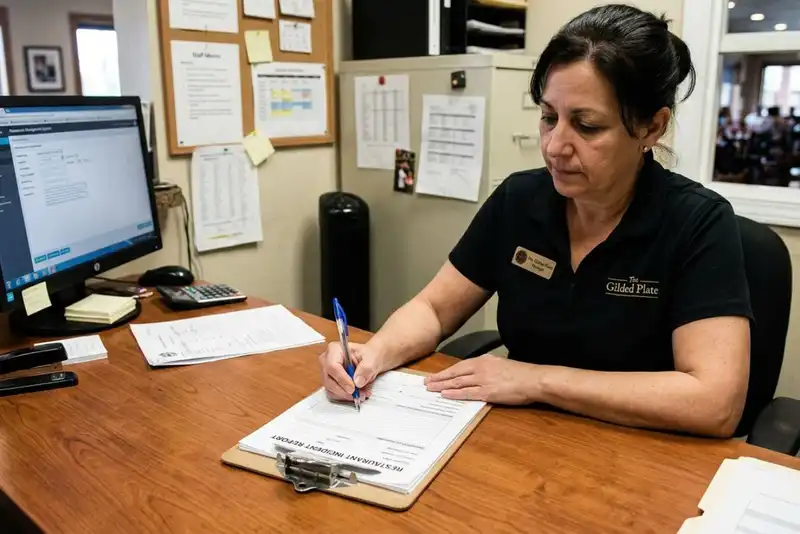
Every incident creates some kind of outcome, even when it looks minor at first. That is why this section should describe the immediate impact in practical, specific terms. The goal is to show not just that an incident occurred, but what effect it had on people, operations, and the business.
There are several key types of impact this section should include -
1. Employee injury - whether the person experienced a cut, burn, strain, fall-related pain, chemical exposure, or another physical injury, and which body part was affected.
2. Property or equipment damage - whether tools, machinery, glassware, shelving, POS hardware, or other operational items were damaged in the incident.
3. Product loss or contamination risk - whether food, beverages, or ingredients were spilled, discarded, or exposed to unsafe conditions as a result of the event.
4. Operational disruption - whether the incident caused a station to stop, slowed service, required shift reassignment, reduced labor coverage, or created a temporary hazard in the work area.
This section should be as factual and specific as possible. If an employee was injured, the report should describe the type of injury and the visible or reported condition at the time. For example, it may note redness from a burn, swelling in a wrist, a cut to the hand, dizziness after a fall, or pain reported in the lower back after lifting. The report does not need to make a medical diagnosis. It only needs to document what was observed or reported in real time.
The same principle applies to operational and property impact. If a tray of food was dropped, a slicer malfunctioned, glass shattered near a service area, or a spill blocked part of the kitchen, those details should be documented. In restaurants, the immediate business effect of an incident matters. A single injury may also trigger labor adjustments, cleanup delays, guest service interruptions, and extra manager involvement during an already busy shift.
This part of the report becomes especially important because the initial impact does not always stay small. An employee who says a strain feels minor may later need treatment. A leak that caused one fall may also expose an equipment problem affecting other shifts. A broken container or shattered dish may create food safety and cleanup concerns beyond the original incident. Accurate reporting at the start gives owners a stronger foundation if the issue grows later.
It also helps restaurant owners think more clearly about cost and risk. Workplace incidents are not only safety events. They can affect productivity, staffing, waste, maintenance, and service quality. For example, if a prep cook leaves the shift after an injury, another employee may need to cover the station, overtime may increase, prep volume may fall behind, and service readiness may suffer. When reports capture this kind of impact consistently, owners can see where incidents are creating hidden operational costs.
Create, Implement, and Execute Multiple Daily Checklists
Streamline Your Operations with Altametrics
Record Immediate Actions Taken at the Time of the Incident
Every restaurant incident requires some kind of immediate response - even if the incident appears minor at first. A manager may provide first aid, shut down equipment, clean and secure the area, call emergency services, reassign staff, or send an employee for medical evaluation. Recording those actions creates a clear timeline of how the business handled the event and whether the response matched the seriousness of the incident.
There are several key actions this section should include -
1. First response provided - whether the employee received first aid, stopped work, sat down for evaluation, washed a wound, applied ice, or was assisted by a manager.
2. Area or hazard control - whether the floor was cleaned, equipment was turned off, a station was blocked off, broken materials were removed, or other employees were redirected away from the area.
3. Management action - whether the manager on duty completed an assessment, notified ownership or HR, contacted emergency services, or arranged transportation for treatment.
4. Shift adjustment - whether the employee returned to work, was reassigned to lighter duties, was sent home, or whether another employee had to cover the station.
For example, if an employee slips in the dish area, the report should show whether the floor was dried, warning signs were placed, and the cause of the wet surface was addressed. If an employee is burned on the line, the report should show whether first aid was provided, whether the employee was removed from the station, and whether the equipment or process involved was reviewed right away. These details help restaurant owners see whether managers are reacting in a controlled, consistent way or simply improvising during the shift.
It is also important to document timing. If the employee reported pain at 2.15 p.m., received first aid at 2.20 p.m., and left for urgent care at 2.40 p.m., that sequence should be recorded. A clear timeline helps support later review and makes the report stronger if questions come up from HR, workers' compensation, insurance, or legal teams. In many cases, the business is not only judged by the incident itself, but by how quickly and appropriately management responded afterward.
This section also helps owners evaluate manager performance. Restaurant managers are often expected to make fast decisions under pressure. A well-documented response shows whether they followed procedure, escalated correctly, and protected both the employee and the operation. If reports repeatedly show delayed action, incomplete hazard control, or inconsistent follow-up, that points to a training or leadership issue that needs attention.
From an operational standpoint, immediate actions matter because incidents rarely affect only one person. A small event can change staffing, interrupt production, delay service, or create a second hazard if the area is not handled correctly. For example, a broken glass incident at a service station is not just a cleanup issue. It may also affect guest safety, food handling, and workflow around that area. The report should show exactly how the team managed that risk in real time.
Witness Statements, Supporting Evidence, and Follow-Up Notes
Every restaurant incident happens in a real operating environment where multiple people may see different parts of the same event. A server may notice the spill before the fall. A prep cook may hear equipment making unusual noise before a malfunction. A shift lead may observe the employee's condition immediately after an injury. That is why this section should gather any additional information that helps confirm what happened and what the business learned afterward.
There are three main types of supporting information this section should include -
1. Witness statements - short factual accounts from employees or other individuals who saw the incident happen or observed the conditions right before or after it occurred.
2. Supporting evidence - photos, video references, maintenance records, cleaning logs, equipment notes, or other materials that help verify the facts of the incident.
3. Follow-up notes - updates recorded after the initial event, such as whether the employee sought treatment, returned to work, reported ongoing pain, or whether management completed a corrective action review.
Witness statements are especially useful because they add perspective without relying on memory weeks later. In a fast-moving restaurant environment, details can change quickly once a shift ends and employees go home. A short witness statement taken close to the event is often more reliable than trying to recreate the situation later. These statements should stay factual and focused. They should describe what the witness saw, heard, or observed, not opinions about who was at fault.
Supporting evidence can also make a major difference in report quality. If the incident involved a wet floor, broken equipment, a cluttered walkway, a damaged shelf, or a spilled chemical, photos can help show the condition at the time. If security cameras captured the area, the report should note that video exists and identify the relevant time period. If maintenance records or cleaning logs are connected to the issue, those should also be referenced. In restaurant operations, documentation is stronger when it includes evidence that can support the written account.
Follow-up notes are equally important because many incidents do not end when the shift ends. An employee may feel worse later, seek medical evaluation the next day, or report that pain continued after leaving work. Management may later discover that equipment repair was needed, additional training was required, or a repeated hazard had already appeared in earlier reports. Adding follow-up notes helps the report reflect the full situation, not just the first few minutes after the event.
Must-Read Content

Haccp system
How to Build a HACCP System for Your Restaurant

Incident management process
Incident Management Process for Restaurants

Osha reporting requirements
OSHA Reporting Requirements for Restaurants

Osha compliance
Restaurant OSHA Compliance Checklist

Incident management best practices
Incident Management Best Practices for Restaurants
Frequently Asked Questions
What basic information should be included in the report first?
The report should begin with the date, time, exact location, shift, and type of incident. These details create the foundation for the rest of the document and help owners connect the incident to the correct work area, staffing conditions, and operating period.
Who should be listed in a restaurant workplace incident report?
The report should identify the employee involved, the manager or supervisor notified, any witnesses, and any other relevant parties connected to the event. Clear identification helps with follow-up, review, and later verification of what happened.
When should a restaurant incident report be completed?
It should be completed as soon as possible after the incident happens. Timely reporting improves accuracy because the details are still fresh, the conditions can still be observed, and the people involved are easier to identify and speak with.
Can digital tools help manage incident reporting in restaurants?
Yes. Many restaurant operators use digital reporting systems to collect incident information, attach photos, store records securely, and track trends over time. Digital tools can also help managers submit reports quickly and maintain consistent documentation across locations.