What should be included in a restaurant food allergen policy?
A restaurant food allergen policy should include ingredient tracking, menu allergen identification, staff training, guest communication steps, POS order marking, kitchen handling procedures, cross-contact prevention, manager approval, emergency response steps, and regular policy reviews.
How to Create a Restaurant Food Allergen Policy

The Importance of Allergen Control
Food allergen management matters because one small mistake can create a serious health risk for a guest and a major operational problem for the restaurant. A food allergy is not a preference. For some customers, exposure to the wrong ingredient can cause symptoms quickly and, in severe cases, become life-threatening. The FDA identifies the major U.S. food allergens as milk, eggs, fish, Crustacean shellfish, tree nuts, peanuts, wheat, soybeans, and sesame.
For restaurant owners, this makes food allergen safety a daily responsibility. Every ingredient moves through purchasing, storage, prep, cooking, plating, packaging, and service. If there is no clear process, allergen information can break down between the guest, server, cashier, kitchen, manager, and delivery team.
The risk is common, not rare. CDC data shows that 6.7% of U.S. adults and 5.3% of children had a food allergy in 2024. That means restaurants may receive allergen questions during dine-in, takeout, delivery, catering, and online ordering.
A written food allergen policy creates consistency. It tells staff what to do, where to check ingredients, when to involve a manager, how to mark orders, and how to reduce cross-contact. It also builds customer trust by showing guests that the restaurant takes allergen requests seriously.
Identify the Major Food Allergens

The first step in building a food allergen management policy is knowing exactly where allergens appear in your menu. Restaurant owners cannot manage allergen risk if ingredient information is incomplete, outdated, or stored only in the memory of cooks and managers. Every menu item should be reviewed carefully, from the main ingredients to sauces, marinades, toppings, dressings, garnishes, sides, desserts, beverages, and limited-time specials.
Start with the major food allergens that commonly create the highest level of concern. These include milk, eggs, fish, shellfish, tree nuts, peanuts, wheat, soy, and sesame. For restaurants, these allergens can appear in obvious places, such as cheese, bread, shrimp, peanut sauce, or eggs. However, they can also appear in less obvious ingredients, such as spice blends, sauces, batters, desserts, salad dressings, cooking oils, buns, tortillas, plant-based products, and packaged toppings.
For example, a burger may seem simple, but the bun may contain wheat, milk, sesame, or eggs. A sauce may contain soy, dairy, or fish-based ingredients. A fried item may be cooked in shared oil with seafood or breaded products. A dessert may contain tree nuts even if nuts are not visible on top. These hidden risks are why allergen identification must go deeper than the menu name.
Restaurant owners should review every recipe one ingredient at a time. This includes -
1. Core ingredients - These are the main items used to make the dish, such as meat, seafood, pasta, rice, vegetables, cheese, bread, tortillas, or eggs.
2. Prepared ingredients - These include sauces, dressings, marinades, spice mixes, breading, batters, soups, stocks, and pre-made products from suppliers.
3. Toppings and garnishes - Items such as nuts, seeds, cheese, croutons, sauces, herbs, fried toppings, and dessert decorations should be checked carefully.
4. Cooking and prep methods - A dish may not contain an allergen in the recipe but may still come into contact with one through shared fryers, grills, cutting boards, utensils, or prep tables.
5. Substitutions and modifications - Menu changes, supplier substitutions, seasonal ingredients, and limited-time offers can introduce new allergens if they are not reviewed before being served.
A strong food allergen management policy should include a menu allergen chart or ingredient reference guide that staff can use when answering guest questions. This chart should list each menu item and identify which major allergens are present. It should also flag items that carry a cross-contact risk because of shared equipment or prep areas.
Accuracy is critical. Staff should never rely on guesses, assumptions, or outdated menu knowledge. If a server says a dish is dairy-free but the sauce contains butter, cream, cheese, or milk powder, the guest may make a decision based on incorrect information. If a cashier says an item is safe without checking the recipe, the kitchen may not realize the order needs special handling.
The policy should also define who is responsible for keeping allergen information updated. For many restaurants, this should be a manager, chef, kitchen lead, or operations person who reviews new ingredients before they are added to the menu. Supplier labels should be checked regularly because manufacturers may change recipes, packaging, or production methods.
Digital menus, online ordering platforms, delivery app menus, catering menus, and printed menus should also match the restaurant's current ingredient information. A food allergen policy is weaker if the dine-in menu is accurate but the online ordering menu is missing allergen details or customization notes.
Create a Written Food Allergen Policy
A food allergen management policy should be written down, not handled casually from memory. In a restaurant, allergen requests may happen during a lunch rush, a busy dinner service, a catering order, a delivery order, or a shift change. If there is no written policy, each employee may respond differently. One server may ask the kitchen, another may guess, and another may forget to mark the order. That inconsistency increases risk.
A written policy gives the restaurant one clear standard. It explains what employees should do when a customer says they have a food allergy, how the order should be handled, who should verify ingredients, and when a manager should get involved. The goal is to make allergen safety part of the restaurant's daily operating process.
The policy should start with a simple statement of responsibility. For example, the restaurant can state that all allergen requests must be taken seriously, staff should never guess about ingredients, and managers must be involved when there is uncertainty. This sets the expectation that allergen management is not optional.
A strong restaurant food allergen policy should include several key parts -
1. Customer communication rules - Staff should know how to respond when a guest mentions a food allergy. They should listen carefully, repeat the allergen back to the guest, ask clarifying questions when needed, and avoid making promises they cannot verify.
2. Ingredient verification process - The policy should explain where staff can find accurate ingredient and allergen information. This may include recipe cards, supplier labels, allergen charts, digital menu records, or manager-approved ingredient lists.
3. Order marking procedures - The restaurant should have a clear way to mark allergen orders in the POS system, kitchen ticket, online order notes, or catering order form. The word "allergy" should be clearly visible so the kitchen knows the order needs special attention.
4. Manager approval steps - A manager or trained lead should review allergen requests before the order is prepared, especially when the guest has a serious allergy or when the menu item has a possible cross-contact risk.
5. Kitchen handling procedures - The policy should explain how kitchen staff should prepare allergen-related orders. This may include washing hands, changing gloves, using clean utensils, cleaning prep surfaces, checking labels, separating ingredients, and avoiding shared equipment when needed.
6. Cross-contact controls - The policy should identify where cross-contact can happen, such as shared fryers, grills, cutting boards, tongs, sauce containers, prep tables, and storage areas. Staff should know when a dish cannot be safely modified because of shared equipment.
7. Menu and recipe update rules - The policy should require allergen information to be reviewed whenever recipes, suppliers, ingredients, sauces, specials, or menu items change. A dish that was safe last month may not be safe today if an ingredient has changed.
8. Emergency response steps - Staff should know what to do if a guest reports an allergic reaction. The policy should include steps for alerting a manager, contacting emergency services if needed, documenting the incident, and preserving relevant order information.
The policy should also explain what employees should not do. Staff should not guess, minimize the guest's concern, say an item is safe without checking, scrape off an allergen from a finished dish, reuse contaminated utensils, or assume that "gluten-free," "dairy-free," or "nut-free" means there is no cross-contact risk.
A written food allergen policy also helps with training. New employees can learn the restaurant's allergen process during onboarding, and current employees can review the policy during refresher training. Managers can use it as a checklist during pre-shift meetings, menu updates, and quality checks.
Ingredient and Recipe Tracking System
A food allergen management policy is only as strong as the ingredient information behind it. If recipes are not documented, supplier labels are not reviewed, or menu changes are not updated, employees may give customers the wrong answer even when they are trying to help. This is why every restaurant needs a clear ingredient and recipe tracking system.
Start by documenting every recipe in detail. Each menu item should have a recipe card that lists the ingredients, sub-ingredients, sauces, toppings, garnishes, cooking method, and possible substitutions. This should include items made in-house and products purchased from suppliers. A chicken sandwich, for example, may include chicken, breading, seasoning, oil, bun, sauce, pickles, cheese, and garnish. Each one should be reviewed for allergen risk.
Supplier products need special attention because many allergens are hidden inside prepared ingredients. A dressing may contain egg, a sauce may contain fish, a seasoning blend may contain wheat, and a dessert topping may contain tree nuts. The restaurant should keep updated supplier labels, product specifications, and ingredient sheets for all packaged items used in recipes.
The tracking system should also include recipe changes. If the kitchen changes a sauce, switches bread vendors, updates a dessert, adds a seasonal item, or substitutes one product for another, allergen information should be reviewed before the item is served. A small supplier change can create a major allergen issue if the new product contains a different ingredient.
Restaurants should also track where ingredients are used across the menu. One sauce may appear on several dishes. One breading mix may be used for multiple fried items. One garnish may appear on salads, entrees, and catering trays. When the restaurant understands how ingredients connect to menu items, it becomes easier to update allergen information quickly when something changes.
A strong ingredient tracking system should include 0
1. Recipe cards for every menu item - Each recipe should list all ingredients, toppings, sauces, garnishes, and prep methods.
2. Supplier ingredient records - Labels, specification sheets, and product details should be stored and reviewed regularly.
3. Allergen identification by menu item - Each dish should be marked for major allergens such as milk, eggs, fish, shellfish, tree nuts, peanuts, wheat, soy, and sesame.
4. Cross-contact notes - The system should identify items prepared with shared fryers, grills, prep tables, utensils, or storage areas.
5. Change approval process - Managers should approve ingredient changes before they are used in service.
6. Digital and printed menu updates - Allergen information should stay consistent across dine-in menus, online ordering, delivery apps, catering menus, and POS descriptions.
Technology can make this process easier. A restaurant may use recipe management software, a POS-integrated menu database, inventory software, spreadsheets, or a shared digital folder. The tool matters less than the accuracy and consistency of the information. What matters most is that staff know where to find the information and that someone is responsible for keeping it updated.
The policy should clearly assign ownership. A chef, kitchen manager, general manager, or operations leader should be responsible for reviewing ingredient records, updating allergen charts, checking supplier changes, and communicating updates to staff. Without clear ownership, records can quickly become outdated.
An ingredient and recipe tracking system also helps prevent confusion between similar menu items. For example, one salad dressing may be dairy-free while another contains cheese. One gluten-free item may still be cooked on shared equipment. One plant-based burger may contain soy or wheat. Accurate records help staff explain these details more clearly to guests.
Train Staff
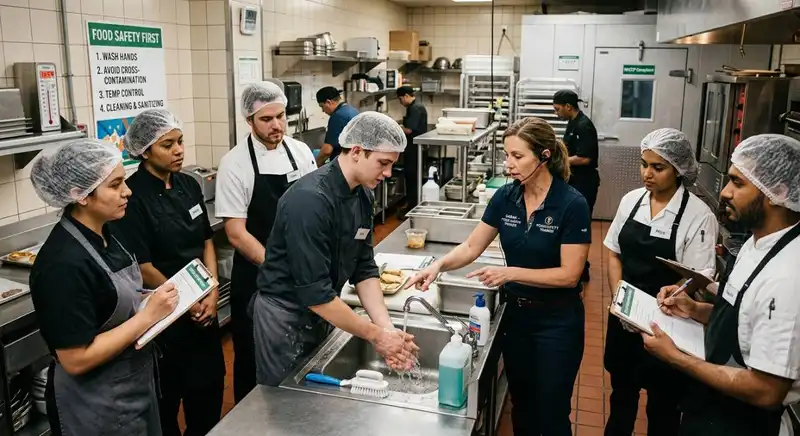
A food allergen management policy only works if employees know how to follow it during real service. A written policy may look strong on paper, but allergen safety can break down quickly if servers, cashiers, cooks, managers, bartenders, food runners, and delivery staff are not trained properly. Training turns the policy from a document into a daily operating habit.
Restaurant staff should understand that food allergies are not casual preferences. When a guest mentions a food allergy, employees should slow down, listen carefully, and follow the restaurant's process. The employee should not guess, assume, or give a quick answer just to keep the line moving. A simple mistake, such as saying a sauce is dairy-free without checking the recipe, can create serious risk.
Training should start during onboarding. Every new employee should learn the restaurant's allergen policy before handling guest orders or preparing food. This includes learning where allergen information is stored, how allergen orders are marked, when to involve a manager, and which kitchen procedures are required for special orders.
Different roles need different training -
1. Servers and cashiers - Front-of-house staff should know how to respond when a guest says they have a food allergy. They should repeat the allergen back to the guest, ask clarifying questions, check approved ingredient information, and alert a manager when needed. They should never say an item is safe unless the information has been verified.
2. Kitchen staff - Cooks and prep staff should know how to reduce cross-contact risk. This may include washing hands, changing gloves, using clean utensils, cleaning prep surfaces, separating ingredients, checking labels, and avoiding shared equipment when required.
3. Managers and shift leads - Managers should know how to verify allergen requests, review ingredient records, approve order modifications, communicate with the kitchen, and decide when a dish cannot be safely prepared. They should also know how to respond if a guest reports an allergic reaction.
4. Food runners and expediters - These employees should understand that allergen orders need extra attention at the pass. They should confirm the correct plate, avoid mixing up orders, and make sure allergen-related notes are not lost between the kitchen and the table.
5. Delivery and takeout teams - Staff handling off-premise orders should know how allergen notes appear in the POS, online ordering system, or delivery app. They should also check that labels, packaging, and order tickets match the guest's request.
Training should include clear examples. For instance, staff should know what to do if a guest asks whether fries are safe for someone with a shellfish allergy and the restaurant uses a shared fryer. They should know how to respond if a guest asks for a nut-free dessert but the dessert station uses shared toppings. They should also know what to do if a customer says they are very allergic to an ingredient after the order has already been entered.
Secure Your Supply, Safeguard Your Standards
Total Hospitality Safety with Altametrics
Prevent Cross-Contact
Preventing cross-contact is one of the most important parts of a food allergen management policy. Cross-contact happens when a food allergen is transferred from one food, surface, tool, or piece of equipment to another food. This can happen even when the allergen is not part of the recipe. For restaurant owners, this is a major concern because busy kitchens often use shared prep areas, shared fryers, shared utensils, and shared storage spaces.
Cross-contact can happen in small ways that are easy to miss. A cook may use the same tongs for shrimp and chicken. A cutting board may be used for bread before preparing a gluten-free order. A fryer may be used for breaded items, seafood, and fries. A spoon may touch a sauce with dairy and then be placed into another container. A dessert station may use the same scoop for nut toppings and non-nut toppings.
Restaurant owners should focus on these key controls -
1. Clean hands and gloves - Kitchen staff should wash their hands and change gloves before preparing an allergen-related order. Gloves can carry allergens from one task to another, especially during rush periods.
2. Clean utensils and equipment - Cooks should use clean knives, tongs, pans, cutting boards, mixing bowls, and serving tools for allergen orders. Reusing tools from another station can transfer allergens.
3. Clean prep surfaces - Prep tables, counters, and cutting boards should be cleaned and sanitized before preparing an allergen-sensitive order. Crumbs, sauces, oils, and small food particles can remain on surfaces.
4. Separate ingredients when possible - Ingredients used for allergen orders should be pulled from clean storage containers when possible. For example, using a fresh container of lettuce or toppings may be safer than using one that has already been handled during service.
5. Watch shared fryers and grills - Shared equipment is one of the biggest cross-contact risks. If fries are cooked in the same fryer as breaded chicken, seafood, or cheese-filled items, the restaurant should not describe them as free from those allergen risks. The same applies to shared grills, flat tops, ovens, and steam tables.
6. Label and store ingredients correctly - Allergens should be stored in a way that reduces accidental contact with other foods. Containers should be clearly labeled, sealed when needed, and placed to avoid spills or mixing.
7. Control toppings, sauces, and garnishes - Open topping stations can create hidden risk. Nuts, cheese, sesame seeds, croutons, sauces, and dessert toppings can easily spread through shared spoons, hands, or containers.
8. Use clear ticket communication - Allergen orders should be marked clearly on the kitchen ticket or POS screen. The kitchen should know which allergen is involved, which dish is affected, and whether a manager has reviewed the request.
The policy should also explain when the restaurant cannot safely modify an item. This is important because not every request can be handled safely in every kitchen. If a restaurant uses shared fryers, a guest with a serious seafood or wheat allergy may need to know that fried items carry a cross-contact risk. If a bakery prepares products with nuts, the restaurant may not be able to guarantee a nut-free dessert.
Honest communication matters. Staff should not promise that an item is allergen-free if the kitchen cannot control cross-contact. A safer response is to explain the risk clearly and involve a manager before the guest orders. This protects the guest from false confidence and protects employees from making promises they cannot support.
Cross-contact prevention should also be built into daily prep, not only special orders. Restaurants can reduce risk by organizing storage areas, using separate containers, labeling allergens, keeping prep tools clean, and training staff to avoid mixing utensils between ingredients. These habits make allergen handling easier when the restaurant gets busy.
Guest Communication Process
A strong food allergen management policy should explain how allergen information moves from the guest to the restaurant team and back to the guest. Many allergen mistakes happen because communication breaks down between the customer, server, cashier, manager, kitchen, food runner, delivery team, or online ordering system. A clear communication process helps make sure important details are not missed.
The process should begin the moment a guest mentions a food allergy. Staff should take the request seriously, stop and listen, and repeat the allergen back to the guest. This helps confirm that the employee heard the concern correctly. For example, if a guest says they have a shellfish allergy, the server should repeat, "You have a shellfish allergy, correct?" before discussing menu options.
The next step is verification. Employees should not answer from memory unless the restaurant's policy allows only trained staff to do so. Instead, they should check the approved allergen chart, recipe guide, supplier label, or manager-approved ingredient record. If there is any uncertainty, the employee should involve a manager before the order is placed.
A clear guest communication process should include these steps -
1. Listen to the guest's allergy concern - Staff should allow the guest to explain the allergen and any specific concern, such as shared fryers, sauces, toppings, or substitutions.
2. Repeat and confirm the allergen - Repeating the allergen helps avoid misunderstanding, especially in noisy dining rooms, drive-thrus, bars, and counter-service lines.
3. Check approved ingredient information - Staff should verify ingredients using the restaurant's official allergen records instead of guessing or relying on memory.
4. Involve a manager when needed - A manager should review serious allergen requests, unclear ingredient questions, or items with possible cross-contact risk.
5. Mark the order clearly - The allergen should be entered into the POS system, kitchen ticket, online order notes, or catering form in a way that is easy for the kitchen to see.
6. Communicate with the kitchen directly - For higher-risk orders, the server, cashier, or manager should verbally confirm the allergen request with the kitchen team instead of relying only on the ticket.
7. Confirm the finished order - Before the food is served, the manager, server, or expo should confirm that the order matches the allergen note and was prepared using the correct procedure.
8. Communicate honestly with the guest - Staff should explain what the restaurant can and cannot control. If shared equipment creates cross-contact risk, the guest should be told clearly before ordering.
This process is especially important for online ordering, takeout, and delivery. Guests may type allergen notes into a comment box, but those notes can be missed if the system does not highlight them clearly. Restaurant owners should make sure online ordering platforms, delivery app menus, catering forms, and POS systems allow allergen notes to appear where employees can see them.
Menu language also matters. A restaurant should avoid making broad promises unless it can support them. For example, saying "allergen-free" can create false confidence if the kitchen uses shared equipment. A better approach is to provide accurate ingredient information, explain cross-contact risk, and encourage guests with allergies to notify staff before ordering.
Servers and cashiers should also have simple language they can use. A clear script helps employees avoid guessing or making unsafe promises. For example - "Thank you for letting us know. I'm going to check our allergen information and confirm this with a manager before we place the order." This response shows the guest that the concern is being handled carefully.
Review, Update, and Enforce
A food allergen management policy should not be created once and forgotten. Restaurants change constantly. New menu items are added, suppliers change products, seasonal specials are introduced, employees leave, new staff are hired, and online ordering menus are updated. Each of these changes can affect allergen risk if the policy is not reviewed regularly.
For restaurant owners, the goal is to keep the policy accurate and active. A policy that sits in a binder but is not used during service will not protect guests or guide employees. The policy should be part of the restaurant's daily operations, training process, menu review, and manager checklist.
Start by setting a regular review schedule. Many restaurants should review their food allergen policy at least quarterly, or anytime there is a menu, recipe, supplier, or process change. A manager, chef, kitchen lead, or operations leader should be responsible for checking that ingredient records, recipe cards, allergen charts, POS notes, online menus, and staff training materials are still accurate.
The review process should focus on key questions -
1. Have any ingredients changed?
A new sauce, bread, dressing, dessert, marinade, or packaged product may contain allergens that were not in the previous version.
2. Have suppliers changed?
Switching vendors can change the allergen profile of a menu item, even if the item name stays the same.
3. Have new menu items or specials been added?
Limited-time offers, seasonal dishes, catering packages, and holiday menus should be reviewed before launch.
4. Are staff following the policy during service?
Managers should check whether allergen orders are being marked correctly, verified properly, and communicated clearly to the kitchen.
5. Are online menus accurate?
Dine-in menus, QR code menus, delivery app menus, catering menus, and online ordering platforms should match current ingredient information.
6. Do employees need refresher training?
Staff turnover, new hires, and menu changes make ongoing training necessary.
Enforcement is just as important as review. Restaurant owners should make it clear that food allergen procedures are required, not optional. Employees should know that guessing about ingredients, ignoring allergen notes, failing to involve a manager, or using shared tools without proper controls is not acceptable.
Managing food allergens is easier when your team has clear checklists, assigned tasks, and digital records instead of relying on memory or paper logs. Altametrics Restaurant Checklist helps restaurants assign tasks, track completion, create digital logs, and support food safety workflows such as allergen management, HACCP tracking, food storage, and inspection management.
To make your food allergen management policy easier to follow across every shift, learn more about Altametrics by clicking "Book a Demo" below.
Elevate Food Safety, Simplify Compliance!
Experience Seamless Food Safety with Altametrics!

Employee scheduling
Human Resource Management for Restaurants
Employee scheduling
Common Payroll Challenges in Restaurants

Sales forecasting
How to Use Restaurant Analytics to Improve Profitability

Restaurant management
The Complete Guide to Restaurant Reputation Management

Accounting payroll
Restaurant Cash Handling Procedures


Accounting payroll
How to Manage Restaurant Finances

Employee scheduling
How to Motivate Restaurant Staff

Software integration
10 Ways Technology Can Help Control Food Cost in Restaurants
Frequently Asked Questions
How can restaurants prevent food allergen cross-contact?
Restaurants can reduce cross-contact by using clean utensils, changing gloves, washing hands, cleaning prep surfaces, separating ingredients, labeling containers, checking shared equipment, and clearly marking allergen orders. Shared fryers, grills, cutting boards, tongs, and topping stations should be reviewed carefully.
What should be included in an allergen order note?
An allergen order note should clearly identify the allergen, the affected menu item, the requested modification, and whether a manager has reviewed the order. The note should be easy for kitchen staff, expediters, and food runners to see before the food is prepared and served.
What are the major food allergens restaurants should track?
Restaurants should track major allergens such as milk, eggs, fish, shellfish, tree nuts, peanuts, wheat, soy, and sesame. These allergens can appear in obvious ingredients like cheese, bread, shrimp, or peanuts, but they may also appear in sauces, dressings, marinades, desserts, spice blends, and packaged products.
What is the role of managers in enforcing allergen procedures?
Managers should make sure staff follow the written policy, verify allergen requests, check ingredient information, review kitchen procedures, and correct mistakes quickly. They should also lead refresher training and make allergen safety part of daily shift management.