How can restaurants reduce inventory waste?
Restaurants can reduce inventory waste by improving ordering habits, using FIFO storage, tracking spoilage, reviewing prep levels, training staff on portion control, and adjusting par levels based on actual usage. Waste logs should be reviewed regularly to identify repeated problems.
How to Improve Inventory Management for Restaurants

Inventory Control Basics
Inventory management for restaurants is the process of controlling every product that moves through the business, from the moment it is ordered to the moment it is sold, wasted, transferred, or thrown away. It is not just a back-of-house counting task. It is a financial control system that helps restaurant owners understand how inventory affects food cost, cash flow, menu pricing, waste, and profitability.
For many restaurants, inventory problems do not happen because one large mistake was made. They usually happen through small daily gaps. A case of produce expires before it is used. A high-cost protein is over-portioned during prep. A supplier invoice includes a price increase that no one reviews. A manager places an order based on habit instead of actual usage. A busy shift runs out of a key ingredient because the count was wrong. Each issue may seem minor on its own, but over time, these gaps increase food cost and reduce profit.
Strong inventory management gives owners clearer answers to important operational questions -
- How much product do we have on hand?
- How much are we using each week?
- Are we ordering too much or too little?
- Are supplier prices changing?
- Are we wasting product before it becomes revenue?
- Are our menu prices still aligned with ingredient costs?
- Are actual usage levels matching expected recipe usage?
The aim is to have the right amount of inventory at the right time. Too much inventory ties up cash, increases spoilage, and creates storage problems. Too little inventory leads to stock-outs, rushed purchases, inconsistent menu availability, and disappointed guests.
For restaurant owners, inventory management should connect directly to numbers. Counts should support ordering decisions. Ordering should support par levels. Par levels should reflect sales trends. Waste logs should explain variance. Supplier tracking should protect margins. Weekly reviews should show whether food cost is improving or getting worse.
When inventory management is done well, it becomes easier to control cost without cutting quality. Owners can make decisions based on data instead of guesswork, protect margins before problems grow, and build a more predictable operation.
Start With Consistent Inventory Counts
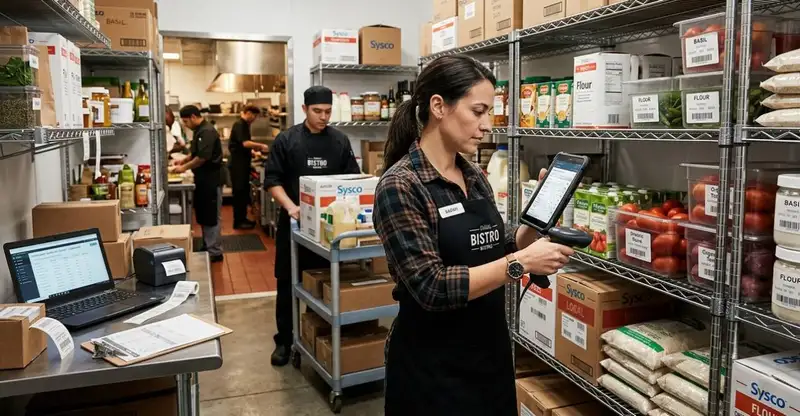
Better inventory management starts with one basic rule - restaurants cannot control what they do not count accurately. If inventory counts are inconsistent, every number that follows becomes unreliable. Food cost, ordering, waste tracking, variance reports, and par levels all depend on accurate starting inventory and ending inventory.
Inventory should be counted on the same day, at the same time, using the same units, and following the same storage path. For example, if counts happen every Sunday night after close, that schedule should stay consistent. If one week is counted before a delivery and the next week is counted after a delivery, the numbers will not compare correctly.
A strong counting process should include a few practical controls -
1. Organize storage before counting - Walk-ins, dry storage, freezers, liquor rooms, and prep areas should be cleaned and organized before the count begins. Similar items should be grouped together so staff are not counting the same product twice or missing items stored in different places.
2. Use standard units of measurement - Items should be counted the same way each time. If chicken is counted by case, tomatoes by pound, and sauces by gallon, those units should stay consistent. Switching between cases, eaches, pounds, and ounces creates errors that affect ordering and food cost.
3. Count opened and unopened products correctly - Open cases, partial containers, and prepped ingredients should be estimated carefully. A half-used case or partially full container still has value and should not be ignored. High-cost items like proteins, seafood, alcohol, and specialty ingredients should receive extra attention.
4. Assign clear counting responsibilities - Staff should know which area they are responsible for counting. One person may count dry storage while another handles the walk-in or bar inventory. This reduces confusion and makes it easier to hold the process accountable.
Consistent counts turn inventory from a rough estimate into useful data. Once owners trust the numbers, they can make better decisions about purchasing, portion control, menu pricing, and waste reduction. Without reliable counts, even the best inventory system will produce weak results.
Set Par Levels Based on Actual Sales Data
Par levels help restaurant owners decide how much inventory should be kept on hand at any given time. A par level is the target amount of product needed to meet demand between deliveries without overstocking. When par levels are accurate, the restaurant has enough product to serve guests, but not so much that cash is sitting on shelves or food is spoiling in storage.
The mistake many restaurants make is setting par levels based on habit. A manager may order what we usually order or keep the same stock levels even when sales patterns change. This creates problems because restaurant demand is not always the same. Weekends may require more product than weekdays. Summer may increase beverage sales. Holidays, local events, catering orders, weather, and menu changes can all affect how much inventory is needed.
A better approach is to use actual sales and usage data. Owners should look at how much of each product is used during a normal week, then compare that number to delivery schedules and upcoming demand. For example, if a restaurant uses 80 pounds of chicken between Monday and Thursday, and the next delivery does not arrive until Friday, the par level must support that usage with a small buffer. If the restaurant only uses 20 pounds of a specialty ingredient per week, keeping 80 pounds on hand may create unnecessary waste.
Par levels should be reviewed using a few key data points -
1. Average weekly usage - Review how much product is actually used over several weeks instead of relying on one busy or slow period.
2. Supplier delivery schedule - Products delivered twice a week may need lower par levels than products delivered once a week.
3. Sales trends by day-part and menu item - If certain items sell more during lunch, dinner, weekends, or seasonal periods, inventory should reflect those patterns.
4. Shelf life and storage capacity - Fresh produce, dairy, seafood, and prepared items should have tighter par levels than shelf-stable products.
5. Emergency buffer - A small buffer can protect the restaurant from unexpected sales spikes, late deliveries, or supplier shortages.
Par levels are not permanent. They should be adjusted as sales volume, menu mix, supplier reliability, and seasonality change. When par levels are tied to real data, ordering becomes more accurate, waste becomes easier to control, and owners gain better visibility into how inventory supports daily operations.
Improve Ordering Habits and Reduce Guesswork
Better inventory management depends on better ordering habits. Even if counts are accurate and par levels are set correctly, restaurants can still lose money when orders are placed based on habit, urgency, or guesswork. Ordering should be a controlled process that compares what the restaurant has, what it needs, what is expected to sell, and when the next delivery will arrive.
A rushed order often leads to overbuying, missed items, duplicate purchases, or expensive emergency orders. Over-ordering ties up cash and increases spoilage. Underordering creates stockouts, menu item shortages, unhappy guests, and pressure on managers to buy from higher-cost suppliers.
A stronger ordering process should start with four basic questions -
1. What do we currently have on hand?
The latest inventory count should be reviewed before placing an order. If managers order without checking current stock, the restaurant may buy products it already has or miss items that are running low.
2. What are our par levels?
Par levels give managers a target amount to order toward. Instead of guessing, the order should close the gap between current inventory and the amount needed for the next sales period.
3. What demand is expected this week?
Ordering should reflect upcoming sales forecasts, reservations, catering orders, promotions, weather, local events, and historical day-of-week trends. A normal Tuesday order should not look the same as an order before a holiday weekend or major event.
4. When is the next supplier delivery?
Lead time matters. If the next delivery is two days away, the restaurant may need less product than if the next delivery is five days away. Delivery frequency should directly affect order size.
Restaurant owners should also create approved order guides for each vendor. An order guide helps managers buy the right products, from the right supplier, in the right pack size, at the expected price. It also reduces the risk of substitutions, inconsistent product quality, and off-contract purchases.
Weekly purchasing reviews are another important control. Owners should compare what was ordered against what was sold, wasted, or left over. If the same item is repeatedly overstocked, the par level or ordering habit may need to change. If the restaurant keeps running out of the same product, the forecast, count accuracy, or supplier schedule may need review.
Good ordering is not about buying less. It is about buying smarter. When orders are based on inventory counts, par levels, sales trends, and supplier timing, restaurants can reduce waste, protect cash flow, and keep the right products available for guests.
Track Supplier Performance and Invoice Accuracy

Inventory management does not stop once an order is placed. Restaurant owners also need to track what suppliers deliver, when they deliver it, what condition it arrives in, and whether the invoice matches the agreed price. If this step is skipped, food cost can increase even when ordering habits look strong on paper.
Supplier tracking matters because small changes can quickly affect margins. A vendor may raise the price of chicken by a few dollars per case. A delivery may arrive short two cases of produce. A substitute product may have a different pack size or lower yield. An invoice may include the wrong price, wrong quantity, or extra charge. If no one checks these details, the restaurant pays more without realizing it.
A strong supplier tracking process should include three key checks -
1. Compare the purchase order to the delivery - Staff should verify that the products delivered match what was ordered. This includes item name, quantity, pack size, brand, and condition. Missing items, damaged products, poor quality, or unexpected substitutions should be documented before the invoice is approved.
2. Compare the delivery receipt to the invoice - The invoice should match what was actually received. If the restaurant ordered five cases but only received four, the invoice should not charge for five. If an item was substituted, the price and pack size should be reviewed before accepting the cost.
3. Track price changes over time - Ingredient prices can move quickly, especially for proteins, dairy, produce, seafood, and oil. Owners should review price changes weekly so they can see when food cost is rising. This helps with menu pricing, vendor negotiations, portion reviews, and purchasing decisions.
Restaurant owners should also monitor supplier reliability. Late deliveries can disrupt prep. Frequent substitutions can affect recipe consistency. Poor product quality can increase waste. Inaccurate invoices can create accounting problems. These issues should be tracked by supplier so owners can decide whether to renegotiate terms, adjust ordering schedules, or consider alternative vendors.
The most important rule is simple- do not treat invoices as automatic. Every invoice affects food cost. A restaurant may work hard to reduce waste and improve portion control, but if supplier prices and invoice errors are not reviewed, profit can still leak out of the business.
When supplier performance is tracked consistently, owners gain better control over purchasing costs. They can catch errors faster, understand cost increases earlier, and make stronger decisions about vendors, pricing, and inventory planning.
Transform Your Restaurant Operations Now!
Effortless Inventory Tracking with Altametrics!
Monitor Waste, Spoilage, and Inventory Variance
Improving inventory management for restaurants requires more than knowing what was purchased. Owners also need to know what happened to the product after it entered the building. If food is wasted, spoiled, over-portioned, stolen, incorrectly prepped, or thrown away without being tracked, the inventory numbers will never tell the full story.
Waste is one of the clearest signals that inventory control needs attention. Some waste is normal in a restaurant, but unmanaged waste becomes expensive fast. A few pounds of produce thrown away each day, extra sauce made before a slow shift, or proteins trimmed incorrectly during prep can quietly raise food cost without showing up as an obvious problem.
Restaurant owners should separate waste into clear categories -
1. Spoilage - Product expires, goes bad, or loses quality before it can be sold. This may point to overordering, poor storage, weak rotation, or inaccurate par levels.
2. Prep waste - Food is lost during trimming, cutting, cooking, or batch preparation. This may show that recipes, prep procedures, or staff training need to be reviewed.
3. Overproduction - Too much food is prepared for the actual demand. This often happens when prep sheets are based on habit instead of sales forecasts.
4. Portioning errors - Staff use more product than the recipe requires. Even small portioning mistakes can create major cost increases when repeated across hundreds of orders.
5. Comped, voided, or returned items - Food that is made but not paid for should still be tracked because it uses inventory and affects cost.
Inventory variance is another important number to watch. Variance is the difference between what the restaurant expected to use and what it actually used. For example, if recipe data shows the restaurant should have used 50 pounds of cheese based on sales, but the inventory count shows 65 pounds were used, the 15-pound difference needs investigation.
That gap could come from over-portioning, waste, theft, inaccurate counts, incorrect recipes, or unrecorded transfers. Without variance tracking, owners may only see that food cost increased, but they will not know why.
A simple weekly waste and variance review can help owners find patterns. If lettuce spoilage is high every week, par levels may be too high. If steak usage is above expected levels, portion control may need attention. If fryer oil costs keep rising, filtering schedules or cooking practices may need review.
Food Cost and Menu Decisions
Inventory management becomes more valuable when it is connected to food cost and menu performance. Counting products is important, but the real goal is to understand how ingredient usage affects profitability. Restaurant owners need to know whether the food they buy is being turned into profitable sales, wasted before it reaches the guest, or used in ways that reduce margins.
Food cost is one of the most important numbers tied to inventory. A restaurant may have strong sales, but if ingredient costs are rising or portions are not controlled, profit can shrink quickly. That is why owners should compare inventory data with sales data, recipe costs, menu prices, and waste logs. These numbers work together to show whether the menu is priced and managed correctly.
A practical inventory review should answer questions like -
1. Are ingredient costs changing?
If the cost of beef, chicken, dairy, produce, or cooking oil increases, menu margins may change immediately. Owners should track these price changes so they can adjust pricing, portions, specials, or vendor choices before profit is affected.
2. Are recipes still accurate?
Recipe costs should reflect the current cost of each ingredient, not outdated prices. If a burger was priced using last year's beef cost, the menu price may no longer support the target margin.
3. Are high-selling items still profitable?
A popular menu item is not always a profitable one. If an item sells often but uses expensive ingredients, creates prep waste, or requires large portions, it may need a price adjustment or recipe review.
4. Are low-selling items creating waste?
Slow-moving menu items can increase spoilage if ingredients are not used elsewhere. Owners should review whether these items deserve to stay on the menu or need to be redesigned.
5. Are actual portions matching recipe standards?
If inventory usage is higher than expected, staff may be using more product than the recipe allows. This can happen with proteins, cheese, sauces, toppings, alcohol, and sides.
Inventory data also helps restaurant owners make smarter menu decisions. If an ingredient is used across several profitable items, it may be worth keeping in stock. If an ingredient is expensive, spoils quickly, and only supports one slow-moving item, it may be hurting the operation. This type of review helps owners simplify purchasing, reduce waste, and improve menu profitability.
The key is to treat inventory as a financial tool, not just an operational task. When inventory data is connected to food cost and menu decisions, owners can see which items protect margins, which items need attention, and where small changes can improve profit without lowering quality.
Use Technology to Improve Inventory Management
Technology can make inventory management for restaurants more accurate, faster, and easier to review. Manual spreadsheets and paper count sheets may work for a small operation, but they often create problems as the restaurant grows. Counts can be entered incorrectly, invoices may be missed, par levels may not update, and managers may spend too much time chasing numbers instead of using them to make decisions.
The right inventory technology helps restaurant owners connect the pieces of the process. Instead of looking at purchasing, sales, waste, and food cost separately, owners can see how each number affects the others. This gives the business a clearer view of what is being ordered, what is being used, what is being wasted, and where profit may be leaking.
Restaurant owners should look for technology that improves these areas -
1. Digital inventory counts - Mobile or tablet-based counts help staff enter inventory directly into the system. This reduces duplicate data entry and makes it easier to count by storage area, item category, or supplier.
2. POS and sales integration - When inventory connects with sales data, owners can compare menu item sales against ingredient usage. This helps show whether actual usage matches expected recipe usage.
3. Recipe costing and depletion tracking - Technology can connect menu items to ingredient quantities. When an item is sold, the system can estimate how much product should have been used. This makes variance easier to identify.
4. Automated par levels and reorder suggestions - Inventory software can use sales history, current stock, and supplier schedules to suggest what needs to be ordered. This reduces guesswork and helps prevent overbuying or stockouts.
5. Invoice and supplier tracking - Digital invoice tracking helps owners monitor price changes, compare vendor costs, and catch invoice errors. This is important because even small price increases can affect food cost when repeated across high-volume ingredients.
6. Waste and variance reporting - Technology makes it easier to record waste, spoilage, transfers, and usage differences. Owners can review patterns by item, location, shift, or supplier instead of relying on memory.
For restaurant owners who want stronger control over inventory, purchasing, and cost management, Altametrics helps turn inventory data into clearer operational decisions. Instead of relying on disconnected spreadsheets or manual tracking, owners can use better visibility to understand stock levels, supplier activity, product movement, and cost changes across the business.
With Altametrics, inventory management becomes part of a larger restaurant control system. Owners can improve how they monitor usage, reduce waste, review purchasing patterns, and make more informed decisions before food cost problems grow. To learn how Altametrics can help your restaurant improve inventory accuracy, protect margins, and manage operations with more confidence, click "Book a Demo" below.
Must-Read Content

Theoretical vs actual
Theoretical vs Actual Food Cost Formula for Restaurants
Multi location restaurant inventory
A Complete Guide to Multi-Location Restaurant Inventory

Bar and liquor inventory
How to Manage Bar and Liquor Inventory
Stock control
Stock Control Best Practices for Restaurant Owners
Perishable food inventory
Perishable Food Inventory Management for Restaurant Owners
Frequently Asked Questions
How can restaurants prevent over-ordering?
Restaurants can prevent over-ordering by using par levels, reviewing current inventory before placing orders, checking sales forecasts, and tracking actual usage. Orders should be based on data, not habit or guesswork.
What are common signs of poor inventory management?
Common signs include frequent stock-outs, high food waste, rising food cost, cluttered storage areas, duplicate orders, missing invoices, inconsistent counts, expired products, and managers placing orders without reviewing actual inventory.
What is inventory variance?
Inventory variance is the difference between what a restaurant expected to use and what it actually used. For example, if sales data shows that 50 pounds of cheese should have been used, but inventory counts show 65 pounds were used, the 15-pound difference is the variance.
How can technology improve inventory management for restaurants?
Technology can improve inventory management by digitizing counts, tracking supplier invoices, connecting inventory to sales data, monitoring recipe usage, identifying waste patterns, and suggesting reorder quantities. This reduces manual work and gives owners better visibility into daily operations.