What is bar and liquor inventory?
Bar and liquor inventory is the process of tracking all beverage-related products in a restaurant or bar. This includes liquor, beer, wine, mixers, garnishes, open bottles, backup stock, transfers, waste, spills, comps, and actual usage. The goal is to understand what was purchased, what was sold, what should remain, and what may be missing.
How to Manage Bar and Liquor Inventory

Bar Inventory Explained
Bar and liquor inventory is more than counting bottles at the end of the week. For restaurant owners, it is the process of tracking every beverage-related item that enters, moves through, and leaves the business. This includes liquor, beer, wine, mixers, garnishes, syrups, juices, open bottles, backup stock, transfers, waste, spills, comps, and actual product usage.
A strong bar and liquor inventory process answers four important questions - What did you buy? What did you sell? What should still be on hand? What is missing? Without clear answers, it becomes difficult to know whether the bar is truly profitable or simply generating sales while product is being lost in the background.
For example, a bottle of vodka may be purchased, stocked, opened, used in multiple cocktails, transferred to another bar station, spilled during service, or partially wasted because of poor storage. If those movements are not tracked, the owner only sees sales at the register, not the full cost of what happened behind the bar. That gap can lead to shrinkage, inaccurate liquor cost, and weaker margins.
Bar inventory should also include items that are easy to overlook. Mixers, garnishes, juices, bitters, and specialty ingredients may seem small compared to premium liquor, but they still affect drink cost and profitability. If recipes are not standardized or usage is not reviewed, these smaller items can quietly increase costs over time.
Restaurant owners need to understand how much product was purchased, how much was used, how much should remain, and whether the numbers match actual sales. When the count, sales data, and usage records line up, owners can make better decisions about ordering, pricing, staffing, training, and loss prevention.
The Profit Impact of Inventory
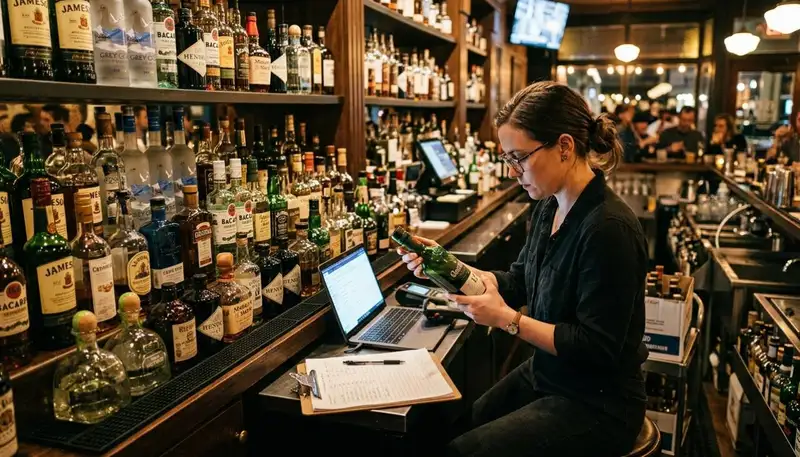
Liquor sales can be one of the strongest profit drivers in a restaurant, but only when inventory is controlled. A busy bar may bring in strong revenue, but revenue does not always mean profit. If product is being wasted, over-poured, stolen, miscounted, or ordered without a plan, the restaurant can lose money even when drink sales look high.
For restaurant owners, liquor inventory matters because it connects product movement directly to margin control. Here are the main reasons it impacts profit -
1. Every ounce has a cost
Each pour affects the profitability of a drink. If a cocktail recipe calls for 1.5 ounces of liquor but the bartender pours 2 ounces, that extra half ounce reduces the margin. One over-pour may seem small, but repeated over hundreds of drinks, it can create a serious profit leak.
2. Unrecorded waste hides true losses
Broken bottles, spills, spoiled wine, draft beer foam, incorrect drinks, and discarded product should all be recorded. If they are not, the numbers will not match. The owner may see lower inventory but have no clear explanation for where the product went.
3. Comps and free drinks reduce revenue
Comps can be useful for guest recovery or hospitality, but they need approval and tracking. When free drinks are given without a record, the restaurant loses product without matching sales. This makes liquor cost harder to understand and easier to underreport.
4. Poor tracking makes liquor cost unclear
Looking only at total beverage sales and total purchases does not show the full picture. Beer, wine, spirits, and cocktails may each have different problems. Draft beer may lose product through foam, wine may be wasted through spoilage, and liquor may be affected by over-pouring or theft. Without detailed tracking, these issues get combined into one unclear number.
5. Inventory affects purchasing and cash flow
Ordering too much ties up cash in bottles sitting on the shelf. Ordering too little leads to stock-outs, missed sales, and frustrated guests. Accurate inventory helps owners order based on real usage instead of guesswork.
In simple terms, liquor inventory is a profit protection tool. It helps restaurant owners see where money is being made, where product is being lost, and what needs to change to protect margins.
Main Causes of Liquor Shrinkage
Liquor shrinkage happens when the amount of product on hand is lower than what the restaurant's sales, purchases, and inventory records say it should be. In simple terms, it means product is missing, wasted, or used without being properly recorded. For restaurant owners, shrinkage is one of the biggest reasons bar profit gets weaker over time.
The challenge is that shrinkage does not always come from one obvious problem. It can come from small habits, loose procedures, poor training, weak controls, or dishonest behavior. To protect margins, owners need to understand where the loss is coming from.
1. Over-pouring
Over-pouring is one of the most common causes of liquor loss. If bartenders pour more than the standard recipe, the restaurant gives away extra product without charging for it. This may happen because of speed, habit, lack of training, or an attempt to please guests. Even a small overpour can reduce profit when repeated across many drinks.
2. Unrecorded comps and free drinks
Complimentary drinks should always be approved and tracked. When staff give away drinks without recording them, inventory drops but sales do not increase. This creates a gap between expected usage and actual usage.
3. Spills, breakage, and waste
Mistakes happen during service. Bottles break, drinks are made incorrectly, wine spoils, kegs foam, and ingredients expire. The problem is not always the waste itself. The bigger issue is when waste is not documented. Without records, owners cannot separate normal waste from repeated problems.
4. Theft or unauthorized use
Theft can include full bottles, cash sales not entered into the POS, drinks made without tickets, or product used after hours. Owners should not assume theft is the cause of every variance, but they should have controls in place to reduce opportunity and identify patterns.
5. Incorrect recipes or inconsistent pours
If drink recipes are not documented, each bartender may make the same cocktail differently. One employee may use more liquor, another may use more mixers, and another may skip standard measurements. This makes it difficult to control cost and compare actual usage against expected usage.
6. Poor receiving and transfer records
Shrinkage can also happen before the product reaches the guest. Vendor delivery errors, missing invoice checks, unrecorded transfers between locations, and bottles moved between bar stations can all create inventory gaps. If movement is not tracked, owners may think product is missing when it was simply recorded incorrectly.
Once owners know whether shrinkage is coming from over-pouring, waste, theft, poor tracking, or weak procedures, they can fix the process and protect bar profit more effectively.
Build a Consistent Counting Process
A strong bar inventory process does not need to be complicated, but it does need to be consistent. Many restaurants lose control of liquor inventory because counts are done only when there is a problem, when a manager has extra time, or when the month ends. By then, it is harder to know when the loss happened, who was working, what was sold, and what changed.
The best approach is to treat counting as a regular operating routine, not a once-in-a-while task.
Start with a clear count schedule. High-volume bars may need daily spot checks on premium liquor, draft beer, wine, and fast-moving items. Most restaurants should complete a full bar inventory at least once per week. Monthly counts are useful for financial reporting, but they are usually too far apart to catch problems early. Weekly counting gives owners and managers a better chance to spot shrinkage before it becomes expensive.
Next, organize the bar before the count begins. Bottles should be grouped by category, brand, and size. Backup bottles should be stored in the same place each time. Open bottles should be measured using a consistent method, whether that means tenthing, weighing, or using inventory software. If one manager estimates open bottles differently from another manager, the count will not be reliable.
The count should also include more than full bottles. Restaurant owners should make sure the team tracks -
- Open liquor bottles
- Beer bottles and cans
- Draft kegs
- Wine bottles
- Mixers and juices
- Garnishes and specialty ingredients
- Backup stock
- Transfers between bars, storage rooms, or locations
- Waste, spills, breakage, and comps
Responsibility matters too. Owners should assign specific people to count inventory and review the results. If everyone is responsible, no one is truly accountable. One person may complete the count, but a manager or owner should review variances, compare the numbers against sales, and investigate anything unusual.
The most important part of the process is using the same method every time. Counts should happen on the same day, at the same time, in the same order, with the same measurement rules. This makes the numbers easier to compare week after week.
When bar inventory is counted consistently, restaurant owners gain better control over product movement. They can see what was purchased, what was sold, what remains, and what does not match. That visibility helps reduce waste, prevent shrinkage, improve ordering, and protect liquor profit before losses become harder to fix.
Standardize Recipes, Pour Sizes, and Staff Procedures

The fastest way to lose liquor profit is to let every bartender make drinks their own way. One bartender may pour heavy to build regulars. Another may eyeball measurements during a rush. Another may use extra ingredients because the recipe is unclear. Even when the team has good intentions, inconsistent drink preparation creates inconsistent costs.
Standardization protects the bar from that problem. It gives every employee the same rules for how drinks should be made, measured, recorded, and approved.
A strong bar should have written recipes for every cocktail on the menu. Each recipe should list the exact liquor amount, mixer amount, garnish, glassware, preparation steps, and selling price. This helps the restaurant control cost and deliver the same guest experience every time. If one margarita uses 1.5 ounces of tequila and another uses 2 ounces, the restaurant is not only losing product. It is also creating an uneven guest experience.
Pour sizes should also be clear. Owners should define standard pours for neat drinks, rocks pours, wine pours, draft beer, and cocktails. For example, a restaurant may set a 1.5-ounce standard liquor pour, a 5-ounce wine pour, and a 16-ounce draft beer pour. The exact standards may vary by concept, but the key is making sure every bartender follows the same measurement.
Training is just as important as documentation. Recipes sitting in a binder or spreadsheet do not protect profit unless the team uses them during service. Bartenders should be trained on proper pours, approved substitutions, waste reporting, comp procedures, and when manager approval is required. New employees should learn these standards before they work independently behind the bar.
Restaurant owners should also make it easy for staff to follow the process. That may include using jiggers, measured pour spouts, recipe cards, POS modifiers, approved comp buttons, and waste logs. When the right tools are in place, employees are less likely to guess, skip steps, or create their own habits.
Standardization does not remove hospitality from the bar. It simply creates boundaries. Staff can still provide great service, recommend drinks, and build guest relationships, but they do it within a system that protects the restaurant's margins.
When recipes, pour sizes, and staff procedures are clear, liquor usage becomes easier to measure. Variance becomes easier to explain. Training becomes more consistent. Most importantly, every drink sold has a better chance of producing the profit it was priced to deliver.
Transform Your Restaurant Operations Now!
Effortless Inventory Tracking with Altametrics!
Expected and Actual Usage
Inventory counts only become useful when restaurant owners compare them against what should have happened. This is where variance tracking matters. Liquor variance is the difference between expected usage and actual usage. Expected usage is what the restaurant should have used based on POS sales, recipes, and standard pours. Actual usage is what the restaurant really used based on beginning inventory, purchases, transfers, and ending inventory.
For example, if the POS shows that the bar sold 100 margaritas, and each margarita should use 1.5 ounces of tequila, the expected tequila usage is 150 ounces. If the inventory count shows that 180 ounces were actually used, there is a 30-ounce variance. That gap may come from over-pouring, spills, unrecorded comps, incorrect recipes, theft, or inaccurate counts.
The value of tracking variance is that it turns guessing into investigation. Instead of simply saying "liquor cost is high" owners can ask better questions -
- Which product has the largest variance?
- Is the issue happening with liquor, beer, wine, or mixers?
- Is one shift showing more loss than another?
- Are certain drinks being over-poured?
- Are comps, spills, and waste being recorded correctly?
- Are recipes and POS buttons matched properly?
Variance should be reviewed regularly, not only at the end of the month. A weekly review gives owners enough time to spot problems while the details are still fresh. Managers can check who worked, what was sold, what was wasted, what was transferred, and whether any unusual events affected usage.
Owners should also avoid treating every variance as theft. Sometimes the issue is a bad recipe, an incorrect bottle size in the system, a missing invoice, a rushed count, or a bartender who needs more training. The goal is to find the cause, not jump to conclusions.
A strong variance process helps protect profit because it shows where product is leaking. When expected usage and actual usage do not match, the numbers are telling the owner to look closer. Over time, this helps reduce waste, tighten procedures, improve staff accountability, and keep liquor cost under control.
Purchasing, Par Levels, and Storage Controls
Managing bar and liquor inventory is not only about what happens during service. Profit can also be lost before a drink is ever poured. Poor purchasing, weak storage controls, and unclear par levels can lead to overstocking, stock-outs, waste, theft, and cash tied up in slow-moving bottles.
Restaurant owners need a purchasing and storage process that keeps enough product on hand without allowing inventory to become disorganized or uncontrolled. Here are the main areas to focus on -
1. Set par levels based on real usage
Par levels show the minimum amount of product the restaurant should keep on hand to meet normal demand. These numbers should be based on sales history, menu mix, seasonality, events, and delivery schedules. If par levels are too high, the restaurant may have too much cash sitting on the shelf. If they are too low, the bar may run out of key products during service.
2. Order from data, not guesswork
Managers should not order liquor based only on habit or personal judgment. Purchasing should be based on current inventory, recent usage, upcoming demand, and vendor delivery timing. This helps owners avoid unnecessary orders, emergency purchases, and duplicate stock.
3. Check vendor invoices carefully
Every delivery should be matched against the invoice and purchase order. Staff should verify bottle sizes, quantities, brands, prices, and any missing or damaged items before products are accepted and stored. Small receiving errors can create inventory gaps and affect liquor cost if they are not caught early.
4. Control access to high-value inventory
Premium liquor, rare bottles, and high-cost wine should be stored securely. Not every employee needs access to backup stock or locked storage areas. Limiting access helps reduce theft, unauthorized use, and unexplained shrinkage.
5. Keep storage organized and consistent
A disorganized liquor room makes counting harder and increases the risk of over-ordering. Bottles should be grouped by category, brand, size, and location. Fast-moving items should be easy to access, while expensive or slow-moving products should be clearly separated and monitored.
6. Use first-in, first-out rotation
Beer, wine, juices, mixers, garnishes, and other perishable bar items should be rotated using the first-in, first-out method. Older product should be used before newer product. This reduces spoilage, waste, expired ingredients, and unnecessary reordering.
7. Track transfers between storage, bars, and locations
If product moves from the storage room to the main bar, from one bar station to another, or from one restaurant location to another, that movement should be recorded. Untracked transfers can look like missing inventory and make variance harder to explain.
Strong purchasing and storage controls help restaurant owners protect both cash flow and profit margins. When par levels are accurate, orders are based on usage, storage is secure, and product movement is tracked, the bar becomes easier to manage and less likely to lose profit through preventable mistakes.
Use Inventory Data to Protect Bar Profit
Bar and liquor inventory should not end with a count sheet. The real value comes from using the numbers to make better decisions. When owners review inventory data regularly, they can see which products are profitable, which items are being wasted, where shrinkage is happening, and whether the bar is operating the way it should.
To protect profit long term, restaurant owners should focus on these key areas -
1. Review liquor cost percentage regularly
Liquor cost percentage shows how much the restaurant spends on liquor compared to how much it earns from liquor sales. If the percentage is rising, it may point to over-pouring, price changes, waste, theft, poor pricing, or inaccurate counts. Owners should review this number weekly or monthly so problems do not go unnoticed.
2. Watch for shrinkage trends
One bad count may be a mistake. A repeated pattern is a warning sign. If the same bottle, category, shift, or bar station keeps showing variance, owners should investigate. Trend tracking helps separate random errors from ongoing profit leaks.
3. Compare top-selling drinks with actual usage
High-selling drinks should be reviewed closely because small recipe or pour errors can create large losses. If a cocktail sells often but uses more product than expected, the restaurant may need to review the recipe, train bartenders, adjust pricing, or improve pour controls.
4. Identify slow-moving inventory
Bottles that sit too long can tie up cash and create waste. Slow-moving liquor, wine, beer, mixers, and specialty ingredients should be reviewed before placing new orders. Owners may need to adjust the menu, run limited-time promotions, remove low-performing items, or reduce par levels.
5. Use data to improve staff training
Inventory data can show where staff may need support. High variance may point to inconsistent pours, missed waste logs, incorrect comps, or unclear recipes. Instead of only correcting employees after a mistake, owners can use the data to create focused training and clearer procedures.
6. Adjust pricing when costs change
Bottle prices, vendor costs, and ingredient costs can change over time. If menu prices stay the same while product costs increase, margins shrink. Owners should use inventory and purchasing data to review drink pricing and make sure each item still supports the target profit margin.
7. Turn inventory review into a weekly habit
The best inventory systems work because they are used consistently. Owners should create a weekly review that looks at sales, purchases, ending inventory, waste, comps, transfers, variance, and liquor cost. This routine keeps the bar visible instead of allowing problems to build quietly.
Long-term bar profit depends on control, not guesswork. When restaurant owners use inventory data to guide purchasing, pricing, training, and loss prevention, they can reduce waste, improve accountability, and protect one of the most valuable profit centers in the restaurant.
Must-Read Content

Inventory management for restaurants
How to Improve Inventory Management for Restaurants

Theoretical vs actual
Theoretical vs Actual Food Cost Formula for Restaurants
Multi location restaurant inventory
A Complete Guide to Multi-Location Restaurant Inventory
Stock control
Stock Control Best Practices for Restaurant Owners
Perishable food inventory
Perishable Food Inventory Management for Restaurant Owners
Frequently Asked Questions
How often should a restaurant count bar inventory?
Most restaurants should complete a full bar inventory at least once per week. High-volume bars may also need daily spot checks on premium liquor, fast-moving bottles, draft beer, and wine. Monthly counts are useful for financial reporting, but they may not catch shrinkage quickly enough.
What causes liquor shrinkage?
Liquor shrinkage can come from overpouring, theft, unrecorded comps, spills, broken bottles, spoiled wine, draft beer waste, incorrect recipes, vendor errors, and untracked transfers. Shrinkage does not always mean theft. It often comes from weak procedures or poor documentation.
What is liquor variance?
Liquor variance is the difference between expected usage and actual usage. Expected usage is based on POS sales, recipes, and standard pours. Actual usage is based on beginning inventory, purchases, transfers, waste, and ending inventory. A large variance may point to overpouring, waste, theft, incorrect recipes, or counting errors.
How do par levels help with liquor inventory?
Par levels help restaurants keep the right amount of product on hand. They prevent over-ordering, reduce stockouts, and improve cash flow. Par levels should be based on sales history, usage trends, vendor delivery schedules, seasonality, and upcoming events.