Restaurant Forecasting Basics
At its core, restaurant forecasting answers one important question - What should we prepare for next? The answer affects almost every part of the business. If sales are expected to increase, managers may need more staff, more prep, higher inventory levels, and stronger vendor coordination. If demand is expected to slow down, owners may need to reduce labor hours, adjust purchasing, limit overproduction, and protect cash flow.
This is important because unpredictable sales can quickly create expensive problems. Understaffing can lead to slower service, longer wait times, stressed employees, and unhappy customers. Overstaffing can raise labor costs and reduce profitability. Ordering too much inventory can increase spoilage, waste, and storage problems. Ordering too little can cause stock-outs, missed sales, and frustrated guests. Poor prep planning can slow down the kitchen during peak hours or leave too much food unused at the end of the day.
Start with Historical Sales Data

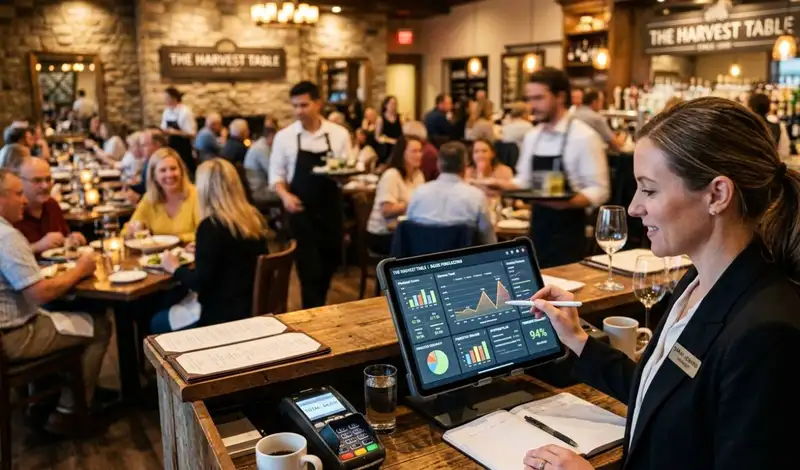
The most useful place to begin is the POS system. A restaurant's POS data can reveal patterns that are easy to miss during daily operations. For example, Friday dinner may consistently produce higher sales than Monday lunch. Delivery orders may increase during bad weather. Certain menu items may sell heavily during weekends but move slowly during weekdays. These patterns help owners forecast demand with more confidence instead of relying only on memory or instinct.
However, historical data should not be used blindly. Last week, last month, or last year may not always reflect what will happen next. A restaurant may have changed its menu, prices, hours, staffing levels, marketing strategy, delivery partners, or customer base. Local events, holidays, school schedules, construction, weather, and economic conditions can also change demand. That is why owners should use historical sales as a starting point, then adjust the forecast based on current business conditions.
A practical forecasting process should compare several layers of data -
1. Same day last week - Helps identify short-term patterns.
2. Same day last month - Shows recent demand trends.
3. Same period last year - Helps with seasonal comparisons.
4. Hourly sales trends - Supports better labor and prep planning.
5. Menu item sales - Helps forecast ingredient usage and kitchen workload.
6. Order channel mix - Shows whether demand is shifting between dine-in, takeout, and delivery.
Owners need to understand when sales happen, what customers buy, how they order, and how those trends affect operations. A restaurant that forecasts only total daily revenue may still overstaff slow hours, under-prep popular items, or order the wrong inventory. Strong restaurant forecasting starts with clean, organized sales data that helps owners see patterns clearly and make better decisions before the shift begins.
Effortlessly Schedule, Seamlessly Manage
Schedule Like a Pro with Altametrics
Identify Sales Patterns by Day, Time, and Season
One of the most important patterns to study is day-part performance. Lunch, dinner, late night, breakfast, and happy hour may each behave differently. A restaurant may have strong weekday lunches because of nearby offices, but stronger weekend dinners because of families, events, or social traffic. If owners only look at total daily sales, they may miss the fact that one part of the day is driving most of the demand.
Weekly patterns also matter. Monday and Tuesday may require lighter staffing and lower prep levels, while Friday and Saturday may need more inventory, more cooks, more servers, and tighter production planning. Seasonal demand can also change the forecast. Restaurants near tourist areas, schools, sports venues, beaches, offices, or shopping centers may see major shifts depending on the time of year.
Owners should also watch for external demand drivers, such as -
1. Weather changes - Rain, heat, cold, or storms can affect dine-in traffic, delivery volume, patio seating, and menu demand.
2. Holidays and school schedules - Breaks, long weekends, and family holidays can change normal traffic patterns.
3. Local events - Concerts, sports games, festivals, conferences, and community events can create sudden spikes.
4. Promotions and menu launches - Discounts, limited-time offers, and new items can increase demand but also change prep and purchasing needs.
5. Payday cycles - Some restaurants see stronger demand around paydays or at the beginning of the month.
By studying these patterns, owners can make smarter decisions about labor, prep, purchasing, and cash flow. Strong restaurant forecasting becomes more useful when it connects sales history with real-world conditions that influence customer behavior.
Use Forecasting to Improve Labor Planning
Restaurant forecasting helps owners schedule based on expected demand instead of guesswork. If the forecast shows higher sales on Friday night, the restaurant may need more cooks, servers, cashiers, hosts, dishwashers, delivery support, or managers on duty. If the forecast shows a slower Monday lunch, the schedule can be adjusted to avoid unnecessary labor hours. The goal is not simply to cut labor. The goal is to match labor to sales volume, order complexity, and service expectations.
A strong labor forecast should look beyond total daily sales. Owners should review hourly sales, guest counts, order volume, table turns, online orders, delivery demand, and kitchen production needs. For example, two days may have the same total sales, but one may have a short dinner rush while the other has steady traffic all day. Those two days require different staffing plans.
Forecasting also helps control overtime and reduce employee stress. When managers can see demand coming, they can schedule the right coverage earlier instead of asking employees to stay late or calling people in at the last minute. Better planning supports smoother shifts, faster service, cleaner handoffs, and stronger employee morale.
Key labor metrics to track include labor cost percentage, sales per labor hour, overtime hours, scheduled hours versus actual hours, and sales by day-part. These numbers help owners see whether labor is aligned with demand. Over time, comparing forecasted sales to actual labor performance helps improve future schedules.
Good labor planning protects both profitability and service quality. Understaffing may save money on paper, but it can hurt speed, accuracy, guest satisfaction, and repeat business. Overstaffing may create a calmer shift, but it can quietly weaken margins. Restaurant forecasting helps owners find the right balance, so each shift has enough labor to serve guests well without carrying unnecessary cost.
Forecast Inventory and Purchasing Needs

When sales are forecasted clearly, owners can make better decisions about food, beverages, packaging, cleaning supplies, and other operating items. For example, if the forecast shows a strong weekend ahead, the restaurant may need higher inventory levels for top-selling menu items, extra packaging for takeout, and stronger vendor coordination. If the forecast shows a slower week, purchasing can be adjusted to reduce excess stock and avoid tying up cash in inventory that may not move quickly.
A good inventory forecast should connect sales expectations to actual product usage. This means looking at -
1. Menu item demand - Which items are expected to sell most?
2. Ingredient usage - What ingredients are needed to support those items?
3. Vendor lead times - How far in advance do orders need to be placed?
4. Par levels - What minimum stock should be kept on hand?
5. Shelf life - Which products are perishable and need tighter control?
6. Order frequency - How often should each category be replenished?
This is especially important for restaurants with fresh produce, meat, seafood, dairy, baked goods, or high-cost ingredients. Over-ordering can lead to spoilage, waste, and lower margins. Under-ordering can cause stock-outs, menu substitutions, rushed vendor orders, and missed sales. Even small forecasting mistakes can add up over time when they affect daily purchasing decisions.
Restaurant owners should also compare forecasted usage against actual inventory movement. If a forecast predicted higher sales but actual demand was lower, the team may need to reduce future orders or adjust prep levels. If demand exceeded the forecast, the owner may need to review whether the sales increase came from a promotion, weather change, event, or normal growth.
Strong restaurant forecasting helps purchasing become more disciplined and data-driven. Instead of ordering based on fear, habit, or guesswork, owners can align inventory with expected demand. This improves food cost control, reduces waste, protects cash flow, and helps the kitchen stay ready for the customers most likely to walk in, call, or order online.
Take Charge of Your Schedule
Smarter Scheduling Made Easy with Altametrics
Improve Prep Planning and Menu Readiness
Poor prep planning creates problems on both sides. If the kitchen preps too much, the restaurant may end the day with wasted food, lower freshness, and higher food costs. If the kitchen preps too little, employees may run out of key ingredients during a rush, slow down ticket times, or 86 popular items. Both situations hurt profitability and guest experience.
A strong prep forecast should be based on expected menu demand, not just total sales. For example, a restaurant may expect $8,000 in sales on Saturday, but the prep plan should go deeper than that. Owners need to know whether that demand is likely to come from burgers, pasta, salads, wings, desserts, catering trays, or delivery orders. Each item affects prep time, ingredient usage, station workload, and kitchen flow differently.
Forecasting also helps managers plan production by time period. Some items may need to be prepped before opening, while others should be prepared closer to peak hours to protect freshness. High-volume items may need larger batches, while slower-moving items may require smaller, more frequent prep. This is especially important for sauces, proteins, chopped produce, dough, bakery items, and grab-and-go products.
Restaurant owners should also use forecasting to prepare for promotions, limited-time offers, holidays, and local events. These demand drivers can shift normal menu patterns and create pressure on specific ingredients or stations. When prep is connected to the forecast, the kitchen can move with more control, reduce last-minute scrambling, and serve customers faster.
Track the Right Forecasting Metrics
The most important metric to track is forecast accuracy. This shows how close the forecasted sales were to actual sales. For example, if a restaurant forecasted $10,000 in sales but finished at $9,200, the owner can review the difference and ask why demand came in lower. Was the weather worse than expected? Did a promotion underperform? Was traffic slower during a specific day-part? These questions help make the next forecast stronger.
Owners should also track sales variance by day, hour, and order channel. A restaurant may hit its total daily sales target but still miss the forecast during key periods. For example, lunch may come in lower than expected while dinner performs better. Dine-in may be slower while delivery increases. These details matter because labor, prep, and inventory decisions are often made by time period and channel, not just by total revenue.
Other important restaurant forecasting metrics include -
1. Guest count variance - Compares expected customer traffic to actual traffic.
2. Average ticket size - Shows whether customers are spending more or less than expected.
3. Labor cost percentage - Helps owners see if staffing matched sales volume.
4. Sales per labor hour - Measures whether labor was productive during each shift.
5. Food cost percentage - Shows how purchasing and prep decisions affected margins.
6. Waste percentage - Helps identify overproduction or poor inventory planning.
7. Stock-outs - Tracks when the restaurant runs out of key items.
8. Inventory turnover - Shows how quickly products are being used and replaced.
9. Menu item variance - Compares expected item sales to actual item sales.
10. Order channel mix - Shows how demand is shifting across dine-in, takeout, delivery, online ordering, and catering.
The goal is to focus on the numbers that help the restaurant make better decisions. If labor costs are high, review forecasted sales versus scheduled hours. If waste is rising, compare prep levels against actual item sales. If stock-outs are common, review inventory forecasts, par levels, and vendor lead times.
Good forecasting improves through repetition. Each week, owners should compare forecasted results to actual results and look for patterns. Over time, this creates a feedback loop that makes sales planning, scheduling, purchasing, and prep more accurate. For restaurant owners, the right metrics turn forecasting from a guess into a measurable management process.
Build a Repeatable Forecasting Process
The best process starts with reviewing past performance. Owners should look at recent sales, same-day sales from previous weeks, seasonal patterns, guest counts, order channels, menu item movement, labor performance, waste, and stock-outs. This gives the forecast a reliable starting point. From there, managers should adjust for what is coming next, such as holidays, weather, school schedules, local events, promotions, catering orders, menu changes, or price changes.
A practical restaurant forecasting process may include -
1. Review historical sales data - Compare last week, last month, and the same period last year when available.
2. Check upcoming demand drivers - Look at weather, events, holidays, promotions, reservations, and delivery trends.
3. Create the sales forecast - Estimate sales by day-part, order channel, and menu category when possible.
4. Build labor plans from the forecast - Schedule based on expected traffic, rush periods, order volume, and service needs.
5. Plan inventory and purchasing - Adjust vendor orders based on expected item demand, lead times, shelf life, and par levels.
6. Create prep plans - Decide what needs to be prepped, how much is needed, and when it should be prepared.
7. Compare forecasted results to actual results - Review sales variance, labor variance, waste, stock-outs, and menu item performance.
8. Improve the next forecast - Use what happened to make better adjustments for the next week or shift.
Consistency is what makes forecasting valuable. If owners only forecast during holidays or busy seasons, they miss the chance to improve normal operations. A weekly forecasting routine helps managers spot trends earlier, reduce surprises, and make more disciplined decisions.
Restaurant forecasting should become part of the operating rhythm of the business. When used consistently, it helps owners move from reacting to problems toward planning ahead. Over time, this can lead to better labor control, lower waste, stronger purchasing, smoother service, and healthier cash flow.
Elevate Your Restaurant's Operations
Swift Inventory Solutions with Altametrics!
Frequently
Asked Questions
How does restaurant forecasting help with staffing?
What causes restaurant forecasts to be inaccurate?
How does restaurant forecasting help with menu planning?
How do restaurants forecast sales?
Must-Read Content
10 Employee Retention Strategies for Restaurant Owners
Restaurant owners can cut turnover by paying fairly, onboarding well, scheduling flexibly, promoting growth, recognizing effort, offering meaningful benefits, listening to feedback, and hiring carefully for fit.
How to Reduce Supply Costs in Your Restaurant
Cut restaurant supply costs by understanding spending, auditing expenses, engineering menus, negotiating with suppliers, controlling inventory, reducing waste, and using technology to monitor everything continuously.
The Ultimate Guide to Managing Food Allergens in Restaurants
Food allergens require accurate labeling, employee training, cross-contact prevention, safe food handling, and consistent procedures to protect customers and improve restaurant safety.