
Why Task Management Gets Harder with More Locations
In a single location, an owner or manager can walk the floor, spot missed tasks, and correct issues in real time. There is constant visibility. But across multiple locations, that visibility disappears. You are no longer present to confirm whether opening checklists were completed correctly, whether food safety tasks were followed, or whether closing procedures were done to standard. Instead, you rely on others to execute consistently without direct supervision.
This is where task management starts to break down.
The first challenge is inconsistency. Each location may begin to operate slightly differently. Tasks are completed in different ways, at different times, or sometimes not at all. What was once a standardized process turns into location-specific habits. Over time, these small inconsistencies create larger operational gaps - affecting food quality, cleanliness, service speed, and ultimately the guest experience.
The second challenge is lack of accountability. When multiple managers and shifts are involved, tasks can easily fall into gray areas. If ownership is not clearly defined, it becomes unclear who was responsible when something is missed. This leads to repeated errors, delayed corrections, and frustration across teams.
The third challenge is limited visibility. Without a structured system, you cannot easily see what is actually happening inside each location on a daily basis. You may hear that tasks are getting done, but you do not have clear, reliable data to confirm it. This makes it difficult to identify which stores are performing well, which are falling behind, and where intervention is needed.
Finally, there is the issue of scale. What works with one store - verbal instructions, paper checklists, or informal processes - breaks down when applied across five, ten, or more locations. The volume of tasks increases, the number of employees grows, and the margin for error becomes smaller. Without a structured approach, execution becomes inconsistent by default.
Task Management Across Locations

At its core, restaurant task management includes five key components -
1. Clear Task Assignment - Every task must be defined and assigned to a specific role, shift, or individual. In multi-location operations, vague instructions lead to inconsistent execution. "Clean the kitchen" is not a task. "Sanitize prep surfaces by 10.30 AM (Shift Lead)" is.
2. Defined Priorities and Timing - Not all tasks carry the same importance. Food safety checks, line readiness, and inventory counts directly impact operations. These must be prioritized and time-bound. Without clear timing, tasks get delayed, rushed, or skipped entirely.
3. Standardized Execution - Every location should complete tasks the same way. This is what allows you to maintain brand standards and compare performance across stores. If one location preps differently or follows different cleaning procedures, you lose operational control.
4. Completion Tracking - You need a way to confirm that tasks were actually completed - not assumed, not verbally confirmed, but tracked. This includes timestamps, completion status, and visibility into what was missed or delayed.
5. Verification and Follow-Up - Completion alone is not enough. Tasks must be verified to ensure they meet your standards. This is where many operations fall short. Without verification, teams can check off tasks without fully completing them.
The gap most restaurant owners face is this- they believe they have a task system because tasks are being assigned. But assignment without tracking, visibility, and verification is not a system - it is a guess.
In multi-location operations, guessing does not work.
A strong restaurant task management system creates structure. It ensures that every store is following the same expectations, every manager understands their responsibilities, and every task contributes to consistent execution.
Create, Implement, and Execute Multiple Daily Checklists
Streamline Your Operations with Altametrics
Standardize Core Tasks
This is why standardization has to come first. At a minimum, every location should follow the same structure for core daily tasks. That includes opening routines, closing procedures, line checks, cleaning responsibilities, prep work, food safety steps, inventory counts, cash handling, and shift handoff tasks. These are the operational basics that keep the restaurant running consistently. When each store handles them differently, you create variation in execution that affects labor efficiency, readiness, compliance, and guest experience.
Standardization also makes task lists easier to manage. Instead of every manager creating their own version of what needs to happen, you build a clear operating framework that applies across the business. That framework should define -
1. What the task is - The description should be specific and easy to understand. Broad instructions create broad interpretation.
2. When it must be completed - Tasks should have a due time or completion window tied to the flow of operations.
3. Who owns it - Each task should be assigned to a role, shift, or named person.
4. What "done correctly" looks like - Completion standards should be clear so stores are not left to define quality on their own.
This matters because inconsistent task lists create inconsistent results. If one location treats line checks as a priority and another treats them casually, your standards are already breaking apart. If one manager requires full closing documentation and another just expects the team to "take care of it," accountability becomes subjective.
For restaurant owners with multiple locations, standardization is what makes comparison possible. It gives you a fair way to evaluate stores, identify execution gaps, and coach managers based on actual performance instead of assumption.
Before you ask whether teams are completing tasks, you need to make sure every team is working from the same playbook. Without that, you are not managing a system. You are managing a collection of different habits.
Assign Ownership Clearly
Every important task should be tied to a specific role, shift, or person. Not a group. Not "the team." Not "someone on nights." Shared responsibility usually turns into no responsibility. When nobody is directly accountable, tasks are easier to delay, overlook, or assume someone else handled.
This shows up in daily operations more than owners realize. A prep task gets skipped because the opening team thought the mid-shift team would handle it. A cleaning duty is left incomplete because the closing manager assumed a supervisor already checked it. A temperature log is missing because it was everyone's responsibility but no one's priority.
To avoid this, task ownership needs to be explicit.
1. Assign tasks by role - Every recurring task should belong to a role with clear expectations. For example, line checks may belong to the shift lead, invoice entry to the manager, and station cleaning to the closing crew. This keeps work organized and easier to audit.
2. Separate manager duties from crew duties - Managers should not carry tasks that frontline employees can consistently own. At the same time, tasks that require judgment, verification, or escalation should not be pushed down without oversight. Blurred lines create weak execution.
3. Match tasks to shift timing - Ownership should reflect when the task needs to happen. Opening, mid-shift, and closing teams each control different parts of the day. If ownership is not aligned with the actual flow of operations, tasks will be missed during handoffs.
4. Build accountability into shift transitions - Shift changes are one of the most common failure points in restaurants. If an incomplete task is not clearly reassigned or escalated, it often disappears. Strong task management makes open items visible before one team leaves and the next takes over.
For multi-location owners, this matters because poor ownership creates recurring problems that look bigger than they are. Stores begin missing the same tasks, managers spend time chasing completion, and operational discipline weakens. Clear ownership solves that at the source.
When every task has a visible owner, accountability becomes measurable. And when accountability becomes measurable, consistency becomes much easier to enforce across locations.
Build Task Lists Around Operational Priorities

The first priority is food safety. Tasks tied to holding temperatures, sanitation, line checks, date labeling, and cleaning routines should never compete with low-impact items for attention. These tasks directly affect compliance, product quality, and operational risk.
The second priority is service readiness. Opening prep, station setup, equipment checks, and shift-change handoffs all affect whether the restaurant can execute smoothly during service. If these tasks are rushed or skipped, the result usually shows up in slower ticket times, poor guest experience, and avoidable stress during peak periods.
The third priority is inventory and product control. Tasks tied to counts, waste logging, prep forecasting, and storage practices matter because they directly affect food cost, shortages, and ordering accuracy. Weak execution in these areas creates financial problems that often go unnoticed until margins tighten.
The fourth priority is labor efficiency and management follow-through. Task lists should support smarter use of labor, not just keep people busy. If employees are completing low-value tasks while critical work is delayed, the task system is not helping operations.
For multi-location owners, the goal is not to create longer checklists. The goal is to create better checklists. That means every task should answer a simple question - does this task protect operations, reduce risk, improve readiness, or support performance in a measurable way? If the answer is no, it may not belong on a core task list.
This matters because overloaded task lists reduce compliance. When teams see too many tasks with no clear priority, they are more likely to rush through them, skip them, or treat all tasks as equally unimportant. A shorter, sharper, more intentional task list usually produces stronger execution than a long list filled with low-impact work.
For restaurant owners managing multiple locations, task discipline matters just as much as task completion. The stores that execute best are usually not the ones doing the most tasks. They are the ones consistently doing the right tasks at the right time.
From Click to Kitchen
Handle All Your Online Orders with Altametrics
Use Visibility and Verification
Visibility means being able to see what was assigned, what was completed, what was missed, and where patterns are forming. Verification means confirming that completed tasks were done to standard, not just marked done.
In multi-location operations, one of the biggest risks is false confidence. A manager says tasks were completed. A checklist is turned in. A team reports that everything is handled. But without a system that gives owners real visibility, there is no reliable way to know whether execution actually matched expectations.
This is where strong task management creates control.
1. Track completion in real time - Owners and multi-unit leaders need to know whether critical tasks were completed on time, delayed, or missed entirely. This is especially important for opening, closing, food safety, and shift handoff routines.
2. Use timestamps and completion records - Task completion should not depend on memory or verbal confirmation. Timestamps and digital records create a more reliable picture of what happened and when.
3. Require manager verification on key tasks - Not every task needs the same level of review, but high-risk or high-impact tasks should be verified. That may include temperature logs, cleaning checks, inventory counts, or end-of-day procedures. Verification adds a second layer of accountability.
4. Identify repeat misses early - Visibility is not just about one missed task. It is about recognizing patterns. If one location repeatedly misses prep tasks, or one shift consistently closes late on cleaning duties, that points to a deeper operational gap that needs attention.
5. Create oversight without micromanagement - The purpose of visibility is not to monitor every movement. It is to give owners and leaders enough information to manage performance intelligently. Good oversight helps you coach stores, support managers, and intervene where needed without relying on constant follow-up calls or surprise visits.
For multi-location restaurant owners, trust is important, but trust alone is not a management system. Stores need a structure that makes execution visible and measurable. Without that, missed tasks stay hidden until they become bigger problems - failed inspections, poor readiness, inconsistent service, or rising operating costs.
When visibility and verification are built into the task process, owners gain something far more valuable than checklists. They gain operational awareness.
Find Weak Stores, Weak Shifts, and Process Gaps
That is why task execution should be reviewed as a trend, not just as a daily activity.
When owners look at task performance over time, they can start to answer more important questions. Which locations consistently complete critical tasks on time? Which stores are regularly missing opening, closing, or food safety steps? Are certain shifts weaker than others? Is one manager keeping standards tight while another allows execution to drift?
These patterns matter because they reveal where the business is losing consistency. There are several useful metrics multi-location owners should pay attention to -
1. Task completion rate - This shows how often assigned tasks are actually being completed. A low completion rate is a direct warning sign that standards are not being followed reliably.
2. On-time completion rate - Some tasks lose value if they are done late. Line checks, prep tasks, safety checks, and shift handoff items need to happen at the right time, not just eventually.
3. Overdue and missed task frequency - This helps identify where execution is breaking down most often. A location with repeated overdue tasks may have staffing issues, weak supervision, or unrealistic task flow.
4. Repeat misses by task type - If the same task is repeatedly missed across several days or several stores, that suggests a system issue. The task may be poorly designed, badly timed, under-trained, or not treated as important enough operationally.
5. Location-level and shift-level consistency - Comparing stores and shifts side by side helps owners find performance gaps that might otherwise stay hidden. A strong day shift and a weak night shift should not be treated as the same operating environment.
This kind of analysis helps owners move from reaction to correction. Instead of waiting for an inspection problem, guest complaint, or manager escalation, they can spot weak execution earlier and respond with training, staffing adjustments, or process changes.
For multi-location restaurants, this is a major advantage. When task management produces usable data, it becomes a tool for operational improvement - not just compliance. It shows where systems are working, where leadership is weak, and where expectations may need to be reset.
Use Technology
This is the point where many restaurants start to feel the operational strain of growth. One store may be highly disciplined because it has a strong manager. Another may be falling behind because tasks are being tracked differently or not tracked at all. Without the right system, owners end up spending more time chasing execution than improving it.
That is why restaurant task management technology matters. It helps owners build one operating structure that every location can follow.
A strong system should help multi-location restaurants do five things well -
1. Standardize tasks across every store - Technology makes it easier to create the same core task structure for all locations while still allowing role-based or location-specific adjustments where needed. This protects consistency without forcing every store into chaos or guesswork.
2. Assign work clearly and automatically - Tasks should be tied to the right roles, shifts, or managers so ownership is visible from the start. This reduces confusion and limits the number of tasks that get lost between teams.
3. Track completion in real time - Owners and operators need a live view of task execution. That includes what was completed, what is overdue, what was missed, and which stores need attention nownot after the damage is already done.
4. Improve accountability without constant follow-up - A good system reduces the need for manual check-ins, phone calls, and reactive management. When expectations, completion, and verification are all visible, accountability becomes easier to maintain.
5. Turn execution into useful operational insight - Task data should help owners identify weak stores, recurring breakdowns, poor shift discipline, and areas where managers need coaching. This is where task management stops being a checklist process and starts becoming a performance tool.
For restaurant owners with multiple locations, the goal is not to add more software for the sake of it. The goal is to make daily execution easier to manage, easier to verify, and easier to scale. Good technology should reduce friction, not create it. It should simplify oversight, not bury operators in more admin work.
Multi-location growth only works when standards stay consistent as complexity increases. That does not happen by accident. It happens when owners have a task management system that creates structure, drives accountability, and gives them visibility across the entire operation.
If you are trying to improve execution across multiple restaurants, Altametrics can help you create stronger operational control with tools built for restaurant management. From task visibility to labor oversight and store-level accountability, the right system makes it easier to keep every location aligned and every shift on track. Explore how Altametrics supports restaurant operators by clicking "Schedule a Demo" below.
Cut Down Prep Time and Boost Accuracy
Automate Your Kitchen with Altametrics!
Frequently
Asked Questions
How can restaurant owners track task performance across locations?
- Completion rates
- On-time completion
- Overdue or missed tasks
- Repeat misses by task type
- Performance by location and shift
These metrics help identify weak areas and improve operations.
How can technology improve restaurant task management?
- Standardizing tasks across locations
- Assigning ownership automatically
- Tracking completion in real time
- Providing visibility into missed tasks
- Turning task data into actionable insights
This improves consistency and reduces manual oversight.
What should a good task management system include?
- Task assignment by role or shift
- Due times and priorities
- Real-time tracking and visibility
- Verification for key tasks
- Reporting on performance trends
What are the most important tasks to prioritize in a restaurant?
- Food safety (temperature checks, sanitation)
- Service readiness (prep, line setup)
- Inventory control (counts, waste tracking)
- Shift handoffs and closing procedures
These directly impact performance, compliance, and cost control.
Must-Read Content

The Ultimate Guide to Managing Food Allergens in Restaurants
Food allergens require accurate labeling, employee training, cross-contact prevention, safe food handling, and consistent procedures to protect customers and improve restaurant safety.

How to Manage Tasks in a Restaurant
Learn how to manage tasks in a restaurant by organizing responsibilities, prioritizing duties, assigning employees, tracking progress, and using technology effectively.
How to Conduct a Food Waste Audit in Your Restaurant
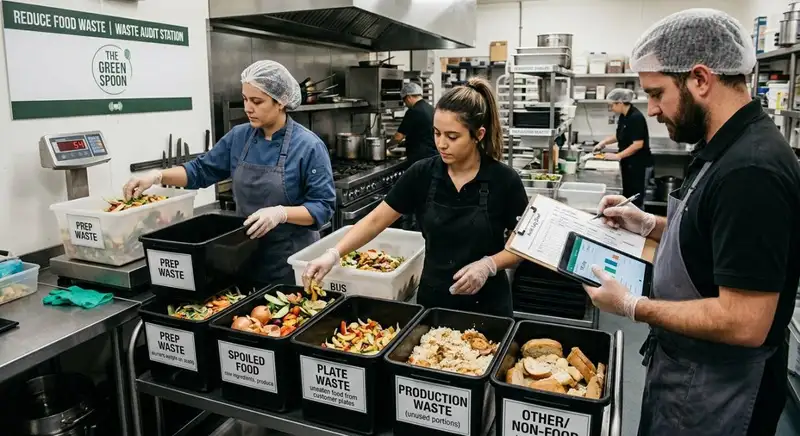
A food waste audit helps restaurant owners identify waste sources, track costs, improve inventory management, reduce food waste, and increase profitability.