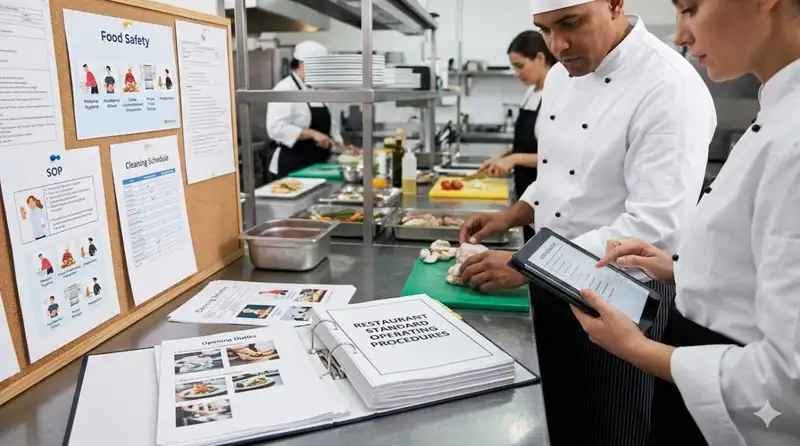
What Restaurant SOPs Should Cover
A useful way to think about SOPs is simple. If a task happens often, affects performance, and can easily be done the wrong way, it probably needs a clear standard.
1. Start with the most repetitive and highest-risk tasks
Restaurant SOPs should first cover the work your team repeats every day, every shift, or every week. These are the procedures that create the most problems when they are unclear.
Key priorities include -
- Opening procedures
- Closing procedures
- Station setup
- Shift change handoffs
- Prep routines
- Cleaning routines
These tasks matter because inconsistency here creates problems for the rest of the shift.
2. Cover food safety and sanitation in detail
Some tasks need SOPs because the risk of poor execution is too high. Food safety should always be one of the first areas documented.
Important SOP categories include -
- Temperature checks
- Labeling and dating
- Storage procedures
- Cross-contamination prevention
- Handwashing standards
- Sanitizing schedules
- Allergen handling
- Receiving deliveries
- Product disposal rules
These procedures protect guest safety, reduce compliance risk, and help maintain product quality.
3. Document front-of-house and back-of-house routines
SOPs should also cover the workflows that affect guest experience and kitchen execution.
Front-of-house examples -
- Guest greeting
- Seating flow
- Order accuracy checks
- Table check timing
- Complaint escalation steps
Back-of-house examples -
- Line setup
- Portioning
- Ticket flow
- Expo procedures
- Waste tracking
- End-of-shift breakdown
When these routines are standardized, service becomes more consistent and easier to manage.
4. Include control procedures that protect profit
Some SOPs are less visible to guests but have a direct financial impact.
These include -
- Inventory counts
- Invoice handling
- Cash handling
- Void and comp procedures
- Equipment cleaning
- Maintenance reporting
- End-of-day reporting
Weak process control in these areas often leads to avoidable loss.
5. Focus on what truly needs consistency
Not every task needs a full SOP. Owners should focus on procedures that are -
- Repeated often
- Important to operations
- Easy to perform incorrectly
- Tied to safety, cost, speed, or guest experience
That is what restaurant SOPs should actually cover. They should define the routines that matter most, reduce guesswork, and make daily execution more consistent across every shift.
Identify Tasks to Standardize First

The most practical starting point is to look at repeated breakdowns in daily operations. If the same issue keeps showing up across shifts, managers, or locations, that is usually a sign the process is not standardized well enough. SOPs should be built around the work that creates measurable operational drag when done inconsistently.
Start by prioritizing five categories of tasks -
1. Food safety and compliance tasks - Focus first on procedures where mistakes create health risk, inspection exposure, or product loss. This includes temperature checks, storage rules, labeling, sanitation routines, handwashing, allergen procedures, and receiving deliveries.
2. High-frequency operational tasks - Document the routines your staff performs every shift. Opening checklists, line setup, prep procedures, shift handoffs, cleaning assignments, and closing steps should be standardized early because small inconsistencies here multiply quickly over time.
3. Tasks tied directly to cost control - Some procedures have an immediate impact on margin. Portioning, waste logging, inventory counts, invoice entry, cash handling, and void or comp approval processes should be high on the list because weak execution in these areas usually shows up in food cost, labor cost, or shrink.
4. Training problem areas - Look at the tasks new employees struggle to learn or managers have to explain repeatedly. If a process depends too heavily on verbal coaching, tribal knowledge, or "how this manager likes it done," it needs a written standard.
5. Guest-facing execution points - Standardize the steps that shape the guest experience, such as greeting, table flow, ticket handling, complaint resolution, and order accuracy checks.
A simple way to decide what comes first is to ask four questions -
- Does this task happen often?
- Is it easy to do incorrectly?
- Does poor execution create cost, risk, or delay?
- Do managers have to keep correcting it?
If the answer is yes to most of those questions, that task should move to the top of your SOP list. That is how owners create standards that solve real operational problems first.
Create, Implement, and Execute Multiple Daily Checklists
Streamline Your Operations with Altametrics
Write SOPs Staff Can Follow
The most effective SOPs are built for speed and clarity. They should tell the employee exactly what to do, when to do it, who is responsible, and what standard must be met. If a procedure leaves room for interpretation, execution will vary by shift, by manager, and by employee. That defeats the purpose of standardization.
A practical SOP format should include these core elements -
1. Task name - Use a clear title such as "Open Fry Station" or "Receive Produce Delivery."
2. Purpose - State why the task matters. Keep this brief and tied to operations, safety, quality, or cost control.
3. When the task is performed - Define the timing. For example, at open, every two hours, after each delivery, or before shift close.
4. Who is responsible - Assign the role clearly. Do not leave ownership vague.
5. Step-by-step instructions - Use numbered steps in the correct sequence. Keep each step short and specific.
6. Standard or completion criteria - Define what done correctly looks like. That may include temperatures, portion size, cleaning outcome, timing, or documentation requirements.
7. Required tools or materials - List what the employee needs to complete the task correctly.
This structure matters because it reduces decision-making in the moment. Instead of asking a manager what to do next, staff can follow a clear process.
Formatting also matters. Use short sentences, simple words, and task-based language. Avoid long paragraphs, general statements, and broad instructions like "prepare station properly" or "clean thoroughly." Those phrases sound clear, but they are hard to execute consistently because they are not measurable.
Whenever possible, use -
- Numbered steps
- Checklists
- Visual references
- Role-specific instructions
- Clear pass-fail standards
A good SOP should be easy to scan in less than a minute. If the team cannot use it during a busy shift, it is too complex. The best restaurant SOPs are not the most detailed. They are the easiest to follow correctly under pressure.
Define the Standard Clearly
For restaurant owners, that creates a major control problem. If the expected outcome is not clear, managers cannot coach consistently, audits become subjective, and small mistakes stay hidden until they affect food quality, service speed, labor efficiency, or compliance. Clear standards solve that by turning routine work into something that can be observed, checked, and improved.
The easiest way to build measurable standards is to define specific completion points for each task. For example -
1. Time-based standards - Use exact timing when speed matters.
- Line setup completed by 10.30 a.m.
- Dining room check every 30 minutes
- Cooler temperatures logged at open, mid-shift, and close
2. Quantity or portion standards - Define what correct output looks like.
- Fries portioned to the exact serving size
- Prep batches limited to the approved quantity
- Sauce cups filled to the designated line
3. Temperature and safety standards - These should never be vague.
- Cold holding at required safe range
- Hot holding checked against approved threshold
- Cooked items verified before service
- Sanitizer concentration tested and recorded
4. Quality standards - Set clear expectations for appearance and readiness.
- Station fully stocked
- Surfaces cleaned and free of residue
- Labels complete and legible
- Product rotated using first-in, first-out rules
5. Documentation standards - If a task must be recorded, define exactly what must be entered and when.
The benefit of measurable standards is that they create accountability without relying on opinion. Managers can verify performance, employees know what is expected, and retraining becomes more focused because the gap is easier to identify.
This is also what makes SOPs more useful in multi-manager or multi-location operations. When the standard is clearly defined, performance becomes easier to compare across shifts and stores. That improves consistency and reduces the risk of each manager enforcing a different version of the same task. For restaurant owners, measurable SOP standards are what turn procedures into a real operating system instead of just written instructions.
Train Employees on SOPs
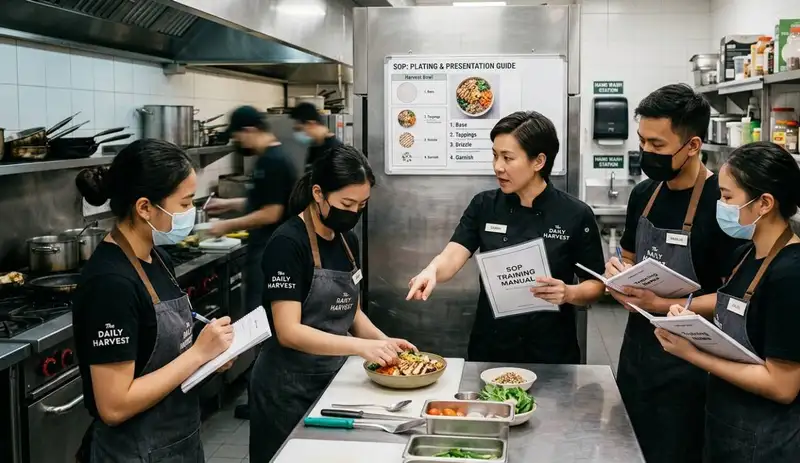
In a restaurant, work happens under time pressure, with interruptions, changing volume, and multiple priorities happening at once. If training stops at "read this and sign off," execution will still vary by employee, shift, and manager. That usually leads to the same problems owners were trying to fix in the first place- missed steps, inconsistent quality, retraining, and avoidable mistakes.
A practical SOP training process should follow four steps -
1. Explain the procedure - Start by reviewing the task, why it matters, and the specific standard that must be met. Employees should understand both the steps and the reason behind them, especially for food safety, quality control, and guest-facing tasks.
2. Demonstrate the task - A manager or trainer should perform the procedure the correct way. This reduces interpretation errors and gives employees a clear model to follow.
3. Observe the employee performing it - The employee should then complete the task while being observed. This is where most training gaps become visible.
4. Verify and retrain if needed - If the task is not completed to standard, coaching should happen immediately. Training is not complete until the employee can perform the procedure correctly without assistance.
This approach matters because it turns SOPs into executable behavior instead of reference material. It also improves training efficiency. When procedures are standardized, managers spend less time reteaching tasks differently and more time reinforcing the same expectations across the team.
Restaurant owners should apply this especially to -
- Opening and closing routines
- Food safety procedures
- Prep methods
- Cleaning tasks
- Cash handling
- Guest service steps
- Shift handoffs
To keep SOP training effective, managers should also revisit key procedures during onboarding, spot checks, and shift coaching. That repetition is important because consistency is built through reinforcement, not one-time exposure.
The most useful SOP in the building is not the one written best. It is the one employees can perform correctly, repeatedly, and under pressure. That is why training has to be treated as part of the SOP system, not as a separate step.
From Click to Kitchen
Handle All Your Online Orders with Altametrics
Daily, Weekly, and Monthly Management Routines
A practical way to manage this is to tie SOP review to the cadence of the business. Some procedures need daily reinforcement because they affect shift readiness, food safety, and execution in real time. Others can be reviewed weekly or monthly because they relate more to trend control, coaching, or process updates.
A strong SOP review system usually works across three levels -
1. Daily reviews - These are the checks that protect day-to-day execution.
- Opening checklist verification
- Line checks
- Temperature log review
- Cleaning completion checks
- Shift handoff confirmation
- Closing walkthroughs
These reviews help managers catch missed steps before they turn into bigger problems later in the day.
2. Weekly reviews - Weekly reviews are useful for spotting repeated breakdowns.
- Audit recurring missed tasks
- Review waste logs
- Check prep accuracy
- Evaluate training gaps
- Review cash handling issues
- Confirm inventory procedures are being followed
This level matters because repeated SOP failures usually signal either weak training, unclear instructions, or poor follow-through from management.
3. Monthly reviews - Monthly reviews should focus on whether the SOPs themselves still match the operation.
- Menu changes
- Equipment changes
- Staffing model changes
- Hours of operation changes
- New compliance requirements
- Updated service workflows
If procedures do not reflect current operations, teams will stop trusting them and managers will revert to verbal workarounds.
This review structure helps restaurant owners move from reactive correction to controlled execution. Instead of waiting for a guest complaint, a failed inspection, a labor issue, or a cost spike, managers can identify where standards are slipping and fix the issue earlier.
The most important part is accountability. Every review should answer three questions -
- Was the SOP followed?
- If not, where did the process fail?
- Does the solution require coaching, correction, or a procedure update?
That is what keeps SOPs operationally useful. They should live inside pre-shift routines, manager checklists, line checks, audits, and follow-up conversations. When restaurant owners build SOP review into the rhythm of management, procedures stop being static documents and start functioning like a real control system.
Cut Down Prep Time and Boost Accuracy
Automate Your Kitchen with Altametrics!
Frequently
Asked Questions
How do SOPs support food safety inspections?
What tools can restaurants use to manage SOPs?
What is the difference between an SOP and a checklist?
What should restaurant SOPs include?
Must-Read Content
The Ultimate Guide to Managing Food Allergens in Restaurants
Food allergens require accurate labeling, employee training, cross-contact prevention, safe food handling, and consistent procedures to protect customers and improve restaurant safety.
How to Manage Tasks in a Restaurant
Learn how to manage tasks in a restaurant by organizing responsibilities, prioritizing duties, assigning employees, tracking progress, and using technology effectively.
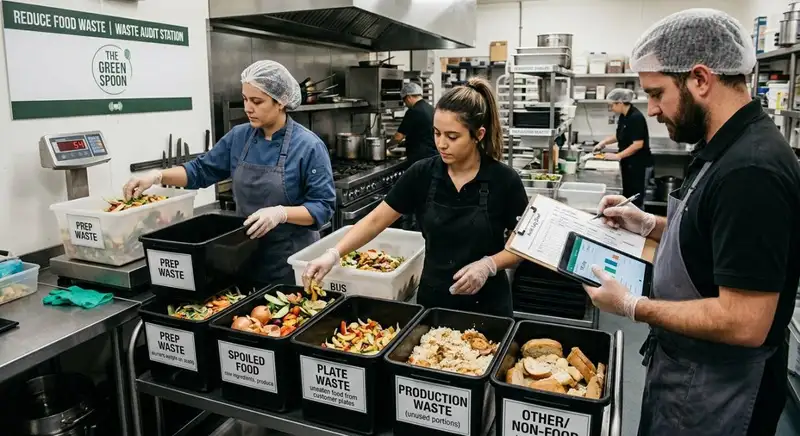
How to Conduct a Food Waste Audit in Your Restaurant
A food waste audit helps restaurant owners identify waste sources, track costs, improve inventory management, reduce food waste, and increase profitability.