
Employee Performance Tracking Metrics
The first category to measure is productivity. Owners need to understand how effectively employees handle the work expected during a shift. For front-of-house staff, that may include tables served, average check, upsell performance, or speed of service. For back-of-house teams, it may include ticket times, prep completion, station readiness, or output during peak periods. Productivity metrics help show whether labor hours are turning into useful operational output.
The second category is accuracy. Speed without accuracy creates new problems. Order entry mistakes, incorrect food preparation, cash handling errors, missed modifiers, and incomplete side work all create waste, rework, and guest frustration. Accuracy metrics help owners identify where process breakdowns are happening and which employees may need clearer coaching or stronger follow-through.
The third category is reliability. Attendance, punctuality, schedule adherence, and task completion all matter because restaurants operate on timing and coordination. A late employee does not just affect one position. It forces other team members to absorb the gap, increases manager intervention, and can reduce service quality across the shift. Reliability is one of the clearest indicators of whether an employee supports operational consistency.
The fourth category is compliance. Employees should be measured on whether they follow the systems that protect quality and reduce risk. That includes recipe compliance, food safety procedures, opening and closing routines, cleaning standards, cash policies, and labor rules. Compliance is critical because poor execution in these areas may not show up immediately in sales, but it often creates financial or operational damage later.
Most importantly, restaurant employee performance tracking should always be role-specific. A line cook should not be measured like a cashier. A host should not be evaluated like a shift lead. The goal is not to force everyone into one scoring model. The goal is to measure whether each employee is performing well in the job they were actually hired to do.
Front-of-House Employees Metrics

1. Order Accuracy - Order accuracy is one of the most important FOH metrics because it affects both guest experience and operational efficiency. Incorrect orders lead to remakes, longer ticket times, wasted food, and frustrated guests. Even a small pattern of mistakes can create measurable cost pressure over time. Tracking voids, modifications entered incorrectly, and guest complaints tied to order errors helps owners spot where coaching is needed.
2. Average Check and Upsell Performance - FOH employees directly influence revenue through suggestive selling. Tracking average check size, add-on sales, appetizer attachment, dessert sales, or beverage upgrades helps owners understand who is consistently driving stronger sales. This metric matters because better upselling improves revenue without requiring more guest traffic.
3. Table Turn Time - Table turn time shows how efficiently servers and hosts are helping move guests through the dining experience without damaging service quality. If table turns are too slow, the restaurant may lose revenue opportunities during busy periods. If they are too fast in the wrong way, the experience may feel rushed. This metric is especially important in high-volume restaurants where seating capacity limits sales.
4. Guest Feedback Scores - Guest feedback is one of the clearest indicators of FOH execution. Reviews, comment cards, survey results, and direct complaints help owners measure whether service standards are actually being felt by guests. This metric should not be used in isolation, but it is valuable when paired with speed and accuracy data.
5. Attendance and Punctuality - Reliable attendance is a performance metric, not just an HR issue. Late arrivals, missed shifts, and frequent schedule changes create labor disruption and force managers into reactive decisions. In restaurant operations, reliability often has a direct effect on shift stability.
FOH performance is not just about guest interaction. It also includes opening duties, closing work, cleaning, stocking, and station readiness. Tracking completion rates helps owners measure follow-through, not just visible service behavior.
Create, Implement, and Execute Multiple Daily Checklists
Streamline Your Operations with Altametrics
Back-of-House Employees Metrics
1. Ticket Time - Ticket time is one of the most important BOH performance metrics because it reflects how efficiently the kitchen is producing orders. Long ticket times slow table turns, increase guest frustration, and create pressure on the front of house. Tracking average ticket times by station, shift, or day-part helps owners see where kitchen flow starts to break down.
2. Prep Completion Rate - Prep work affects the entire day. If prep is incomplete, late, or poorly executed, the kitchen operates reactively instead of predictably. Tracking whether prep lists are completed on time and in full helps owners evaluate readiness before service begins. This is one of the clearest indicators of daily kitchen discipline.
3. Recipe and Portion Compliance - Consistency matters for both guest satisfaction and food cost. If employees do not follow recipes, portion sizes drift, presentation becomes inconsistent, and food cost variance increases. Recipe compliance should be measured through line checks, manager observations, and variance trends. This metric helps protect both quality and margin.
4. Waste and Remake Frequency - Waste is often a direct signal of performance issues. Burned product, misfired tickets, incorrect builds, overproduction, and remakes all create avoidable cost. Tracking waste levels and remake frequency helps owners identify whether the issue is training, carelessness, speed pressure, or poor communication.
5. Food Safety and Sanitation Compliance - Food safety is a performance issue because failure in this area creates real operational and financial risk. Temperature logs, handwashing adherence, cleaning completion, and storage compliance should all be tracked consistently. A kitchen that performs well operationally but fails on food safety is not performing well overall.
Strong BOH employees do not just survive the rush. They set up correctly and close correctly. Tracking station organization, stocking, cleaning, and end-of-shift reset quality helps owners measure accountability beyond live service. This supports smoother openings, better shift handoffs, and more consistent kitchen execution.
Tools to Track Employee Performance
1. POS Systems - Your POS system is one of the most valuable sources of employee performance data. It can help track average check size, upselling patterns, voids, discounts, order errors, sales by employee, and transaction speed. For front-of-house teams, this provides direct visibility into both revenue contribution and execution quality. Instead of asking whether a cashier or server is doing well, owners can review measurable output tied to actual sales activity.
2. Time and Attendance Systems - Attendance tools help track punctuality, missed punches, missed shifts, early clock-ins, late clock-outs, and schedule adherence. This matters because reliability is one of the clearest indicators of employee performance in a restaurant environment. Frequent tardiness or inconsistent attendance does not stay isolated. It disrupts labor planning, creates shift stress, and often reduces service quality across the team.
3. Scheduling Software - Scheduling platforms help owners compare labor planning against actual performance. They show who performs better during certain shifts, who handles peak periods effectively, and where weaker staffing choices lead to slower execution. Over time, this helps owners build stronger shift lineups based on results, not assumptions.
4. Kitchen Display Systems and BOH Tools - For back-of-house teams, kitchen display systems can support tracking ticket times, station delays, order flow, and production bottlenecks. Prep checklists, waste logs, and line check tools can also help owners measure kitchen readiness, compliance, and consistency more objectively.
5. Task Management and Checklist Tools - Task tools help track completion of side work, opening duties, cleaning routines, prep tasks, and closing responsibilities. This is important because employee performance is not just about what happens during live service. It also includes whether routine responsibilities are being completed fully and on time.
6. Guest Feedback and Manager Observation Tools - Guest surveys, review trends, secret shopper programs, and manager scorecards can help measure softer service behaviors that operational systems may not capture on their own. The key is to combine this input with hard data, not use it as the only source. The best tracking systems balance measurable metrics with consistent manager observation.
Best Practices for Useful Tracking Process

1. Use role-specific metrics - A strong tracking process starts by matching metrics to the role. Hosts, servers, cooks, cashiers, and shift leads all affect the business differently. Their performance should not be measured with one generic scorecard. Servers may be tracked on order accuracy, average check, and guest feedback. Cooks may be tracked on ticket time, prep completion, and recipe compliance. Role-specific metrics make performance data more relevant and more credible.
2. Keep the number of metrics limited - Tracking too many data points creates noise. Most restaurant owners do not need a long list of metrics to understand performance. A smaller set of high-value measures is usually more effective. In most roles, five to seven core metrics are enough to show whether performance is strong, inconsistent, or improving. This keeps the process easier to manage and easier for employees to understand.
3. Measure trends, not one shift - One bad rush or one difficult shift should not define an employee's overall performance. Restaurant operations change by day-part, staffing level, traffic mix, and manager coverage. Owners should look for patterns over time instead of reacting too strongly to isolated incidents. Trend-based tracking leads to better coaching and reduces emotional decision-making.
4. Combine operational data with manager observation - Data matters, but numbers alone do not explain everything. A server's average check may be low because of section placement. A cook's ticket times may be affected by equipment or staffing issues. This is why performance tracking should combine system data with direct manager observation. The goal is to understand performance in context, not just report numbers.
5. Review performance consistently - Tracking is only useful if it leads to regular conversations. Employees should know where they stand, what they are doing well, and what needs improvement. Consistent review builds accountability and makes coaching more timely.
The purpose of tracking is not to catch people failing. It is to build stronger execution. The best systems help owners coach better, recognize stronger performers, and create more consistency across the restaurant.
From Click to Kitchen
Handle All Your Online Orders with Altametrics
Turn Performance Tracking Into Better Operations
The first step is to use performance data to improve coaching. When managers can point to specific metrics like late arrivals, weak upselling, slower ticket times, missed prep completion, or frequent remakes, coaching becomes clearer and more productive. Employees are more likely to improve when feedback is tied to visible behavior rather than broad criticism. This also helps managers spend less time on vague conversations and more time on targeted correction.
The second step is to use performance tracking to make better scheduling decisions. Strong employees should not be placed randomly. Owners should identify who performs well during peak periods, who handles pressure effectively, who stays reliable, and who needs more support. This helps build stronger shift lineups and reduces the risk of avoidable service breakdowns. Over time, better performance-based scheduling can improve labor efficiency without simply cutting hours.
The third step is to use the data to strengthen accountability and consistency. When expectations are measured and reviewed regularly, employees have a clearer understanding of what good performance looks like. That reduces confusion, improves follow-through, and helps managers enforce standards more consistently across shifts. This becomes even more important for multi-unit operators who need a more uniform operating model.
The fourth step is to connect performance tracking to operational outcomes. If ticket times improve, service becomes faster. If order accuracy improves, guest complaints and waste decline. If attendance improves, shifts become more stable. If recipe compliance improves, food cost control gets stronger. Performance tracking matters because it influences the core drivers of restaurant execution.
In the end, restaurant employee performance tracking works best when it becomes part of how the business is managed every day. Used correctly, it helps owners coach better, schedule smarter, reduce errors, improve guest experience, and build a stronger operation with more control.
Cut Down Prep Time and Boost Accuracy
Automate Your Kitchen with Altametrics!
Frequently
Asked Questions
What are good restaurant front-of-house performance metrics?
What are good restaurant back-of-house performance metrics?
How can performance tracking improve labor cost control?
How do you handle employees who consistently underperform?
Must-Read Content

The Ultimate Guide to Managing Food Allergens in Restaurants
Food allergens require accurate labeling, employee training, cross-contact prevention, safe food handling, and consistent procedures to protect customers and improve restaurant safety.

How to Manage Tasks in a Restaurant
Learn how to manage tasks in a restaurant by organizing responsibilities, prioritizing duties, assigning employees, tracking progress, and using technology effectively.
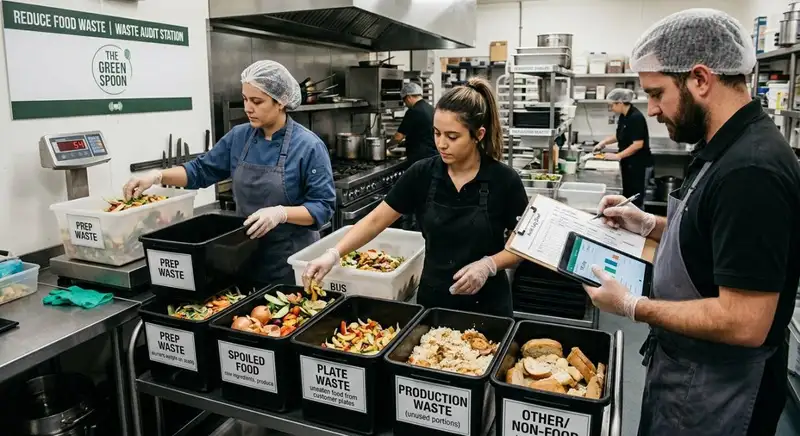
How to Conduct a Food Waste Audit in Your Restaurant
A food waste audit helps restaurant owners identify waste sources, track costs, improve inventory management, reduce food waste, and increase profitability.