
What Food Safety Logs Track
At a minimum, every daily log should answer three questions - what was checked, when it was checked, and who verified it. If any of these are missing, the log loses its value. A completed box without a timestamp does not prove consistency. A task marked "done" without ownership does not create accountability. Logs must be structured to capture clear, verifiable actions.
It is also important to separate food safety logs from general task lists. A side-work checklist might include sweeping floors or restocking napkins. A food safety log focuses only on tasks that directly impact food safety and compliance - such as temperature control, sanitation verification, and hygiene enforcement. Mixing the two reduces clarity and increases the risk that critical checks get overlooked.
Strong logs are specific and measurable. For example -
- "Checked cooler" is not useful
- "Walk-in cooler at 38F at 10.00 AM" is actionable and verifiable
The difference is precision. Measurable logs allow managers to identify trends, catch deviations, and take corrective action immediately. Vague logs only confirm that something may have happened, without proving it was done correctly.
Timing is another critical factor. Logs should be tied to fixed checkpoints throughout the day, not left to be completed "when there is time." Food safety risks change by the hour - during deliveries, prep periods, peak service, and closing. Structuring logs around these moments ensures that checks happen when they matter most.
Finally, effective logs must include corrective action tracking. If a temperature is out of range or a sanitation step is missed, the log should document what was done to fix it. This turns the log from a passive record into an active control system. Without corrective action, logging becomes documentation of failure rather than prevention.
Essential Temperature Logs
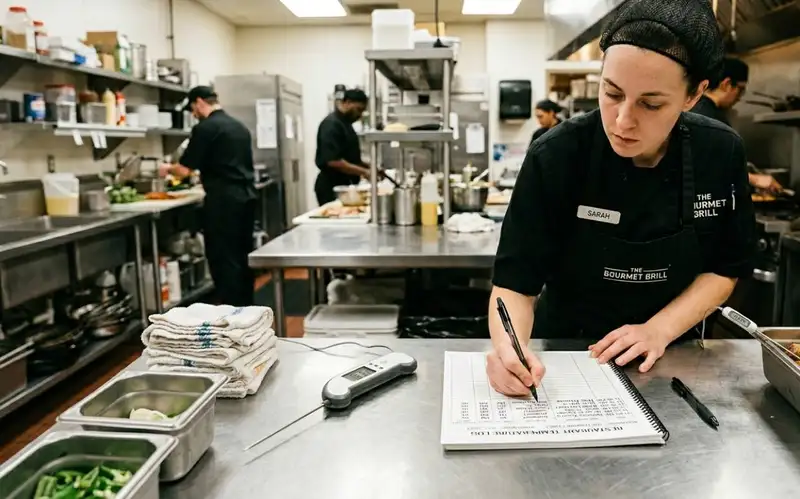
To keep this manageable, restaurant owners should focus on five core temperature logs.
1. Refrigerator and Freezer Temperature Logs - These logs confirm that coolers and freezers are holding product at safe temperatures throughout the day. This matters because equipment problems often start gradually. A unit may drift out of range long before it fully fails. Without a log, product can remain in unsafe storage conditions for hours, increasing both food safety risk and product loss.
2. Hot Holding Temperature Logs - Any food held for service needs regular temperature checks. During busy periods, teams often assume hot holding equipment is maintaining safe conditions. That assumption creates risk. A hot holding log verifies that food stayed within the required range during active service, when exposure can happen quickly.
3. Cold Holding Temperature Logs - Cold items on prep lines, make tables, salad stations, or grab-and-go areas also need to be checked throughout the day. These products are exposed to constant opening, closing, handling, and traffic. A cold holding log helps staff catch problems before food quality declines or safety standards are compromised.
4. Cooking Temperature Logs - Cooking logs confirm that food reached the required internal temperature before service. This is especially important for proteins and other high-risk items. The goal is not to document that food was prepared. The goal is to verify that it was cooked to a safe standard.
5. Cooling and Reheating Temperature Logs - These are critical for batch-prepped items such as soups, sauces, rice, and cooked proteins. Improper cooling or reheating can create serious food safety problems. These logs provide proof that food moved safely through both steps.
Each entry should include -
- the item or unit checked
- the actual temperature
- the time
- the employee responsible
- any corrective action taken
For restaurant owners, strong temperature logs help protect inventory, reduce waste, improve accountability, and catch food safety issues before they become larger operational problems.
Create, Implement, and Execute Multiple Daily Checklists
Streamline Your Operations with Altametrics
Cleaning and Sanitizing Logs
The first log owners should maintain is a food-contact surface cleaning log. This includes prep tables, cutting boards, knives, utensils, slicers, and any equipment that directly touches food. These surfaces need scheduled cleaning and sanitizing throughout the day, not just at closing. A log creates proof that critical surfaces were cleaned at the right times and by the right people.
The second essential log is a sanitizer concentration check log. Sanitizing solution only works when it is mixed and maintained at the correct strength. If concentration is too weak, it may not sanitize effectively. If it is too strong, it may create chemical safety concerns. Logging sanitizer checks helps confirm that the solution being used is actually doing its job.
Restaurants should also keep a dishwashing and ware-washing verification log. Plates, pans, utensils, and small-wares move constantly through the kitchen, and poor ware-washing creates direct contamination risk. A daily log should verify that dish machines or manual ware-washing processes are operating correctly and consistently.
Another key document is an equipment cleaning log. High-use equipment such as fryers, grills, mixers, ovens, and beverage stations can accumulate buildup fast. If these items are not cleaned on schedule, restaurants face both sanitation and maintenance problems. Logging these tasks reinforces consistency and helps prevent skipped cleaning.
Finally, restaurants need restroom and dining area sanitation logs. While these may seem less critical than back-of-house logs, they still affect health standards, guest perception, and overall cleanliness discipline.
Each cleaning and sanitizing log should show -
- what was cleaned or checked
- when it was done
- who completed it
- what sanitizer or method was used if relevant
- any corrective action taken
For restaurant owners, these logs do more than document chores. They help verify execution, reduce contamination risk, improve accountability, and support a cleaner, safer operation every day.
Personal Hygiene and Handwashing Logs
The first log owners should use is a handwashing compliance check log. This does not mean tracking every single hand-wash. It means creating scheduled manager checks during key parts of the day, such as opening, prep periods, shift changes, and peak service times. These checks verify that staff are washing hands at the moments that matter most, including after handling raw product, using the restroom, touching waste, cleaning surfaces, or switching tasks.
The second important log is a glove-use compliance log. Gloves can help reduce contamination risk, but only when they are used correctly. In many restaurants, glove misuse creates a false sense of safety. Employees may wear the same gloves too long, touch multiple surfaces, or fail to change gloves between tasks. A daily compliance log helps managers verify that glove practices support food safety instead of weakening it.
Restaurants should also maintain an employee health and illness reporting log. Staff who are sick, showing symptoms, or reporting exposure to certain illnesses may create serious food safety risk if they are allowed to work in food handling roles. A documented daily process for health screening or symptom reporting helps owners show that this risk is being actively managed.
Another useful document is an opening hygiene readiness log. This can include checks for clean uniforms, proper hair restraints, available hand soap, stocked paper towels, and accessible handwashing stations. These details may seem basic, but when they are missed, hygiene compliance drops quickly.
Each hygiene-related log should capture -
- what was checked
- when it was checked
- who completed the verification
- what issue was identified, if any
- what corrective action was taken
For restaurant owners, hygiene logs help create consistency in one of the hardest areas to manage through assumption alone. They reinforce standards, strengthen manager oversight, reduce contamination risk, and help ensure that daily food safety starts with employee behavior.
Receiving, Storage, and Date Labeling Logs
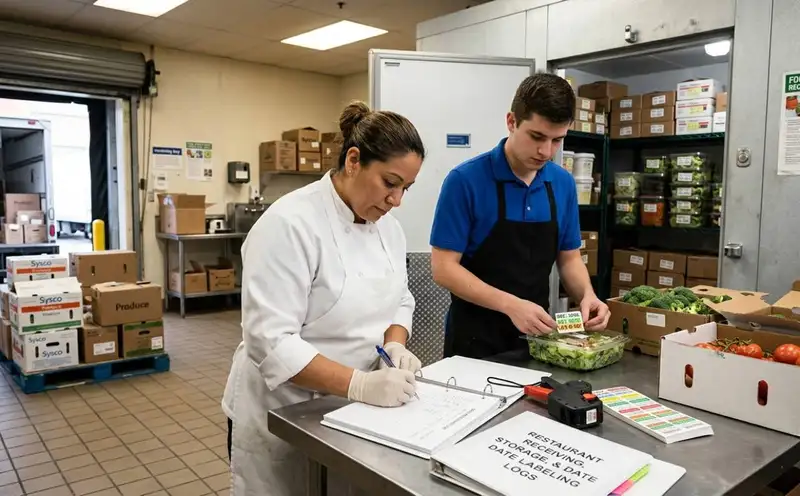
The first log every restaurant should maintain is a receiving log. This log should document key checks at delivery, including product temperature, package condition, visible contamination, and signs of spoilage. It should also confirm that refrigerated and frozen items arrived in acceptable condition. Without a receiving log, staff may accept product too quickly, especially during busy deliveries or shift transitions. That creates risk before food even reaches storage.
The second important document is a storage verification log. Once product is received, it must be stored correctly to maintain safety and quality. This includes keeping raw and ready-to-eat foods separated, using proper shelving order, protecting product from contamination, and making sure items are held in the correct storage area. A daily storage log helps managers verify that standards are being followed instead of assumed.
Restaurants also need a FIFO and stock rotation log. First-in, first-out practices help reduce waste, prevent old inventory from being forgotten, and improve product consistency. Without a documented rotation process, staff may use newer product first and allow older items to expire or decline in quality. Over time, that leads to unnecessary food loss and weaker inventory control.
Another essential document is a date marking and expiration log. Prepared foods, opened products, and stored ingredients should be labeled clearly so teams know what must be used first and what should be discarded. When date labeling is inconsistent, restaurants increase the risk of serving expired food, keeping product too long, or throwing away food simply because no one can verify its status.
Each of these logs should record -
- what was checked
- when it was checked
- who verified it
- any issue found
- what corrective action was taken
For restaurant owners, these logs help control waste, improve consistency, reduce contamination risk, and strengthen daily discipline around product handling from delivery through use.
From Click to Kitchen
Handle All Your Online Orders with Altametrics
How to Build a Log System
The first step is to keep logs simple and role-based. Not every employee needs to complete every log. Line cooks should handle cooking and holding logs tied to their station. Receiving teams should complete delivery checks. Managers should verify critical controls and corrective actions. When logs are assigned by role, accountability becomes clearer and execution becomes more realistic.
The second step is to tie logs to specific moments in the day. Staff should not be told to complete logs sometime during the shift. That creates inconsistency and backfilled records. Instead, checks should happen at fixed operational points such as opening, after deliveries, before lunch service, mid-shift, before dinner rush, and closing. This makes logging part of the routine rather than an afterthought.
Restaurants also need to make logs easy to complete and easy to review. A strong log should be clear, short, and focused only on critical food safety checks. If a form is crowded with unnecessary items, employees will rush through it or ignore it. Simplicity increases completion rates and makes it easier for managers to spot missing information.
Manager verification is another essential part of the system. Staff completion alone is not enough. Managers need to review logs daily, confirm accuracy, and respond immediately when something is out of range or incomplete. This is what turns a log from paperwork into an operational control tool.
Training also matters. Employees should understand not just how to fill out a log, but why it exists. When teams understand that logs help prevent waste, contamination, equipment failures, and compliance issues, they are more likely to take the process seriously.
When a log system fits the way the restaurant actually operates, staff follow it more consistently and food safety becomes easier to control.
Cut Down Prep Time and Boost Accuracy
Automate Your Kitchen with Altametrics!
Frequently
Asked Questions
What is the difference between a food safety log and a checklist?
What is a corrective action in a food safety log?
What temperature logs should a restaurant keep every day?
How can technology improve food safety and sanitation logging?
Must-Read Content

The Ultimate Guide to Managing Food Allergens in Restaurants
Food allergens require accurate labeling, employee training, cross-contact prevention, safe food handling, and consistent procedures to protect customers and improve restaurant safety.

How to Manage Tasks in a Restaurant
Learn how to manage tasks in a restaurant by organizing responsibilities, prioritizing duties, assigning employees, tracking progress, and using technology effectively.
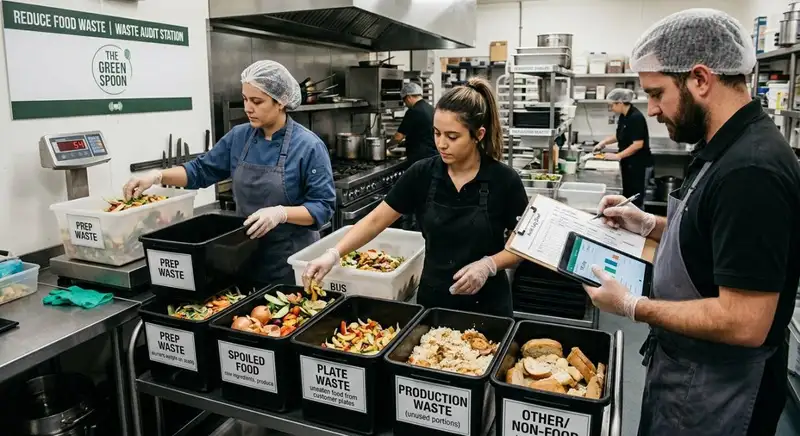
How to Conduct a Food Waste Audit in Your Restaurant
A food waste audit helps restaurant owners identify waste sources, track costs, improve inventory management, reduce food waste, and increase profitability.