The Risk of Cross Contamination
For restaurant owners, the risk is bigger than one mistake. Raw chicken stored above vegetables, the same cutting board used for seafood and salad ingredients, unwashed hands after handling raw meat, or a dirty prep table can all create unsafe food conditions. Since restaurants serve many customers each day, one cross contamination issue can affect multiple orders.
The business impact can also be serious. Foodborne illness complaints, failed health inspections, negative reviews, refund requests, staff retraining, and possible legal claims can damage both revenue and reputation. Customers trust restaurants to prepare food safely, even when the kitchen is busy.
Common Causes of Cross Contamination
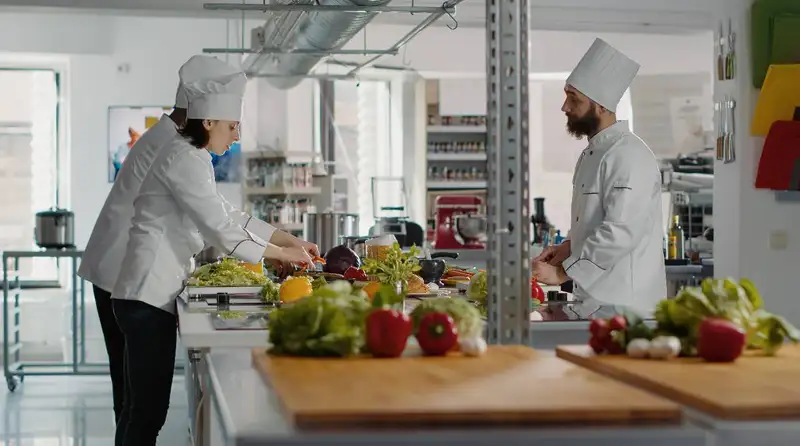
The risk is important because foodborne illness is not rare. In the United States, an estimated 48 million people get sick from foodborne diseases each year. For restaurant owners, that means food safety needs to be managed as a daily operating system, not only as a health inspection requirement.
Common causes of cross contamination include -
1. Poor food storage. Raw meat, poultry, seafood, or eggs can drip onto cooked or ready-to-eat foods if they are stored incorrectly. This is especially dangerous because ready-to-eat foods may not go through another cooking step before being served.
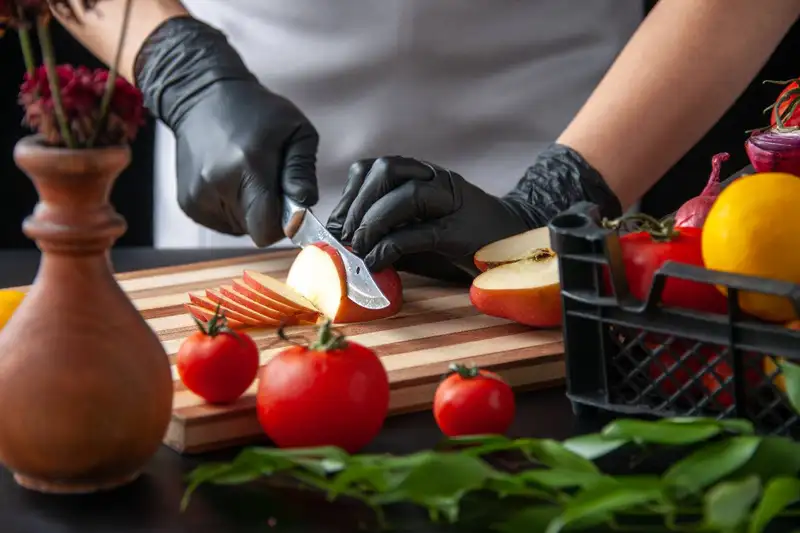
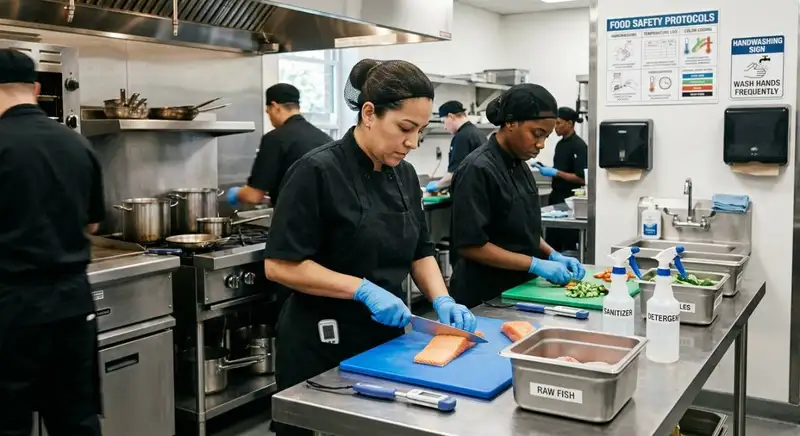
2. Shared prep tools. Using the same knife, cutting board, tongs, slicer, or prep table for raw proteins and fresh ingredients can transfer bacteria from one item to another.
3. Inconsistent handwashing. Employees may move from handling raw chicken, trash, phones, cleaning towels, or dirty dishes back to food prep without washing hands properly.
4. Dirty gloves. Gloves can create a false sense of safety. If employees touch contaminated surfaces and continue using the same gloves, the gloves become another source of contamination.
5. Improper wiping cloth use. Towels that are not stored in sanitizer or changed often can spread bacteria across counters, equipment, handles, and food-contact surfaces.
6. Allergen cross contact. Shared fryers, utensils, prep areas, or containers can transfer allergens like peanuts, shellfish, dairy, wheat, eggs, or soy into foods that should not contain them.
For restaurant owners, the biggest issue is consistency. Cross contamination prevention depends on clear storage rules, dedicated tools, employee training, and manager checks throughout every shift.
Elevate Food Safety, Simplify Compliance!
Experience Seamless Food Safety with Altametrics!
Separate Raw and Ready-to-Eat Foods
For restaurant owners, separation should start before food ever reaches the line. Deliveries should be checked for damaged packaging, leaking proteins, and poor temperature control. In walk-in coolers, raw proteins should be stored in sealed containers and placed below ready-to-eat foods to reduce the chance of drips. Raw poultry, raw meat, raw seafood, eggs, washed produce, and cooked foods should not be mixed together on the same shelf without clear separation.
Prep flow matters just as much as storage. If a cook trims raw chicken on a prep table and then uses the same surface for salad ingredients, bacteria can move from the raw product to food that will not receive a final kill step. The same risk applies to shared knives, cutting boards, pans, tongs, slicers, scales, and gloves.
A simple way to manage this risk is to build separation into the kitchen workflow -
1. Store ready-to-eat foods above raw foods. This protects cooked foods, produce, sauces, and garnishes from raw juices.
2. Use sealed containers for raw proteins. Leaks are one of the easiest ways contamination spreads in coolers.
3. Prep ready-to-eat foods before raw proteins when possible. This reduces the chance of bacteria moving from raw foods to finished items.
4. Clean and sanitize between tasks. Switching from raw chicken to vegetables without a full reset creates a direct contamination path.
5. Assign separate prep zones during busy periods. A small kitchen can still separate tasks by time, table, tool, or employee responsibility.
The aim is to remove guesswork. When employees know where foods belong, which tools to use, and when to clean and sanitize, separation becomes part of the operating routine instead of a last-minute safety reminder.
Color-Coded Tools and Dedicated Equipment
This matters because cross contamination often happens through repeated contact points. A cutting board, knife, slicer, tong, prep container, or towel may touch several foods in a short period. If the same tool moves from raw chicken to lettuce, cooked rice, sandwich toppings, or garnish without being cleaned and sanitized, the risk can spread across multiple menu items.
Dedicated equipment also helps managers control risk by reducing employee guesswork. Instead of relying only on memory, the system tells employees what to do. A red board for raw meat, a green board for produce, or a labeled container for allergens creates a clear standard that can be checked quickly.
Restaurant owners can apply this system in several practical ways -
1. Assign tools by food category. Use separate boards, knives, tongs, and containers for raw proteins, produce, cooked foods, and allergens.
2. Label storage bins and prep containers. Clear labels help employees avoid mixing raw and ready-to-eat ingredients.
3. Keep allergen tools separate. Dedicated utensils, pans, fryer baskets, or prep surfaces can reduce allergen cross contact.
4. Store tools in the correct station. If tools are stored together without separation, employees are more likely to grab the wrong item during rush periods.
5. Inspect tools during every shift. Cracked boards, worn handles, and damaged containers can trap food particles and bacteria, making them harder to clean.
For restaurant owners, the value of color-coded tools is consistency. Training tells employees the rule once, but color-coded equipment reinforces the rule every time someone prepares food.
Handwashing and Glove Use

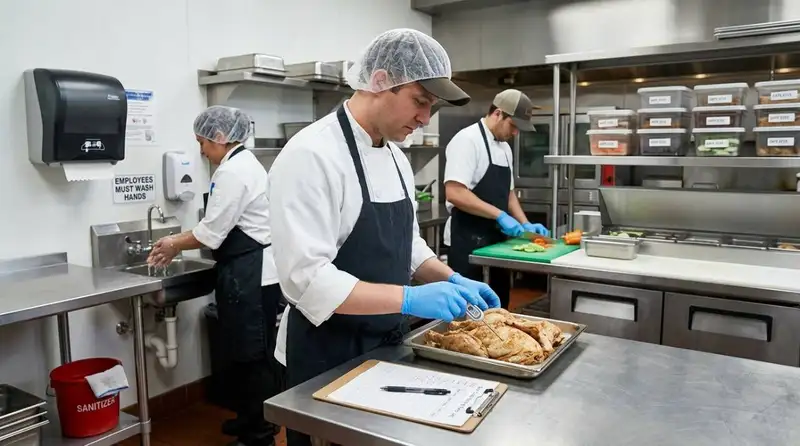
This is why training cannot be limited to a poster above the sink. Restaurant owners need a repeatable system that teaches employees when to wash hands, how to wash hands, when to wear gloves, and when gloves must be changed. A missed handwashing step may seem small, but in a restaurant kitchen, one employee may prepare dozens or hundreds of orders in a single shift.
The most important training points include -
1. Wash hands before starting food prep. Employees should begin each food-handling task with clean hands, especially before working with ready-to-eat foods.
2. Wash hands after handling raw food. Raw meat, poultry, seafood, and eggs can transfer bacteria to hands, gloves, utensils, and prep surfaces.
3. Wash hands after non-food tasks. Trash removal, cleaning, touching phones, handling money, using the restroom, eating, drinking, coughing, sneezing, or touching the face should all trigger handwashing.
4. Change gloves between tasks. Gloves should not move from raw chicken to salad prep, from cleaning to plating, or from cash handling to food service.
5. Never treat gloves as a substitute for handwashing. Gloves can become contaminated just like bare hands. Employees should wash hands before putting on gloves and replace gloves when they become dirty, torn, or used for the wrong task.
6. Use barriers for ready-to-eat foods. Gloves, tongs, deli paper, spatulas, or other utensils help protect foods that will not be cooked again before serving.
For restaurant owners, the goal is behavior consistency. Strong training turns handwashing and glove changes into automatic habits, not optional steps employees remember only during inspections.
Create, Implement, and Execute Multiple Daily Checklists
Streamline Your Operations with Altametrics
Clean and Sanitize Surfaces
This is important because restaurant kitchens have many high-contact areas. Prep tables, cutting boards, knives, slicers, tongs, refrigerator handles, sink handles, sanitizer buckets, order screens, POS devices, and storage containers may be touched repeatedly during a shift. When these surfaces are not cleaned and sanitized correctly, bacteria, allergens, and food residue can move from one station to another.
A data-driven cleaning system should answer four questions - what needs to be cleaned, when it needs to be cleaned, who is responsible, and how managers will verify it. Without that structure, cleaning often becomes inconsistent during rush periods.
Restaurant owners can improve sanitation by focusing on these key controls -
1. Clean before sanitizing. Employees should remove food debris, wash the surface, rinse when needed, and then apply sanitizer according to label directions.
2. Sanitize between food categories. Prep areas and tools should be reset when switching from raw meat, poultry, seafood, or eggs to produce, cooked food, or ready-to-eat items.
3. Monitor sanitizer strength. Sanitizer that is too weak may not work properly. Sanitizer that is too strong can create chemical safety risks. Test strips help employees confirm the correct concentration.
4. Replace wiping cloths often. Wiping cloths should be stored in sanitizer between uses and changed when dirty. A cloth used across multiple surfaces can spread contamination instead of removing it.
5. Prioritize high-touch surfaces. Handles, faucets, switches, screens, railings, and shared tools should be cleaned regularly because employees touch them throughout the shift.
6. Document cleaning tasks. Logs, checklists, and manager initials help confirm that sanitation is happening before, during, and after service.
The aim is a repeatable sanitation process that reduces cross contamination risk every hour the restaurant is open.
Control Allergen Cross Contact
For restaurant owners, allergen control needs to be built into the ordering, prep, cooking, plating, and service process. A server may correctly enter an allergy note, but the kitchen still needs a clear system to prevent the allergen from reaching the plate. Without a defined process, mistakes can happen through shared cutting boards, fryer oil, utensils, gloves, pans, sauces, garnishes, containers, or prep surfaces.
A strong allergen control system should focus on these key areas -
1. Confirm the allergy at order entry. Servers and cashiers should repeat the allergy back to the guest and clearly mark it in the POS or order ticket.
2. Communicate allergy orders to the kitchen. Allergy tickets should stand out visually so cooks, expediters, and managers know the order requires extra care.
3. Use clean and dedicated tools. Knives, cutting boards, pans, tongs, spatulas, and prep bowls should be cleaned and sanitized before preparing an allergy order. When possible, restaurants should use dedicated allergen tools.
4. Watch shared fryers and cooking surfaces. Fries cooked in the same oil as breaded shrimp, chicken, or dairy-containing items may not be safe for guests with certain allergies.
5. Store allergen ingredients carefully. Nuts, sesame, flour, shellfish, dairy, and other allergens should be sealed, labeled, and stored in a way that prevents spills or accidental mixing.
6. Train staff to avoid guessing. If employees are unsure whether a sauce, dressing, breading, dessert, or packaged ingredient contains an allergen, they should verify before answering the guest.
7. Assign manager verification. A manager or trained lead should review allergy orders before they leave the kitchen, especially during rush periods.
For restaurant owners, allergen control is about reducing uncertainty. The safer system is one where staff do not rely on memory, assumptions, or verbal reminders alone. Clear labels, documented recipes, allergy notes, dedicated tools, and manager checks help protect guests and reduce operational risk.
Daily Cross Contamination Checklist
A daily checklist gives restaurant owners a measurable way to confirm that food safety standards are being followed. Instead of asking whether the kitchen "looks clean," managers can check specific items - raw food storage, cutting board use, handwashing supplies, sanitizer levels, allergen procedures, glove changes, and cleaning logs.
A strong cross contamination checklist should include these areas -
1. Opening storage checks. Confirm that raw meat, poultry, seafood, and eggs are stored below ready-to-eat foods. Check that containers are sealed, labeled, and not leaking.
2. Prep station checks. Make sure cutting boards, knives, tongs, prep tables, and containers are separated by food category. Employees should know which tools are used for raw proteins, produce, cooked foods, and allergens.
3. Handwashing checks. Verify that hand sinks have soap, paper towels, warm water, and clear access. A blocked or poorly stocked hand sink makes safe habits harder to follow.
4. Sanitizer checks. Test sanitizer buckets and dish machine sanitizer levels throughout the day. Record the result so managers can see whether cleaning controls are being maintained.
5. Allergen checks. Confirm that allergy orders are clearly marked, communicated to the kitchen, and prepared with clean tools or dedicated equipment when needed.
6. Shift-change checks. Review prep areas, cooler organization, wiping cloths, trash areas, and shared tools before the next team takes over.
7. Closing checks. Confirm that food is covered, labeled, stored correctly, and separated before the kitchen closes.
The most useful checklist is not the longest one. It is the one employees actually complete. Restaurant owners should keep it simple, assign responsibility by role, require manager initials, and review missed items regularly. When cross contamination checks become part of every shift, food safety becomes easier to measure, manage, and improve.
Empower Your Workforce!
Ensure Compliance with Altametrics!
Frequently
Asked Questions
What is the most common cause of cross contamination?
How can restaurants prevent cross contamination?
What is allergen cross contact?
What should be included in a restaurant cross contamination policy?
Must-Read Content
The Ultimate Guide to Managing Food Allergens in Restaurants
Food allergens require accurate labeling, employee training, cross-contact prevention, safe food handling, and consistent procedures to protect customers and improve restaurant safety.
The Most Common Restaurant Health Code Violations
Identify health code violations across major restaurant operations and learn how consistent inspections, training, sanitation, and documentation can reduce risks.
The Complete Guide to OSHA Regulations for Restaurants
This guide explains essential OSHA regulations for restaurants, covering safety hazards, training, hazard communication, PPE, and recordkeeping requirements for owners.