What is supply chain forecasting in a restaurant?
Supply chain forecasting is the process of predicting future ingredient, inventory, and purchasing needs based on expected restaurant demand.
The Ultimate Guide to Supply Chain Forecasting for Restaurants

Supply Chain Forecasting Basics
Supply chain forecasting is the process of predicting what ingredients, products, and supplies a restaurant will need in the future based on expected customer demand. It helps restaurant owners plan purchasing, inventory, and supplier orders before demand occurs rather than reacting after inventory runs low.
In a restaurant, supply chain forecasting begins with sales expectations. For example, if a restaurant expects to sell 500 chicken entrees next week, managers can use recipe data to estimate how much chicken, oil, seasoning, packaging, and other ingredients will be required. They can then compare those requirements with current inventory and determine what needs to be ordered.
Supply chain forecasting typically connects several areas of restaurant operations, including -
1. Sales forecasting - Estimating how much revenue and how many menu items the restaurant expects to sell.
2. Inventory planning - Determining how much product should be available to meet expected demand.
3. Purchasing - Calculating what quantities should be ordered from suppliers.
4. Supplier planning - Accounting for delivery schedules, lead times, minimum order quantities, and potential disruptions.
Supply chain forecasting is closely related to demand forecasting, but the two are not exactly the same. Demand forecasting predicts what customers are likely to purchase, while supply chain forecasting determines what the restaurant needs to have available to meet that demand.
For example, predicting higher burger sales during a major sporting event is demand forecasting. Calculating the additional beef, buns, cheese, produce, and packaging required - and making sure suppliers can deliver those products on time - is supply chain forecasting.
Accurate forecasting helps restaurants maintain a better balance between having enough inventory and avoiding excess stock. Ordering too little can lead to stockouts and unavailable menu items, while ordering too much can increase spoilage, waste, and cash tied up in inventory.
For restaurant owners, supply chain forecasting creates a more structured approach to purchasing by connecting expected sales directly with ingredient requirements and supplier orders.
Identify the Data You Need
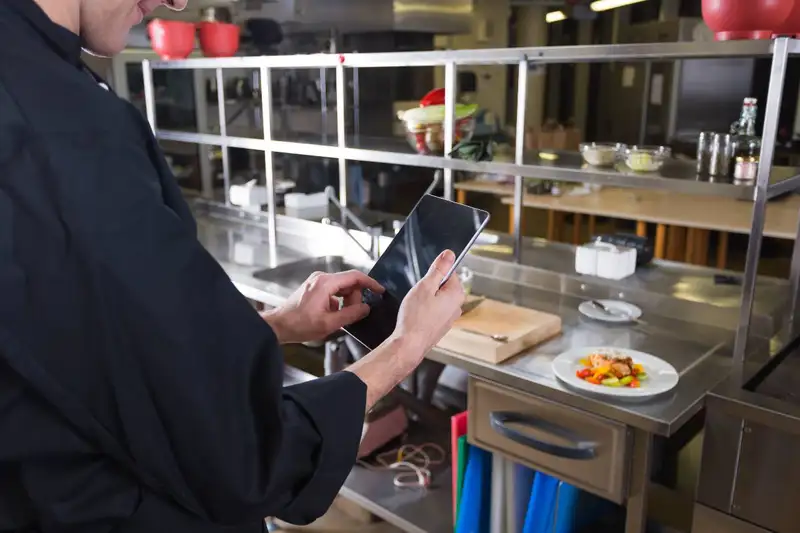
Accurate supply chain forecasting depends on reliable restaurant data. The more clearly restaurant owners can connect sales, inventory, recipes, and supplier information, the easier it becomes to estimate what products will be needed and when they should be ordered.
Start with historical sales data. Review sales by day, week, daypart, and menu item to identify recurring patterns. For example, a restaurant may consistently sell more burgers on Friday evenings or more breakfast items on weekends. These patterns provide a baseline for estimating future demand.
Next, review menu-item and recipe data. Each menu item should be connected to the ingredients and quantities required to prepare it. If a chicken sandwich uses 6 ounces of chicken, forecasting 200 sandwiches means the restaurant will need approximately 75 pounds of chicken before accounting for waste, current inventory, or safety stock.
Restaurant owners should also track -
1. Current inventory levels - Know how much usable product is already on hand before placing new orders.
2. Ingredient usage - Compare expected consumption with actual usage to identify waste, portioning issues, or inaccurate recipes.
3. Supplier lead times - Record how many days suppliers typically need to fulfill orders.
4. Delivery schedules - Account for which days suppliers deliver and how frequently orders can be placed.
5. Minimum order quantities - Include supplier purchasing requirements when determining order sizes.
6. Waste and spoilage - Track products that are regularly discarded, expired, or lost during preparation.
External factors should also be included in the forecast. Holidays, local events, promotions, weather, school schedules, and seasonal changes can all affect customer traffic and menu demand.
For example, historical sales may suggest that a restaurant normally sells 300 entrees on a Saturday. However, an upcoming promotion may increase expected demand to 360. Using the normal 300-unit forecast could leave the restaurant understocked.
The goal is to create a forecasting process that combines historical patterns with current operating conditions. When sales, inventory, recipe, supplier, and external data are reviewed together, restaurant owners can make more informed purchasing decisions and reduce the risk of both shortages and excess inventory.
Efficient Ordering at Your Fingertips
Experience Flawless Inventory Management with Altametrics
Restaurant Sales and Customer Demand
Once the right data is in place, the next step is to estimate how much the restaurant is likely to sell during an upcoming period. Sales forecasting gives restaurant owners a starting point for determining how much inventory, labor, and purchasing capacity will be needed.
Begin with historical sales patterns. Review previous sales by day of the week, week, month, and season. A restaurant that consistently generates higher sales on Fridays and Saturdays should reflect those patterns in its forecast instead of using the same sales estimate for every day.
Forecasting should also go beyond total revenue. Restaurant owners can improve accuracy by forecasting at a more detailed level, including -
1. Daypart - Breakfast, lunch, dinner, and late-night demand may follow different patterns.
2. Menu category - Entrees, appetizers, beverages, and desserts may grow or decline at different rates.
3. Menu item - High-volume items should be forecast individually when possible.
4. Sales channel - Dine-in, takeout, delivery, drive-thru, and online ordering may have different demand patterns.
For example, suppose a restaurant typically sells 240 chicken sandwiches on Fridays. If an upcoming promotion is expected to increase demand by 15%, the forecast would increase to approximately 276 sandwiches. That estimate can then be converted into the chicken, buns, produce, sauces, and packaging needed to support those sales.
Restaurant owners should also adjust forecasts for holidays, promotions, local events, weather conditions, seasonal traffic, and changes in operating hours. Historical averages provide a useful baseline, but they should not be treated as fixed predictions.
After the period ends, compare forecasted sales with actual sales. If the restaurant forecasted 1,000 entrees but sold 850, demand was overestimated by 150 entrees. Repeated differences can reveal assumptions that need to be adjusted.
More reliable sales forecasts give the rest of the supply chain a stronger foundation. When expected demand is estimated at the menu-item level, restaurant owners can translate those sales projections into specific ingredient and purchasing requirements.
Turn Sales Forecasts Into Ingredient Needs
After forecasting expected sales, restaurant owners need to translate those projections into specific ingredient requirements. This step connects demand forecasting with purchasing and inventory planning.
Start by linking each menu item to its standardized recipe. The recipe should specify exactly how much of each ingredient is required for one serving. For example, if one burger requires 6 ounces of beef and the restaurant expects to sell 300 burgers, projected beef usage would be 1,800 ounces, or 112.5 pounds.
The same calculation should be completed for every major ingredient tied to forecasted menu-item sales.
Restaurant owners should then adjust projected usage based on -
1. Current inventory - Subtract usable inventory already on hand from projected requirements.
2. Expected waste - Account for trimming, spoilage, preparation loss, and other normal waste.
3. Safety stock - Maintain an appropriate buffer for unexpected increases in demand or supplier delays.
4. Yield - Consider whether the purchased quantity differs from the usable quantity after preparation.
5. Existing purchase orders - Avoid ordering products that are already scheduled for delivery.
For example, suppose the restaurant expects to need 120 pounds of chicken during the next ordering period. If 35 pounds are currently available and another 20 pounds are already scheduled for delivery, the remaining requirement is 65 pounds before considering safety stock or expected waste.
Forecasting should be especially detailed for high-volume, expensive, and perishable ingredients. Errors involving products such as meat, seafood, dairy, and fresh produce can quickly create either shortages or unnecessary waste.
Restaurant owners should also aggregate ingredient demand across the entire menu. Chicken may be used in sandwiches, salads, bowls, and entrees, so purchasing requirements should reflect the combined forecast rather than treating each dish separately.
This process turns a general sales forecast into an actionable purchasing plan. Instead of ordering based primarily on intuition or previous order quantities, managers can calculate what the restaurant is expected to consume based on projected menu sales.
When recipe data, inventory counts, and sales forecasts are connected, restaurants can make purchasing decisions that more closely reflect actual operating needs.
Plan Purchasing Around Supplier Lead Times

Once ingredient requirements are calculated, restaurant owners need to determine when to place orders. Even an accurate demand forecast can lead to stockouts if purchasing decisions do not account for supplier lead times, delivery schedules, and reorder points.
Start by identifying the lead time for each supplier. Lead time is the period between placing an order and receiving the product. Some suppliers may deliver the next day, while others may require several days of notice. Specialty products, imported ingredients, or items ordered from smaller vendors may require even longer lead times.
For example, if a restaurant expects to need 80 pounds of salmon on Saturday and the supplier requires a three-day lead time, the order should generally be placed by Wednesday. Waiting until Friday could leave the restaurant without enough product to meet forecasted demand.
Restaurant owners should also consider -
1. Delivery frequency - A supplier delivering twice a week requires different inventory planning than one delivering daily.
2. Reorder points - Establish the inventory level that triggers a new order.
3. Safety stock - Keep a reasonable buffer for unexpected demand or delayed deliveries.
4. Minimum order quantities - Account for supplier requirements that may force larger purchases.
5. Storage capacity - Avoid ordering more product than refrigerators, freezers, and dry storage areas can safely hold.
A basic reorder point can be calculated as -
Reorder Point = Expected Usage During Lead Time + Safety Stock
Suppose a restaurant uses 10 cases of a product per day, the supplier has a two-day lead time, and the restaurant keeps 5 cases as safety stock. The reorder point would be -
(10 x 2) + 5 = 25 cases
When inventory falls to approximately 25 cases, the restaurant should consider placing another order.
Safety stock should also be managed carefully. Too little increases the risk of stockouts, while too much can increase spoilage, storage costs, and cash tied up in inventory.
By combining demand forecasts with supplier lead times and delivery schedules, restaurant owners can create purchasing plans that help ensure ingredients arrive when they are needed without unnecessarily increasing inventory levels.
Streamline Your Inventory. Order Smartly.
Start Simplifying Your Orders with Altametrics
Seasonality and Unexpected Changes
Restaurant demand is rarely consistent throughout the year. Seasonal patterns, holidays, local events, promotions, and unexpected disruptions can all change how much product a restaurant needs. For that reason, supply chain forecasting should be updated regularly instead of relying only on historical averages.
Start by reviewing seasonal sales patterns. Restaurants may see higher demand during summer tourism, holiday periods, school breaks, major sporting events, or colder months depending on the concept and location. These patterns can affect both total sales and the mix of menu items customers order.
Restaurant owners should also adjust forecasts for -
1. Holidays - Thanksgiving, Christmas, Valentine's Day, and other holidays can significantly change traffic and menu demand.
2. Local events - Concerts, festivals, conventions, and sporting events may increase customer volume.
3. Promotions - Limited-time offers, discounts, and new menu launches can create temporary spikes in demand.
4. Weather - Heat, rain, snow, or extreme temperatures can influence dine-in traffic, delivery orders, and product preferences.
5. Operating changes - Extended hours, closures, renovations, or changes in service channels can affect demand.
6. Supplier disruptions - Delays, shortages, transportation problems, and product substitutions can affect what is available to order.
For example, if a restaurant typically sells 400 entrees on a Saturday but expects a nearby event to increase traffic by 20%, the adjusted forecast would rise to approximately 480 entrees. Purchasing plans should then reflect the additional ingredient demand.
Restaurant owners should also create contingency plans for critical ingredients. This may include identifying backup suppliers, approved substitute products, or alternative menu items that can be promoted when an ingredient becomes unavailable.
Forecasts should be updated as new information becomes available. A forecast created two weeks in advance may need to change if weather conditions shift, a promotion performs differently than expected, or a supplier announces a delay.
The most effective forecasting process combines historical data with current conditions. Regular adjustments help restaurant owners respond to changing demand while reducing the risk of both shortages and excess inventory.
Use Technology to Improve Supply Chain Forecasting
Restaurant supply chain forecasting can become difficult when sales, inventory, recipes, and purchasing data are stored in separate systems. Technology can help restaurant owners connect this information and create more consistent forecasts with less manual work.
Start by integrating POS sales data with inventory and purchasing systems. POS data shows what customers are actually buying, while inventory systems track how much product is available and how quickly it is being used. When these systems work together, restaurant owners can compare expected demand with current stock before placing orders.
Technology can also support -
1. Automated demand forecasting - Software can analyze historical sales patterns and estimate future demand by day, week, daypart, or menu item.
2. Ingredient-level forecasting - Recipe data can convert projected menu-item sales into expected ingredient usage.
3. Recommended order quantities - Purchasing systems can use demand forecasts, current inventory, supplier lead times, and safety stock to suggest how much to order.
4. Real-time inventory visibility - Digital inventory tools can help managers monitor stock levels and identify products that are running low.
5. Supplier management - Centralized purchasing systems can track order history, delivery schedules, pricing, and supplier performance.
For example, suppose a forecasting system predicts that a restaurant will sell 600 chicken entrees next week. If each entree requires 6 ounces of chicken, projected usage is approximately 225 pounds. If the restaurant already has 70 pounds in usable inventory, technology can help calculate the remaining requirement while also accounting for incoming orders, waste assumptions, and safety stock.
AI and predictive analytics can further improve forecasting by analyzing multiple variables at the same time. Instead of relying only on previous sales, forecasting tools may incorporate seasonality, promotions, day-of-week patterns, recent demand changes, and other operational data to generate updated projections.
Technology should not eliminate management oversight. Restaurant owners still need to review unusual events, supplier disruptions, menu changes, and local conditions that automated systems may not fully anticipate.
The goal is to reduce manual calculations while giving managers better information. By connecting sales, recipes, inventory, and purchasing data, technology can make supply chain forecasting faster, more consistent, and easier to adjust as restaurant conditions change.
Track Forecast Accuracy
Supply chain forecasting should be treated as an ongoing process rather than a one-time calculation. Restaurant owners need to compare forecasts with actual results to understand where estimates are accurate and where adjustments are needed.
Start by comparing forecasted demand with actual sales and ingredient usage. For example, if a restaurant forecasts 500 chicken entrees but sells only 425, demand was overestimated by 75 entrees. Repeated differences like this can lead to excess inventory, higher waste, and unnecessary purchasing.
Restaurant owners should monitor several key indicators, including -
1. Forecast accuracy - Measure how closely projected sales and ingredient usage match actual results.
2. Stockouts - Track how often ingredients become unavailable before the next delivery.
3. Food waste - Monitor spoilage, overproduction, and expired inventory.
4. Inventory variance - Compare recorded inventory with actual physical counts.
5. Emergency purchases - Track last-minute orders caused by inaccurate forecasts or unexpected demand.
6. Order adjustments - Review how frequently managers need to increase, reduce, or cancel supplier orders.
For example, if a restaurant forecasts 100 cases of a product but actually uses 90, the forecast was 10 cases higher than actual demand. If this pattern occurs repeatedly, future forecasts should be adjusted downward.
Restaurant owners should also review forecasting performance by menu item, ingredient, daypart, location, and supplier. A restaurant-wide forecast may appear accurate even when certain ingredients are consistently overordered or specific locations experience frequent shortages.
Regular reviews can help identify the reasons behind forecasting errors. These may include inaccurate recipe data, outdated sales assumptions, unexpected promotions, poor inventory counts, supplier delays, or changes in customer demand.
By consistently measuring forecast accuracy and adjusting assumptions, restaurants can improve purchasing decisions, reduce waste, prevent stockouts, and build a supply chain that responds more effectively to changing demand.
Transform Your Restaurant Operations Now!
Effortless Inventory Tracking with Altametrics!
Inventory management
How to Conduct a Food Waste Audit in Your Restaurant
Software integration
Smart Ways to Use AI in Your Restaurant

Employee scheduling
Employee Time Tracking Tips for Restaurants
Employee scheduling
7 Scheduling Mistakes Restaurant Owners Should Stop Making

Employee scheduling
Human Resource Management for Restaurants
Employee scheduling
Common Payroll Challenges in Restaurants

Sales forecasting
How to Use Restaurant Analytics to Improve Profitability

Restaurant management
The Complete Guide to Restaurant Reputation Management

Accounting payroll
Restaurant Cash Handling Procedures
Frequently Asked Questions
What causes inaccurate restaurant supply chain forecasts?
Common causes include inaccurate inventory counts, outdated recipes, unexpected demand changes, promotions, weather, supplier disruptions, and relying too heavily on historical averages.
How can restaurants measure forecast accuracy?
Restaurants can compare forecasted sales, ingredient usage, and purchasing requirements with actual results to identify over-forecasting and under-forecasting.
How does supply chain forecasting help prevent stockouts?
Forecasting estimates future ingredient demand and combines it with current inventory, supplier lead times, and safety stock to determine when products should be reordered.
What is the best forecasting method for restaurants?
The best method depends on the restaurant's size, sales patterns, menu complexity, and available data. Many restaurants combine historical sales with seasonal adjustments and recent demand trends.