

The Basics of Liquor Cost Management
Liquor cost management is the process of monitoring and controlling how much a restaurant spends on alcoholic beverages compared with the revenue those beverages produce. It covers every stage of bar operations, including purchasing, receiving, storage, inventory counts, drink preparation, pricing, waste tracking, and sales reporting.
For restaurant owners, this process is important because liquor can generate strong margins, but those margins are easy to lose. Overpouring, inconsistent recipes, inaccurate inventory counts, missing bottles, excessive discounts, and poor purchasing decisions can quickly raise costs. Small losses on individual drinks may seem minor, but they can become significant when repeated across busy shifts.
Strong liquor cost management depends on clear procedures. Each drink should follow a standard recipe and pour size. Deliveries should be checked against invoices, bottles should be stored securely, and inventory should be counted on a consistent schedule. Spills, breakage, complimentary drinks, and transfers should also be recorded.
Liquor cost should be treated as an operational performance measure, not just an accounting figure. Regular tracking helps owners identify unusual variances, improve staff training, adjust prices, reduce waste, and make smarter purchasing decisions. The result is better cash flow, stronger accountability, and more reliable beverage profits throughout the business.
For restaurant owners, this process is important because liquor can generate strong margins, but those margins are easy to lose. Overpouring, inconsistent recipes, inaccurate inventory counts, missing bottles, excessive discounts, and poor purchasing decisions can quickly raise costs. Small losses on individual drinks may seem minor, but they can become significant when repeated across busy shifts.
Strong liquor cost management depends on clear procedures. Each drink should follow a standard recipe and pour size. Deliveries should be checked against invoices, bottles should be stored securely, and inventory should be counted on a consistent schedule. Spills, breakage, complimentary drinks, and transfers should also be recorded.
Liquor cost should be treated as an operational performance measure, not just an accounting figure. Regular tracking helps owners identify unusual variances, improve staff training, adjust prices, reduce waste, and make smarter purchasing decisions. The result is better cash flow, stronger accountability, and more reliable beverage profits throughout the business.
How to Calculate Liquor Cost Percentage
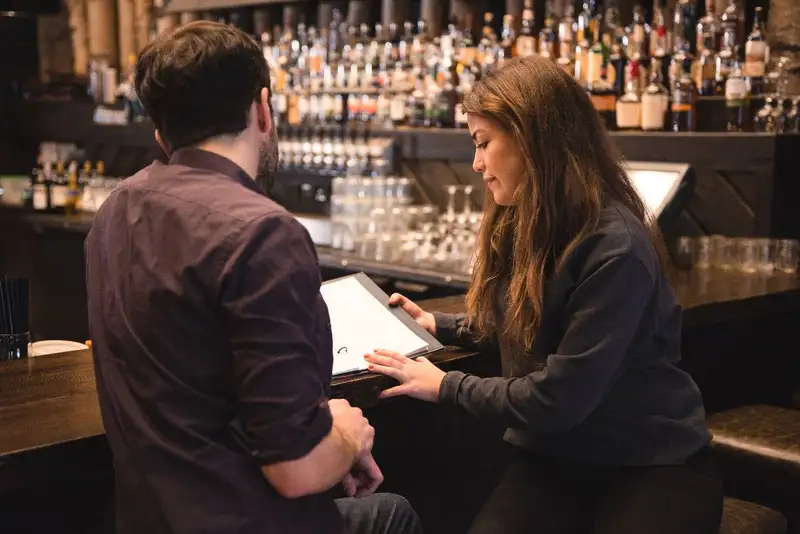
Liquor cost percentage shows how much of a restaurant's liquor sales are being used to cover the cost of the liquor sold. Tracking this number helps restaurant owners measure beverage profitability, compare performance across reporting periods, and identify potential problems such as overpouring, waste, theft, or inaccurate inventory counts.
The calculation begins by finding the cost of liquor used during a specific period -
Beginning liquor inventory + liquor purchases - ending liquor inventory = cost of liquor used
Next, divide the cost of liquor used by total liquor sales for the same period -
Liquor cost percentage = Cost of liquor used / liquor sales x 100
For example, assume a restaurant begins the week with $8,000 in liquor inventory, purchases another $2,500, and finishes the week with $7,000 in inventory.
$8,000 + $2,500 - $7,000 = $3,500 in liquor used
If liquor sales for that week were $17,500, the calculation would be -
$3,500 / $17,500 x 100 = 20% liquor cost
This means the restaurant spent 20 cents on liquor for every dollar of liquor revenue generated.
For an accurate result, owners must use inventory and sales data from the same time period. Counts should be completed consistently, preferably at the same time and on the same day each week. Transfers between locations, complimentary drinks, spills, breakage, and returned products should also be documented.
A single percentage does not explain the entire operation. Restaurant owners should compare liquor cost over several weeks and investigate sudden increases. A rising percentage may indicate higher supplier prices, weaker portion control, lower menu prices, excessive waste, or inventory loss.
The calculation begins by finding the cost of liquor used during a specific period -
Beginning liquor inventory + liquor purchases - ending liquor inventory = cost of liquor used
Next, divide the cost of liquor used by total liquor sales for the same period -
Liquor cost percentage = Cost of liquor used / liquor sales x 100
For example, assume a restaurant begins the week with $8,000 in liquor inventory, purchases another $2,500, and finishes the week with $7,000 in inventory.
$8,000 + $2,500 - $7,000 = $3,500 in liquor used
If liquor sales for that week were $17,500, the calculation would be -
$3,500 / $17,500 x 100 = 20% liquor cost
This means the restaurant spent 20 cents on liquor for every dollar of liquor revenue generated.
For an accurate result, owners must use inventory and sales data from the same time period. Counts should be completed consistently, preferably at the same time and on the same day each week. Transfers between locations, complimentary drinks, spills, breakage, and returned products should also be documented.
A single percentage does not explain the entire operation. Restaurant owners should compare liquor cost over several weeks and investigate sudden increases. A rising percentage may indicate higher supplier prices, weaker portion control, lower menu prices, excessive waste, or inventory loss.
Get Accurate Inventory Valuations
Manage Your Workforce with Altametrics
Set Target Liquor Cost Benchmarks
A liquor cost benchmark gives restaurant owners a clear standard for evaluating beverage performance. Instead of reviewing liquor costs without context, owners can compare actual results with a target and quickly identify when costs are moving in the wrong direction.
The right target will vary by restaurant. A casual dining concept with a large cocktail menu may have different costs than a sports bar focused on beer and basic mixed drinks. Premium spirits, signature cocktails, discounts, complimentary drinks, happy-hour pricing, and local supplier prices can all affect the final percentage. For this reason, restaurant owners should avoid copying another business's benchmark without reviewing their own sales mix and operating costs.
A practical target should be based on three factors -
1. Product costs - Calculate the cost of each spirit, wine, beer, mixer, garnish, and ingredient used in beverage recipes.
2. Menu pricing - Compare each drink's selling price with its recipe cost to determine whether the expected margin supports the restaurant's goals.
3. Historical performance - Review several weeks or months of liquor cost data to understand normal patterns and identify realistic opportunities for improvement.
Owners can set an overall liquor cost target for the bar and create separate benchmarks for spirits, wine, and beer. This provides more useful information because one category may perform well while another drives up total costs. For example, an increase in total liquor cost could come from wine spoilage, excessive cocktail pours, or heavy discounting rather than a problem across the entire beverage program.
Targets should also be reviewed when supplier prices, menu prices, recipes, or promotions change. A benchmark is not a permanent number. It should evolve with the restaurant's operations. By setting realistic targets and monitoring them consistently, owners can spot cost problems earlier and make decisions based on measurable performance rather than assumptions.
The right target will vary by restaurant. A casual dining concept with a large cocktail menu may have different costs than a sports bar focused on beer and basic mixed drinks. Premium spirits, signature cocktails, discounts, complimentary drinks, happy-hour pricing, and local supplier prices can all affect the final percentage. For this reason, restaurant owners should avoid copying another business's benchmark without reviewing their own sales mix and operating costs.
A practical target should be based on three factors -
1. Product costs - Calculate the cost of each spirit, wine, beer, mixer, garnish, and ingredient used in beverage recipes.
2. Menu pricing - Compare each drink's selling price with its recipe cost to determine whether the expected margin supports the restaurant's goals.
3. Historical performance - Review several weeks or months of liquor cost data to understand normal patterns and identify realistic opportunities for improvement.
Owners can set an overall liquor cost target for the bar and create separate benchmarks for spirits, wine, and beer. This provides more useful information because one category may perform well while another drives up total costs. For example, an increase in total liquor cost could come from wine spoilage, excessive cocktail pours, or heavy discounting rather than a problem across the entire beverage program.
Targets should also be reviewed when supplier prices, menu prices, recipes, or promotions change. A benchmark is not a permanent number. It should evolve with the restaurant's operations. By setting realistic targets and monitoring them consistently, owners can spot cost problems earlier and make decisions based on measurable performance rather than assumptions.
Drink Recipes and Pour Sizes
Standardized drink recipes help restaurant owners control liquor costs by making every beverage consistent. When bartenders use different amounts of liquor, mixers, syrups, or garnishes, the actual cost of a drink can be higher than the amount used in menu pricing calculations. Small differences in each pour can create significant losses when multiplied across hundreds of drinks.
Every cocktail should have a written recipe that lists -
- The exact type and brand of liquor
- The required pour size
- Mixer and syrup quantities
- Garnish specifications
- Glassware requirements
- Preparation instructions
Recipes should be easy for bartenders to access during every shift. Owners can store them in a printed bar manual, recipe book, training guide, or digital system. The same recipe standards should also be used when calculating drink costs and setting menu prices.
Pour sizes must be clearly defined. A restaurant may use a 1-ounce, 1.25-ounce, 1.5-ounce, or 2-ounce standard depending on its concept and pricing strategy. Once the standard is selected, bartenders should follow it consistently. Jiggers, measured pour spouts, or automated dispensing systems can help improve accuracy.
Training is equally important. Bartenders should understand that portion control is not about giving customers less value. It is about serving the drink exactly as designed. Accurate pours protect flavor, alcohol balance, guest consistency, and profitability.
Managers should also perform occasional pour tests and compare actual bottle usage with expected usage based on sales. When differences appear, the restaurant can determine whether the cause is overpouring, incorrect recipes, unrecorded drinks, or poor staff training.
By standardizing recipes and pour sizes, restaurant owners can calculate costs more accurately, deliver consistent beverages, reduce waste, and maintain stronger control over liquor profit margins.
Every cocktail should have a written recipe that lists -
- The exact type and brand of liquor
- The required pour size
- Mixer and syrup quantities
- Garnish specifications
- Glassware requirements
- Preparation instructions
Recipes should be easy for bartenders to access during every shift. Owners can store them in a printed bar manual, recipe book, training guide, or digital system. The same recipe standards should also be used when calculating drink costs and setting menu prices.
Pour sizes must be clearly defined. A restaurant may use a 1-ounce, 1.25-ounce, 1.5-ounce, or 2-ounce standard depending on its concept and pricing strategy. Once the standard is selected, bartenders should follow it consistently. Jiggers, measured pour spouts, or automated dispensing systems can help improve accuracy.
Training is equally important. Bartenders should understand that portion control is not about giving customers less value. It is about serving the drink exactly as designed. Accurate pours protect flavor, alcohol balance, guest consistency, and profitability.
Managers should also perform occasional pour tests and compare actual bottle usage with expected usage based on sales. When differences appear, the restaurant can determine whether the cause is overpouring, incorrect recipes, unrecorded drinks, or poor staff training.
By standardizing recipes and pour sizes, restaurant owners can calculate costs more accurately, deliver consistent beverages, reduce waste, and maintain stronger control over liquor profit margins.
Improve Liquor Inventory Control

Strong liquor inventory control helps restaurant owners understand what they have, what they used, and what needs to be ordered. Without accurate inventory records, it becomes difficult to calculate liquor costs, detect losses, prevent overstocking, or make informed purchasing decisions.
Start by organizing the storage area. Bottles should be grouped by category, brand, and size so managers can count them quickly and consistently. Open bottles should remain in assigned locations, while reserve inventory should be stored securely. Clear organization reduces counting mistakes and makes missing products easier to notice.
Restaurant owners should also establish a regular inventory schedule. Many businesses count liquor weekly, while high-volume bars may track expensive or fast-moving products more frequently. Counts should be completed at the same time, preferably when the restaurant is closed and product movement is limited.
Accurate counts require more than recording full bottles. Open bottles should be measured using a consistent method, such as estimating tenths of a bottle, weighing bottles, or using inventory software. Managers should also separate spirits, wine, and beer so each category can be reviewed independently.
Par levels are another important control. A par level defines how much of each product the restaurant should keep in stock based on sales demand and delivery schedules. When par levels are too high, cash becomes tied up in slow-moving inventory. When they are too low, the restaurant risks stockouts and emergency purchases.
Finally, compare inventory usage with POS sales and standard recipes. Large differences may point to overpouring, unrecorded drinks, breakage, theft, or counting errors. Consistent inventory control allows restaurant owners to identify these issues early, improve ordering accuracy, and protect beverage profits.
Start by organizing the storage area. Bottles should be grouped by category, brand, and size so managers can count them quickly and consistently. Open bottles should remain in assigned locations, while reserve inventory should be stored securely. Clear organization reduces counting mistakes and makes missing products easier to notice.
Restaurant owners should also establish a regular inventory schedule. Many businesses count liquor weekly, while high-volume bars may track expensive or fast-moving products more frequently. Counts should be completed at the same time, preferably when the restaurant is closed and product movement is limited.
Accurate counts require more than recording full bottles. Open bottles should be measured using a consistent method, such as estimating tenths of a bottle, weighing bottles, or using inventory software. Managers should also separate spirits, wine, and beer so each category can be reviewed independently.
Par levels are another important control. A par level defines how much of each product the restaurant should keep in stock based on sales demand and delivery schedules. When par levels are too high, cash becomes tied up in slow-moving inventory. When they are too low, the restaurant risks stockouts and emergency purchases.
Finally, compare inventory usage with POS sales and standard recipes. Large differences may point to overpouring, unrecorded drinks, breakage, theft, or counting errors. Consistent inventory control allows restaurant owners to identify these issues early, improve ordering accuracy, and protect beverage profits.
Streamline Your Inventory. Order Smartly.
Start Simplifying Your Orders with Altametrics
Control Waste, Overpouring, and Theft
Liquor losses do not always come from one major problem. They often build through small, repeated issues such as heavy pours, unrecorded drinks, spills, incorrect recipes, unauthorized discounts, breakage, or missing bottles. For restaurant owners, controlling these losses requires clear procedures and consistent oversight.
Overpouring is one of the most common causes of higher liquor costs. A bartender who adds only a small amount beyond the standard pour may not notice the difference, but the extra product adds up across hundreds of drinks. Measured pour spouts, jiggers, regular pour tests, and recipe training can help keep portions consistent.
Waste should also be documented instead of treated as an unavoidable expense. Every spill, broken bottle, spoiled wine, incorrect drink, or returned cocktail should be entered into a waste log. This gives managers a more accurate explanation for inventory differences and helps identify repeated problems by product, employee, or shift.
Unrecorded drinks can create another gap between inventory usage and sales. Complimentary drinks, manager promotions, staff beverages, and customer replacements should all be entered through the POS system, even when no payment is collected. Recording these transactions protects inventory accuracy.
Theft prevention depends on strong controls rather than constant suspicion. Restaurants can limit storage access, assign individual POS logins, review voids and discounts, require approval for complimentary drinks, and count high-value bottles more frequently. Deliveries should also be checked against purchase orders and invoices before products are stored.
Managers should review inventory variance alongside sales, waste logs, discounts, voids, and staff schedules. A repeated variance during a particular shift may require additional training or closer monitoring. By documenting every form of liquor movement, restaurant owners can reduce unexplained losses, improve accountability, and protect bar profit margins.
Overpouring is one of the most common causes of higher liquor costs. A bartender who adds only a small amount beyond the standard pour may not notice the difference, but the extra product adds up across hundreds of drinks. Measured pour spouts, jiggers, regular pour tests, and recipe training can help keep portions consistent.
Waste should also be documented instead of treated as an unavoidable expense. Every spill, broken bottle, spoiled wine, incorrect drink, or returned cocktail should be entered into a waste log. This gives managers a more accurate explanation for inventory differences and helps identify repeated problems by product, employee, or shift.
Unrecorded drinks can create another gap between inventory usage and sales. Complimentary drinks, manager promotions, staff beverages, and customer replacements should all be entered through the POS system, even when no payment is collected. Recording these transactions protects inventory accuracy.
Theft prevention depends on strong controls rather than constant suspicion. Restaurants can limit storage access, assign individual POS logins, review voids and discounts, require approval for complimentary drinks, and count high-value bottles more frequently. Deliveries should also be checked against purchase orders and invoices before products are stored.
Managers should review inventory variance alongside sales, waste logs, discounts, voids, and staff schedules. A repeated variance during a particular shift may require additional training or closer monitoring. By documenting every form of liquor movement, restaurant owners can reduce unexplained losses, improve accountability, and protect bar profit margins.
Purchasing and Supplier Costs
Effective liquor cost management begins before a bottle reaches the bar. Purchasing decisions determine how much cash is tied up in inventory, how much the restaurant pays per serving, and whether popular products remain available without creating excess stock.
Restaurant owners should base orders on sales data rather than estimates. Reviewing weekly usage, upcoming events, seasonal demand, and current inventory levels helps managers purchase the right quantities. Ordering too much can create storage problems, increase the risk of breakage or spoilage, and lock cash into products that may take months to sell. Ordering too little can lead to stockouts, emergency purchases, and lost beverage sales.
Supplier invoices should also be reviewed carefully. Managers should compare the products delivered with the original purchase order and confirm -
1. Product accuracy - Verify the brand, bottle size, vintage, and quantity.
2. Pricing accuracy - Check unit prices, discounts, taxes, delivery charges, and promotional credits.
3. Product condition - Inspect bottles for damaged seals, breakage, leakage, or incorrect labeling.
4. Delivery completion - Record shortages, substitutions, and backordered products before accepting the shipment.
Restaurant owners should compare supplier pricing regularly instead of assuming existing rates remain competitive. Volume discounts may reduce unit costs, but they are only valuable when the restaurant can sell the inventory within a reasonable period. Large orders of slow-moving liquor can increase carrying costs and reduce purchasing flexibility.
Par levels provide a more disciplined ordering method. Each product should have a minimum and maximum stock level based on average usage and supplier delivery frequency. Managers can then order only the amount required to restore inventory to its target level.
By connecting purchasing decisions to inventory and sales data, restaurant owners can control supplier costs, reduce excess stock, prevent shortages, and protect liquor margins.
Restaurant owners should base orders on sales data rather than estimates. Reviewing weekly usage, upcoming events, seasonal demand, and current inventory levels helps managers purchase the right quantities. Ordering too much can create storage problems, increase the risk of breakage or spoilage, and lock cash into products that may take months to sell. Ordering too little can lead to stockouts, emergency purchases, and lost beverage sales.
Supplier invoices should also be reviewed carefully. Managers should compare the products delivered with the original purchase order and confirm -
1. Product accuracy - Verify the brand, bottle size, vintage, and quantity.
2. Pricing accuracy - Check unit prices, discounts, taxes, delivery charges, and promotional credits.
3. Product condition - Inspect bottles for damaged seals, breakage, leakage, or incorrect labeling.
4. Delivery completion - Record shortages, substitutions, and backordered products before accepting the shipment.
Restaurant owners should compare supplier pricing regularly instead of assuming existing rates remain competitive. Volume discounts may reduce unit costs, but they are only valuable when the restaurant can sell the inventory within a reasonable period. Large orders of slow-moving liquor can increase carrying costs and reduce purchasing flexibility.
Par levels provide a more disciplined ordering method. Each product should have a minimum and maximum stock level based on average usage and supplier delivery frequency. Managers can then order only the amount required to restore inventory to its target level.
By connecting purchasing decisions to inventory and sales data, restaurant owners can control supplier costs, reduce excess stock, prevent shortages, and protect liquor margins.
Review Liquor Cost Data
Liquor cost data is only valuable when restaurant owners use it to improve daily operations. Reviewing reports regularly helps identify where money is being lost, which products are performing well, and what changes are needed to protect beverage profitability.
Start by comparing actual liquor cost with theoretical liquor cost. Actual cost is based on beginning inventory, purchases, ending inventory, and sales. Theoretical cost estimates how much liquor should have been used based on POS sales and standard recipes. The difference between the two is known as liquor cost variance.
For example, if theoretical liquor cost is 18% but actual liquor cost is 22%, the four-percentage-point gap may indicate overpouring, waste, unrecorded drinks, inaccurate recipes, theft, or inventory counting errors. Owners should investigate the cause instead of assuming higher costs are unavoidable.
Restaurant managers should review several key metrics -
1. Liquor cost percentage - Shows the cost of liquor used compared with liquor sales.
2. Inventory variance - Measures the difference between expected and actual product usage.
3. Sales by category - Reveals how spirits, wine, beer, and cocktails contribute to revenue.
4. Waste and breakage - Identifies products or shifts creating repeated losses.
5. Discounts, voids, and complimentary drinks - Shows how nonstandard transactions affect inventory and profit.
Reports should be reviewed weekly or by accounting period, not only at the end of the month. Faster reviews allow managers to correct problems before they become expensive patterns.
Owners should use the data to adjust recipes, update prices, improve staff training, revise par levels, remove slow-moving products, and strengthen inventory controls. Consistent analysis turns liquor cost management into an ongoing system for improving margins, accountability, and beverage performance.
Start by comparing actual liquor cost with theoretical liquor cost. Actual cost is based on beginning inventory, purchases, ending inventory, and sales. Theoretical cost estimates how much liquor should have been used based on POS sales and standard recipes. The difference between the two is known as liquor cost variance.
For example, if theoretical liquor cost is 18% but actual liquor cost is 22%, the four-percentage-point gap may indicate overpouring, waste, unrecorded drinks, inaccurate recipes, theft, or inventory counting errors. Owners should investigate the cause instead of assuming higher costs are unavoidable.
Restaurant managers should review several key metrics -
1. Liquor cost percentage - Shows the cost of liquor used compared with liquor sales.
2. Inventory variance - Measures the difference between expected and actual product usage.
3. Sales by category - Reveals how spirits, wine, beer, and cocktails contribute to revenue.
4. Waste and breakage - Identifies products or shifts creating repeated losses.
5. Discounts, voids, and complimentary drinks - Shows how nonstandard transactions affect inventory and profit.
Reports should be reviewed weekly or by accounting period, not only at the end of the month. Faster reviews allow managers to correct problems before they become expensive patterns.
Owners should use the data to adjust recipes, update prices, improve staff training, revise par levels, remove slow-moving products, and strengthen inventory controls. Consistent analysis turns liquor cost management into an ongoing system for improving margins, accountability, and beverage performance.
Transform Your Restaurant Operations Now!
Effortless Inventory Tracking with Altametrics!
Frequently
Asked Questions
What should be included in a liquor waste log?
A liquor waste log should record spills, broken bottles, spoiled wine, incorrect drinks, customer returns, product transfers, and complimentary beverages. Each entry should include the date, product, quantity, reason, and employee or manager approval.
How can restaurant technology improve liquor cost management?
POS and inventory systems can connect drink sales with standard recipes, track product usage, monitor variance, record waste, update costs, and create purchasing reports. This gives restaurant owners faster and more accurate information for controlling liquor costs.
What is liquor cost variance?
Liquor cost variance is the difference between the amount of liquor a restaurant should have used and the amount it actually used. A high variance may indicate overpouring, waste, theft, incorrect recipes, or inventory errors.
How can restaurants reduce overpouring?
Restaurants can reduce overpouring by using standardized recipes, jiggers, measured pour spouts, bartender training, regular pour tests, and comparisons between expected bottle usage and actual inventory usage.
Must-Read Content
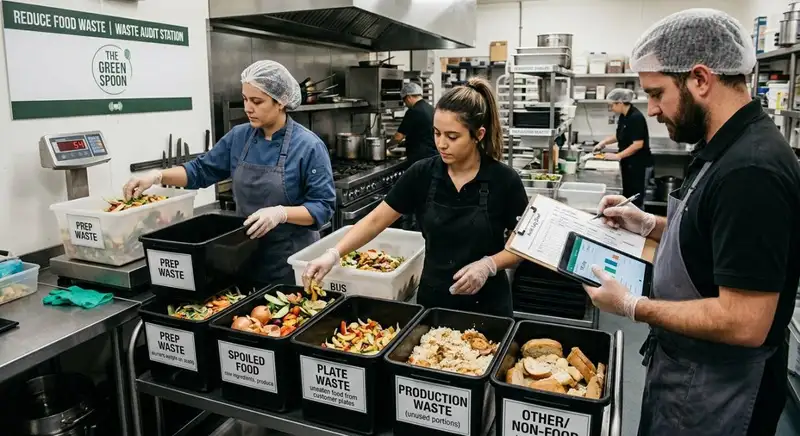
How to Conduct a Food Waste Audit in Your Restaurant
A food waste audit helps restaurant owners identify waste sources, track costs, improve inventory management, reduce food waste, and increase profitability.
The Complete Guide to Bar Inventory Management for Restaurants
This guide covers bar inventory management essentials - counting, tracking, ordering, storage, variance control, and cost strategies for restaurant profitability.
How to Calculate Liquor Cost in Your Restaurant
Learn how to calculate liquor cost using the correct formula, accurate inventory data, and step-by-step guidance for restaurant profitability.