
The Value of Social Media
Social media content matters for restaurants because it helps keep the business visible before customers decide where to eat. Many guests do not choose a restaurant only when they are hungry. They may see a post in the morning, save a menu item in the afternoon, send a Reel to a friend, or remember a special later in the week. This means every post can support future visits, online orders, reservations, catering inquiries, and brand awareness.
For restaurant owners, social media is not just about posting attractive food photos. It is a low-cost marketing channel that can show the restaurant's food, atmosphere, service style, staff, promotions, events, and customer experience. A strong content strategy helps answer common customer questions before they visit - What does the food look like? Is the restaurant busy? Is it casual or upscale? Are there specials? Can I order online? Is it good for families, dates, groups, or takeout?
Engagement is important because it shows that people are paying attention. Comments, shares, saves, direct messages, link clicks, tagged posts, and story replies can all signal customer interest. A single post may not create immediate sales, but consistent content builds recognition over time. When customers repeatedly see menu items, behind-the-scenes videos, reviews, and limited-time offers, the restaurant becomes easier to remember.
For restaurant owners, social media is not just about posting attractive food photos. It is a low-cost marketing channel that can show the restaurant's food, atmosphere, service style, staff, promotions, events, and customer experience. A strong content strategy helps answer common customer questions before they visit - What does the food look like? Is the restaurant busy? Is it casual or upscale? Are there specials? Can I order online? Is it good for families, dates, groups, or takeout?
Engagement is important because it shows that people are paying attention. Comments, shares, saves, direct messages, link clicks, tagged posts, and story replies can all signal customer interest. A single post may not create immediate sales, but consistent content builds recognition over time. When customers repeatedly see menu items, behind-the-scenes videos, reviews, and limited-time offers, the restaurant becomes easier to remember.
Food Photos and Menu Item Highlights
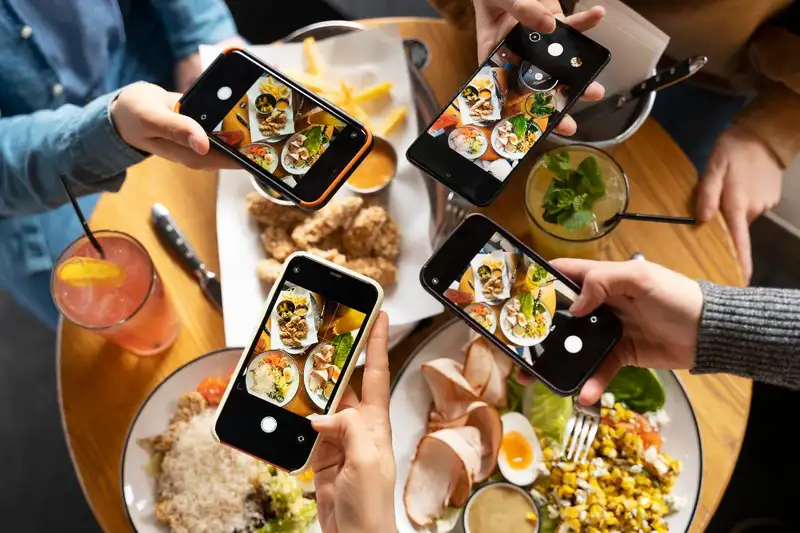
Food photos and menu item highlights are some of the most effective social media content ideas for restaurants because they show customers exactly what they can order. For many guests, a strong photo or short video can create interest faster than a written promotion. A burger with melted cheese, a pasta dish being plated, a pizza coming out of the oven, or a dessert being finished with sauce can make the menu feel more immediate and memorable.
Restaurant owners should treat food content as a sales tool, not just a branding post. Each photo should have a clear purpose. One post may promote a best-selling item. Another may introduce a new dish, push a seasonal special, or remind customers about a high-margin menu item. For example, if a restaurant sells a $16 lunch special with a 30% food cost, every sale leaves about $11.20 before labor and overhead. If one social media post drives 25 additional orders, that single post can help generate $400 in sales and roughly $280 in gross profit before other costs.
The strongest menu posts usually include three details -
1. What the item is - Customers should know the dish name, main ingredients, portion style, and flavor profile.
2. When it is available - Mention whether the item is offered all day, during lunch, at happy hour, on weekends, or for a limited time.
3. What the customer should do next - Use a clear action such as "order online," "stop in for lunch," "book a table," "try it this weekend," or "send this to someone who would order this."
Short videos can make menu content even stronger. A 10-second clip showing steam, sauce, slicing, pouring, or plating can feel more engaging than a static photo because it shows movement and freshness. Restaurants can also reuse the same item in multiple formats - one photo for Instagram, one short video for Reels or TikTok, one story post with a poll, and one menu reminder for Facebook.
Restaurant owners should treat food content as a sales tool, not just a branding post. Each photo should have a clear purpose. One post may promote a best-selling item. Another may introduce a new dish, push a seasonal special, or remind customers about a high-margin menu item. For example, if a restaurant sells a $16 lunch special with a 30% food cost, every sale leaves about $11.20 before labor and overhead. If one social media post drives 25 additional orders, that single post can help generate $400 in sales and roughly $280 in gross profit before other costs.
The strongest menu posts usually include three details -
1. What the item is - Customers should know the dish name, main ingredients, portion style, and flavor profile.
2. When it is available - Mention whether the item is offered all day, during lunch, at happy hour, on weekends, or for a limited time.
3. What the customer should do next - Use a clear action such as "order online," "stop in for lunch," "book a table," "try it this weekend," or "send this to someone who would order this."
Short videos can make menu content even stronger. A 10-second clip showing steam, sauce, slicing, pouring, or plating can feel more engaging than a static photo because it shows movement and freshness. Restaurants can also reuse the same item in multiple formats - one photo for Instagram, one short video for Reels or TikTok, one story post with a poll, and one menu reminder for Facebook.
Empower Your Marketing Strategies!
Step Up Your Marketing with Altametrics
Behind-the-Scenes Restaurant Content
Behind-the-scenes content helps restaurants show customers the work that happens before a meal reaches the table. This type of content works well because it makes the restaurant feel active, human, and trustworthy. Instead of only showing the finished plate, owners can show prep work, cooking steps, ingredient handling, plating, opening routines, closing routines, staff setup, or the kitchen getting ready before service.
For restaurant owners, this matters because customers often respond to transparency. A short video of dough being stretched, vegetables being chopped, coffee being brewed, sauces being made, or a chef finishing a dish can make the food feel fresher and more valuable. It also gives the restaurant more content without needing a professional photoshoot every time.
Behind-the-scenes posts can support engagement in several ways -
1. They show freshness - Customers can see ingredients being prepared, food being cooked, and menu items being made in real time.
2. They build trust - Clean prep areas, organized stations, and careful cooking processes can make customers feel more confident about the restaurant.
3. They create repeatable content - Restaurants perform the same prep, cooking, and service routines every day. That means owners can turn normal operations into useful content.
4. They make the brand feel personal - A restaurant becomes more memorable when customers see the people, effort, and process behind the food.
For example, a pizza restaurant can record cheese being added, dough being stretched, a pizza entering the oven, and the final slice pull. A coffee shop can show espresso shots, latte art, pastries being stocked, and morning opening prep. A full-service restaurant can show the chef preparing a special, the bar team mixing drinks, or the dining room being set before dinner.
The best behind-the-scenes content should be short, simple, and consistent. Restaurant owners do not need to film everything. Even 10 to 15 seconds of real daily activity can give customers a reason to watch, comment, save, or visit.
For restaurant owners, this matters because customers often respond to transparency. A short video of dough being stretched, vegetables being chopped, coffee being brewed, sauces being made, or a chef finishing a dish can make the food feel fresher and more valuable. It also gives the restaurant more content without needing a professional photoshoot every time.
Behind-the-scenes posts can support engagement in several ways -
1. They show freshness - Customers can see ingredients being prepared, food being cooked, and menu items being made in real time.
2. They build trust - Clean prep areas, organized stations, and careful cooking processes can make customers feel more confident about the restaurant.
3. They create repeatable content - Restaurants perform the same prep, cooking, and service routines every day. That means owners can turn normal operations into useful content.
4. They make the brand feel personal - A restaurant becomes more memorable when customers see the people, effort, and process behind the food.
For example, a pizza restaurant can record cheese being added, dough being stretched, a pizza entering the oven, and the final slice pull. A coffee shop can show espresso shots, latte art, pastries being stocked, and morning opening prep. A full-service restaurant can show the chef preparing a special, the bar team mixing drinks, or the dining room being set before dinner.
The best behind-the-scenes content should be short, simple, and consistent. Restaurant owners do not need to film everything. Even 10 to 15 seconds of real daily activity can give customers a reason to watch, comment, save, or visit.
Staff and Team Spotlight Posts
Staff and team spotlight posts help restaurants create a stronger connection with customers by showing the people behind the food and service. A restaurant is not only judged by its menu. Customers also remember the server who helped them, the chef who created a favorite dish, the bartender who made their drink, or the barista who knows their regular order. Social media gives owners a simple way to make those team members part of the restaurant's brand.
This type of content can be especially useful because it does not require a large production budget. A simple photo, short video, or quick Q&A can turn into a strong engagement post. For example, a restaurant can feature a chef explaining a new menu item, a server sharing their favorite dish, a bartender recommending a cocktail, or a manager introducing the team before a busy weekend.
Staff content can support engagement in several ways -
1. It makes the restaurant feel more personal - Customers are more likely to interact when they see real people instead of only menu items and promotions.
2. It builds familiarity - When guests recognize employees from social media, the restaurant can feel more welcoming before they even walk in.
3. It creates easy recurring content - Owners can post a weekly team spotlight, staff menu pick, birthday mention, work anniversary, or "meet the team" feature.
4. It improves the customer experience story - A restaurant can show hospitality, service culture, and team energy without directly saying it.
Good staff spotlight posts should stay simple. Ask one employee what menu item they recommend, what they enjoy about working at the restaurant, or what guests should try this week. Then pair the answer with a photo or short video. The caption can include a clear prompt such as, "Say hi to Maria next time you visit," or "Try James' favorite dish this weekend."
The goal is to help customers connect with the restaurant on a human level. Food may attract attention, but people often make the restaurant easier to remember.
This type of content can be especially useful because it does not require a large production budget. A simple photo, short video, or quick Q&A can turn into a strong engagement post. For example, a restaurant can feature a chef explaining a new menu item, a server sharing their favorite dish, a bartender recommending a cocktail, or a manager introducing the team before a busy weekend.
Staff content can support engagement in several ways -
1. It makes the restaurant feel more personal - Customers are more likely to interact when they see real people instead of only menu items and promotions.
2. It builds familiarity - When guests recognize employees from social media, the restaurant can feel more welcoming before they even walk in.
3. It creates easy recurring content - Owners can post a weekly team spotlight, staff menu pick, birthday mention, work anniversary, or "meet the team" feature.
4. It improves the customer experience story - A restaurant can show hospitality, service culture, and team energy without directly saying it.
Good staff spotlight posts should stay simple. Ask one employee what menu item they recommend, what they enjoy about working at the restaurant, or what guests should try this week. Then pair the answer with a photo or short video. The caption can include a clear prompt such as, "Say hi to Maria next time you visit," or "Try James' favorite dish this weekend."
The goal is to help customers connect with the restaurant on a human level. Food may attract attention, but people often make the restaurant easier to remember.
Customer-Generated Content and Reviews
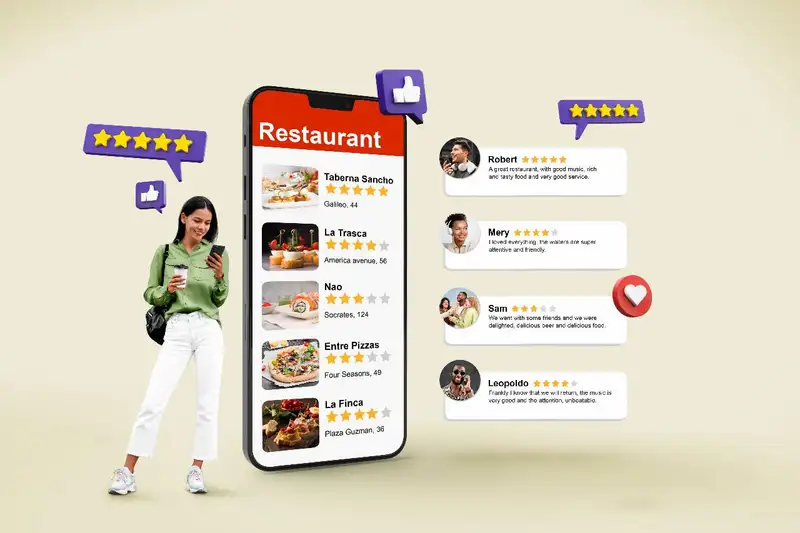
Customer-generated content is one of the strongest social media content ideas for restaurants because it shows real people enjoying the food, service, and atmosphere. Instead of the restaurant only promoting itself, customers help tell the story through photos, videos, tagged posts, reviews, comments, and shared experiences. This matters because many guests trust social proof before choosing where to eat.
For restaurant owners, customer content can also save time. A restaurant may already have useful content sitting in tagged Instagram posts, Facebook comments, Google reviews, TikTok videos, and story mentions. With permission, owners can repost this content and turn it into engagement without creating everything from scratch.
Customer-generated content can include -
1. Tagged food photos - Repost customer photos of popular dishes, desserts, drinks, takeout orders, or table spreads.
2. Positive reviews - Turn short customer reviews into simple quote graphics or captions that highlight food quality, service, speed, or atmosphere.
3. Group visits and celebrations - Share birthdays, date nights, family meals, private events, catering orders, or team lunches when customers are comfortable being featured.
4. Customer menu favorites - Use comments and reviews to show which items guests recommend most often.
This type of content works because it feels more authentic than a standard promotion. For example, a post that says "Try our pasta tonight" may get attention, but a customer photo with a caption like "Our guests are loving this creamy chicken pasta" can feel more credible. It shows that people are already ordering and enjoying the item.
Restaurant owners should always ask for permission before reposting customer photos or videos, especially if people are clearly visible. They should also tag the customer when appropriate and thank them in the caption. This encourages more guests to tag the restaurant in the future.
For restaurant owners, customer content can also save time. A restaurant may already have useful content sitting in tagged Instagram posts, Facebook comments, Google reviews, TikTok videos, and story mentions. With permission, owners can repost this content and turn it into engagement without creating everything from scratch.
Customer-generated content can include -
1. Tagged food photos - Repost customer photos of popular dishes, desserts, drinks, takeout orders, or table spreads.
2. Positive reviews - Turn short customer reviews into simple quote graphics or captions that highlight food quality, service, speed, or atmosphere.
3. Group visits and celebrations - Share birthdays, date nights, family meals, private events, catering orders, or team lunches when customers are comfortable being featured.
4. Customer menu favorites - Use comments and reviews to show which items guests recommend most often.
This type of content works because it feels more authentic than a standard promotion. For example, a post that says "Try our pasta tonight" may get attention, but a customer photo with a caption like "Our guests are loving this creamy chicken pasta" can feel more credible. It shows that people are already ordering and enjoying the item.
Restaurant owners should always ask for permission before reposting customer photos or videos, especially if people are clearly visible. They should also tag the customer when appropriate and thank them in the caption. This encourages more guests to tag the restaurant in the future.
Dive Deeper into Customer Insights!
Capture Key Insights with Altametrics
Promotions, Events, and Limited-Time Offers
Promotions, events, and limited-time offers give restaurants a clear reason to post on social media. Instead of only reminding customers that the restaurant exists, these posts create urgency. They tell customers what is happening, when it is available, and why they should visit or order now.
For restaurant owners, this type of content is useful because it can support slower sales periods, seasonal demand, new menu launches, and higher check averages. A restaurant may use social media to promote lunch specials on weekdays, happy hour deals during slower afternoon periods, weekend brunch, holiday menus, catering packages, live music, tasting events, or limited-time dishes.
The strongest promotional posts usually include four details -
1. The offer - Make the promotion easy to understand. For example, "$12 lunch bowls," "half-price appetizers," "weekend brunch," "new seasonal pasta," or "family meal deal."
2. The time frame - Customers should know whether the offer is available today, this week, during happy hour, on weekends, or for a limited number of days.
3. The value - Explain why the customer should care. The value may be price, convenience, exclusivity, freshness, portion size, or a seasonal item they cannot get later.
4. The next step - Tell customers what to do next. Use simple actions such as "order online," "reserve a table," "stop by after work," "call for catering," or "bring a friend."
Limited-time offers can also help restaurants test demand before making bigger menu decisions. If a new appetizer, drink, dessert, or combo performs well on social media and generates orders, the owner gets useful feedback. If engagement is low, the restaurant can adjust the photo, caption, price, timing, or offer before investing more heavily.
Events should be promoted more than once. A single post may not be enough because customers may miss it or forget the date. Restaurants can post an announcement, a reminder, a behind-the-scenes preview, a day-of story, and a recap after the event.
For restaurant owners, this type of content is useful because it can support slower sales periods, seasonal demand, new menu launches, and higher check averages. A restaurant may use social media to promote lunch specials on weekdays, happy hour deals during slower afternoon periods, weekend brunch, holiday menus, catering packages, live music, tasting events, or limited-time dishes.
The strongest promotional posts usually include four details -
1. The offer - Make the promotion easy to understand. For example, "$12 lunch bowls," "half-price appetizers," "weekend brunch," "new seasonal pasta," or "family meal deal."
2. The time frame - Customers should know whether the offer is available today, this week, during happy hour, on weekends, or for a limited number of days.
3. The value - Explain why the customer should care. The value may be price, convenience, exclusivity, freshness, portion size, or a seasonal item they cannot get later.
4. The next step - Tell customers what to do next. Use simple actions such as "order online," "reserve a table," "stop by after work," "call for catering," or "bring a friend."
Limited-time offers can also help restaurants test demand before making bigger menu decisions. If a new appetizer, drink, dessert, or combo performs well on social media and generates orders, the owner gets useful feedback. If engagement is low, the restaurant can adjust the photo, caption, price, timing, or offer before investing more heavily.
Events should be promoted more than once. A single post may not be enough because customers may miss it or forget the date. Restaurants can post an announcement, a reminder, a behind-the-scenes preview, a day-of story, and a recap after the event.
Interactive Content
Interactive content helps restaurants turn social media followers into active participants instead of passive viewers. A customer may scroll past a standard post, but they are more likely to respond when the restaurant asks a simple question, offers a choice, or invites them to share an opinion. This makes interactive posts useful for increasing comments, story replies, shares, saves, and direct messages.
For restaurant owners, interactive content is also valuable because it can reveal what customers want. A poll about two possible lunch specials, a question about favorite desserts, or a vote on a new drink flavor can provide quick feedback before the restaurant makes a bigger menu or marketing decision.
Restaurants can use several types of interactive posts -
1. Polls and votes - Ask customers to choose between two menu items, sauces, desserts, drinks, or daily specials. For example, Which special should we bring back this weekend - spicy chicken sandwich or loaded fries?
2. Questions and prompts - Use simple captions like "What is your go-to order?" or "Who would you share this appetizer with?" These prompts make it easier for customers to comment.
3. This-or-that posts - Compare two popular items, such as tacos vs. burgers, iced coffee vs. hot coffee, or brunch vs. dinner. These posts are easy to answer and can create quick engagement.
4. Menu voting - Let customers vote on a limited-time item, seasonal flavor, topping, drink name, or featured special. This helps customers feel involved in the restaurant's decisions.
5. Comment-to-enter promotions - Restaurants can ask customers to comment, tag a friend, or answer a question for a chance to win a small reward. Owners should keep the rules clear and follow platform guidelines.
The best interactive posts are simple. Customers should understand what to do within a few seconds. A complicated question or unclear promotion can reduce participation. Restaurant owners should also respond to comments and story replies when possible because engagement works best as a two-way conversation.
For restaurant owners, interactive content is also valuable because it can reveal what customers want. A poll about two possible lunch specials, a question about favorite desserts, or a vote on a new drink flavor can provide quick feedback before the restaurant makes a bigger menu or marketing decision.
Restaurants can use several types of interactive posts -
1. Polls and votes - Ask customers to choose between two menu items, sauces, desserts, drinks, or daily specials. For example, Which special should we bring back this weekend - spicy chicken sandwich or loaded fries?
2. Questions and prompts - Use simple captions like "What is your go-to order?" or "Who would you share this appetizer with?" These prompts make it easier for customers to comment.
3. This-or-that posts - Compare two popular items, such as tacos vs. burgers, iced coffee vs. hot coffee, or brunch vs. dinner. These posts are easy to answer and can create quick engagement.
4. Menu voting - Let customers vote on a limited-time item, seasonal flavor, topping, drink name, or featured special. This helps customers feel involved in the restaurant's decisions.
5. Comment-to-enter promotions - Restaurants can ask customers to comment, tag a friend, or answer a question for a chance to win a small reward. Owners should keep the rules clear and follow platform guidelines.
The best interactive posts are simple. Customers should understand what to do within a few seconds. A complicated question or unclear promotion can reduce participation. Restaurant owners should also respond to comments and story replies when possible because engagement works best as a two-way conversation.
Get Started with Smart Data Capture
Optimize Your Marketing Efforts with Altametrics
Frequently
Asked Questions
What type of social media content works best for restaurants?
The best social media content for restaurants usually includes food photos, short videos, behind-the-scenes clips, staff highlights, customer reviews, promotions, and interactive posts. These formats work because they show customers what the restaurant offers, what the experience feels like, and why they should visit or order.
How can restaurants use customer-generated content?
Restaurants can repost customer photos, tagged posts, reviews, videos, and celebration moments when they have permission. This type of content works well because it acts as social proof and shows real customers enjoying the restaurant.
What should a restaurant include in a promotional social media post?
A strong promotional post should include the offer, time frame, value, and next step. Customers should quickly understand what is being promoted, when it is available, why it matters, and how to order, book, or visit.
What captions work best for restaurant posts?
The best captions are clear, specific, and action-focused. A restaurant caption should explain what the item or offer is, why customers should care, and what they should do next. For example, instead of writing "Dinner is served," a stronger caption would mention the dish name, ingredients, availability, and a call-to-action.
Must-Read Content
How to Manage Tasks in a Restaurant
Learn how to manage tasks in a restaurant by organizing responsibilities, prioritizing duties, assigning employees, tracking progress, and using technology effectively.
The Complete Guide to Restaurant Reputation Management
Restaurant reputation management helps restaurant owners monitor reviews, respond to feedback, improve customer experiences, protect their reputation, and build trust.

How Much Should a Restaurant Spend on Marketing?
Restaurants should base how much to spend on marketing on revenue, growth stage, size, and specific business goals.