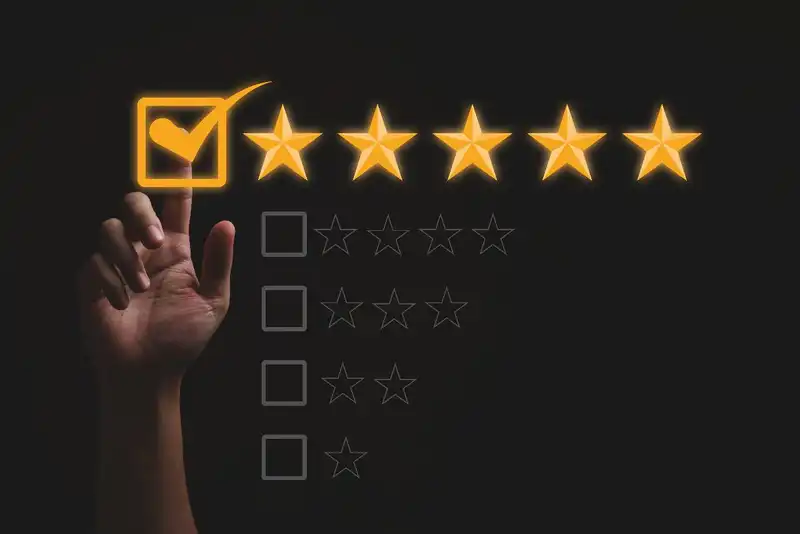
What is the best way to get more 5-star customer ratings?
The best way is to improve the guest experience first, then ask happy customers to leave a rating. Focus on food quality, speed, order accuracy, cleanliness, and friendly service. When those basics are strong, asking for ratings becomes much more effective.
How to Get More 5-Star Customer Ratings for Your Restaurant

Build Trust and Bring in More Guests
A 5-star customer rating is more than just a number on Google, Yelp, or a delivery app. For a restaurant, it is a quick signal that tells people, "Guests trust this place." Before many customers look at your menu, prices, or photos, they often check your rating first. That score helps them decide if your restaurant feels reliable, clean, and worth trying.
For restaurant owners, 5-star ratings are not only about reputation. They also affect visibility. Platforms often show higher-rated restaurants more often, especially when customers are searching for places nearby. This means better ratings can help more people discover your business online. In other words, strong ratings support both trust and traffic.
It is also important to understand the difference between a rating and a review. A rating is the star score a customer gives, while a review is the written comment they may leave with it. Some guests will leave only stars and no comment. That still matters. A high number of strong ratings can improve how your restaurant looks online, even if not every customer writes a full review.
A 5-star rating usually means the guest felt the full experience went well. It is rarely just about the food. Customers often base their score on a combination of things, including -
- Food quality and taste
- Speed of service
- Friendliness of staff
- Order accuracy
- Cleanliness
- Value for the price
- How problems were handled
This is why a restaurant can serve good food and still get a lower rating. If the wait felt too long, the order was wrong, or the staff seemed rushed or unhelpful, the customer may rate the experience lower. On the other hand, even when something small goes wrong, a polite and fast recovery can still protect the rating.
Why Restaurants Miss Out on 5-Star Ratings
Many restaurants miss out on 5-star customer ratings not because of one big mistake, but because of small problems throughout the guest experience. A customer may enjoy the food and still leave 3 or 4 stars if the service felt slow, the order was incomplete, or the interaction with staff felt rushed. These small moments shape how people rate your restaurant online.
Here are the main reasons this happens -
1) Inconsistent service between shifts - Guests expect a similar experience every time they visit. If one shift is friendly, fast, and organized, but another feels slow or unhelpful, ratings will become inconsistent too. Customers rate what they experienced that day, not what your restaurant usually does well.
2) Focusing only on food quality - Food is important, but it is not the only reason people leave a 5-star rating. Guests also pay attention to speed, cleanliness, order accuracy, and how they are treated. A great meal with poor service often leads to an average rating.
3) Small problems that build up - Many ratings drop because of minor issues that seem small on their own, such as -
- Long wait times
- Missing items
- Confusing communication
- Dirty tables or restrooms
- Staff who seem distracted
Even if none of these problems are serious by themselves, they can create a frustrating overall experience.
4) Not asking happy guests to leave ratings - A lot of satisfied customers leave without posting a rating. At the same time, unhappy customers are more likely to rate the restaurant right away. This can make your online rating look lower than the experience you usually provide. If you do not ask for ratings, you miss many 5-star opportunities.
5) Poor handling of mistakes - Every restaurant makes mistakes. What matters is how the team responds. If a problem is fixed quickly and politely, guests often stay satisfied. If the response is slow or defensive, the rating usually drops.
The good news is that all of these issues can be improved with better service habits and a clear process. In the next section, we will look at the most important guest touchpoints to strengthen if you want more 5-star customer ratings.
Get Started with Smart Data Capture
Optimize Your Marketing Efforts with Altametrics
Build a 5-Star Experience
If you want more 5-star customer ratings, focus on the parts of the guest experience people notice most. Customers usually do not rate only the food. They rate the full experience from the moment they interact with your restaurant to the moment they leave. That is why improving key touchpoints can quickly raise your ratings.
1) The first impression - The first few moments matter a lot. For dine-in, this means a clean entrance, a quick greeting, and a friendly tone. For takeout or delivery, it means clear communication, accurate pickup times, and an organized handoff. A strong start helps guests feel confident about their order.
2) Ordering and communication - Guests want the ordering process to feel easy. Staff should be patient, clear, and helpful, especially when answering menu questions or handling special requests. If a delay happens, it is better to communicate early than let the customer guess what is going on. Clear communication reduces frustration.
3) Food quality and order accuracy - This is one of the biggest rating drivers. Guests expect food to be fresh, correct, and prepared the way they ordered it. A simple accuracy check before food goes out can prevent many low ratings. For takeout and delivery, this is even more important because customers cannot fix the issue easily once they leave.
4) Cleanliness and presentation - Customers notice clean tables, counters, restrooms, packaging, and uniforms. Cleanliness strongly affects trust. Even great food can get a lower rating if the environment looks messy or poorly maintained.
5) Checkout and final impression - The last part of the visit also affects the rating. A polite goodbye, a quick checkout, and a smooth pickup experience leave a positive final impression. This is also the best time to invite a happy guest to leave a rating.
When these touchpoints are strong and consistent, 5-star ratings become much more natural. In the next section, we will cover how to train your team to support better ratings every day.
Train Your Team to Support Better Ratings
Your team has a direct impact on customer ratings every shift. Even with great food and a good location, weak service habits can lower your score. The good news is that better ratings usually come from simple behaviors your staff can learn, practice, and repeat consistently. Training does not need to be complicated, but it does need to be clear.
1) Teach what drives a 5-star rating - Start by helping your team understand what customers actually rate. Many employees think ratings are only about food, but guests also rate friendliness, speed, order accuracy, cleanliness, and communication. When staff understand that every interaction affects the final score, they pay more attention to small details.
2) Set simple service standards - Give your team a few clear standards they can follow every shift. For example -
- Greet guests quickly
- Repeat orders for accuracy
- Communicate delays early
- Check bags before handoff
- Thank every guest before they leave
Simple standards are easier to remember and easier to coach.
3) Practice guest communication - Strong communication improves ratings fast. Train staff to speak clearly, stay calm during busy periods, and handle guest concerns politely. Role-play common situations, such as an order delay or missing item, so employees know what to say. This helps them respond professionally instead of reacting emotionally.
4) Coach in real time - Training should not happen only once. Managers should coach during shifts by watching interactions and giving quick feedback. Short reminders before and during service are often more effective than long meetings.
5) Make ratings part of the daily focus - You do not need to pressure employees with numbers all day. Instead, tie ratings to guest experience goals. For example, talk about order accuracy, friendly greetings, and fast recovery when mistakes happen. Ratings improve when service habits improve.
A well-trained team creates a smoother, more consistent experience, which leads to better customer ratings over time. In the next section, we will cover how to ask for customer ratings in a way that feels natural and effective.
Ask for Customer Ratings the Right Way

Many restaurants deliver a great experience but still do not get enough 5-star customer ratings because they never ask. Most happy guests are willing to leave a rating, but they usually need a simple reminder. The key is to ask in a way that feels natural, polite, and easy to act on.
1) Ask at the right moment - Timing matters. The best time to ask is right after a positive experiencewhen the customer has their food, compliments the service, or finishes the meal satisfied. If a guest seems frustrated, in a hurry, or is dealing with a problem, that is not the right time to ask for a rating.
2) Keep the request short and friendly - Your team should use simple wording that does not sound pushy. For example -
- "If you enjoyed your visit, we'd really appreciate a quick rating."
- "Thanks for coming in. A 5-star rating helps our restaurant a lot."
This works better than a long speech or a forced script.
3) Make asking part of the routine - Train staff on when and how to ask so it becomes part of normal service. For dine-in, the best moment may be at checkout. For takeout, it may be during pickup handoff. For delivery orders, use a follow-up text or email if your system supports it.
4) Focus on satisfied guests - Do not ask every guest the same way. Teach your team to notice positive signals, such as a customer saying the food was great or thanking the staff. These are strong moments to ask for a rating. This helps increase your chances of getting more 5-star responses.
5) Stay ethical and platform-safe - Never offer rewards, discounts, or gifts in exchange for ratings. The goal is to earn honest feedback, not manipulate reviews.
When your restaurant asks consistently and respectfully, rating volume usually improves. In the next section, we will cover how to make it even easier for guests to leave a rating.
Make It Easy for Guests to Leave a Rating
Even when guests have a great experience, many will not leave a rating if the process feels slow or confusing. That is why convenience matters. If you want more 5-star customer ratings, remove as much friction as possible. The easier it is to leave a rating, the more likely customers are to do it.
1) Use direct links and QR codes - Do not make guests search for your restaurant online. Give them a direct path. A QR code at the register, on the receipt, or on table signage can take guests straight to your rating page. For online orders, include a direct link in follow-up texts or emails. This one step can increase rating activity because it saves time.
2) Put rating prompts in the right places - Place rating requests where customers naturally pause -
- Checkout counter
- Receipt footer
- Takeout bag insert
- Table tent
- Pickup window
- Post-order message
Keep the message simple and visible. A short line like Enjoyed your order? Leave us a quick rating works well.
3) Check your online listings - Make sure your Google Business Profile, Yelp page, and delivery app profiles are active and accurate. If your business name, hours, or location details are wrong, guests may get confused or rate the wrong page. An updated profile also builds trust before they leave feedback.
4) Optimize for mobile users - Most guests leave ratings from their phones. Test your QR codes and links yourself to make sure they open the correct page and work smoothly on mobile. If the page loads slowly or requires too many steps, many people will quit before rating.
5) Keep the process simple for your team - Your staff should know where the QR codes are, what link to share, and how to guide a guest quickly if asked. A simple process helps employees ask more confidently.
When rating is fast and easy, more happy guests will follow through. In the next section, we will cover how to respond to ratings and recover low-score experiences effectively.
Respond to Ratings and Recover Low-Score Experiences
Getting more 5-star customer ratings is not only about asking for feedback. It is also about how your restaurant responds after ratings are posted. When owners and managers reply to ratings, it shows customers that the business is paying attention. It also helps protect your reputation when a guest has a bad experience.
1) Respond to positive ratings - A quick thank-you goes a long way. When someone leaves a high rating, reply with appreciation and keep it personal when possible. You do not need a long message. A short response that thanks the guest and invites them back is enough. This helps build loyalty and shows future customers that your restaurant values feedback.
2) Respond to low ratings calmly - Low ratings can feel frustrating, but it is important to stay professional. Avoid arguing, blaming the guest, or sounding defensive. Start by thanking them for the feedback, apologize for the experience, and acknowledge the issue. A respectful response can improve how others view your business, even if the original rating stays low.
3) Focus on recovery, not just replies - A public response matters, but fixing the root issue matters more. If guests mention the same problem again and again - slow service, wrong orders, poor packaging, rude staff treat that as an operational warning. Ratings are often one of the clearest signals of what needs attention.
4) Handle complaints quickly - The faster your team responds to a problem, the better the chance of saving the guest experience. If a mistake happens in-store, train staff to fix it immediately and politely. If the complaint comes online, respond promptly and professionally. Quick recovery often prevents repeat complaints.
5) Use feedback to improve training - Share common feedback themes with your team during shift meetings. Keep it simple - what guests liked, what went wrong, and what to improve this week.
When you respond well and improve from feedback, ratings get stronger over time. In the next section, we will build a simple weekly routine to consistently improve customer ratings.

Must-Read Content


Online reviews
How to Improve Online Reviews for Your Hotel

Consumer reviews
Why Restaurants Get Bad Consumer Reviews

Customer review
Customer Review Strategy for QSR Owners

Frequently Asked Questions
How often should I review customer ratings?
A weekly review is a good starting point. Check your average rating, number of new ratings, and common feedback themes. Then choose one or two improvements to focus on for the next week.
How do I get more ratings for takeout and delivery orders?
For takeout and delivery, the best methods are receipt messages, QR code stickers on packaging, and post-order text or email links. Since there is less face-to-face interaction, your rating request should be built into the order experience.
Why do I get 4-star ratings even when the food is good?
Customers rate the full experience, not just the food. A lower score can come from slow service, long wait times, missing items, poor communication, or cleanliness issues. Small service problems can reduce ratings even if the food is great.
What is the difference between a rating and a review?
A rating is the star score a customer gives (such as 1 to 5 stars). A review usually includes written feedback. Both matter, but even star-only ratings help improve your restaurant's online reputation and visibility.