
Trust, Visibility, and Bookings
When we say a marketing asset, we mean something your business can use to attract more attention, build trust, and help more people choose you. In simple terms, guest reviews are not just feedback. They are real words from real guests that can help market your business.
This matters because people trust other guests. Before booking a hotel, vacation rental, inn, or resort, most people read reviews to see what the experience is really like. They want to know if the property is clean, if the staff is helpful, if the rooms look like the photos, and if the location is convenient. Your own marketing says what you offer. Guest reviews help prove it.
Guest reviews also help your digital footprint. A stronger digital footprint means your business is easier to find online and looks more credible when people do find it. Reviews support this by adding fresh content to your profiles and listings, showing that people are actively staying with you and sharing their experience.
Using guest reviews as a marketing asset means you treat them as part of your marketing system. You collect them consistently, respond to them professionally, and reuse them in places where future guests will see them - like your website, social media, and booking pages.
How Reviews Help Your business
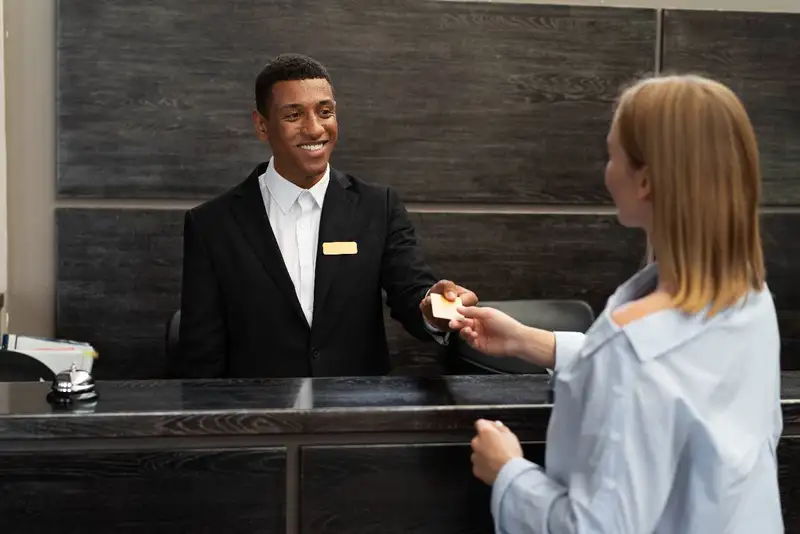
Guest reviews help strengthen that digital footprint in a few important ways.
First, reviews build trust fast. When a potential guest sees recent reviews from real people, your business feels active and credible. Even if someone finds your property for the first time, a strong review presence can make them more comfortable taking the next step.
Second, reviews improve visibility. Many platforms and listing sites pay attention to review activity. Businesses with a steady flow of reviews often look more relevant and better maintained than businesses with outdated or very few reviews. It also helps when reviews mention things guests care about, like cleanliness, friendly staff, walkable location, quiet rooms, or good breakfast. Those details help future guests understand what makes your property a good fit.
Third, reviews influence booking decisions. People usually do not read every review. They scan for patterns. If they repeatedly see positive comments about service, comfort, or value, that shapes their impression. The same is true for negative patterns. This is why review quality and consistency matter just as much as your overall rating.
Recency also plays a big role. A property with strong reviews from last week or last month often looks more trustworthy than one with great reviews from two years ago. Fresh reviews show that the experience is still good now - not just in the past.
In simple terms, guest reviews do two jobs at once - they help people find you, and they help people trust you once they do. That is why reviews are not just a customer service task. They are a key part of your online marketing presence and should be managed like one.
Get Started with Smart Data Capture
Optimize Your Marketing Efforts with Altametrics
How to Collect More Guest Reviews
1) Ask at the right time. The best time to ask for a review is soon after checkout, while the stay is still fresh in the guest's mind. If you wait too long, guests are less likely to respond. A same-day or next-day request usually works best.
2) Make it easy to leave a review. Remove as much friction as possible. Send guests a direct review link instead of asking them to search for your listing. You can also use QR codes at the front desk or checkout area so guests can leave a review quickly from their phone.
3) Use a short, polite message. Keep the request simple. Thank the guest for staying with you, let them know their feedback matters, and invite them to leave a review. Avoid long messages or wording that sounds pushy. A friendly tone works better.
4) Train staff to ask naturally. Your team can help a lot with review collection. If a guest mentions they enjoyed their stay, your staff can politely ask for a review at that moment. This works especially well when the request feels natural and personal.
5) Build a repeatable process. Decide who sends review requests, when they are sent, and which platforms you want to prioritize. A basic checklist helps your team stay consistent and prevents missed opportunities.
When you follow these steps regularly, review collection becomes part of your operation. That consistency helps you build a steady flow of guest reviews, which strengthens both your online reputation and your marketing.
Encourage Better, More Useful Guest Reviews
1) Ask guests to share specific details. When you request a review, encourage guests to mention what stood out during their stay. For example, they can comment on cleanliness, staff service, check-in experience, room comfort, amenities, or location. Specific details make reviews more helpful for future guests who are comparing options.
2) Keep the request honest and simple. Ask for an honest review, not a "5-star review." This matters because forced or overly scripted requests can feel uncomfortable and may lead to low-quality responses. A better approach is to say that you value feedback and would appreciate a review about their experience.
3) Focus on the guest experience first. The best way to improve review quality is to improve the stay itself. Guests naturally leave stronger reviews when the basics are done well- clean rooms, smooth check-in, clear communication, and fast issue resolution. Review quality is often a reflection of operational consistency.
4) Make it easy for guests to remember what to mention. Without overloading the guest, you can give a light prompt in your message. For example - "If you have a moment, we'd love to hear about your stay, especially what you enjoyed most." This helps guests write something more useful than a one-word comment.
5) Avoid fake or incentivized reviews. Do not offer rewards in exchange for positive reviews, and do not ask staff to post fake feedback. This can damage trust and create problems on review platforms. Real reviews are more valuable because they help your marketing stay credible.
Useful guest reviews do more than raise your rating. They tell future guests what your property is actually like. That makes them stronger marketing assets because they help people picture the experience before they book.
Responding to Guest Reviews

1) Respond because future guests are watching. When you reply to reviews, you are not only speaking to the guest who wrote it. You are also speaking to people who may book with you later. A calm, professional response helps your business look organized, respectful, and guest-focused.
2) Thank guests for positive reviews. Do not leave positive reviews unanswered. A short thank-you message goes a long way. You can also mention one detail from their review, like the room, the staff, or the location, to make your response feel personal instead of generic.
3) Handle negative reviews professionally. Negative reviews can feel frustrating, but public arguments hurt your brand more than the review itself. Thank the guest for the feedback, acknowledge the issue, and respond in a respectful tone. If needed, invite them to continue the conversation privately to resolve the problem.
4) Keep your tone consistent with your brand. Your review responses should sound professional and human. Avoid replies that sound robotic, defensive, or overly scripted. A warm and clear tone helps build trust and supports your overall brand image.
5) Use responses to reinforce what matters. Without sounding promotional, your responses can highlight what your business values. For example, you can mention that your team works hard to provide clean rooms, smooth check-ins, or responsive service. This helps future guests understand your standards.
Strong review responses help in two ways - they support guest relationships and they improve how your business looks online. When done consistently, review replies become part of your marketing because they show your service quality in real time.
Dive Deeper into Customer Insights!
Capture Key Insights with Altametrics
Reuse Guest Reviews Across Your Marketing Channels
1) Add guest reviews to your website. Your website should not rely only on your own marketing copy. Add review quotes to key pages like your homepage, room or property pages, booking pages, and contact page. This helps visitors see real guest feedback while they are deciding whether to book.
2) Use reviews in social media content. Guest reviews can be turned into simple social posts. You can share a short quote with a photo of your property, a room, or a common area. This gives you steady content and adds social proof without needing to create new promotional text every time.
3) Include reviews in email marketing. Reviews also work well in email campaigns. You can add a short guest quote to booking reminder emails, seasonal promotions, or newsletters. This makes your message feel more credible because the praise is coming from a guest, not just from your business.
4) Use reviews in booking and listing content. Where possible, use review language in your booking descriptions and listing content. If guests often mention "clean rooms" or "friendly staff," those themes should appear in your messaging. This keeps your marketing aligned with what guests actually value.
5) Organize reviews by topic for easier reuse. Save strong review quotes and group them by topics like cleanliness, customer service, amenities, or location. This makes it easier to find the right quote when updating your website, creating a social post, or writing a promotional email.
When you reuse guest reviews consistently, they become an active part of your marketing system. Instead of sitting on a review page, they help build trust across your website, social channels, and booking touchpoints.
How to Organize and Track Reviews
1) Save your best reviews in one place. Create one shared place to store useful reviews, such as a spreadsheet or simple document. Copy strong review quotes into it as they come in. Include the date, platform, and a short label so your team can find them later.
2) Group reviews by marketing themes. Organize reviews into categories that match what future guests care about most. Common categories include cleanliness, customer service, room comfort, location, amenities, value, and check-in experience. This makes it easier to match reviews to website pages, social posts, and promotions.
3) Track patterns, not just star ratings. Your overall rating matters, but the real value is in the patterns. Look for repeated comments, both positive and negative. If many guests mention friendly staff, that is a strong marketing message. If many mention slow check-in, that is a signal to improve operations.
4) Keep recent reviews easy to find. New reviews are especially useful because they reflect the current guest experience. Add a simple way to mark recent quotes so your team uses fresh feedback in marketing. This helps your content stay credible and up to date.
5) Assign ownership so the process happens. Decide who is responsible for collecting, saving, and organizing reviews. It can be one person or shared across roles, but it should be clear. When ownership is unclear, review tracking usually becomes inconsistent.
A basic review tracking system does not need to be complex. It just needs to be consistent. When your team can quickly find strong, organized guest feedback, reviews become much easier to use in marketing every week and every month.
Build Customer Loyalty!
Create your rewards program today!
Frequently
Asked Questions
How can I get more guest reviews?
What kinds of guest reviews are most useful for marketing?
How do I organize guest reviews for marketing use?
How often should I respond to guest reviews?
Must-Read Content

10 Employee Retention Strategies for Restaurant Owners
Restaurant owners can cut turnover by paying fairly, onboarding well, scheduling flexibly, promoting growth, recognizing effort, offering meaningful benefits, listening to feedback, and hiring carefully for fit.

How to Reduce Supply Costs in Your Restaurant
Cut restaurant supply costs by understanding spending, auditing expenses, engineering menus, negotiating with suppliers, controlling inventory, reducing waste, and using technology to monitor everything continuously.

The Ultimate Guide to Managing Food Allergens in Restaurants
Food allergens require accurate labeling, employee training, cross-contact prevention, safe food handling, and consistent procedures to protect customers and improve restaurant safety.