QSR Customer Review Strategy Basics
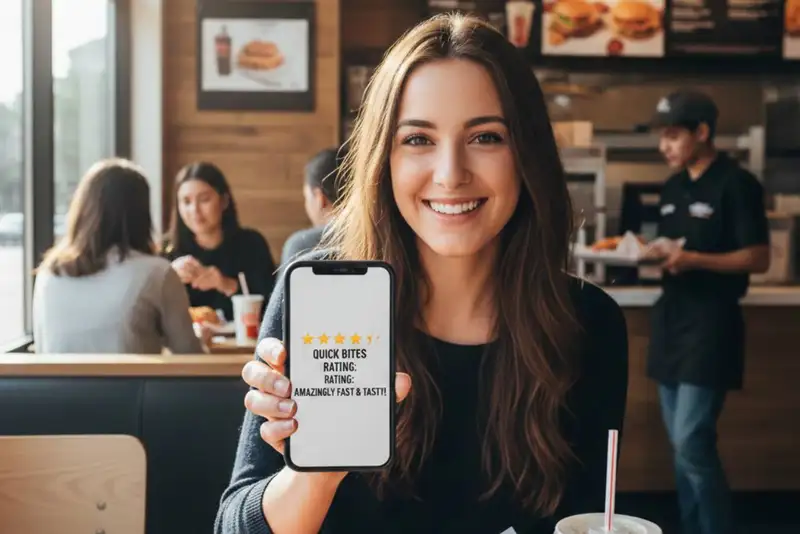
For many QSR owners, reviews are treated as something passive - something that just "happens" on Google or Yelp. But reviews are one of the most visible parts of your digital footprint. When someone searches for food near them, they often see your rating, review count, and recent comments before they ever visit your website or walk into your store. In many cases, reviews are your first impression.
That is why a customer review strategy matters. It helps you take control of how your restaurant appears online. Instead of only reacting to negative comments, you create a system for -
- asking happy customers to leave reviews,
- responding to reviews professionally,
- using strong review comments in your marketing,
- and posting review content where new customers will see it.
In simple terms, a review strategy turns customer feedback into a marketing asset.
It also helps you stay consistent. A lot of QSR owners post randomly or only focus on reviews when there is a problem. A strategy changes that. You create a repeatable process that helps your restaurant build trust over time. Even small actions - like replying to reviews each week or sharing one customer quote on social media - can make a big difference when done consistently.
For a QSR, that is powerful. Your speed, value, consistency, and service are exactly the things customers talk about in reviews. When you use those reviews the right way, you are not just collecting feedback - you are showing future customers why your restaurant is worth visiting.
Importance of Customer Reviews for Marketing

When someone looks up a QSR online, they usually notice a few things right away - star rating, number of reviews, and the most recent comments. These signals shape trust before the customer even sees your menu. A strong rating with recent, specific reviews can make your restaurant feel reliable. A weak rating, old reviews, or no responses can make people move on to another option.
Reviews also help your digital footprint in a practical way. They add fresh content to your Google Business Profile and other platforms, which helps keep your restaurant active online. They also give potential customers the exact details they care about, such as food quality, speed of service, friendly staff, clean store conditions, and order accuracy. Your marketing can say those things, but customer reviews make them feel more believable.
Another reason reviews matter is that they help reduce hesitation. A new customer may not know your brand, but seeing multiple positive reviews gives them confidence to try you. This is especially important for QSRs competing in busy local markets where customers have many choices.
Reviews also support your other marketing channels. You can reuse review quotes in social posts, website content, and in-store signs. That means reviews are not just feedback - they become content you can use to attract more customers.
Get Started with Smart Data Capture
Optimize Your Marketing Efforts with Altametrics
What to Post From Your Customer Reviews
Start by looking for reviews that mention specific strengths. The most useful review topics for QSRs usually include food quality, fast service, friendly staff, clean store conditions, order accuracy, and value for the price. A review that says "Great place" is nice, but a review that says "Fast service, hot food, and my order was correct" gives much stronger marketing value.
When you choose a review to post, keep the quote short and easy to read. You do not need to post the full review every time. Pull one strong line that highlights a clear benefit. For example, a short quote about speed works well for a lunch crowd, while a quote about friendly service may work better for a brand trust post.
You can turn customer reviews into different types of content -
- simple text posts with a short quote,
- quote graphics for social media,
- review screenshots (if readable and clean),
- website review sections,
- ordering page trust messages,
- and in-store signage near the register or pickup area.
Try to match the quote to the message you want to share. If you are promoting quick lunch service, post review quotes that mention speed. If you want to improve trust, post reviews that mention consistency or clean conditions.
Most importantly, keep reviews accurate. Do not change the meaning of what the customer said. You can shorten a review for clarity, but avoid over-editing. Real customer language is what makes review content believable.
When used well, customer reviews become ready-made marketing content that feels honest, useful, and relevant to new customers.
Where to Post Customer Review Content
The first and most important place is your Google Business Profile. This is often the first thing people see when they search for your restaurant or search for food nearby. Keep your review activity strong here by replying to reviews and highlighting recent feedback in your posts or updates when possible. Google is a major part of your local digital footprint, so this should be your top priority.
The second place is your social media pages, especially platforms where your customers already follow you. Review quotes work well as short image posts, story content, or simple captions. A quick quote like Fast service and fresh food can be paired with a food photo and posted in seconds. This keeps your content active without needing to create everything from scratch.
The third place is your website, especially your homepage, location pages, and online ordering page. Many QSRs send traffic to ordering pages, but forget to include trust-building content there. Adding a few customer review quotes near the order button can help reduce hesitation and increase confidence.
You can also use review content inside your store. Posting a short customer quote near the register, drive-thru window, or pickup area reinforces trust and reminds customers that others have had a good experience. This can support repeat visits.
The key is to match the content to the platform. Short quotes work well on social. Trust-focused quotes work well on your website and ordering page. Fresh review activity matters most on Google. By posting reviews in the right places, you turn customer feedback into visible proof that supports your marketing every day.
How to Ask for More Reviews

Timing matters. The best time to ask is soon after the customer gets their food and has a positive interaction with your team. This could be after a smooth pickup, a fast drive-thru order, or a friendly counter experience. If you wait too long, the moment passes and customers are less likely to leave a review.
Keep the ask short and polite. Staff do not need a script that sounds forced. A simple line works - "If you enjoyed your visit, we'd really appreciate a quick review on Google." That is enough. The key is to sound natural and not pushy.
You should also make the process easy. Good review request methods for QSRs include -
- a QR code near the register or pickup counter,
- a review link on receipts,
- a follow-up SMS or email for online orders,
- table tents or window signs,
- and a review link on your website or ordering confirmation page.
It also helps to train your team on when to ask. For example, ask after a customer gives positive feedback in person, not during a rushed or unhappy moment. A review request works best when it follows a clearly good experience.
One important rule - do not buy fake reviews or offer rewards in ways that break platform rules. This can damage trust and create problems with review platforms. Focus on real customer feedback instead.
The most effective review strategy is steady, not aggressive. If your team asks a few happy customers each day, your review count and review quality will grow over time. That consistency helps strengthen your digital footprint and gives future customers more reasons to trust your restaurant.
Dive Deeper into Customer Insights!
Capture Key Insights with Altametrics
How to Respond to Reviews
Start with positive reviews. Keep your reply simple, warm, and specific. Thank the customer, mention something from their comment, and invite them back. For example, if someone praises fast service, you can thank them for noticing and say you look forward to serving them again soon. This shows you are paying attention, not posting the same copy-and-paste reply to everyone.
Negative reviews need a calm and professional tone. Even if the review feels unfair, avoid arguing in public. Start by acknowledging the customer's experience. Apologize for the issue, or at least for their frustration, and offer a path to follow up offline. This could mean asking them to contact your store manager or support team. The goal is to show that you take concerns seriously and want to fix problems.
A simple response structure works well -
- Thank them (or acknowledge the issue)
- Mention the concern clearly
- Apologize when appropriate
- Offer a next step or invite them back
Keep your responses short and respectful. You do not need to explain every detail of what happened. Long defensive replies often create more problems. Focus on tone, clarity, and professionalism.
Try to respond consistently, especially on Google. Recent review responses signal that your business is active and engaged. It also shows potential customers that you care about service, not just sales.
In the end, review responses are part of your marketing. They shape your brand image in public. When you respond well, you show that your QSR values customer feedback, handles issues professionally, and takes pride in the guest experience.
How to Turn Reviews Into a Weekly Content Routine
Start by setting one time each week to check your reviews. This can be done by the owner, a manager, or whoever handles marketing. During that review check, look at new comments on Google and other key platforms. Reply to reviews first, because that helps with trust and keeps your profile active.
Next, choose one or two strong reviews to reuse in your marketing. Look for comments that mention things customers care about most, like fast service, friendly staff, fresh food, order accuracy, or value. Save these quotes in a simple review bank document or spreadsheet so you can reuse them later.
Then, turn those reviews into content. Keep it simple -
- Post one review quote on social media
- Add one review quote to your website or ordering page
- Update an in-store sign with a fresh quote if needed
This routine works because it breaks the process into small steps. You are not trying to do everything at once. You are just building consistency.
It also helps to assign clear roles. For example -
- One person checks and replies to reviews
- One person picks quotes
- One person posts content (or one person does all three if your team is small)
If you want to track progress, watch a few basic metrics each month - review count, average rating, response rate, and how often review content gets posted.
A weekly routine keeps your customer review strategy active without adding too much work. Over time, this steady process builds a stronger digital footprint and gives new customers more reasons to trust your QSR before they place an order.
Build Customer Loyalty!
Create your rewards program today!
Frequently
Asked Questions
Which review platforms should QSR owners focus on first?
What is the best way to ask for a review in a QSR?
How do customer reviews help my digital footprint?
What should I do if my QSR gets very few reviews?
Must-Read Content

10 Employee Retention Strategies for Restaurant Owners
Restaurant owners can cut turnover by paying fairly, onboarding well, scheduling flexibly, promoting growth, recognizing effort, offering meaningful benefits, listening to feedback, and hiring carefully for fit.
How to Reduce Supply Costs in Your Restaurant
Cut restaurant supply costs by understanding spending, auditing expenses, engineering menus, negotiating with suppliers, controlling inventory, reducing waste, and using technology to monitor everything continuously.

The Ultimate Guide to Managing Food Allergens in Restaurants
Food allergens require accurate labeling, employee training, cross-contact prevention, safe food handling, and consistent procedures to protect customers and improve restaurant safety.