Overview
You're not imagining it, and you're not alone. Turnover in the restaurant industry often runs above 70% a year, a rate far higher than in most other fields. For many owners, hiring and training has become a permanent part of the job rather than an occasional task.
The cost of that revolving door adds up quickly. Every departure means spending money on recruiting, paying for training time, and absorbing the lost productivity while a new hire gets up to speed. Then there's the cost that doesn't show up on a spreadsheet - inconsistent service, strained teams, and regulars who notice that familiar faces keep disappearing. Guests return to a restaurant for the food, but they also return for the people.
The good news is that turnover isn't inevitable. Restaurants that keep their teams together aren't relying on luck or a bigger budget. They're making deliberate choices about how they pay, schedule, train, and treat their people, and many of those choices are within reach for owners of any size.
1. Pay Competitively and Be Transparent About It

Start by benchmarking. Take a look at what similar restaurants in your area are paying for each role, from dishwashers to line cooks to servers. Job postings, industry surveys, and conversations with other owners can all help you see where you stand. You don't have to match the highest offer in town, but falling well below the going rate is an invitation for your best people to walk.
Make the numbers clear. Confusion about pay breeds distrust. Spell out exactly how tip pooling works, who participates, and how the split is calculated. Be upfront about how hours are scheduled and how overtime is handled. When employees understand how they're paid, they're far less likely to suspect they're being shortchanged.
Show a path to earning more. Nothing is more discouraging than a wage that never moves. Establish clear criteria for raises, such as mastering a new station, earning a certification, or hitting tenure milestones, and share them openly. Small, regular increases tend to build more loyalty than a rare, large one, because they show employees that their growth is noticed and rewarded along the way.
When your team trusts that they're paid fairly, and knows how to earn more, they have one less reason to start scrolling job listings on their break.
Automate, Manage, Distribute
Simplify Tip Process with Altametrics
2. Build a Strong Onboarding Process
Create a first-week roadmap. Put together a simple checklist that covers everything a new employee needs to know - a tour of the space, introductions to the team, uniform and equipment details, menu and POS training, and safety and sanitation basics. Having a plan in place signals that you're organized and that you value their time. It also keeps important steps from falling through the cracks on a busy Friday night.
Pair every new hire with a buddy. Assign an experienced, patient team member to shadow and support them through their first shifts. A mentor can answer the small questions people hesitate to ask a manager, explain unwritten rules, and help the newcomer feel welcome. Choose buddies carefully, since a negative veteran can pass on bad habits just as easily as good ones.
Set expectations from day one. Be clear about what great performance looks like, how and when feedback will be given, and who to go to with questions. Schedule a brief check-in at the end of the first week and again at 30 days so small concerns get addressed before they turn into resignations.
When new employees feel prepared and supported from the start, they're far more likely to stick around long enough to become the experienced team members you're hoping to keep.
3. Offer Predictable, Flexible Scheduling
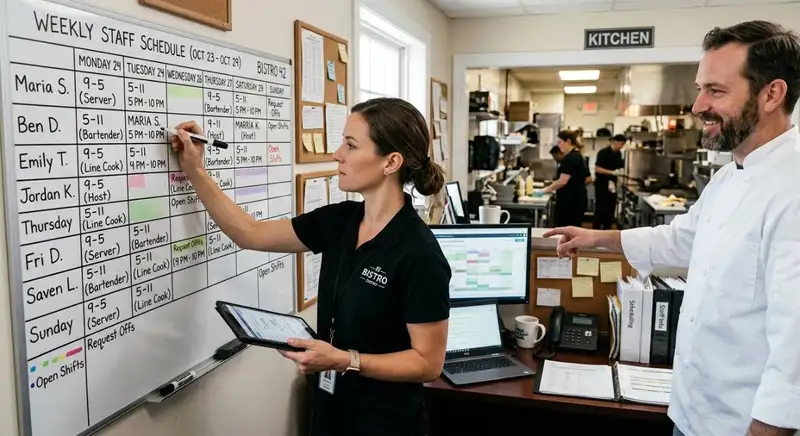
Post schedules early and stick to them. Aim to publish schedules at least two weeks in advance, and avoid making last-minute changes unless absolutely necessary. A consistent routine lets your team plan their lives, and it shows that you respect their time outside the restaurant. Some cities and states now require advance notice by law, so it's worth checking the rules where you operate.
Make swapping shifts easy. Life happens, and employees will occasionally need to trade a shift. Scheduling apps that let staff offer, pick up, and swap shifts on their own, with manager approval, cut down on frantic group texts and no-shows. They also give your team a sense of control over their own time.
Respect availability and avoid "clopens." When someone tells you they can't work Tuesdays because of a class, honor it. Ignoring stated availability is one of the fastest ways to lose a good employee. Be careful, too, about scheduling "clopens," where an employee closes late at night and returns to open the next morning. The short turnaround leaves people exhausted and resentful, and it's a recipe for mistakes on the job.
You won't be able to accommodate every request, especially during a rush or a staffing crunch. But a team that feels its time is respected is a team that's far more willing to show up, and stay.
4. Create Clear Paths for Advancement

Promote from within whenever possible. Make it a habit to look at your current team first when a higher role opens up. A natural progression might look like server to trainer to shift lead to assistant manager, or dishwasher to prep cook to line cook to sous chef. Internal promotions reward loyalty, save on recruiting costs, and send a powerful message to everyone watching - work hard here, and you'll be noticed.
Cross-train for new skills. Teaching servers to bartend, or prep cooks to run the grill, makes your team more versatile and gives employees a chance to expand their earning potential. It also adds flexibility to your scheduling, since more people can cover more positions when someone calls out.
Map the ladder and talk about it. Don't leave advancement to guesswork. Outline the steps for each role, including the skills, experience, and responsibilities required to move up, and share them openly. Then bring it up in conversation. During check-ins, ask employees where they'd like to be in a year or two and what you can do to help them get there.
For some, growth means mastering a craft or taking on a specialty role. The goal is simply to make sure every team member can picture a future at your restaurant.
Take Charge of Your Schedule
Smarter Scheduling Made Easy with Altametrics
5. Invest in Ongoing Training and Development
Build skills on the floor and in the kitchen. Host regular sessions that keep your team sharp and add to their expertise, such as menu tastings, wine and cocktail education, knife skills, or allergen awareness refreshers. Pre-shift meetings are a low-cost opportunity for short lessons, like a quick rundown of a new dish or tips for handling difficult guests. Staff who know the menu inside and out feel more confident, and guests notice the difference.
Develop future leaders. Your next general manager or head chef may already be on your payroll. Offer leadership training to promising employees, covering topics like giving feedback, managing inventory, handling conflict, and running a shift. Even small steps, such as letting a shift lead run a pre-shift meeting or shadow you during ordering, can prepare people for bigger roles.
Support outside learning. If your budget allows, consider covering the cost of food safety certifications, sommelier courses, or culinary classes. Some owners offer tuition assistance or reimburse employees who complete approved programs. Even a modest contribution signals real investment in a person's future, and it often earns loyalty well beyond its price tag.
Training does cost time and money, but so does constantly replacing people who leave. Teams that keep learning are teams that keep growing, and they're more likely to grow with you.
6. Foster a Positive, Respectful Workplace Culture
Set a zero-tolerance standard for harassment and bullying. Put your expectations in writing, explain how employees can report problems, and make sure every complaint is taken seriously and handled promptly. A team that sees misconduct ignored, especially when the offender is a top performer, quickly loses trust in leadership. Protecting your people from mistreatment, whether it comes from coworkers, managers, or guests, is one of the most powerful retention tools you have.
Lead with respect, especially during a rush. Restaurants are high-pressure environments, and tempers can flare in the middle of a slammed Saturday service. But yelling, public criticism, and belittling remarks leave lasting damage. Train your managers and chefs to stay calm, give feedback privately when possible, and communicate clearly under stress. The tone they set will ripple through the entire team.
Bridge the gap between front and back of house. Tension between servers and kitchen staff is a familiar source of friction. Encourage mutual understanding by holding joint pre-shift meetings, having servers spend time in the kitchen (and vice versa), and making it clear that both sides depend on each other for success. When people see each other as teammates rather than rivals, the whole operation runs more smoothly.
A positive culture doesn't happen by accident, and it won't fix itself. But owners who build one often find that their team does much of the work of keeping it alive, including welcoming new hires and holding each other accountable.
7. Recognize and Reward Good Work
Make praise a daily habit. The simplest form of recognition costs nothing. Thank people specifically and sincerely, whether it's for staying late to help break down the kitchen or for turning around a guest's bad night. Pre-shift meetings are a natural place for shout-outs, since they let the whole team hear who stepped up and why. Specific praise, such as "the way you handled that large party last night kept service running smoothly," lands far better than a generic "good job."
Add tangible rewards. Recognition feels even more meaningful when it comes with something real. Consider an employee of the month program, spot bonuses for exceptional work, or incentives tied to goals like positive guest reviews, upselling a featured item, or perfect attendance. Rewards don't have to be expensive. A gift card, a choice of preferred shifts, or a paid day off can all make someone feel appreciated.
Keep it fair and genuine. Recognition only works when it's earned and evenly distributed. If the same one or two people get all the attention, others may feel overlooked, and forced or insincere praise is easy to spot. Pay attention to the quieter contributors too, like the dishwasher who never misses a shift or the prep cook who keeps the walk-in impeccably organized.
When people know their hard work is noticed, they're more likely to keep doing it, and to keep doing it for you.
8. Provide Benefits That Matter
Start with the everyday perks. Shift meals are a simple way to show care, saving employees money and making sure they're fed before a long service. Employee discounts on dining, whether for staff or for friends and family, are another low-cost benefit that builds goodwill and turns your team into enthusiastic ambassadors for the restaurant. Small gestures like these add up over time.
Offer bigger benefits where you can. Health coverage, paid time off, and retirement plans are among the most sought-after benefits in the industry, and they're also the rarest. If you can offer them, even to full-time employees only or after a set period of service, you'll have a significant edge over competitors. Paid sick leave deserves special mention, since it keeps ill employees from working through illness and tells your team that their well-being matters. Rules around benefits vary by location and business size, so check what applies to you.
Get creative if your budget is tight. Smaller operators can still find ways to help. Consider a wellness stipend for gym memberships or mental health support, a transit or parking subsidy, or access to earned wage tools that let employees draw on pay they've already earned. Flexible perks like these can mean a lot to people living paycheck to paycheck.
Ask what your team wants. Before investing in a new benefit, find out which ones would make the biggest difference. A quick survey might reveal that staff would value a transit pass far more than a gym discount.
The right benefits send a clear message - you care about your employees as whole people, not just as workers behind the line or on the floor.
9. Listen to Your Team and Act on Feedback
Hold regular one-on-ones. Short, scheduled conversations give employees a chance to speak openly without the pressure of a busy shift. Even ten or fifteen minutes every month or two can surface concerns while they're still small. Ask open-ended questions, such as what's going well, what's frustrating, and what would make their job easier, and then truly listen instead of rushing to defend or explain.
Use surveys for honest input. Some people hesitate to speak up face to face, especially about sensitive issues like a manager's behavior. Anonymous surveys, whether on paper or through a simple online form, can reveal problems that would otherwise stay hidden. Keep them short and focused so people actually complete them.
Try stay interviews. Most owners conduct exit interviews, but by then it's too late. A stay interview flips the approach by asking current employees why they stay, what they enjoy about the job, and what might tempt them to leave. The answers give you a clear picture of what's working and what needs attention, and they show people that you value them enough to ask.
Close the loop. Feedback only builds trust when people see something happen as a result. When you make a change based on a suggestion, say so, and give credit to the person who raised it. If you can't act on an idea, explain why. Employees who ask for improvements and hear nothing back soon stop offering them.
Listening isn't a one-time exercise. When you make it a regular practice, your team learns that their voices matter, and you gain the insight you need to fix problems before they cost you good people.
10. Hire for Fit and Set Realistic Expectations
Give honest job previews. It's tempting to oversell a position when you're short-staffed, but glossing over the hard parts often backfires. Be upfront about the pace, the physical demands, the weekend and holiday hours, and how tips and pay actually work. Better yet, invite candidates for a short trial shift or let them observe service. Some will realize it isn't for them, which is far better than discovering that after you've invested in training them. Those who stay on will do so with their eyes open.
Screen for values and teamwork, not just experience. A seasoned cook with a bad attitude can drag down an entire kitchen, while an eager newcomer with a great attitude can be taught the rest. Ask questions that reveal how candidates handle stress, resolve conflict, and work with others, such as "Tell me about a time you helped a coworker during a busy shift." Involve a few current team members in the process, since they often have a good sense of who will fit in.
Tap into employee referrals. Your best people tend to know other good people. Referrals often lead to hires who stay longer, because they arrive with a connection to someone on the team and a realistic idea of what the job involves. Consider offering a referral bonus, paid out after the new hire has stayed for a set period, such as 90 days.
Hiring slowly and deliberately may feel like a luxury when you have an open shift to fill, but a thoughtful hire is far less likely to leave within the first few weeks.
Your Next Step Toward a Team That Stays
You don't need to tackle all ten strategies at once. In fact, trying to do so can feel overwhelming. Pick one or two that address your biggest pain points right now. If your newest hires keep leaving within a month, start with onboarding and honest job previews. If your seasoned staff are drifting away, look closely at advancement opportunities and recognition.
Whatever you choose, measure the results. Calculate your turnover rate today, then check it again in three and six months. Even a modest drop can mean thousands of dollars saved in hiring and training costs, along with a steadier team and a better experience for your guests.
The restaurants that keep their people aren't doing anything magical. They're simply paying attention, following through, and treating their employees as the heart of the business. Start with one change this week, and your team will notice.
Simplify Your Hiring Process!
Streamline Your Recruitment Process with Altametrics
Frequently
Asked Questions
What are the most common reasons restaurant employees quit?
How does employee scheduling affect restaurant staff retention?
How can restaurant owners improve employee morale and loyalty?
What are the most effective employee retention strategies for restaurants?
Must-Read Content

Employee Time Tracking Tips for Restaurants
Use these time tracking tips to improve restaurant employee timekeeping, reduce payroll errors, monitor overtime, track breaks, and simplify workforce management.
7 Scheduling Mistakes Restaurant Owners Should Stop Making
Avoid common scheduling mistakes by improving labor forecasting, balancing shift coverage, respecting employee availability, controlling overtime, and using scheduling software to optimize restaurant operations.

Human Resource Management for Restaurants
Effective human resource management for restaurants covers hiring, onboarding, scheduling, payroll, records, training, and retention, helping owners reduce turnover, ensure compliance, and build stronger, more profitable teams.