



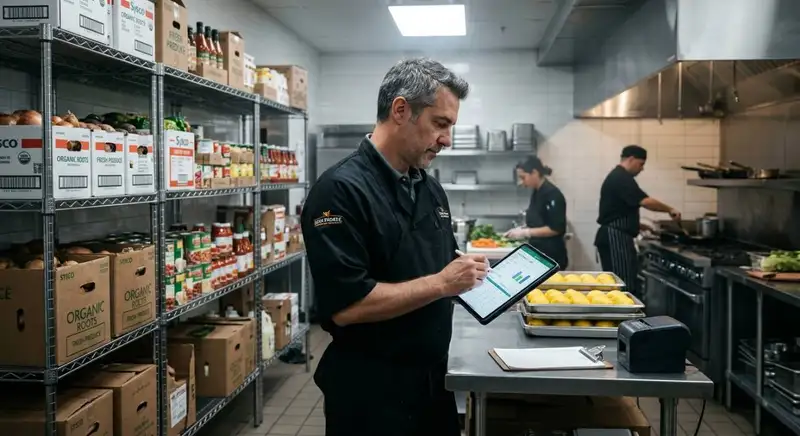
Understanding Where Your Supply Money Goes
You can't reduce what you can't see. Many owners know their total monthly supply spend but couldn't say how much goes to proteins versus produce, or how much quietly disappears into packaging and cleaning products. Before changing a single order, you need a clear picture of where every dollar is going.
Breaking Down Your Supply Expenses
Supply spending falls into four main categories, and each behaves differently -
1. Food - Usually the largest category. Track proteins, produce, dairy, dry goods, and specialty items separately, since proteins carry the highest cost and volatility while produce swings with the seasons.
2. Beverage - Alcohol, soft drinks, coffee, and mixers often carry higher margins, but over-pouring, spillage, and theft can erode them quickly.
3. Packaging and disposables - Takeout containers, cups, bags, and utensils. For restaurants with heavy delivery business, this category grows fast and is easy to overlook.
4. Cleaning and operational supplies - Sanitizers, gloves, liners, and foil. Each purchase is small, but the monthly total adds up.
If everything is lumped into one "supplies" account, you'll never know which area is driving costs up, so separate these categories in your bookkeeping.
Calculating Food Cost Percentage
Food cost percentage shows how much of your food sales is consumed by ingredient costs.
COGS = Beginning Inventory + Purchases - Ending Inventory
Food Cost % = (COGS / Food Sales) x 100
For example, with $12,000 in beginning inventory, $28,000 in purchases, and $10,000 in ending inventory, your COGS is $30,000. On $100,000 in food sales, your food cost is 30%.
You can run the same calculation per dish by dividing ingredient cost by menu price. A burger that costs $4.20 to make and sells for $14.00 has a 30% food cost. Doing this across your menu reveals which items pull their weight and which erode margins.
Understanding Prime Cost
Food cost percentage tells only part of the story. Prime cost combines your two largest controllable expenses - COGS and total labor (wages, payroll taxes, and benefits).
Prime Cost = COGS + Total Labor Costs
Many operators aim to keep prime cost at or below roughly 60 to 65 percent of sales, though the right number varies by concept. Tracking both components together matters because savings in one can create costs in the other. Buying cheaper ingredients that require more prep, for instance, simply shifts the expense from supplies to labor.
Setting Realistic Cost Targets
Once you know your numbers, set targets that reflect your concept rather than a universal figure. Many full-service restaurants aim for a food cost between 28 and 35 percent, while pizzerias often run lower and steakhouses or seafood restaurants run higher due to premium proteins. Consider -
1. Menu mix - Protein-heavy menus naturally cost more than those built around pasta, rice, and vegetables.
2. Pricing position - Value-oriented restaurants have less room to absorb ingredient costs.
3. Historical performance - Your past numbers are often the best starting benchmark. Aim for a one to three percentage point reduction over a defined period rather than an overnight overhaul.
Write targets down, assign them to each category, and set a review date. A target that isn't measured regularly quickly becomes a number nobody remembers.
With a category breakdown, accurate cost percentages, and clear targets in hand, you have the foundation for everything that follows.
Auditing Your Current Expenses
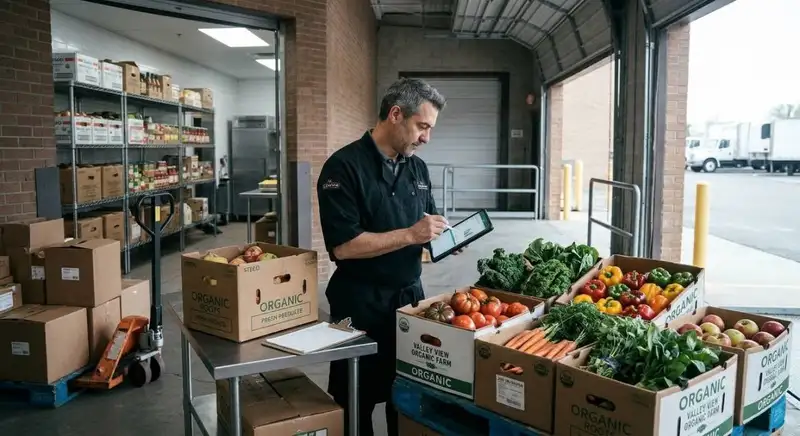
Now that you know your targets, you need to see how far your actual spending is from them. An expense audit shows exactly where money is leaking, and it gives you the data you'll need later when negotiating with suppliers.
Reviewing Invoices and Purchasing History
Start by gathering three to six months of supplier invoices, along with your purchase orders and inventory records. Three months gives you a usable snapshot, while six helps you account for seasonal swings. Enter the data into a single spreadsheet or your accounting software, recording the supplier, item, quantity, unit price, and delivery date for each line.
Then compare invoices against what you actually ordered and received. Short shipments, substituted products, and incorrect pricing are surprisingly common, and they often go unnoticed when invoices are paid without a line-by-line check.
Identifying Your Highest-Spend Categories and Items
Once your data is organized, rank everything by total spend. In most restaurants, a small number of items account for the majority of costs, often called the 80/20 pattern. Proteins, dairy, cooking oil, and a handful of staple ingredients typically dominate the list.
Focus your attention here. A 5 percent saving on your top ten items will usually do more than a 20 percent saving on dozens of low-volume products. Also review each supplier's share of your total spend, since this shows where your negotiating leverage is strongest.
Spotting Common Problems
As you work through the data, watch for these warning signs -
1. Price creep - Unit prices that rise gradually across invoices without notice. Small increases are easy to miss but compound over a year.
2. Duplicate or overlapping orders - Different staff members ordering the same item from different vendors, or placing a second order before the first has arrived.
3. Unnecessary purchases - Specialty items bought for one dish that rarely sells, or products that sit in storage until they expire.
4. Rush orders and delivery fees - Frequent emergency orders usually signal poor par levels and cost more than planned purchasing.
5. Inconsistent pricing - The same product costing different amounts from the same supplier at different times.
Flag each issue and estimate its annual cost. This helps you decide which problems deserve attention first.
Creating a Baseline for Measuring Future Savings
Finally, turn your findings into a baseline. Record your average cost per item for top products, your spend by category and supplier, and your current food cost percentage. Without these starting numbers, you can't prove that any change actually saved money.
Store the baseline somewhere accessible and update it on a regular schedule, such as monthly or quarterly. Treat it as a living document rather than a one-time exercise.
With a clear picture of where your money goes and where it leaks, you're ready to look at the menu itself.
Efficient Ordering at Your Fingertips
Experience Flawless Inventory Management with Altametrics
Smart Menu Engineering
Your menu is the biggest driver of your supply costs. Every dish determines which ingredients you buy, how much you store, and how much you waste. Menu engineering is the practice of analyzing each item's profitability and popularity, then adjusting the menu to steer guests toward the dishes that earn the most.
Analyzing Item Profitability and Popularity
Start by calculating two numbers for every dish - its contribution margin (menu price minus ingredient cost) and its sales volume over the past three to six months. Your POS system can usually provide sales data, and the recipe costs come from the work you did in the earlier sections.
Then sort items into four groups -
1. Stars - High profit, high popularity. Protect these and give them prominent placement.
2. Plowhorses - Low profit, high popularity. Guests love them, but they need cost or price adjustments.
3. Puzzles - High profit, low popularity. These need better visibility, descriptions, or server recommendations.
4. Dogs - Low profit, low popularity. These are candidates for removal.
This simple matrix replaces guesswork with evidence about which dishes deserve space on your menu.
Redesigning Dishes to Use Overlapping Ingredients
Every unique ingredient adds ordering effort, storage needs, and spoilage risk. Look for ways to build dishes around a shared set of core ingredients. A roasted chicken used in an entree can also appear in a salad, a sandwich, and a soup. Fresh herbs bought for one dish can garnish several others.
Cross-utilization reduces the number of items you stock, increases your purchase volume on each (which improves negotiating power), and lowers the odds that perishable products expire unused.
Adjusting Portion Sizes and Recipe Specifications
Inconsistent portioning quietly drains margins. If a cook adds an extra ounce of protein to each plate, the cost across hundreds of covers is substantial. Create standardized recipe cards that list exact quantities, and give your team tools such as portion scoops, scales, and measured ladles.
Consider whether any ingredients can be adjusted without hurting quality. Slightly smaller proteins paired with more filling sides, a less expensive cut that suits slow cooking, or a house-made sauce replacing a costly pre-made one can all lower costs. Test changes with your team and watch guest feedback and plate returns before rolling them out fully.
Removing Low-Margin, Low-Selling Items
Most menus carry dishes that persist out of habit. Removing your dogs simplifies prep, shrinks inventory, and reduces waste. Before cutting an item, check whether it's a signature dish or a necessary option for dietary needs, and consider whether a small price increase or recipe change might rescue it instead.
A leaner menu also speeds up kitchen service and makes training easier. Review your menu at least twice a year, since ingredient prices and guest preferences shift.
Sourcing and Choosing the Right Suppliers
Even a well-engineered menu can't overcome poor purchasing. The suppliers you choose determine your prices, product quality, and delivery reliability, so this decision deserves as much attention as any recipe.
Comparing Supplier Types
Each type of supplier offers different strengths -
1. Broadline distributors - Carry a wide range of products, from proteins to paper goods, and simplify ordering through a single delivery. Their convenience can come with higher prices on some items, but volume discounts and consolidated invoicing often offset this.
2. Specialty vendors - Focus on categories such as seafood, produce, bakery, or imported goods. They typically offer better quality and expertise, which matters for items central to your menu.
3. Local producers and farms - Provide freshness, seasonal variety, and a story guests appreciate. Prices can be competitive for in-season items, though supply may be less predictable.
4. Cash-and-carry and wholesale clubs - Useful for filling gaps, handling small quantities, or covering emergency needs without delivery fees.
Most restaurants perform best with a mix - a primary distributor for staples, specialty vendors for key items, and warehouse options as a backup.
Evaluating Suppliers Beyond Price
The lowest unit price rarely means the lowest total cost. Evaluate each supplier on -
1. Price and price stability - Ask how often prices change and how much notice you receive.
2. Quality and consistency - Inconsistent products lead to rejected deliveries, remakes, and unhappy guests.
3. Reliability - Track on-time delivery, order accuracy, and fill rates. Frequent shortages force costly emergency purchases.
4. Delivery terms - Compare minimum order sizes, delivery days, fees, and cutoff times.
5. Payment terms - Net 30 terms improve your cash flow compared with cash on delivery.
6. Returns and credits - Confirm how quickly the supplier resolves damaged or incorrect items.
Consider building a simple scorecard that rates each vendor on these criteria and review it every quarter.
Using Seasonal Purchasing to Your Advantage
Produce, seafood, and some proteins cost far less when they are in season and abundant. Plan menu features around what's at peak supply, and ask suppliers for seasonal availability lists in advance. A rotating specials board lets you take advantage of price drops without redesigning your core menu. When prices on shelf-stable items dip, buying extra may make sense, as long as you have storage space and the product won't expire before you use it.
Diversifying Suppliers to Reduce Risk
Relying on a single vendor leaves you exposed to price hikes, shortages, and service problems. Maintaining at least one backup supplier for your critical items gives you options when something goes wrong and strengthens your position in price discussions. Avoid spreading orders across too many vendors, however, since splitting purchases too thinly reduces volume discounts and adds administrative work.
With the right mix of suppliers in place, you're ready to get better terms from them.
Negotiating with Suppliers

Many restaurant owners treat supplier prices as fixed, but nearly everything about a supplier relationship is negotiable, including prices, fees, minimums, and payment terms. Suppliers want your business, and a prepared buyer can often secure better terms without damaging the relationship.
Preparing with Data and Competing Quotes
Negotiation is won before the conversation begins. Use the baseline from your expense audit to identify your top items by spend, your average unit costs, and each supplier's share of your total purchases. Then request quotes from at least two or three competing vendors for the same products and specifications.
Make sure comparisons are fair. Check pack sizes, quality grades, brands, and delivery terms so you're comparing like with like. Decide in advance what you want, what you would accept, and what you would walk away from. Having a backup supplier ready gives you real leverage.
Leveraging Volume, Consolidated Orders, and Payment Terms
Suppliers value predictable, high-volume customers. Consider the following approaches -
1. Consolidate purchases - Concentrating more of your spend with one vendor can earn tiered pricing, rebates, or volume discounts.
2. Commit to regular orders - A standing weekly order helps suppliers plan, and they may reward that reliability with better pricing.
3. Pay promptly or in advance - Early-payment discounts, such as a small percentage off for paying within ten days, can add up significantly over a year.
4. Request longer terms - If cash flow is tight, negotiate net 30 terms rather than cash on delivery.
If you operate multiple locations or belong to a purchasing group, use that combined buying power as part of your pitch.
Negotiating Minimums, Delivery Fees, and Price Locks
Price per unit is only one part of your total cost. Ask about -
1. Order minimums - Lower thresholds let you order only what you need, reducing overstock.
2. Delivery fees - Many suppliers will waive or reduce fees if you order on consistent days or reach a set order size.
3. Price locks - For volatile items such as proteins, dairy, and cooking oil, ask for fixed pricing over a set period, such as 30 to 90 days. This protects your budget from sudden spikes.
4. Credits and returns - Confirm how quickly the supplier will credit damaged, short, or incorrect items.
Get every agreement in writing, and review invoices to confirm the negotiated terms are actually being applied.
Building Long-Term Vendor Relationships
Aggressive tactics may win a short-term discount but can cost you goodwill when you need a favor, such as a rush delivery or priority access to scarce products. Treat suppliers as partners. Pay on time, communicate order changes early, give honest feedback, and be upfront about competing quotes rather than using them as threats.
Schedule regular reviews, perhaps quarterly, to discuss pricing, performance, and upcoming needs. Ask your sales representative about upcoming promotions, new products, and market trends. A supplier who trusts you will often alert you to opportunities before others hear about them.
Strong supplier terms reduce what you pay for each item, but you still need to manage what happens once products arrive.
Streamline Your Inventory. Order Smartly.
Start Simplifying Your Orders with Altametrics
Controlling Inventory
Even with great prices, money disappears when inventory isn't managed well. Overstocked products spoil, understocked shelves trigger costly rush orders, and unmonitored storage invites theft and error. Inventory control ensures you buy only what you need and use everything you buy.
Setting Par Levels and Ordering Schedules
A par level is the amount of each item you should have on hand to get through to your next delivery. Set pars by reviewing your sales history, delivery frequency, and each item's shelf life. A busy Saturday requires a higher par than a slow Tuesday, so consider adjusting for weekday patterns, seasons, and special events.
Build the ordering process around those pars. Count what you have, subtract it from the par, and order the difference. Assign one or two trained people to place orders rather than allowing anyone to do it, which prevents duplicate purchases. Match your ordering schedule to supplier delivery days so that perishables arrive fresh and frequent small deliveries replace large, risky stock-ups. Review pars every month or two, since menu changes and shifts in demand quickly make them outdated.
Implementing FIFO and Proper Storage
First In, First Out (FIFO) means older stock is used before newer stock. When a delivery arrives, move existing products to the front and place new items behind them. Label everything with the received or prep date and the use-by date, and use color-coded tags or labels if that helps your team follow the system.
Storage conditions matter just as much -
1. Keep temperatures correct - Refrigerators should hold at or below 41F (5C) and freezers at 0F (-18C). Check and log temperatures regularly.
2. Organize by category - Designate clear locations for each product so items aren't lost or double-ordered.\
3. Protect product quality - Use airtight containers for dry goods, store raw proteins on lower shelves, and keep items off the floor.
4. Restrict access - Limit who can enter storerooms and walk-ins, especially for high-value items like alcohol and premium proteins.
Inspect deliveries before signing for them, checking quantities, temperatures, and quality against the invoice.
Conducting Regular Inventory Counts
You can't manage what you don't count. Perform a full physical inventory at least monthly, and weekly counts for high-cost items such as proteins and liquor. Count at the same time each period, ideally after closing, and organize your count sheet in the same order as your storage layout to speed things up and reduce mistakes.
Having a second person verify counts, or rotating who does them, improves accuracy and discourages manipulation. Track items that turn over slowly, because stock that hasn't moved in weeks is tying up cash and approaching expiration.
Reconciling Actual Usage Against Theoretical Usage
Theoretical usage is what you should have used based on sales and recipe specifications. Actual usage is what your inventory counts show you did use. The gap between the two reveals problems such as over-portioning, waste, spoilage, miscounts, or theft.
Investigate any item with a significant variance, starting with your most expensive products. Even a small percentage gap on a costly protein adds up quickly. Once inventory is under control, the next target is the waste that still slips through.
Reducing Food Waste
Every ounce of food thrown away is money you've already spent. Even well-run kitchens lose a meaningful share of purchased food to waste, and unlike supplier prices, waste is almost entirely within your control. Reducing it means first understanding where it comes from.
Identifying Sources of Waste
Food waste typically falls into four categories -
1. Spoilage - Products that expire or deteriorate before use, usually caused by over-ordering, poor rotation, or incorrect storage temperatures.
2. Overproduction - Food prepped or cooked in quantities that exceed demand, leaving surplus that can't be served.
3. Prep errors - Trim loss, overcooked or dropped items, incorrect orders, and dishes remade after mistakes.
4. Plate waste - Food guests leave uneaten, often a sign that portions are too large or that a side or garnish isn't wanted.
Knowing which category dominates in your kitchen tells you where to focus.
Tracking Waste with Logs and Audits
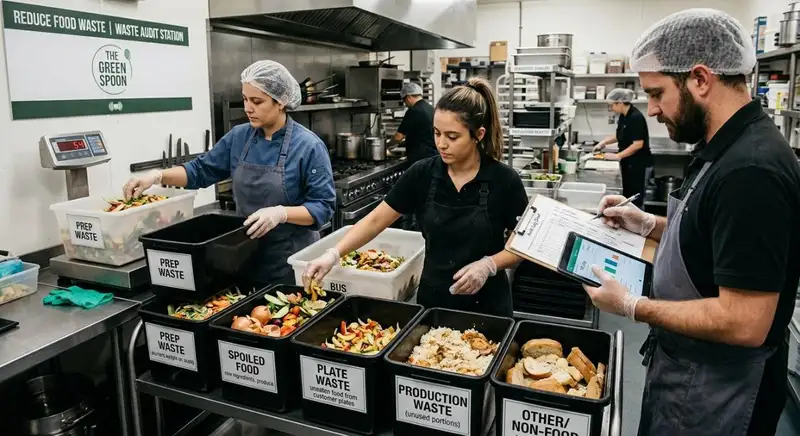
Waste you don't measure will continue unnoticed. Place a waste log or scale station in the kitchen and ask staff to record what is discarded, how much, the reason, and the approximate cost. Keep the process quick, or it won't get done. Some kitchens use a simple color-coded bin system, separating spoilage, prep waste, and plate returns.
Review the logs weekly. Look for patterns such as a particular dish that regularly comes back half-eaten, a prep item that is consistently overproduced, or a product that spoils every week. Periodic audits, where a manager inspects bins, walk-ins, and prep areas, can catch issues the logs miss. Convert the findings into dollar amounts, since seeing a weekly waste figure makes the problem tangible for your team.
Using Trim and Surplus Ingredients Creatively
Many scraps have a second life. Vegetable trimmings and bones become stocks and sauces, stale bread turns into croutons or breadcrumbs, and overripe fruit works in sauces, smoothies, or desserts. Surplus proteins can feature in staff meals, soups, or daily specials.
A "use it first" shelf in the walk-in highlights items approaching their use-by date so cooks can build specials around them. This turns potential waste into revenue, as long as you follow food safety rules and never serve anything that is unsafe.
Training Staff on Portioning, Handling, and Waste Habits
Your team has the biggest influence on waste, so make it part of everyday training. Teach proper knife skills to improve yield, correct storage and labeling practices, and the use of portioning tools. Explain why it matters by sharing waste costs in plain figures.
Involve staff in solutions. Cooks often know exactly why waste occurs and can suggest practical fixes. Share progress in pre-shift meetings and recognize improvements to keep the habit alive. Reducing waste is easier when you can see results quickly and automatically.
Use Technology to Monitor and Optimize Supply Costs
The strategies in this guide all depend on accurate, timely data. Collecting it by hand is slow and error-prone, and by the time a spreadsheet reveals a problem, the money is already gone. The right technology automates tracking, flags issues early, and frees your team to act rather than count.
1. Inventory Management Software - Modern inventory platforms let you count stock on a tablet or phone, track real-time quantities, and compare usage against sales. Many can generate suggested orders based on your par levels and alert you when items run low or approach expiration. This reduces both overordering and costly stockouts, and it shortens the time spent on monthly counts.
2. POS Integration - Connecting your inventory system to your point-of-sale (POS) data links what you sell to what you use. Every dish sold deducts its ingredients from theoretical inventory automatically, which makes the actual-versus-theoretical comparison nearly effortless. Sales data also reveals demand patterns, helping you set more accurate pars and prep quantities.
3. Recipe Costing Tools - Recipe costing software calculates the cost of every dish from current ingredient prices. When a supplier raises the price of butter or chicken, the tool updates the cost of every affected recipe and shows how your margins change. This lets you adjust prices, portions, or specials quickly instead of discovering the problem weeks later in your financial statements.
4. Invoice Scanning and Accounting Integrations - Invoice-capture tools read supplier invoices, extract line items, and feed them into your accounting and costing systems. This cuts manual data entry, speeds up bookkeeping, and highlights pricing discrepancies, such as an item billed above the agreed rate. Since price creep and billing errors were key problems in your audit, automated checks help ensure negotiated terms are honored.
5. Waste Tracking and Smart Sensors - Waste-tracking apps make logging quick and turn the data into reports by item, reason, and cost. Some kitchens use smart scales and camera-based systems that measure discarded food automatically. Wireless temperature sensors monitor refrigerators and freezers around the clock and send alerts if equipment fails, which can prevent the loss of an entire walk-in of product.
6. Analytics Dashboards and Forecasting - Dashboards bring your key figures into one view - food cost percentage, prime cost, spend by supplier, variances, and waste. Review them weekly to spot trends early. Forecasting features use past sales, seasonality, and events to predict demand, helping you purchase and prep closer to actual need.
7. Choosing the Right Tools - Start with the problem that costs you the most rather than buying everything at once. When evaluating options, consider -
Budget - Weigh subscription costs against realistic savings.
Size and complexity - A single cafe needs less than a multi-location group.
Integration - Choose tools that connect with your existing POS and accounting systems.
Ease of use - If staff find it cumbersome, they won't use it.
Support and training - Look for vendors that help with setup and onboarding.
Run a trial period where possible, and measure results against your baseline.
Reducing supply costs isn't a single project but an ongoing discipline. Know your numbers, audit your spending, engineer your menu, choose and negotiate with suppliers wisely, control inventory, cut waste, and let technology keep watch. Restaurants that review these areas regularly protect their margins even as prices change.
Get Accurate Inventory Valuations
Manage Your Workforce with Altametrics
Frequently
Asked Questions
What technology can help restaurants control supply costs?
Inventory management software, restaurant management systems, and purchasing platforms can help track stock levels, organize supplier invoices, monitor product usage, and identify unusual spending. These tools provide better visibility into purchasing patterns and potential inefficiencies.
How can restaurant owners avoid overstocking supplies?
Establish minimum and maximum stock levels, conduct regular inventory counts, review sales forecasts, and set purchasing quantities based on actual usage. Monitoring slow-moving products can also help prevent excess stock from tying up cash and storage space.
What is the biggest factor affecting restaurant supply costs?
Common factors include supplier price fluctuations, food waste, inefficient inventory management, overordering, portion inconsistencies, and unexpected purchases. The most significant factor varies depending on the restaurant's menu, size, purchasing practices, and operating model.
How does inventory management help reduce supply costs?
Effective inventory management helps restaurants avoid overordering, spoilage, excess stock, and emergency purchases. Tracking inventory levels, establishing par levels, and using the first-in, first-out (FIFO) method can improve purchasing accuracy and reduce waste.
Must-Read Content
How to Conduct a Food Waste Audit in Your Restaurant
A food waste audit helps restaurant owners identify waste sources, track costs, improve inventory management, reduce food waste, and increase profitability.

The Complete Guide to Bar Inventory Management for Restaurants
This guide covers bar inventory management essentials - counting, tracking, ordering, storage, variance control, and cost strategies for restaurant profitability.

How to Calculate Liquor Cost in Your Restaurant
Learn how to calculate liquor cost using the correct formula, accurate inventory data, and step-by-step guidance for restaurant profitability.

