



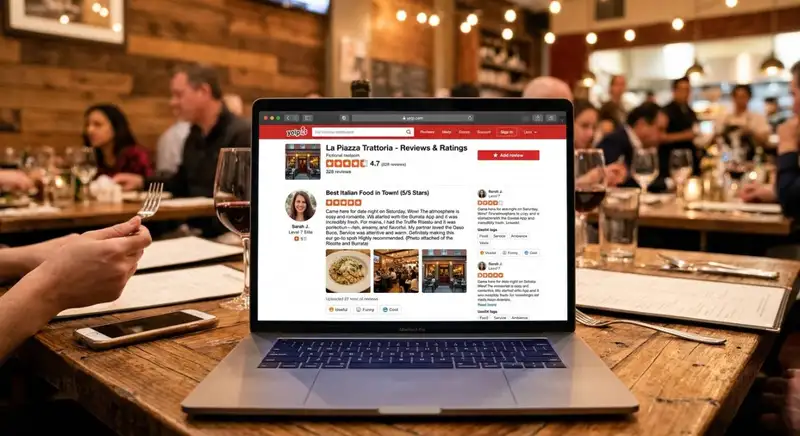
The Importance of Yelp Reviews for Restaurants
Yelp reviews influence how potential customers discover, evaluate, and choose restaurants. Before making a reservation or visiting an unfamiliar dining establishment, customers often look at star ratings, written feedback, food photos, and other diners' experiences. For restaurant owners, understanding how Yelp reviews affect customer decisions is the first step toward building a stronger online reputation.
How Yelp Reviews Influence Customer Decisions
Online reviews help customers evaluate a restaurant before visiting. Diners use feedback from other customers to assess food quality, service, cleanliness, atmosphere, and overall value. A restaurant with detailed, recent, and relevant reviews gives potential customers more information to consider when deciding where to eat.
Several factors influence how customers interpret Yelp reviews -
1. Star ratings - Ratings provide a quick overview of customers' overall experiences and can shape their first impressions.
2. Written feedback - Detailed comments help customers understand specific strengths and weaknesses, such as menu variety, service speed, or portion sizes.
3. Customer photos - Images of dishes, dining areas, and food presentation give potential diners a better idea of what to expect.
4. Recent reviews - Newer feedback helps customers assess whether the restaurant continues to deliver a consistent experience.
Restaurant owners should pay attention to these elements because potential customers often consider several aspects of a restaurant's online presence before making a decision.
How Yelp Reviews Support Restaurant Discovery
Yelp helps customers find restaurants based on location, cuisine, price range, and other preferences. Maintaining an accurate business profile and providing useful information can help customers evaluate whether a restaurant meets their needs.
Reviews also give potential diners additional context that basic business information cannot provide. For example, a restaurant's menu may describe its dishes, but customer feedback can offer insight into portion sizes, wait times, staff responsiveness, and dining conditions.
However, more reviews do not automatically guarantee better visibility or higher rankings on Yelp. The platform uses its own recommendation and ranking systems, and not every submitted review is necessarily recommended or displayed in the same way.
How Restaurant Owners Can Use Yelp Reviews to Improve Operations
Yelp reviews provide restaurant owners with another source of customer feedback. By examining recurring comments, managers can identify operational problems that may affect customer satisfaction.
For example, repeated complaints about slow service may indicate scheduling or workflow problems. Feedback about inconsistent food quality could highlight the need for better preparation standards or kitchen oversight. Positive comments about specific dishes or attentive staff can also help managers understand which aspects of the dining experience customers value.
Restaurant owners should focus on three priorities when reviewing feedback -
1. Identify recurring patterns - Look for repeated comments about food quality, service, cleanliness, pricing, and wait times.
2. Address operational weaknesses - Turn valid complaints into specific actions, such as adjusting staff coverage or improving order accuracy.
3. Maintain consistent standards - Monitor whether improvements are reflected in day-to-day operations and future customer feedback.
These foundations can help restaurants earn authentic customer feedback over time without pressuring diners to leave reviews.
Optimize Your Restaurant's Yelp Business Page
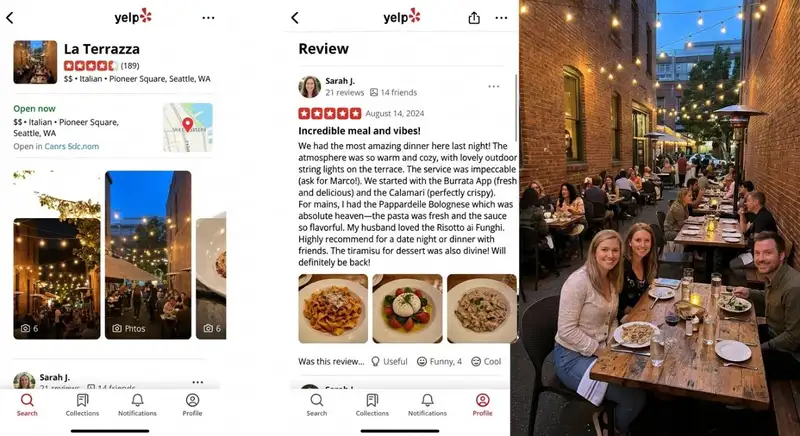
An optimized Yelp business page helps potential customers find accurate information about your restaurant and decide whether to visit. When diners discover a restaurant through Yelp, they want to know its location, operating hours, menu options, price range, and atmosphere. Keeping these details complete and current makes it easier for customers to evaluate the restaurant and plan their visits.
A well-maintained Yelp profile supports customer discovery by providing useful, reliable information. Restaurant owners should regularly review their business pages to ensure that every detail reflects the current dining experience.
Claim and Verify Your Yelp Business Page
Start by claiming your restaurant's Yelp business page through Yelp for Business. This gives authorized business representatives access to available profile management features and business information.
Once the page is claimed, verify that the restaurant's name, address, phone number, website, and operating hours are correct. Incorrect information can frustrate customers, cause missed visits, and create unnecessary confusion.
If the restaurant offers dine-in, takeout, delivery, or reservations, ensure the relevant information is accurate and available on the profile where supported. Update holiday hours and temporary closures promptly to help customers plan accordingly.
Add High-Quality Photos and Menu Information
Photos help customers understand what to expect before arriving. Upload clear, representative images that accurately showcase the restaurant's food, dining space, and overall atmosphere.
Prioritize the following types of photos -
1. Food and beverages - Show popular menu items, signature dishes, and appealing presentations.
2. Dining areas - Display the interior, seating arrangements, and atmosphere so customers can determine whether the restaurant suits their needs.
3. Exterior and entrance - Help first-time visitors recognize the location when they arrive.
4. Menu details - Keep menu information current, including prices and available options wherever supported.
Avoid misleading images or photographs that no longer reflect the restaurant. Accurate visuals help establish realistic customer expectations and reduce potential disappointment.
Keep Business Information Consistent
Review your restaurant's Yelp page regularly to ensure that customers receive consistent information. Check business categories, cuisine types, price range, accessibility details, and available amenities where applicable.
If the restaurant changes its menu, introduces new services, or adjusts operating hours, update the relevant profile information. Restaurant groups should also review each location separately because hours, menus, and services may differ between branches.
Make Your Yelp Profile Useful to Potential Customers
Think of the business page as a digital introduction to the restaurant. Customers should be able to understand what the restaurant offers, where it is located, and how to visit without searching across multiple sources.
Remember that profile optimization does not guarantee more Yelp reviews or higher search rankings. Its primary purpose is to improve the accuracy and usefulness of the information customers see. Combined with excellent food and service, a complete profile helps create a stronger foundation for positive dining experiences and authentic customer feedback.
Get Started with Smart Data Capture
Optimize Your Marketing Efforts with Altametrics
Deliver Customer Experiences Worth Reviewing
One of the most effective ways to build a strong reputation on Yelp is to provide a dining experience that meets or exceeds customer expectations. Food quality, service speed, cleanliness, and staff interactions all influence how customers perceive a restaurant. When these elements are consistent, customers have more reasons to feel satisfied with their visits and share their experiences online.
Restaurant owners should focus on improving the customer experience rather than directly asking customers to leave Yelp reviews. Yelp discourages businesses from soliciting reviews, so the priority should be delivering reliable service that naturally encourages customer satisfaction and authentic feedback.
Maintain Consistent Food Quality
Food is central to the restaurant experience. Customers expect dishes to match menu descriptions, arrive at the appropriate temperature, and maintain consistent quality across visits.
Restaurant owners can improve consistency by establishing standardized recipes, monitoring ingredient freshness, and training kitchen staff on preparation and presentation requirements. Managers should also conduct regular quality checks to identify problems before meals reach customers.
Consider these practical steps -
- Standardize recipes and portion sizes across shifts.
- Check food temperature, freshness, and presentation before serving.
- Monitor ingredient availability to prevent unexpected menu substitutions.
- Review recurring food-related complaints and correct the underlying problems.
Consistency helps customers know what to expect when they return.
Train Staff to Provide Attentive Service
Customer interactions can significantly influence how diners remember their experiences. Friendly greetings, accurate orders, timely assistance, and professional communication help create a welcoming environment.
Train employees to understand their responsibilities, communicate clearly, and respond appropriately to customer requests. Managers should also ensure that staff members know how to handle complaints without becoming defensive or dismissive.
For example, if a customer reports an incorrect order, employees should acknowledge the mistake, arrange a correction promptly, and communicate any expected delay. Resolving problems professionally can prevent a manageable issue from becoming a more frustrating experience.
Reduce Waiting Times and Improve Order Accuracy
Long waits and incorrect orders can undermine an otherwise enjoyable visit. Review reservation procedures, kitchen workflows, order-entry processes, and staffing levels to identify avoidable delays.
Restaurant owners should monitor peak-hour performance and ensure that enough employees are available to handle customer demand. For takeout and delivery orders, verify items before packaging and establish clear procedures for communicating delays.
Maintain a Clean and Comfortable Environment
Customers notice the condition of dining areas, restrooms, entrances, and service stations. Establish cleaning schedules, assign responsibilities, and inspect customer-facing areas throughout operating hours.
Temperature, noise levels, seating comfort, and accessibility can also affect the dining experience. Addressing these details demonstrates attention to customer needs.
By maintaining food quality, training staff, reducing service problems, and keeping the restaurant clean, owners can improve customer satisfaction and create a stronger foundation for authentic Yelp reviews over time.
Make Customer Feedback Part of Restaurant Operations
Customer feedback can help restaurant owners identify problems that affect the dining experience and make improvements that support a stronger Yelp reputation. While online reviews provide valuable insights, they represent only one source of customer feedback. Combining review analysis with direct observations, staff input, and operational data gives managers a more complete understanding of customer satisfaction.
The goal is to turn customer feedback into measurable operational improvements. Instead of focusing exclusively on star ratings, restaurant owners should identify recurring issues, determine their underlying causes, and establish procedures to prevent them from happening again.
Identify Recurring Customer Complaints
Start by reviewing available Yelp feedback regularly. Look for repeated comments about food quality, service speed, employee interactions, cleanliness, pricing, or order accuracy. Individual complaints may reflect isolated experiences, but recurring concerns can indicate problems that require management attention.
For example, multiple comments about long waits during dinner service may indicate insufficient staffing, inefficient kitchen workflows, or delays in order processing. Complaints about inconsistent dishes could point to preparation issues or inadequate quality-control procedures.
Organize feedback into categories to make patterns easier to identify -
1. Food quality - Taste, temperature, freshness, portion sizes, and presentation.
2. Customer service - Staff friendliness, responsiveness, communication, and professionalism.
3. Service efficiency - Waiting times, reservation handling, payment delays, and order accuracy.
4. Restaurant environment - Cleanliness, seating comfort, noise, and overall atmosphere.
5. Value for money - Pricing, portion expectations, menu clarity, and perceived value.
Categorizing feedback helps managers prioritize issues based on their frequency, severity, and potential impact on customer satisfaction.
Establish a Process for Resolving Customer Concerns
Restaurant managers should have a clear procedure for handling complaints during service and addressing recurring issues afterward. Employees need to know whom to notify, what corrective actions they can take, and when a manager should become involved.
For example, if customers frequently report incorrect takeout orders, managers can introduce a final order-verification step before packaging. If service delays occur during peak hours, reviewing staff assignments and kitchen ticket times may reveal opportunities to improve workflow.
Each recurring issue should have an assigned owner, a specific corrective action, and a deadline for review. This approach makes feedback management part of everyday restaurant operations rather than an occasional task.
Use Employee Feedback to Find Root Causes
Frontline employees often understand operational problems that may not be obvious from online reviews alone. Servers can identify recurring customer questions, kitchen staff can explain preparation bottlenecks, and hosts can describe reservation or seating challenges.
Hold brief team discussions to review customer concerns and invite employees to suggest practical solutions. Avoid assigning blame when mistakes occur. Instead, focus on improving procedures, clarifying responsibilities, and providing the training employees need to perform consistently.
Measure Whether Improvements Work
After implementing changes, monitor relevant operational indicators. These might include average ticket times, order-error rates, customer complaints, food-quality checks, or table-turnover times.
Compare performance before and after an adjustment to determine whether the change is producing the intended result. Continue reviewing Yelp feedback for recurring concerns, while recognizing that review volume and customer opinions can fluctuate.
Effective feedback management connects customer concerns with specific operational actions. By establishing a consistent process for collecting insights, correcting problems, and measuring results, restaurant owners can improve the dining experience and build a stronger foundation for authentic Yelp reviews without directly soliciting them.
Follow Yelp's Policies When Building Review Activity

Restaurant owners who want to improve their Yelp reputation must understand the platform's rules for collecting and managing customer reviews. While encouraging customer satisfaction is a worthwhile business goal, directly asking customers to write Yelp reviews can violate Yelp's policies. Restaurants should focus on delivering excellent experiences and maintaining an informative business profile rather than soliciting feedback.
Following Yelp's review policies helps restaurants build an authentic online reputation without risking problems associated with inappropriate review solicitation. Before introducing any review-related marketing activity, restaurant owners should understand which practices are permitted and which should be avoided.
Understand Yelp's Rules About Soliciting Reviews
Yelp discourages businesses from asking customers to leave reviews. This includes requesting reviews in person, sending review-request emails or text messages, and using signs or other materials that encourage customers to post feedback.
Restaurant owners should avoid adding messages such as "Leave us a Yelp review" to receipts, table tents, menus, packaging, or follow-up communications. Even if the intention is simply to collect honest opinions, directly requesting reviews can conflict with Yelp's guidelines.
Instead, restaurants can make their Yelp business pages accessible through general business information, such as a website's contact or directory section, without explicitly asking customers to review the business. The distinction is important - helping customers find a business profile is different from soliciting reviews.
Never Offer Incentives for Reviews
Offering discounts, free food, complimentary drinks, loyalty points, or other rewards in exchange for Yelp reviews is not an appropriate way to build review activity.
Incentives can undermine the credibility of customer feedback by creating a financial reason for customers to post reviews. Restaurant owners should also avoid offering rewards only to customers who promise to leave positive feedback.
Focus instead on providing value through food quality, attentive service, accurate orders, and a comfortable dining environment. These improvements benefit customers regardless of whether they decide to share their experiences online.
Avoid Selectively Soliciting Positive Reviews
Another practice to avoid is asking only satisfied customers to leave Yelp reviews while directing unhappy customers toward private feedback channels. This can create a misleading impression of customer satisfaction and conflicts with Yelp's approach to review solicitation.
Restaurants can collect internal feedback through legitimate customer-service surveys and complaint channels. However, those processes should be used to understand customer needs and improve operations, not to identify people who should be asked to post favorable Yelp reviews.
Build Visibility Through Accurate Business Information
Restaurant owners can still strengthen their Yelp presence by maintaining a complete, accurate business profile. Keep operating hours, contact information, menus, photos, and available services current.
Train employees to explain restaurant policies and answer questions about the business without pressuring customers to post reviews. Managers should also review Yelp's current business guidelines before launching campaigns involving the platform.
The most sustainable approach is to improve the customer experience while allowing reviews to develop organically. By avoiding direct solicitation, incentives, and selective review requests, restaurant owners can concentrate on genuine customer satisfaction and maintain a Yelp presence that accurately represents their business.
Dive Deeper into Customer Insights!
Capture Key Insights with Altametrics
Respond to Yelp Reviews Professionally
Responding to Yelp reviews gives restaurant owners an opportunity to demonstrate professionalism, acknowledge customer feedback, and explain how the business approaches service quality. Both positive and negative reviews can provide useful opportunities to communicate with customers and show potential diners that management takes the dining experience seriously.
A thoughtful response can help build customer trust, but it should never become an argument with the reviewer. Restaurant owners should prioritize clear communication, respectful language, and practical solutions when responding to feedback.
Respond to Positive Yelp Reviews With Specific Appreciation
Positive reviews can highlight the aspects of a restaurant that customers value most, including food quality, attentive staff, atmosphere, and overall service. Acknowledging this feedback helps demonstrate appreciation for the customer's experience.
Avoid relying exclusively on generic responses such as "Thanks for the review." Instead, refer to a specific detail mentioned in the review when appropriate.
For example, if a customer praises the restaurant's freshly prepared pasta, a manager could thank them for recognizing the kitchen team's attention to food quality.
Keep responses concise and natural. Avoid excessive promotional language, repeated marketing messages, or requests for additional reviews. The purpose is to acknowledge the customer's feedback, not turn the interaction into a sales pitch.
Handle Negative Reviews Calmly and Constructively
Negative reviews can be frustrating, particularly when they describe problems that restaurant owners believe have been misunderstood. However, defensive responses can make the situation worse and influence how other potential customers perceive the business.
Follow these steps when responding to negative feedback -
1. Acknowledge the concern - Recognize the customer's reported experience without becoming argumentative.
2. Apologize when appropriate - Express regret that the experience did not meet expectations.
3. Provide relevant context - Clarify misunderstandings when necessary, using factual and professional language.
4. Explain corrective action - When appropriate, describe the steps being taken to address the underlying problem.
5. Offer an appropriate next step - Provide a suitable business contact channel if further discussion is needed.
For example, if a reviewer reports a long wait for dinner, the response might acknowledge the delay and explain that management is reviewing service procedures during busy periods.
Protect Customer and Employee Privacy
Restaurant owners should never disclose private customer information, payment details, reservation records, or confidential employee matters in public responses.
Even when a review contains inaccurate claims, respond with restraint. Avoid personal attacks, threats, accusations, or attempts to embarrass the reviewer. If a review appears to violate Yelp's content guidelines, use the platform's reporting process rather than attempting to resolve the issue through a public argument.
Establish a Consistent Review-Response Process
Assign responsibility for monitoring Yelp reviews and responding within a reasonable timeframe. Managers should follow consistent communication standards across shifts and locations.
Review negative feedback for recurring operational problems and share relevant findings with the appropriate team members. If several customers mention the same issue, investigate the underlying cause rather than treating each review as an isolated complaint.
Professional responses demonstrate accountability and reinforce a restaurant's commitment to customer satisfaction. Combined with meaningful operational improvements, consistent review management can strengthen a restaurant's reputation and help potential diners make informed decisions.
Monitor Yelp Performance and Identify Opportunities
Monitoring Yelp performance helps restaurant owners understand how customers perceive their business and identify areas that require attention. While star ratings provide a quick overview of customer sentiment, they do not explain every factor influencing the dining experience. Restaurant owners should examine review content, customer feedback patterns, and available business metrics to develop a more complete understanding of their online reputation.
The objective is to use Yelp data to make informed business decisions, not simply to increase the restaurant's star rating. Consistent monitoring allows managers to recognize recurring problems, evaluate operational improvements, and maintain a customer-focused approach to restaurant management.
Track Star Ratings and Review Trends
Start by reviewing your restaurant's overall Yelp rating and the reviews published over time. Pay attention to changes in customer sentiment, recurring complaints, and the subjects customers mention most frequently.
A change in ratings may indicate that customers are experiencing different levels of service, but individual reviews do not always reflect the experience of every diner. Consider the context and volume of feedback before making operational decisions.
Restaurant owners should monitor -
1. Overall star rating - Understand how customers currently rate their experiences.
2. Review frequency - Observe how review activity changes over time without treating a higher volume as the only measure of success.
3. Recurring feedback - Identify common compliments and complaints involving food, service, cleanliness, and value.
4. Recent customer sentiment - Determine whether feedback suggests improving, declining, or inconsistent service quality.
Remember that Yelp's recommendation software determines which reviews are recommended and how they appear on a business page. Not every submitted review necessarily contributes to the displayed rating, so review counts and ratings may not change as expected.
Compare Customer Feedback With Restaurant Operations
Online reviews become more useful when managers compare them with internal performance data. For example, repeated complaints about slow service can be examined alongside kitchen ticket times, staffing schedules, and order-processing records.
Similarly, concerns about incorrect takeout orders can be compared with internal order-error reports. If customers repeatedly mention inconsistent food quality, managers can review preparation procedures, ingredient standards, and quality-control checks.
This approach helps restaurant owners determine whether feedback reflects an isolated incident or a broader operational issue.
Use Available Yelp Business Metrics
Yelp for Business provides access to certain performance insights, depending on the features available to the business. These may include information about customer engagement with the business page and other activity associated with its presence on Yelp.
Review available metrics periodically to understand how customers interact with the profile. Use the findings to identify opportunities to improve business information, photos, menus, and other profile details.
Avoid assuming that profile views or engagement automatically translate into restaurant visits or additional reviews. Treat these figures as indicators rather than guaranteed business outcomes.
Establish a Regular Performance Review Schedule
Set aside time each week to review new feedback, identify recurring issues, and assign corrective actions. Conduct a more detailed monthly assessment to evaluate trends and determine whether previous improvements are working.
Document the issues identified, the actions taken, and the results observed.
Consistent performance monitoring helps restaurant owners turn Yelp reviews into actionable business insights. By combining customer feedback with operational data, managers can improve service quality, address weaknesses, and build a stronger foundation for long-term customer satisfaction.
Build a Long-Term Strategy
Building a strong Yelp reputation requires consistent attention to customer satisfaction, business information, and review management. Restaurant owners should treat reputation management as an ongoing operational responsibility rather than a one-time marketing activity. By establishing clear procedures and regularly evaluating customer feedback, restaurants can maintain a trustworthy online presence and create better dining experiences over time.
A sustainable Yelp strategy focuses on service quality, accurate business information, and authentic customer feedback rather than chasing a particular star rating.
Assign Responsibility for Yelp Management
Restaurant owners should designate a manager or team member to oversee the restaurant's Yelp business page. This person can monitor incoming reviews, verify business information, identify recurring customer concerns, and coordinate improvements with the appropriate departments.
For restaurants operating multiple locations, establish consistent guidelines while allowing individual managers to address location-specific issues. Each restaurant should maintain accurate hours, menus, contact details, and service information.
Clearly assigned responsibilities help prevent important tasks from being overlooked. Managers should also know when to escalate serious complaints, operational problems, or potentially policy-violating content for further review.
Establish a Weekly Review Management Routine
Create a recurring schedule for checking the Yelp business page and reviewing customer feedback. A structured routine makes it easier to identify problems before they become persistent concerns.
A practical weekly checklist includes -
1. Review new feedback - Read available reviews and identify recurring customer concerns.
2. Respond professionally - Acknowledge feedback where appropriate and follow consistent communication standards.
3. Check business information - Confirm that operating hours, menus, contact details, and other important information remain accurate.
4. Assign corrective actions - Share relevant concerns with kitchen managers, service supervisors, or other responsible employees.
5. Review progress - Check whether previously identified operational problems are being addressed.
These activities help keep reputation management connected to everyday restaurant operations.
Incorporate Customer Feedback Into Staff Training
Use recurring feedback to identify training opportunities and reinforce service standards. If customers frequently mention slow service, managers can review table assignments, staffing levels, and communication procedures. If feedback highlights inconsistent food preparation, additional training or clearer kitchen procedures may be necessary.
Discuss relevant patterns during staff meetings without publicly identifying individual reviewers or unnecessarily blaming employees. Focus on practical improvements that employees can apply during their shifts.
Restaurant owners should also recognize areas where customers consistently report positive experiences. Maintaining those standards is just as important as correcting weaknesses.
Maintain Consistency Across Every Customer Touchpoint
A restaurant's reputation depends on more than its Yelp page. Customers evaluate the entire experience, from discovering the restaurant online to placing an order, receiving service, and completing payment.
Keep menus, photos, hours, and service descriptions aligned with the actual customer experience. Review these details whenever the restaurant changes its offerings, staffing procedures, or operating schedule.
Avoid direct review solicitation, incentives, or selective requests for positive feedback. Instead, allow customers to decide independently whether they want to share their experiences on Yelp.
Measure Progress and Adjust Your Approach
Evaluate reputation-management efforts monthly by reviewing recurring feedback, operational performance, response consistency, and available Yelp business insights. Use these findings to prioritize improvements and update procedures as needed.
Ultimately, maintaining strong Yelp reviews begins with consistently meeting customer expectations. By combining reliable service, accurate business information, professional communication, and ongoing operational improvements, restaurant owners can build a more credible online reputation and support long-term customer trust.
Empower Your Marketing Strategies!
Step Up Your Marketing with Altametrics
Frequently
Asked Questions
How can I get more Yelp reviews for my restaurant?
Focus on delivering excellent food, attentive service, and consistent dining experiences. Maintain an accurate Yelp business page with updated hours, menus, and photos. Yelp discourages directly asking customers for reviews, so allow customers to share feedback voluntarily without pressure or incentives.
What information should a restaurant include on its Yelp business page?
A restaurant should maintain accurate contact details, operating hours, website information, business categories, menus, and relevant service details. High-quality photos of food, dining areas, and the exterior can also help potential customers understand what the restaurant offers.
How often should restaurants monitor Yelp reviews?
Restaurant owners should check their Yelp business pages regularly, ideally as part of a weekly management routine. Monitor new feedback, respond appropriately, identify recurring complaints, and verify business information. More frequent monitoring may be helpful for restaurants receiving substantial customer feedback.
Why are some Yelp reviews not included in a restaurant's rating?
Yelp uses an automated recommendation software system to evaluate reviews. Some reviews may not be recommended or included in the displayed rating. The system considers various factors related to review reliability, so the number of reviews submitted may differ from the number displayed or reflected in the rating.
Must-Read Content
How to Manage Tasks in a Restaurant
Learn how to manage tasks in a restaurant by organizing responsibilities, prioritizing duties, assigning employees, tracking progress, and using technology effectively.

The Complete Guide to Restaurant Reputation Management
Restaurant reputation management helps restaurant owners monitor reviews, respond to feedback, improve customer experiences, protect their reputation, and build trust.

How Much Should a Restaurant Spend on Marketing?
Restaurants should base how much to spend on marketing on revenue, growth stage, size, and specific business goals.

