What should be included in a restaurant job description?
A restaurant job description should include the job title, role summary, main responsibilities, required skills, preferred experience, schedule, pay structure, physical requirements, and work conditions.
How to Write Job Descriptions for Restaurant Staff

Improve Hiring Clarity
Restaurant job descriptions matter because they help owners, managers, and employees understand exactly what each role is responsible for. In a restaurant, every position affects the guest experience and daily operations. Servers influence service quality, cooks protect food consistency, hosts manage first impressions, dishwashers keep the kitchen moving, and managers guide the team. When these duties are not clearly written, employees may start the job with the wrong expectations.
A strong job description helps restaurant owners hire better from the beginning. It explains the job title, main responsibilities, required skills, schedule expectations, work conditions, and performance standards. This helps applicants decide whether the role matches their experience, availability, and work style before they apply. It can also save managers time by reducing applications from candidates who are not a good fit.
Job descriptions also make onboarding and training easier. New employees can see what they need to learn, how their role supports the team, and what success looks like during each shift. Managers can use the description as a reference when assigning tasks, coaching employees, or reviewing performance.
For restaurant owners, job descriptions are more than hiring documents. They are practical tools for reducing confusion, improving accountability, and building stronger front-of-house, back-of-house, and management teams.
Use the Right Job Title

The job title is one of the most important parts of a restaurant job description because it affects who finds the opening, who clicks on it, and whether the applicant understands the role. A clear job title helps restaurant owners attract candidates who are actually searching for that position.
A strong hiring process should start with titles that are simple, searchable, and role-specific. For example, "Server," "Line Cook," "Prep Cook," "Host," "Bartender," "Dishwasher," "Cashier," "Shift Leader," "Assistant Manager," and "General Manager" are easier for applicants to understand than creative titles or vague labels.
Restaurant owners should look at the job title through three key hiring metrics -
1. Search visibility - Applicants often search by common job titles. If the title is too unusual, fewer qualified candidates may see the posting.
2. Applicant quality - A specific title helps filter candidates before they apply. "Line Cook" gives a clearer expectation than "Kitchen Team Member" if the role requires cooking on the line during busy shifts.
3. Screening time - Clear titles reduce confusion during hiring. When applicants understand the role upfront, managers spend less time explaining basic responsibilities during interviews.
The title should also match the actual duties of the position. If an employee will supervise shifts, handle opening or closing tasks, and train staff, "Shift Leader" may be more accurate than "Server." If the role is focused on prep work, "Prep Cook" is clearer than "Cook."
For restaurant owners, the goal is to make the job title easy to find, easy to understand, and accurate to the work being performed.
Write a Clear Role Summary
A clear role summary helps applicants understand the purpose of the job before they read the full list of duties. For restaurant owners, this section should explain what the employee will do, where they fit in the restaurant, and how the role supports daily operations.
The role summary should usually be 2 to 4 sentences. If it is too short, applicants may not understand the expectations. If it is too long, important details may get lost. The goal is to give a quick but useful overview of the position.
Restaurant owners should focus on four key points -
1. Role purpose - Explain the main reason the position exists. For example, a server's role is to create a positive guest experience, while a line cook's role is to prepare menu items accurately and efficiently.
2. Daily impact - Show how the role affects the restaurant's performance. A host helps manage seating flow, a dishwasher helps prevent kitchen delays, and a manager helps keep labor, service, and operations on track.
3. Team connection - Explain who the employee works with. This helps applicants understand whether they will work mostly with guests, kitchen staff, delivery drivers, supervisors, or the full restaurant team.
4. Success expectations - Give a simple picture of what good performance looks like. This may include fast service, accurate orders, clean workstations, strong communication, reliable attendance, or leadership during busy shifts.
A strong role summary helps improve applicant fit because candidates can quickly decide whether the job matches their skills, availability, and work style. For restaurant owners, this can lead to better applications, faster screening, and fewer misunderstandings during interviews.
List the Main Responsibilities
The responsibilities section is where restaurant owners explain what the employee will actually do during each shift. This part should be specific, practical, and organized by role. A clear list of responsibilities helps applicants understand the workload before they apply and helps managers set expectations after the employee is hired.
Restaurant owners should write responsibilities based on the tasks that affect daily performance. These may include guest service, food preparation, cleaning, order accuracy, speed, safety, teamwork, and shift leadership. Instead of writing a vague line such as "help with restaurant duties," owners should list the main tasks that are required for the role.
The responsibilities section should focus on five key areas -
1. Guest-facing tasks - For front-of-house roles, include duties such as greeting guests, taking orders, answering menu questions, processing payments, handling reservations, and resolving basic customer concerns.
2. Food and kitchen tasks - For back-of-house roles, include responsibilities such as preparing ingredients, cooking menu items, following recipes, checking food quality, labeling products, and maintaining food safety standards.
3. Cleaning and safety tasks - Every restaurant role should include cleanliness expectations. This may involve sanitizing workstations, washing dishes, sweeping floors, cleaning tables, storing food correctly, and following health and safety rules.
4. Teamwork expectations - Restaurants depend on coordination. Job descriptions should explain how the employee will communicate with servers, cooks, hosts, cashiers, managers, and other team members during busy shifts.
5. Performance standards - Owners should connect responsibilities to measurable expectations such as order accuracy, ticket times, table turnover, attendance, prep completion, waste reduction, or shift readiness.
A strong responsibilities section helps reduce confusion because employees know what they are accountable for from the start. It also gives managers a clear reference point for training, coaching, and performance reviews.
Skills and Experience
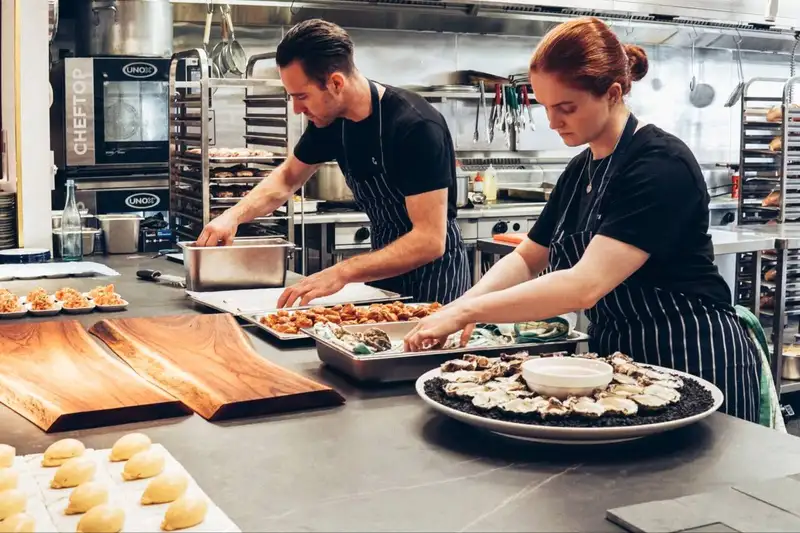
The skills and experience section helps restaurant owners separate qualified applicants from candidates who may not be ready for the role. This part should explain what the employee needs to know before starting and what can be learned through training. When this section is too vague, managers may receive applications from people who do not match the position, schedule, or work environment.
Restaurant owners should divide qualifications into two groups - required skills and preferred experience. Required skills are the basics an employee must have to perform the job safely and reliably. Preferred experience is helpful, but not always necessary if the restaurant is willing to train the right candidate.
Owners should focus on five hiring factors -
1. Role-specific skills - Servers may need communication, menu knowledge, and POS experience. Cooks may need knife skills, recipe accuracy, food prep knowledge, and speed on the line. Managers may need leadership, scheduling, inventory, and conflict resolution skills.
2. Experience level - Be clear about whether the role requires no experience, 6 months, 1 year, or several years of restaurant experience. This helps applicants understand if they are a good fit.
3. Training requirements - If the restaurant provides training, mention it. This can increase the applicant pool for entry-level roles such as host, cashier, dishwasher, or food runner.
4. Certifications - Some roles may require food handler training, alcohol service certification, or food safety knowledge, depending on the position and local rules.
5. Soft skills - Reliability, teamwork, communication, attention to detail, and the ability to work under pressure are important for almost every restaurant role.
A clear skills section helps improve applicant quality, reduce screening time, and support better hiring decisions. It also helps new employees understand what they are expected to bring to the job from day one.
Stay Organized and Hire with Confidence!
Revolutionize Your Recruitment Strategy with Altametrics
Include Schedule, Pay, and Work Conditions
The schedule, pay, and work conditions section helps restaurant owners set clear expectations before an applicant accepts the job. In restaurants, many hiring issues happen when candidates do not fully understand the shift hours, weekend requirements, pay structure, physical demands, or pace of the work. Clear details in the job description can reduce confusion and improve applicant fit.
Restaurant owners should include the most important employment details in a simple, direct format. This gives applicants the information they need to decide whether the role matches their availability and expectations.
Focus on five key areas -
1. Employment type - State whether the role is full-time, part-time, seasonal, temporary, or on-call. This helps applicants understand the level of commitment required.
2. Schedule expectations - Include expected shifts, opening or closing duties, weekend availability, holiday shifts, late nights, early mornings, or rotating schedules. For example, a restaurant manager role may require nights and weekends, while a prep cook role may start early in the morning.
3. Pay structure - List the hourly rate, salary range, tip eligibility, bonus opportunities, or overtime expectations when appropriate. Clear pay information can help attract serious applicants and reduce time spent answering basic compensation questions.
4. Physical requirements - Restaurant work often requires standing for long periods, lifting boxes, carrying trays, bending, reaching, walking, and working in hot, cold, or fast-paced environments. These details help applicants understand the real working conditions.
5. Work environment - Explain the pace and setting of the role. This may include busy meal periods, teamwork under pressure, guest interaction, kitchen heat, cleaning duties, or multitasking during rush hours.
A clear section on schedule, pay, and work conditions helps restaurant owners reduce mismatched applications, improve hiring conversations, and make sure employees understand the job before their first shift.
Customize Descriptions by Restaurant Role
Restaurant job descriptions should not use the same wording for every position. Each role affects the business in a different way, so restaurant owners should customize the description based on the employee's main responsibilities, performance expectations, and impact on operations.
A server, line cook, dishwasher, and manager may all work in the same restaurant, but their daily priorities are different. If the job description is too general, applicants may not understand what the role requires. A customized description helps owners attract people with the right skills for each position.
Restaurant owners should organize role-specific descriptions around three major staff groups -
1. Front-of-house roles - These include servers, hosts, bartenders, cashiers, food runners, and bussers. Job descriptions should focus on guest service, communication, order accuracy, table flow, upselling, payment handling, and cleanliness. Important performance areas may include customer satisfaction, ticket accuracy, table turnover, and response time during busy shifts.
2. Back-of-house roles - These include line cooks, prep cooks, dishwashers, expeditors, and kitchen supervisors. Descriptions should focus on food quality, recipe accuracy, prep completion, food safety, station cleanliness, speed, and teamwork. Key performance areas may include ticket times, waste control, portion consistency, sanitation standards, and prep readiness.
3. Management roles - These include shift leaders, assistant managers, kitchen managers, and general managers. Job descriptions should focus on leadership, scheduling, labor control, inventory, training, guest recovery, compliance, and shift execution. Important performance areas may include labor percentage, employee attendance, sales goals, inventory variance, service speed, and team performance.
Customizing each job description helps restaurant owners create clearer expectations before hiring. It also makes training easier because managers can connect each employee's daily duties to measurable restaurant goals.
Review and Update
Restaurant job descriptions should not be written once and ignored. Restaurant roles change as menus expand, technology updates, service models shift, and staffing needs evolve. A job description that was accurate one year ago may no longer reflect what the employee actually does during each shift.
Restaurant owners should review job descriptions on a regular schedule to make sure they still match the role, the restaurant's operations, and current hiring needs. Outdated descriptions can lead to mismatched applicants, unclear expectations, weak training, and performance issues after the employee is hired.
Owners should review job descriptions using five key checkpoints -
1. Duty accuracy - Compare the written responsibilities with the actual tasks employees perform. If servers now handle takeout orders, online order packing, or QR code menu support, those duties should be included.
2. Schedule changes - Update shift expectations when hours, weekend needs, holiday coverage, or opening and closing responsibilities change.
3. Technology updates - Add any tools employees are expected to use, such as POS systems, scheduling apps, inventory tools, kitchen display systems, online ordering platforms, or time clock software.
4. Performance expectations - Review whether the role connects to measurable goals such as order accuracy, ticket times, table turnover, prep completion, labor control, waste reduction, or customer service standards.
5. Compliance and training needs - Update requirements for food safety, alcohol service, workplace policies, harassment prevention, safety procedures, or local labor rules when needed.
A regular review process helps restaurant owners keep job descriptions useful for hiring, onboarding, training, coaching, and performance reviews. When job descriptions stay current, employees have a clearer understanding of their responsibilities, and managers have a stronger tool for building a reliable restaurant team.
Inventory management
How to Conduct a Food Waste Audit in Your Restaurant

Software integration
Smart Ways to Use AI in Your Restaurant

Employee scheduling
Employee Time Tracking Tips for Restaurants

Employee scheduling
7 Scheduling Mistakes Restaurant Owners Should Stop Making

Employee scheduling
Human Resource Management for Restaurants
Employee scheduling
Common Payroll Challenges in Restaurants

Sales forecasting
How to Use Restaurant Analytics to Improve Profitability

Restaurant management
The Complete Guide to Restaurant Reputation Management

Accounting payroll
Restaurant Cash Handling Procedures
Frequently Asked Questions
How do I write a job description for back-of-house staff?
For back-of-house roles, focus on food preparation, recipe accuracy, food safety, station cleanliness, speed, teamwork, and prep completion. Common roles include line cooks, prep cooks, dishwashers, expeditors, and kitchen supervisors.
What skills should I include in a server job description?
A server job description should include communication, guest service, order accuracy, menu knowledge, teamwork, multitasking, POS use, payment handling, and the ability to work in a fast-paced environment.
How do I write a job description for front-of-house staff?
For front-of-house roles, focus on guest service, communication, order accuracy, payment handling, table flow, cleanliness, and teamwork. Common roles include servers, hosts, bartenders, cashiers, bussers, and food runners.
How do I make a restaurant job description more attractive?
A restaurant job description becomes more attractive when it is clear, honest, and easy to read. Owners should highlight the role, schedule, pay, growth opportunities, team culture, training, and benefits without making the job sound unrealistic.