What is a food waste audit in a restaurant?
A food waste audit is a systematic process for measuring, categorizing, and analyzing discarded food. It helps restaurant owners identify waste sources, calculate financial losses, improve inventory management, and reduce unnecessary food costs.
How to Conduct a Food Waste Audit in Your Restaurant

The Importance of Food Waste Audit
A food waste audit helps restaurant owners understand how much food gets discarded, where waste occurs, and how much money those losses cost the business. From spoiled ingredients to oversized portions, food waste can accumulate throughout daily operations and reduce restaurant profitability. Without accurate tracking, it can be difficult to identify the underlying causes or determine which changes will make the biggest difference.
A food waste audit is a systematic process for collecting, measuring, and analyzing discarded food over a defined period. It examines waste at different stages of restaurant operations, including food storage, preparation, cooking, and service. By recording the type, quantity, and cost of discarded ingredients, restaurant owners can make informed decisions about purchasing, inventory management, and food preparation.
Restaurants generate waste for several reasons, and each source requires a different solution. Common examples include -
1. Spoiled ingredients - Perishable products expire or deteriorate before they can be used, often because of overordering or improper storage.
2. Preparation waste - Employees discard excessive trimmings or usable ingredients during food preparation.
3. Overproduction - Kitchens prepare more food than customers order, leaving unsold items that cannot be reused safely.
4. Portion control problems - Oversized servings increase ingredient usage and may result in more food being left uneaten.
5. Plate waste - Customers leave portions of their meals unfinished, potentially indicating issues with serving sizes, menu design, or customer preferences.
Categorizing these losses helps owners determine which operational problems contribute most to food waste.
Understand the Financial Impact of Food Waste
Every discarded ingredient represents money spent on food that did not generate revenue. Restaurant owners also need to consider the associated costs of storage, labor, preparation, and disposal. For example, throwing away spoiled produce means losing the purchase cost of the produce, as well as the resources used to receive, store, and handle it.
A food waste audit makes these losses more visible by translating discarded quantities into estimated financial costs. It also helps owners distinguish between occasional waste and recurring problems that require operational changes.
Make Better Operational Decisions
Regular audits provide useful information for improving inventory purchasing, forecasting customer demand, adjusting preparation quantities, and standardizing portion sizes. They also help managers determine whether waste reduction measures are producing measurable improvements.
Rather than relying on assumptions, restaurant owners can use audit findings to prioritize the changes most likely to reduce unnecessary food costs. This creates a practical starting point for improving kitchen efficiency, controlling inventory, and protecting profit margins.
Set Clear Goals Before Starting a Food Waste Audit
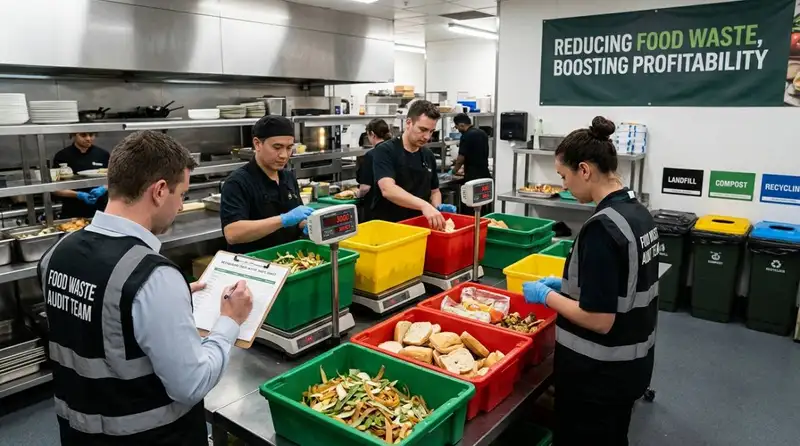
Before conducting a food waste audit, restaurant owners should establish what they want to measure and improve. Without clear objectives, collecting waste data can become a routine task that produces little actionable information. Defined goals help managers focus on the biggest operational problems, establish measurable targets, and evaluate whether changes are reducing waste over time.
Start by identifying the reasons for conducting the audit. Some restaurants may struggle with spoiled ingredients, while others discard large quantities of prepared food at the end of each shift. Understanding the primary concern helps determine what information the audit needs to capture.
Common objectives include -
1. Reducing food costs - Identify ingredients that are frequently discarded and calculate their financial impact.
2. Minimizing spoilage - Determine whether purchasing quantities, storage conditions, or stock rotation contribute to expired inventory.
3. Improving portion control - Measure plate waste and review whether serving sizes align with customer demand.
4. Reducing overproduction - Compare preparation quantities with actual sales to avoid making more food than necessary.
5. Improving inventory management - Identify discrepancies between expected ingredient usage and actual consumption.
Restaurant owners can prioritize one objective initially and expand the audit as tracking becomes more consistent.
Establish a Baseline for Food Waste
A baseline provides a starting point for evaluating future improvements. Before changing purchasing or preparation practices, record how much food the restaurant discards under its current operating conditions.
Track the weight, category, and estimated cost of discarded food over a representative period. Include different shifts and days of the week to account for changes in customer traffic and menu demand. For example, a restaurant may experience higher preparation waste on slower weekdays and more overproduction during unpredictable weekend rushes.
Use the baseline to establish realistic targets, such as reducing preparation waste by a defined percentage over the next month. The target should reflect the restaurant's current performance rather than an arbitrary industry benchmark.
Decide Which Areas to Audit
A food waste audit does not always need to cover every operational area at once. Restaurant owners can begin with the departments or processes where waste is most likely to occur.
Consider auditing receiving and storage, ingredient preparation, cooking and service, and leftover food from customer plates. For multi-location restaurants, select consistent tracking categories and procedures so results can be compared across locations.
Finally, define the audit period, assign responsibility for collecting records, and decide how frequently managers will review the findings. Clear goals and consistent procedures make the audit easier to manage and turn the collected data into practical decisions.
Tools and Systems Needed for the Audit
A successful food waste audit depends on consistent data collection. Restaurant owners need a straightforward system that allows employees to record discarded food accurately without disrupting kitchen operations. Preparing the right tools, defining waste categories, and assigning responsibilities before the audit begins helps prevent missing information and inconsistent measurements.
Start with basic equipment that makes food waste easy to measure and document. Most restaurants can begin with a few inexpensive supplies before investing in specialized tracking software.
Essential tools include -
1. Digital weighing scales - Measure discarded food by weight rather than relying on visual estimates.
2. Separate waste containers - Collect different categories of waste, such as preparation scraps, spoiled ingredients, and uneaten prepared food.
3. Waste tracking sheets - Record the food item, quantity, disposal reason, date, time, and responsible department.
4. Cost and inventory records - Determine ingredient costs and compare waste quantities with purchasing and usage data.
5. Digital reporting tools - Use spreadsheets or inventory management software to organize records, identify trends, and calculate waste costs.
Choose tools that fit the restaurant's size, menu, and staffing levels. The goal is to make tracking practical enough for employees to follow throughout every shift.
Establish Consistent Food Waste Categories
Create standardized categories so employees record similar waste in the same way. Without clear definitions, one employee might classify discarded vegetables as preparation waste while another records them as spoilage. These inconsistencies make audit results less reliable.
Common categories include preparation scraps, spoiled or expired ingredients, overproduction, cooking errors, and customer plate waste. Restaurants can also create separate categories for returned orders or food discarded because of improper storage.
Keep the categories specific enough to identify the causes of waste without making the tracking process unnecessarily complicated. For example, recording discarded chicken separately from discarded produce can help managers identify which ingredients account for the highest losses.
Create a Standard Waste Tracking Process
Establish a simple procedure that employees can follow whenever food is discarded. Each entry should include the food item, its weight, the reason for disposal, and the estimated ingredient cost when available. Recording the date, shift, and department can also help managers identify recurring problems.
Use a consistent weighing method and establish clear rules for whether containers or packaging must be excluded from measurements. Food safety procedures should always take priority, so waste collection must never interfere with safe food handling or create opportunities for cross-contamination.
Assign Responsibilities to Employees
Designate specific employees to record waste during preparation, service, and closing procedures. Kitchen staff can log preparation scraps and cooking errors, while shift managers can verify entries and review end-of-day totals.
Train employees to follow the same recording process and explain why accurate measurements matter. When staff understand that the goal is to identify operational improvements rather than assign blame, they are more likely to report waste consistently.
With the right tools, categories, and responsibilities in place, restaurant owners can begin collecting reliable data and use it to identify where food waste occurs most frequently.
Measure and Record Restaurant Food Waste
Once the audit tools and tracking procedures are ready, the next step is to measure how much food the restaurant discards and document where the waste occurs. Accurate measurements help restaurant owners understand which ingredients are being wasted, when losses happen, and which kitchen processes need improvement. The key is to record waste consistently throughout the audit period rather than relying on occasional observations.
Begin by placing designated waste containers in appropriate areas, such as food preparation stations, storage areas, cooking lines, and dishwashing stations. Whenever food is discarded, employees should separate it into the appropriate category and measure its weight using a digital scale.
Subtract the weight of the container from the total measurement to calculate the net weight of the discarded food. For mixed waste, record individual ingredients separately when practical. This makes it easier to identify whether specific products, such as meat, dairy, or fresh produce, account for a disproportionate share of waste.
Establish a consistent measurement schedule that covers all relevant shifts. Recording waste during preparation, lunch service, dinner service, and closing can reveal patterns that a single end-of-day measurement might miss.
Record Waste at Every Stage of Operations
Food waste can occur before ingredients reach the kitchen line, during preparation, or after meals are served. Tracking each stage helps restaurant owners determine where corrective action is needed.
1. Receiving and storage - Record ingredients discarded because of spoilage, damage, improper storage, or expiration.
2. Food preparation - Measure trimmings, discarded ingredients, and products lost through preparation errors.
3. Cooking and service - Track overproduction, burnt food, incorrect orders, and unsold prepared items.
4. Customer plates - Measure uneaten food returned from tables to identify potential portion-size or menu-related issues.
Document the date, food item, weight, waste category, and reason for disposal for each entry. Adding the shift or department can help managers identify operational differences across the restaurant.
Calculate the Cost of Discarded Ingredients
Weight alone does not show the full financial impact of food waste. Restaurant owners should also estimate how much the discarded ingredients cost the business.
For example, if a restaurant discards 5 pounds of chicken purchased at $4 per pound, the direct ingredient cost of that waste is $20. Recording this loss alongside other discarded ingredients helps managers identify which waste categories deserve the most attention.
Use the actual ingredient cost whenever possible, rather than menu prices or selling prices. For prepared dishes containing several ingredients, estimate the cost using the quantities and costs of the components that were discarded.
Maintain Accurate and Consistent Records
At the end of each shift, review the tracking sheets or digital entries to identify missing measurements, duplicate records, or incorrectly classified waste. Managers should compare entries with inventory records when discrepancies appear and ensure that employees follow the same measurement procedures.
Continue collecting data over a representative period that includes different days, shifts, and levels of customer demand. A consistent record of food waste provides a stronger basis for identifying recurring problems and determining where changes to purchasing, preparation, or storage practices can deliver the greatest benefit.
Identify the Main Causes of Food Waste
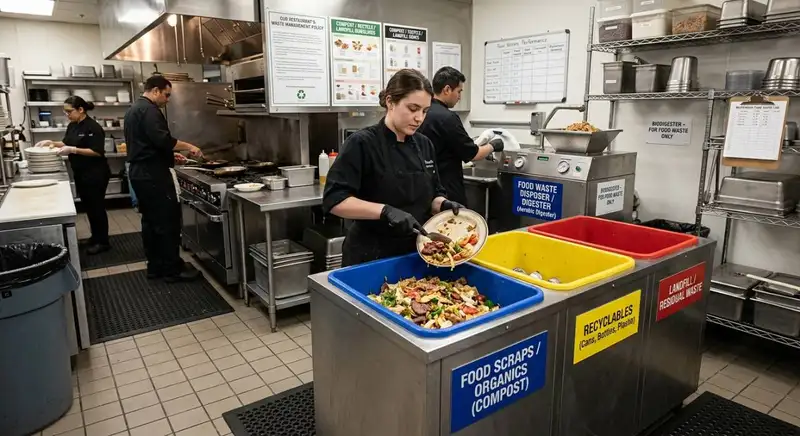
After collecting food waste data, restaurant owners need to determine why food is being discarded. The goal is not simply to measure waste but to identify the operational problems responsible for it. Reviewing waste records alongside purchasing, inventory, and sales data helps managers distinguish isolated incidents from recurring issues that require corrective action.
Start by reviewing which ingredients appear most often in the waste records. Pay attention to both the quantity discarded and its financial cost. A restaurant might throw away large amounts of inexpensive produce while losing less food by weight but more money through discarded seafood or premium cuts of meat.
Group waste by ingredient and category to identify patterns. For example, frequent disposal of leafy greens may indicate that purchasing quantities exceed demand or that storage conditions shorten shelf life.
Repeated losses involving dairy products could point to poor stock rotation or inconsistent inventory checks.
Prioritize ingredients that contribute significantly to total waste costs. Addressing these items first can help restaurant owners focus their efforts where improvements are likely to have the greatest financial impact.
Investigate Spoilage and Storage Problems
Spoilage often occurs when restaurants purchase more ingredients than they can use before they deteriorate. However, excessive purchasing is not always the only cause. Incorrect refrigeration temperatures, inadequate labeling, poor stock rotation, and improper storage practices can also lead to avoidable losses.
Review receiving procedures, storage temperatures, product dates, and inventory records. Check whether employees consistently follow FIFO (First In, First Out), which places older stock ahead of newer stock for use, where appropriate for the product and food safety requirements.
If waste records repeatedly show expired ingredients, examine purchasing schedules and actual usage before changing order quantities. This helps identify whether the underlying issue involves overordering, storage, or inventory management.
Examine Preparation, Portioning, and Overproduction
Preparation waste can reveal opportunities to improve kitchen procedures. Excessive trimming, inconsistent cutting techniques, and avoidable preparation errors may cause employees to discard ingredients that could otherwise be used safely.
Review preparation standards and provide training where necessary. Establish clear portion specifications and use appropriate measuring tools to maintain consistency. If employees regularly prepare more food than customers order, compare production quantities with sales data and adjust batch sizes to reflect demand.
Plate waste also deserves attention. Frequent leftovers may indicate oversized portions, unpopular side dishes, or a mismatch between menu offerings and customer preferences. Review these patterns before changing serving sizes or recipes.
Compare Waste Records With Sales and Inventory Data
Waste measurements become more useful when evaluated alongside other restaurant records. Compare ingredient usage with sales volume, purchasing quantities, inventory counts, and menu performance to identify discrepancies.
For example, if an ingredient is purchased frequently but appears in relatively few sold dishes, managers should investigate whether order quantities reflect actual demand. If theoretical ingredient usage differs substantially from actual inventory depletion, possible explanations include unrecorded waste, inconsistent portioning, preparation errors, or inventory-count inaccuracies.
Focus on the underlying cause rather than the discarded food alone. Once restaurant owners understand why waste occurs, they can choose targeted solutions, assign responsibility for corrective actions, and use subsequent audits to determine whether those changes are working.
Transform Your Restaurant Operations Now!
Effortless Inventory Tracking with Altametrics!
Calculate Food Waste Costs
After identifying the main causes of food waste, restaurant owners need to evaluate the financial impact of discarded food. Calculating waste costs and reviewing performance metrics helps determine which problems deserve immediate attention and whether current inventory and kitchen procedures are effective. These measurements also establish a basis for evaluating future improvements.
Calculate the Total Cost of Food Waste
Start by multiplying the quantity of each discarded ingredient by its cost per unit. Use consistent units of measurement and ingredient costs from purchasing or inventory records.
For example, if a restaurant discards 8 pounds of beef costing $6 per pound, the direct ingredient loss is $48. Repeat this calculation for each recorded ingredient and add the results to determine the total direct food waste cost for the audit period.
For prepared dishes containing multiple ingredients, calculate the cost of the discarded portion using the quantities and costs of its components. Avoid using menu prices because they include factors beyond the cost of the food itself.
Restaurant owners can also evaluate associated disposal, labor, and handling expenses separately when reliable data is available. Keeping direct ingredient losses distinct from additional operating costs makes the results easier to interpret.
Measure Food Waste as a Percentage of Food Purchases
The total dollar value of discarded food shows the scale of the problem, but a percentage can help compare performance across different periods.
One useful metric is food waste cost as a percentage of food purchases -
Food Waste Cost Percentage = (Food Waste Cost / Food Purchases Cost) x 100
For example, if a restaurant discards $600 worth of food during a period when it purchases $12,000 in food, its food waste cost equals 5% of food purchases.
This metric helps owners understand how much of their purchasing expenditure is being lost to discarded food. However, the calculation is only meaningful when the waste cost and purchase cost cover the same period and use consistent accounting methods.
Use several performance indicators to understand where waste occurs and how it changes over time.
1. Total food waste by weight - Measures the quantity of food discarded during the audit period.
2. Waste cost by ingredient - Identifies which products contribute most to financial losses.
3. Waste per customer served - Divides total waste weight by the number of customers served, helping compare periods with different traffic levels.
4. Spoilage cost - Measures the financial impact of ingredients discarded because of deterioration or expiration.
5. Waste by category - Separates preparation scraps, overproduction, cooking errors, and plate waste to highlight specific operational problems.
No single metric provides a complete picture. Combining financial and operational measurements helps managers distinguish high-volume waste from waste involving expensive ingredients.
Compare Results Against the Baseline
Compare current audit results with the baseline established before corrective actions began. Review whether total waste, waste costs, and key category-level metrics have increased or decreased.
Account for changes in sales volume, menu offerings, purchasing prices, and customer traffic before drawing conclusions. A restaurant serving more customers may generate more waste overall while producing less waste per customer.
Use the findings to rank improvement opportunities by financial impact and operational feasibility. For example, recurring losses from high-cost ingredients may deserve attention before small quantities of low-cost preparation scraps.
The results should lead to specific decisions, such as adjusting order quantities, changing preparation schedules, or improving stock rotation. This allows restaurant owners to turn audit measurements into a practical plan for controlling food costs and reducing avoidable waste.
Create an Action Plan to Reduce Food Waste
Once the food waste audit reveals the biggest sources of losses, restaurant owners should turn those findings into specific operational changes. An effective action plan addresses the underlying causes of waste, assigns responsibility to employees, and establishes measurable targets. Rather than trying to eliminate every type of waste at once, focus first on the problems that create the greatest financial losses.
Improve Purchasing and Inventory Forecasting
Use audit findings to adjust purchasing quantities based on actual ingredient usage and customer demand. If the restaurant regularly discards excess produce or dairy products, review order frequency, supplier delivery schedules, and the amount of inventory kept on hand.
Compare historical sales, current inventory levels, upcoming promotions, and seasonal demand before placing orders. More accurate forecasting helps managers avoid overordering while maintaining enough stock to meet customer needs.
Implement FIFO (First In, First Out) stock rotation and clearly label products with the appropriate dates. Schedule regular inventory checks to identify ingredients approaching the end of their usable life, following applicable food safety requirements.
Adjust Food Preparation and Portion Sizes
Overproduction and inconsistent portions can increase food costs even when purchasing and storage procedures are effective. Use sales records and waste logs to determine how much food the kitchen needs to prepare for different shifts and demand levels.
Consider these adjustments -
1. Prepare smaller batches - Cook or assemble food in quantities that reflect expected demand, particularly for items with short holding times.
2. Standardize recipes - Establish ingredient quantities and preparation instructions to reduce errors and inconsistent yields.
3. Control portion sizes - Use portioning tools and clear serving specifications to maintain consistency.
4. Review menu performance - Evaluate ingredients used in low-demand dishes and consider whether recipes or menu offerings need adjustment.
5. Improve ingredient utilization - Where appropriate, use safe, edible trimmings in other menu preparations that meet established recipes and food safety standards.
These changes can reduce unnecessary disposal without compromising food quality, consistency, or customer satisfaction.
Train Employees on Food Waste Prevention
Employees influence how ingredients are received, stored, prepared, and served. Provide practical training on proper storage, stock rotation, portion control, food handling, and waste recording procedures.
Explain how individual actions contribute to food costs and why accurate waste logs matter. Encourage staff to report recurring problems, such as ingredients arriving in poor condition or preparation quantities consistently exceeding demand.
Assign specific responsibilities to kitchen staff and shift managers. For example, prep employees can record discarded ingredients, while managers review waste totals and verify that corrective procedures are followed.
Use Technology to Improve Waste Tracking
Digital tools can make it easier to connect food waste records with purchasing, inventory, and sales data. Inventory management systems help restaurant owners monitor stock levels and ingredient usage, while POS reports reveal sales patterns that can inform preparation quantities.
Review available reporting features to determine whether they can flag unusual ingredient consumption, recurring spoilage, or discrepancies between expected and actual inventory usage. Automated alerts and standardized digital records can also reduce manual tracking errors.
Finally, assign a deadline to each improvement, define how its impact will be measured, and designate someone to review progress. This keeps the plan focused on measurable changes rather than general goals to waste less food.
Streamline Your Inventory. Order Smartly.
Start Simplifying Your Orders with Altametrics

Software integration
Smart Ways to Use AI in Your Restaurant

Inventory management
How to Conduct a Food Waste Audit in Your Restaurant

Employee scheduling
Employee Time Tracking Tips for Restaurants

Employee scheduling
7 Scheduling Mistakes Restaurant Owners Should Stop Making

Employee scheduling
Human Resource Management for Restaurants
Employee scheduling
Common Payroll Challenges in Restaurants

Sales forecasting
How to Use Restaurant Analytics to Improve Profitability

Restaurant management
The Complete Guide to Restaurant Reputation Management

Accounting payroll
Restaurant Cash Handling Procedures

Frequently Asked Questions
How do you conduct a food waste audit in a restaurant?
Start by setting audit goals, gathering weighing and tracking tools, and establishing waste categories. Measure discarded food, record its type and cost, analyze the causes, and implement corrective actions. Review results regularly to measure progress.
What should restaurants track during a food waste audit?
Restaurants should track the type, weight, cost, and reason for discarded food. Useful categories include spoiled ingredients, preparation scraps, overproduction, cooking errors, and plate waste. Recording the date, shift, and department helps identify recurring problems.
What tools are needed for a food waste audit?
Basic tools include digital weighing scales, labeled waste containers, tracking sheets, ingredient cost records, and inventory reports. Spreadsheets or inventory management software can simplify calculations, organize records, and identify recurring waste patterns.
What are the most common causes of food waste in restaurants?
Common causes include overordering, improper storage, expired ingredients, excessive preparation, inconsistent portion sizes, cooking errors, and overproduction. Customer plate waste can also indicate opportunities to review serving sizes, menu design, and customer preferences.