




Overview of California Overtime Laws
Overtime laws in California are designed to ensure that employees are fairly compensated for time worked beyond the standard 40-hour workweek or more than 8 hours in a single day. Specifically, these laws mandate that employees receive one and a half times their regular rate of pay for hours worked beyond 8 hours up to 12 hours in any workday, and for the first 8 hours worked on the seventh consecutive day of work in a workweek. Moreover, hours worked beyond 12 in a day or beyond 8 on the seventh consecutive day trigger double the employee's standard rate of pay. This framework directly impacts restaurant operations, where long hours and shift work are common.
For restaurant owners, navigating these regulations requires a careful balance between operational needs and legal obligations. Efficiency, in this context, doesn't merely refer to the speed and quality of service delivery but also to the optimal management of human resources to prevent unnecessary overtime costs. Compliance is equally crucial, as failure to adhere to these laws can result in significant financial penalties, legal challenges, and damage to a restaurant's reputation.
Balancing efficiency with legal compliance involves a comprehensive approach, including implementing effective scheduling practices, using technology to track and manage hours worked, and fostering a culture of transparency and fairness in the workplace. It necessitates a deep understanding of the nuances of California's overtime laws and a commitment to ethical business practices.
Understanding California Overtime Laws

At its core, California overtime legislation stipulates that employees must receive one and a half times their regular rate of pay for hours worked beyond eight in a day or 40 in a workweek. This rate increases to double for hours worked beyond 12 in a single day or for any work beyond eight hours on the seventh consecutive day of work in a week. These thresholds establish clear markers for when enhanced pay rates apply, directly impacting staffing and scheduling decisions within restaurants.
For restaurant employees, these laws also encompass provisions related to breaks and meal periods. Workers are entitled to a 30-minute meal break if they work more than five hours in a day, and a second meal break if they work over 10 hours. Additionally, they are eligible for 10-minute rest breaks for every four hours worked or major fraction thereof. These break requirements add another layer of complexity to scheduling, especially during peak dining times when staffing needs are highest.
Moreover, California law includes several exceptions and nuances relevant to the restaurant industry. For example, certain employees, such as those in managerial positions or those earning a monthly salary exceeding twice the state minimum wage for full-time employment, may be exempt from some overtime provisions. Additionally, alternative workweek schedules can be adopted with the consent of two-thirds of affected employees, allowing for shifts of up to 10 hours within a 40-hour workweek without triggering overtime pay.
For restaurant owners, a deep understanding of these laws is not just about legal compliance but also about fostering a fair and supportive work environment. It involves strategic scheduling to ensure coverage during busy periods without unnecessarily incurring overtime, understanding exceptions and how they apply to different roles within the restaurant, and implementing policies that respect the rights and well-being of employees. Navigating these regulations effectively can help restaurants maintain profitability while upholding a reputation as a fair and law-abiding employer.
All-in-One Workforce Management Solution
Easily Record Every Time Punch with Altametrics
Strategies for Schedule Management
A fundamental technique in schedule management involves forecasting business needs based on historical data and upcoming events. This proactive approach allows restaurant owners to align staff strength with expected customer volume, ensuring that the restaurant is adequately staffed during busy periods and not overstaffed during slower times. It's a delicate balance that requires careful planning and a deep understanding of the restaurant's flow of business.
Another critical strategy is cross-training staff to perform multiple roles. This flexibility means that during peak times, employees can shift roles as needed to meet demand without the need to bring in additional staff or risk exceeding overtime thresholds. Cross-training not only helps in managing sudden spikes in customer volume but also contributes to a more versatile and engaged workforce.
Employee scheduling software emerges as a game-changer in this context, offering sophisticated tools that aid in the meticulous planning of work schedules. These platforms come equipped with features that can predict busy periods based on historical sales data, weather forecasts, and local events, allowing for more informed scheduling decisions. They can also track employee hours in real-time, alerting managers before workers approach overtime limits. This level of oversight is invaluable for maintaining compliance with overtime laws while optimizing labor costs.
Moreover, modern scheduling software often includes employee portals where staff can request time off, swap shifts, or pick up extra hours, all within the parameters set by their employer to prevent unintended overtime. This empowers employees by giving them some control over their schedules, leading to increased satisfaction and retention, while also ensuring that the restaurant remains compliant with labor laws.
Training and Empowering Your Management Team
Training on overtime laws should cover not only the basics of what constitutes overtime and the associated pay rates but also the nuances of scheduling, break requirements, and the handling of exceptions. This comprehensive approach ensures that management is well-versed in the legal framework governing employee hours and compensation. Beyond mere awareness, the goal of this training is to empower managers to apply their knowledge in day-to-day operations, making informed decisions that align with both the law and the restaurant's operational needs.
The effectiveness of this training can be significantly enhanced through a robust training evaluation process. Evaluating the training involves assessing how well managers have understood and can apply the overtime laws in practical scenarios. This could include simulations of scheduling challenges, quizzes on legal requirements, or role-playing exercises dealing with employee queries about overtime. The feedback from these evaluations informs further training, ensuring that management is not only informed but also confident in their ability to implement the laws.
Informed management is a critical asset in preventing accidental violations of overtime laws. Understanding the intricacies of these regulations enables managers to schedule shifts strategically, ensuring that the restaurant can handle peak times efficiently without unnecessarily incurring overtime costs. This strategic approach to employee scheduling and labor management not only helps in adhering to legal requirements but also plays a significant role in enhancing staff efficiency. By avoiding the pitfalls of under or overstaffing, managers can ensure a smoother operation, better service delivery, and a more satisfied workforce.
Implementing Technology Solutions

Technological tools and software designed for time tracking and schedule management are crucial for restaurant owners. These systems allow for real-time tracking of employee hours, ensuring accurate pay and adherence to overtime regulations. They eliminate the guesswork and manual errors associated with traditional timekeeping methods, providing a clear and auditable record of work hours. This precision is vital in avoiding unintentional overtime and the associated costs, as well as in defending against any disputes or claims regarding pay.
Beyond mere compliance, these technologies offer powerful insights into staffing needs, allowing owners and managers to forecast labor requirements with greater accuracy. By analyzing trends in business activity, restaurant owners can predict peak times and staff accordingly, ensuring that customer service does not suffer while avoiding unnecessary overtime. This predictive scheduling can be a significant cost-saving measure, especially in an industry where demand can fluctuate widely.
The integration of Point of Sale (POS) systems with employee scheduling software represents a particularly impactful technological synergy. POS systems, the nerve center of a restaurant's operations, track every sale, table turnover, and menu item popularity. When this data is integrated with scheduling software, it provides a wealth of information that can inform more efficient staff scheduling. For instance, if the data shows that certain days or times consistently have higher sales volumes, owners can schedule more staff during these periods and fewer during slower times, ensuring that labor costs are aligned with revenue.
Furthermore, integrating POS and scheduling software can streamline operations, making it easier for managers to adjust schedules in real-time based on actual business needs. This flexibility can improve staff morale, as employees are less likely to be overworked or called in unnecessarily. It also enhances the customer experience, as the right staffing levels ensure that service remains high even during busy periods.
Capture Every Punch with Precision
Elevate Your Hospitality Operations with Altametrics
Effective Communication and Policy Implementation
Developing clear policies on overtime involves outlining when and how overtime will be authorized, the process for approving overtime hours, and the expectations for both management and staff regarding overtime work. This clarity helps prevent misunderstandings and disputes, ensuring that all team members are on the same page. It's crucial that these policies are not just documented but also actively communicated through staff meetings, training sessions, and accessible written materials, such as employee handbooks or postings in common areas.
Transparency in employee scheduling and shift swaps plays a significant role in avoiding unintentional overtime. When employees understand their schedules and the rationale behind them, they are more likely to engage positively with their work and less likely to feel unfairly burdened by unexpected overtime. Transparent scheduling means that employees have access to their schedules well in advance, allowing them to plan their personal time effectively and to communicate any conflicts or requests for shift swaps early.
Shift swaps, when managed correctly, can be a flexible tool for accommodating employee needs without disrupting operational efficiency. However, without clear policies and transparent communication, shift swaps can quickly lead to accidental overtime, as managers may lose track of the hours each employee has worked. Implementing a system where all shift swaps are approved and recorded can mitigate this risk. Technology solutions, such as scheduling software with shift swap features, can facilitate this process, ensuring that all changes are logged and that any potential overtime triggers are flagged for management's attention.
The foundation of effective overtime management in the restaurant industry lies in clear policy development and robust communication strategies. By prioritizing transparency in all aspects of employee scheduling and overtime management, restaurant owners can foster a culture of trust, reduce the likelihood of unintentional overtime, and ensure a smoother operational flow. This approach not only supports compliance with California's overtime laws but also enhances overall employee satisfaction and retention.
Monitoring and Adjusting Practices
Regular reviews of labor costs are critical in identifying trends, inefficiencies, and opportunities for cost savings without sacrificing service quality. By analyzing these costs in relation to sales data, restaurant owners can discern whether they are overstaffed during slow periods or understaffed during peak times, leading to unnecessary overtime expenses or compromised customer service. This analysis allows for data-driven decisions on staffing levels, potentially revealing the need for adjustments in scheduling practices to better match labor supply with customer demand.
Operational efficiency extends beyond labor costs, encompassing all aspects of the restaurant's functioning, from inventory management to table turnover rates. Regularly assessing these areas can highlight inefficiencies that, when addressed, significantly impact the bottom line. For instance, optimizing inventory levels can reduce waste and costs, while strategies to improve table turnover can increase revenue without increasing staffing levels.
Techniques for auditing and feedback collection are invaluable in this process of continuous improvement. Audits, whether conducted internally or by external experts, provide an objective assessment of compliance with overtime laws and operational efficiency. They can uncover discrepancies in timekeeping, payroll, and scheduling practices that, if left unaddressed, could lead to legal and financial repercussions.
Feedback collection from employees and customers offers another layer of insight, highlighting areas for improvement from those who experience the restaurant's operations firsthand. Employee feedback can reveal scheduling preferences, perceived fairness in shift assignments, and suggestions for improving workplace efficiency. Customer feedback, on the other hand, can provide perspective on service quality and dining experience, which are directly influenced by staffing levels and employee satisfaction.
By embracing a strategy of regular monitoring and adjustment, restaurant owners can ensure their practices remain aligned with legal requirements and operational goals. This proactive approach facilitates a culture of continuous improvement, where efficiency and compliance are not static targets but evolving standards that adapt to the changing needs of the business and its workforce.
Key Takeaways
Moreover, the introduction of concepts like the California 32 hour workweek presents an evolving landscape that restaurant owners must navigate. This shift towards shorter workweeks could significantly impact scheduling practices, labor costs, and overall operational efficiency. It underscores the necessity for restaurant owners to stay informed about legislative changes and adapt their business practices accordingly, always with an eye towards innovation and sustainability.
Encouragement to continually seek efficiency improvements is not just about optimizing profits; it's about building resilient businesses capable of thriving in an ever-changing market. Efficiency in the restaurant industry is multifaceted, encompassing everything from labor management to resource utilization and customer service. By embracing a mindset of continuous improvement, restaurant owners can identify and implement strategies that enhance productivity, improve employee satisfaction, and deliver exceptional dining experiences.
In conclusion, maintaining compliance with California's overtime laws while pursuing operational efficiency is a dynamic and ongoing process. It requires vigilance, adaptability, and a commitment to best practices. For restaurant owners, the journey towards achieving this balance is challenging but ultimately rewarding, offering a roadmap to sustainable success in a competitive industry. Through informed decision-making, strategic planning, and continuous engagement with both employees and customers, restaurant owners can navigate the complexities of the legal landscape and market demands, securing a prosperous future for their businesses.
Ensure Every Time Punch is Recorded Seamlessly
Perfect Time Management with Altametrics
Frequently
Asked Questions
Why is it important for restaurant managers to understand overtime laws?
What methods can restaurants use to monitor labor costs and operational efficiency?
What are the penalties for not complying with California's overtime laws?
What are the basic principles of California's overtime laws for restaurant employees?
Must-Read Content
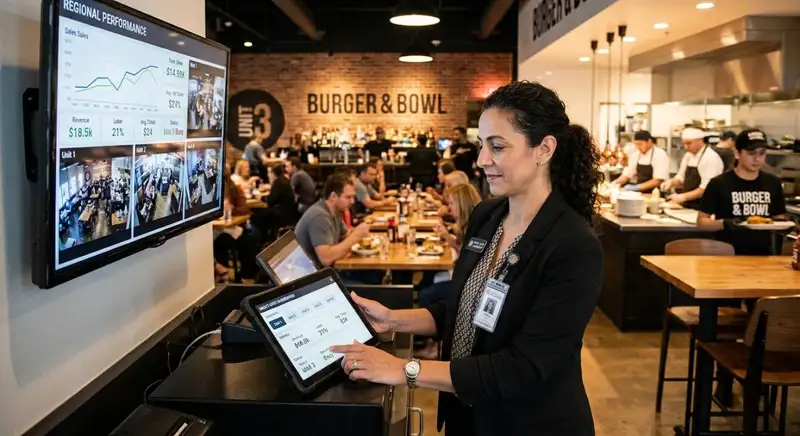
How AI Is Transforming Multi-Unit Restaurant Management
AI helps multi-unit restaurant operators forecast demand, optimize labor, detect anomalies, ensure consistency, refine menus and pricing, and adopt tools gradually, freeing managers to focus on hospitality.

Restaurant ERP Explained - What It Is, How It Works, and Its Benefits
Restaurant ERP connects essential operations, improves cost control, centralizes business information, streamlines workflows, and helps owners make informed management decisions.

10 Benefits of All-in-One Restaurant Management Software
All-in-one restaurant management software streamlines operations, improves communication, reduces administrative work, controls costs, strengthens workforce management, and supports informed business decisions.

