



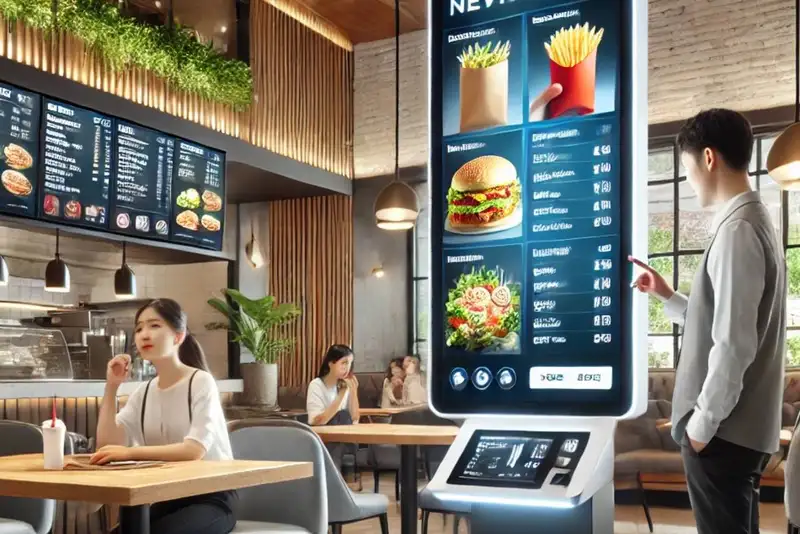
Overview of Self-Order Kiosks
Understanding Labor Costs in Restaurants
1. Wages - The primary expense, encompassing hourly wages for front-of-house and back-of-house staff. Wages are typically the largest component of labor costs, directly impacting the restaurant's financial health.
2. Benefits - Health insurance, retirement plans, and other employee benefits. These add significant value for employees but also increase the employer's financial burden.
3. Training - Costs associated with onboarding new employees and ongoing training to maintain service standards. Training costs can be substantial, especially in high-turnover environments like restaurants.
4. Overtime - Additional pay for hours worked beyond the standard workweek. Managing overtime effectively is crucial to controlling labor costs.
5. Payroll Taxes - Taxes that employers must pay based on their employees' wages. These include Social Security, Medicare, and unemployment taxes, which add to the overall labor expenses.
High labor costs can have a significant impact on a restaurant's profitability and operations. When labor expenses consume a large portion of revenue, it becomes challenging to maintain healthy profit margins. This often leads to cost-cutting measures that can affect service quality and overall customer experience. Some of the impacts include -
1. Reduced Profit Margins - High labor costs directly reduce the restaurant's profitability, making it harder to reinvest in the business or weather financial downturns.
2. Operational Strain - To manage costs, restaurants may reduce staff hours or operate with minimal staff, leading to longer wait times, decreased service quality, and lower customer satisfaction.
3. Increased Prices - To cover high labor costs, restaurants may increase menu prices, potentially driving away price-sensitive customers.
4. Employee Turnover - High labor costs can lead to a cycle of hiring and training new employees, which is both time-consuming and costly.
Simplify Multi-Channel Ordering
Get started with Altametrics to streamline your POS!
Benefits of Self-Order Kiosks for Labor Cost Reduction
1. Reduced Payroll Expenses - Fewer cashiers and order takers mean lower wage expenses, contributing to immediate labor cost savings.
2. Decreased Hiring and Training Costs - With fewer front-of-house staff required, restaurants can save on the costs associated with recruiting, hiring, and training new employees.
3. Operational Efficiency - Kiosks can handle high volumes of orders quickly and accurately, reducing bottlenecks during busy periods and allowing existing staff to focus on other critical tasks.
In addition to direct savings, self-order kiosks contribute to indirect cost savings. For example, the implementation of kiosks can lead to decreased employee turnover. With fewer employees required for repetitive tasks, staff can be allocated to more engaging roles, enhancing job satisfaction and reducing turnover rates. Additionally, kiosks can help minimize training costs by reducing the number of new hires needed to handle ordering tasks. Indirect benefits include -
1. Enhanced Employee Morale - Allocating staff to more meaningful tasks can boost job satisfaction and reduce burnout, leading to lower turnover rates.
2. Consistency in Service - Kiosks provide a consistent ordering experience, reducing the variability that can occur with human order takers. This consistency can lead to higher customer satisfaction and repeat business.
3. Improved Order Accuracy - Self-order kiosks reduce the chances of human error, ensuring that orders are accurate and minimizing the need for costly corrections or refunds.
Comparing Labor Costs Before and After Kiosk Implementation
1. Higher Staffing Levels - More employees are needed to manage the ordering and payment processes, leading to higher overall wage expenses.
2. Training and Onboarding - The constant need to train new employees due to turnover adds to the labor costs.
3. Inconsistent Service Quality - Variability in service quality due to different skill levels and training effectiveness can impact customer satisfaction and repeat business.
After implementing self-order kiosks, the labor cost structure changes significantly. With kiosks handling the majority of ordering tasks, the need for front-of-house staff decreases. This reduction in staffing requirements leads to lower payroll expenses and fewer training costs. Additionally, the streamlined ordering process can improve overall efficiency, allowing existing staff to focus on other critical tasks, such as food preparation and customer service. Post-implementation benefits include -
1. Lower Staffing Requirements - Fewer employees are needed to manage the ordering process, reducing payroll expenses.
2. Reduced Training Costs - With fewer front-of-house staff to train, training expenses decrease.
3. Increased Operational Efficiency - Staff can be redeployed to roles that enhance customer service and operational efficiency, such as food preparation or customer engagement.
Calculating ROI for Self-Order Kiosks

1. Kiosk Hardware - The cost of the physical kiosks, including touchscreens, printers, and payment processing equipment.
2. Software Licenses - The cost of software required to run the kiosks, including point-of-sale integration and order management systems.
3. Installation Fees - Costs associated with setting up and installing the kiosks, including any necessary infrastructure upgrades.
In addition to the initial investment, there are ongoing operational costs associated with maintaining and operating self-order kiosks. These costs include energy consumption, technical support, software updates, and potential repairs. While these expenses are generally lower than the ongoing costs of employing additional staff, they should be factored into the overall ROI calculation. Ongoing costs include -
1. Energy Consumption - The cost of powering the kiosks, which can vary depending on usage and energy rates.
2. Technical Support - Costs associated with maintaining and troubleshooting the kiosks, including support contracts or in-house technical staff.
3. Software Updates - Regular software updates to ensure the kiosks remain functional and secure.
4. Repairs and Maintenance - Costs for any necessary repairs or maintenance to keep the kiosks in good working condition.
Self-order kiosks have the potential to increase revenue by enabling upselling opportunities and enhancing the customer experience. Kiosks can suggest additional items or promotions during the ordering process, encouraging customers to add more to their orders. Additionally, the streamlined ordering process can lead to faster service and increased customer satisfaction, resulting in repeat business and higher overall sales. Revenue-boosting benefits include -
1. Upselling Opportunities - Kiosks can automatically suggest complementary items or promotions, increasing the average order value.
2. Faster Service - The efficient ordering process can reduce wait times, allowing the restaurant to serve more customers, especially during peak hours.
3. Enhanced Customer Experience - Improved order accuracy and a user-friendly interface can lead to higher customer satisfaction and repeat visits.
Streamline Operations
Control Menus, Items, and Prices Seamlessly with Altametrics
Break-Even Analysis for Kiosk Installation
1. Fixed Costs - Costs that do not change with the number of orders processed, such as initial investment costs for kiosk hardware and installation.
2. Variable Costs - Costs that vary with the number of orders processed, such as energy consumption and maintenance expenses.
3. Additional Revenue - Revenue generated from upselling and increased customer throughput due to faster service.
To conduct a break-even analysis, follow these steps
1. Identify Fixed Costs - Calculate the total fixed costs associated with purchasing and installing the kiosks.
2. Identify Variable Costs - Determine the ongoing operational costs, such as energy consumption and technical support.
3. Calculate Additional Revenue - Estimate the additional revenue generated from upselling and increased customer satisfaction.
4. Determine Break-Even Volume - Use the break-even formula to calculate the number of orders or revenue needed to cover the total costs.
The break-even formula is -
Break-Even Volume = Fixed Costs % Additional Revenue per Order Variable Costs per Order
Example Calculation
Let's consider a hypothetical scenario to illustrate the break-even calculation-
Initial Investment Costs - $20,000 (hardware, software, installation)
Ongoing Operational Costs - $500 per month
Additional Revenue - $1 per order (from upselling)
Average Monthly Orders - 5,000
First, calculate the variable costs per order -
Variable Costs per Order = $500 % 5000 = $ 0.10
Next, determine the break-even volume using the formula-
Break-Even Volume = $20, 000 % $1 $0.10 = $20,000 % $0.90 22,222 orders
In this scenario, the restaurant would need to process approximately 22,222 orders through the kiosks to reach the break-even point.
Implementation Tips for Maximizing Cost Savings
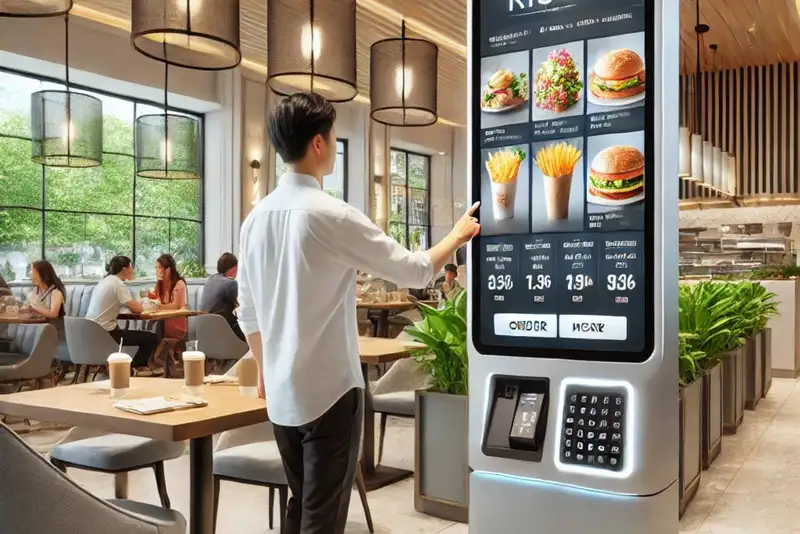
1. Foot Traffic - Place kiosks in high-traffic areas to ensure maximum visibility and usage. High-traffic areas include entrances, near waiting areas, and in dining zones where customers naturally congregate.
2. Visibility - Ensure kiosks are easily visible and accessible to customers. Use clear signage and intuitive design to guide customers to the kiosks.
3. Convenience - Position kiosks near the entrance and in areas where customers typically wait. This reduces congestion at the main counter and encourages customers to use the kiosks for quick and easy ordering.
Successful implementation of self-order kiosks requires proper training and a smooth transition for employees. Follow these steps to ensure a successful rollout -
1. Staff Training - Provide comprehensive training to staff on how to use and assist customers with the kiosks. Ensure they are comfortable with troubleshooting and can confidently guide customers through the process.
2. Transition Plan - Develop a plan to gradually transition from traditional ordering methods to kiosk-based ordering. Start with a pilot program or phased rollout to minimize disruption.
3. Customer Introduction - Educate customers on how to use the kiosks through signage, staff assistance, and promotional materials. Offer incentives for using the kiosks, such as discounts or loyalty points, to encourage adoption.
Regular monitoring and optimization are essential for maintaining the efficiency and effectiveness of self-order kiosks. Implement these practices to ensure ongoing success -
1. Performance Assessment - Regularly assess kiosk performance and usage data to identify areas for improvement. Monitor key metrics such as order volume, transaction times, and customer feedback.
2. Customer Feedback - Gather feedback from customers to understand their experiences and address any issues. Use surveys, comment cards, or digital feedback tools to collect insights.
3. Continuous Improvement - Make necessary adjustments to kiosk placement, software, and operations to optimize performance and cost savings. Regularly update kiosk software to incorporate new features and improvements.
Recap of Key Points
By following the comprehensive guide outlined above, restaurant owners can leverage the advantages of self-order kiosks to streamline operations, improve service quality, and ultimately, reduce labor costs. Embracing this technology not only addresses current challenges but also positions restaurants for future growth and competitiveness in an increasingly automated industry.
Centralize Your Menus Today!
Manage Everything In One Place with Altametrics
Frequently
Asked Questions
What should restaurants monitor to optimize self-order kiosk performance?
What types of restaurants benefit most from self-order kiosks?
How do self-order kiosks help reduce labor costs in restaurants?
How can restaurants ensure a smooth transition to using self-order kiosks?
Must-Read Content
How AI Is Transforming Multi-Unit Restaurant Management
AI helps multi-unit restaurant operators forecast demand, optimize labor, detect anomalies, ensure consistency, refine menus and pricing, and adopt tools gradually, freeing managers to focus on hospitality.

Restaurant ERP Explained - What It Is, How It Works, and Its Benefits
Restaurant ERP connects essential operations, improves cost control, centralizes business information, streamlines workflows, and helps owners make informed management decisions.

10 Benefits of All-in-One Restaurant Management Software
All-in-one restaurant management software streamlines operations, improves communication, reduces administrative work, controls costs, strengthens workforce management, and supports informed business decisions.

