




Transforming Culinary Training
The restaurant industry, a dynamic and competitive sector, requires highly effective training systems to ensure success. High-quality training is crucial in this industry because the performance of staff directly influences the customer's experience. Every action, from food preparation to service delivery, impacts customer satisfaction, which in turn affects a restaurant's reputation and profitability. Restaurants need to continuously train and update their staff on new culinary techniques, health and safety regulations, customer service practices, and restaurant management tactics. Consequently, an effective training system in the restaurant industry can mean the difference between success and failure.
The potential of learning management systems to revolutionize restaurant manager training and enhance restaurant performance globally is tremendous. Given the highly competitive nature of the restaurant industry, the ability to quickly adapt to change and implement new practices is essential for survival and success. With a well-integrated LMS, restaurants can ensure their managers are adequately trained in a consistent manner, regardless of geographical location. It provides the tools to create, deliver, and track interactive training modules and professional development programs tailored to each individual's needs. Therefore, it is transforming the landscape of the restaurant industry, enabling better training, increased productivity, and improved overall restaurant performance. In essence, the LMS is not merely a tool but a catalyst for change, a platform for progress, and a key player in the success of the global restaurant industry.
Restaurant Manager Training

The customization and personalization of learning experiences are another valuable benefit of using an LMS. Traditional training methods often take a one-size-fits-all approach, but learning is more effective when tailored to the individual. An LMS allows the creation of personalized learning paths based on the role, experience level, or learning style of the manager. It can also adapt to the evolving needs of the learner by identifying areas where they struggle and providing additional resources for improvement. Consequently, personalized learning leads to more engaged and motivated managers, who can then translate their improved skills into superior restaurant performance.
Moreover, LMS offers scalability and cost-effectiveness, crucial aspects for any business, especially those operating in the restaurant sector. As the restaurant grows, whether by adding new locations or increasing staff at existing locations, the LMS can easily scale to accommodate these changes. It can support hundreds or even thousands of learners without sacrificing the quality of training. In addition, the LMS eliminates the need for physical training materials and in-person trainers, which can result in significant cost savings. It also allows restaurants to keep track of their employees' progress and the effectiveness of the training program, ensuring a return on their investment.
In essence, learning management systems offer a revolutionary solution for restaurant manager training. By providing accessibility and flexibility, fostering customization and personalization, and ensuring scalability and cost-effectiveness, an LMS stands as an instrumental tool in enhancing restaurant performance, ultimately leading to a better dining experience for customers and a more profitable business model for restaurant owners.
Perfect Solution for Your Training and Development Needs
Teach Your Staff with Altametrics LMS
Enhanced Skill Development
Continuous learning and skill reinforcement is another significant advantage that an LMS provides. In the fast-paced restaurant industry, where trends and standards are constantly evolving, ongoing learning is crucial. An LMS facilitates continuous learning by providing regular updates to the training content and allowing managers to revisit the modules as needed for reinforcement. This access to repetitive learning helps reinforce and solidify new skills, improving long-term retention and practical application.
The standardization of training content is an essential feature that an LMS offers. In a global or multi-branch restaurant chain, it's important to ensure that all managers receive the same high-quality training, regardless of location. An LMS makes this possible by providing a centralized platform where standardized training materials can be uploaded and accessed by all. This uniformity not only guarantees a consistent level of knowledge and skills across the organization but also enhances knowledge retention. When everyone is trained using the same resources, it fosters a common language and understanding, reducing the risk of miscommunication or misinterpretation. Moreover, with built-in tracking and reporting features, an LMS can assess the effectiveness of the training program, identify gaps, and provide feedback for improvement. This information can be invaluable in improving the content and delivery of the training program, leading to better knowledge retention and skill development.
In summary, learning management systems are instrumental in enhancing skill development in restaurant managers. By providing engaging and interactive learning experiences, facilitating continuous learning and skill reinforcement, and standardizing training content, an LMS ensures the development of competent, knowledgeable, and effective restaurant managers who are equipped to navigate the challenges of the restaurant industry.
Streamlining Training Processes
Another critical way LMS streamlines training processes is by providing consistent training across multiple locations. In the case of a restaurant chain operating in different locales or countries, consistency in service standards is vital for maintaining the brand's reputation. With an LMS, restaurants can ensure that the same high-quality training is being delivered to every manager, no matter where they are located. The ability to share training modules across locations also means that new techniques or procedures can be disseminated quickly and efficiently, enabling the entire chain to adapt rapidly to changes.
The LMS also plays a crucial role in tracking and monitoring progress and performance. Traditional training methods often make it challenging to gauge the effectiveness of the training and the progress of each manager. However, an LMS comes equipped with tracking capabilities that can provide detailed reports on each manager's progress, including their completion of modules, scores on assessments, and areas of weakness. These insights allow for immediate feedback and the possibility of tweaking training programs to better suit the learner's needs. Moreover, tracking performance can help identify high performers who may be ready for further career advancement, helping to foster talent within the organization.
The use of learning management systems is transforming and streamlining training processes in the restaurant industry. By enhancing the onboarding process, ensuring consistency in training across various locations, and providing valuable insights into progress and performance, an LMS is revolutionizing how restaurant managers are trained. The result is a more competent and confident management team capable of leading the restaurant to higher levels of success.
Empowering Managers

Beyond flexible learning, an LMS also provides access to a wealth of relevant resources and job aids. This includes not only formal training modules but also a variety of supplementary materials such as best practice guides, instructional videos, manuals, and forums for peer discussion. Such resources can be invaluable for managers facing real-time challenges, offering immediate solutions and advice. The availability of these resources also promotes continuous learning and reinforcement, helping managers to keep their knowledge and skills up to date. Moreover, the utilization of an LMS can open up opportunities for career advancement and skill growth. By facilitating the development of a wide range of skills, from leadership and strategic planning to problem-solving and customer service, an LMS can prepare managers for more advanced roles within the organization. The ability to track and document learning progress within the system can also provide evidence of a manager's competency and readiness for promotion. Additionally, the introduction of new learning modules can challenge managers to acquire new skills, pushing them to grow and adapt in line with industry changes and innovations.
Overall, the use of learning management systems in restaurant manager training is empowering managers in multiple ways. By promoting self-guided learning, providing access to relevant resources, and facilitating career advancement and skill growth, an LMS is playing a pivotal role in shaping confident, capable, and motivated restaurant managers. This not only enhances the performance of individual managers but also contributes to the overall success and growth of the restaurant industry.
Invest in Training and Development
Coach Your Employees with Altametrics LMS
Overcoming Challenges
Engaging users and maintaining their motivation can also present a challenge. Even with the most interactive and user-friendly platform, managers may lose interest over time if the content is not engaging or if they do not see the value in the training. To ensure ongoing engagement, it's important to keep the content fresh and relevant, and align it with the managers' roles and career goals. Incorporating interactive elements, real-world examples, and opportunities for feedback can make learning more engaging and meaningful. Moreover, recognizing and rewarding progress, such as through digital badges or certificates, can provide further motivation.
Technical issues and support are another challenge that can arise with the implementation of an LMS. As with any technology, there may be instances of technical glitches, connectivity issues, or difficulties navigating the system. This can lead to frustration and disrupt the learning process. To mitigate these issues, it's important to have a dedicated technical support team that can address problems promptly. Providing an initial training session on how to navigate the LMS, along with ongoing support such as guides, FAQs, and troubleshooting resources, can also help users feel more comfortable with the system.
While there may be challenges in implementing learning management systems in restaurant manager training, they are not insurmountable. Through clear communication, engaging content, and dedicated technical support, restaurants can successfully integrate an LMS into their training programs. The benefits that come with it, such as enhanced skill development, streamlined training processes, and empowered managers, far outweigh the challenges, making the LMS a worthwhile investment for any restaurant seeking to enhance its performance and success.
Best Practices for Effective Implementation
Aligning training objectives with business goals is another essential practice. The LMS should not be viewed as an isolated tool but as an integral part of the restaurant's strategic planning. The training modules should reflect the restaurant's values, standards, and objectives. Whether the goal is to improve customer service, increase sales, or reduce food waste, the training should be designed to help managers develop the skills and knowledge needed to achieve these goals. This alignment ensures that the training is relevant, practical, and beneficial for both the managers and the restaurant.
Continuous evaluation and improvement of training programs is also a key practice. Just as the restaurant industry is continually evolving, so too should the training programs. The LMS's tracking and reporting capabilities should be utilized to monitor the effectiveness of the training. Feedback from managers about their learning experiences and the applicability of the training to their roles can also provide valuable insights. Based on this data, adjustments can be made to the training content, delivery methods, or assessment strategies to enhance learning outcomes. Regular updates and additions to the training modules can also ensure that the training remains up-to-date and engaging.
The successful implementation of learning management systems in restaurant manager training involves clear communication, alignment of training objectives with business goals, and continuous evaluation and improvement. Following these best practices can maximize the benefits of the LMS, leading to enhanced manager performance, improved restaurant operations, and ultimately a more successful restaurant business. As such, the LMS is not just a training tool but a strategic asset that can significantly contribute to a restaurant's growth and success.
Learning Management Systems in Manager Training
Looking forward, the future of learning management in the restaurant industry is promising. As technology advances, we can expect to see even more interactive and engaging learning experiences, perhaps incorporating virtual reality or augmented reality for more immersive training. Artificial intelligence could also play a role in personalizing learning paths, analyzing learning data, and providing real-time feedback. Given the rise in remote work, we might also see more remote training options, allowing for even greater flexibility and accessibility.
While these prospects are exciting, they are just part of the potential that learning management systems hold for the restaurant industry. As restaurants worldwide increasingly adopt this technology, it will not only enhance manager training but also contribute to broader business objectives. A well-trained and competent manager can lead to improved customer service, more efficient operations, increased employee retention, and ultimately, a more successful and profitable restaurant.
In conclusion, learning management systems hold immense potential to transform the restaurant industry. The digital revolution is not just about new ways of ordering or delivering food; it is also about new ways of learning, growing, and leading in this dynamic industry. By harnessing the power of LMS, restaurants can equip their managers with the skills and knowledge they need to navigate the challenges and opportunities of the future, driving the industry forward in a way that benefits everyone from managers and employees to customers and owners.
Looking for Training Your Employees Effectively?
Elevate Your Training and Development with Altametrics LMS
Frequently
Asked Questions
How do I measure the effectiveness of managerial training in my restaurant?
How can managerial training help in managing the inventory of my restaurant?
What is managerial training in the context of a restaurant?
How can I provide managerial training to my restaurant's managers?
Must-Read Content
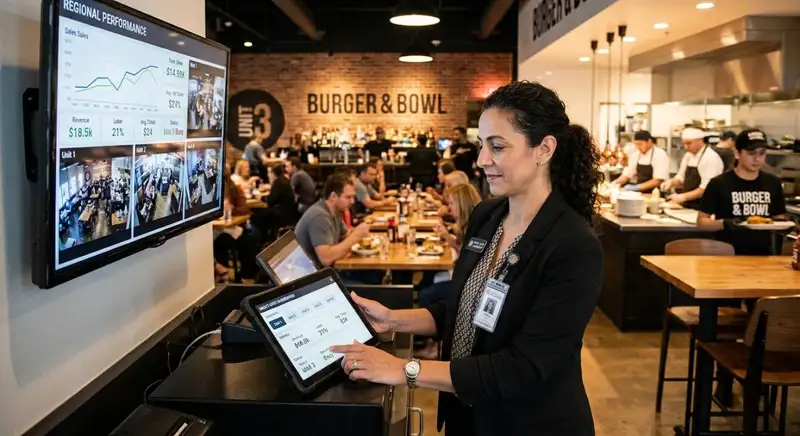
How AI Is Transforming Multi-Unit Restaurant Management
AI helps multi-unit restaurant operators forecast demand, optimize labor, detect anomalies, ensure consistency, refine menus and pricing, and adopt tools gradually, freeing managers to focus on hospitality.

Restaurant ERP Explained - What It Is, How It Works, and Its Benefits
Restaurant ERP connects essential operations, improves cost control, centralizes business information, streamlines workflows, and helps owners make informed management decisions.

10 Benefits of All-in-One Restaurant Management Software
All-in-one restaurant management software streamlines operations, improves communication, reduces administrative work, controls costs, strengthens workforce management, and supports informed business decisions.

