




Overview
Many restaurant owners worry that raising prices will drive people away. But the truth is, you don't need to make big changes to see better profits. Small adjustments, when done the right way, can make a big difference. The goal is to increase what you earn from each sale while still making customers feel like they're getting good value for their money.
In this article, we'll share simple and practical tips to help you update your menu prices. These ideas are easy to follow and won't make your restaurant feel overpriced. With the right approach, you can improve your profits without losing the trust of your regulars.
Understand Your Food Cost and Target Profit Margin

To figure out the food cost for a menu item, add up the cost of all the ingredients in one serving. For example, if it costs you $3.50 to make a burger, that's your food cost. But you can't just sell the burger for $3.50. You need to add enough to cover other expenses like labor, rent, utilities, and also make a profit.
Most restaurants aim for a food cost percentage of around 25-35%. That means if your burger costs $3.50 to make, you might price it between $10 and $14, depending on your target profit margin and other costs. The formula is simple -
Menu Price = Food Cost / Target Food Cost %
So if your target food cost is 30%, you'd calculate-
$3.50 / 0.30 = $11.67
Knowing this number helps you price smarter. You don't have to guess or copy competitors - you'll have a price that actually works for your business. Once you know your costs, you can start making small changes that help you earn more without shocking your customers.
Elevate Your Restaurant's Operations
Swift Inventory Solutions with Altametrics!
Use Strategic Price Increases on High-Margin Items
Customers are more likely to accept a price increase on items they already love. If someone always orders your best-selling burger, they're not likely to skip it just because it's 50 cents more. They're coming back for the taste, experience, and value they've come to expect. In most cases, a slight increase won't even be noticed.
The key here is to keep changes small and reasonable. Avoid increasing prices across the board all at once. Instead, start with one or two items where the price increase won't feel out of place. Round numbers can also affect how customers feel about pricing - a jump from $11.00 to $11.95 feels lighter than going straight to $12.50.
Also, remember to keep an eye on how these changes affect your sales. If customers continue ordering the item at the new price, it's a win. If you notice a drop, you can always adjust. The goal is to test small changes that add up over time, helping you make more money without turning off your loyal customers.
Apply Psychological Pricing Techniques
One common strategy is charm pricing - using prices that end in .95 or .99. For example, instead of listing a sandwich at $10.00, price it at $9.95. Even though the difference is only five cents, customers tend to see $9.95 as a better deal. It feels lower, even if it's not by much.
Another helpful tip is to remove currency symbols. Studies show that when customers see dollar signs on menus, they think more about the cost. So instead of writing "$12.95," just write "12.95." This helps guests focus on what they want to eat rather than how much they're spending.
You can also use price anchoring. This means placing a higher-priced item near other items to make everything else seem more affordable. For example, if you list a $24 steak near a $14 burger, the burger feels like a bargain.
These small visual changes can go a long way in your overall menu pricing strategy. They don't require raising prices at all - but they can guide your customers toward higher-profit choices and increase your average ticket size. And best of all, they help you do it without making your guests feel pressured.
Simplify the Menu to Drive Profitable Choices
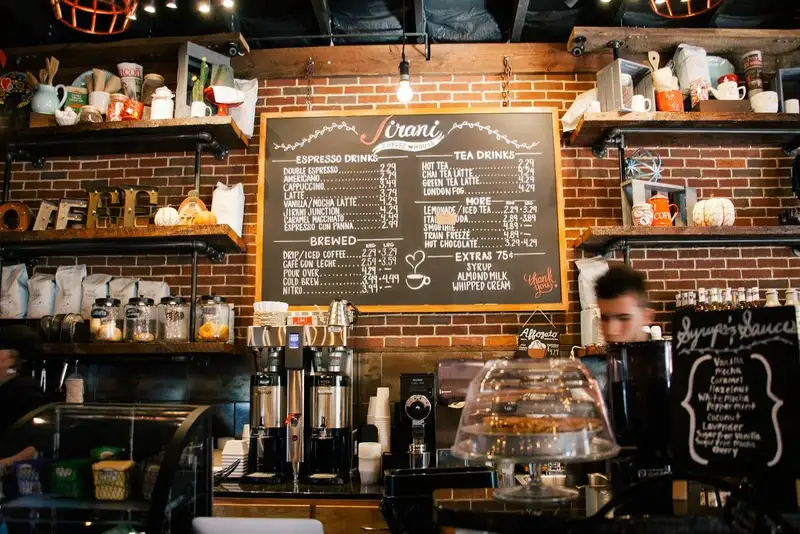
By simplifying your menu, you make it easier for customers to choose - and easier for you to guide them toward the items that make you the most money. Start by reviewing your sales data and removing items that don't sell well or have low profit margins. Every dish on your menu should have a clear reason to be there, whether it's a customer favorite or a strong contributor to your bottom line.
Fewer items also mean better inventory control, faster kitchen operations, and less waste. Your staff can focus on doing fewer things really well, and customers will feel more confident about their choices.
As you streamline your offerings, make sure your best-selling and most profitable dishes stand out. Use menu design elements like boxes, bold text, or placement in the top-right corner (where eyes naturally go first) to highlight them.
A simple, focused menu doesn't just help with operations - it supports better menu pricing, too. With fewer items, you can spend more time perfecting each one's cost, value, and presentation, making it easier to adjust prices where it counts the most.
Transform Your Restaurant Operations Now!
Effortless Inventory Tracking with Altametrics!
Bundle Items to Increase Perceived Value
For example, if you sell a sandwich for $9, fries for $3, and a drink for $2, the total would be $14. But if you bundle all three for $12.99, customers are likely to go for the combo because it seems like a savings - even though they end up spending more than they would have on the sandwich alone.
This approach not only increases your revenue but also helps control what customers order. You can build bundles around items with good profit margins, which boosts your earnings while offering convenience and value.
You can also try upselling bundles by offering an option to make it a meal or upgrade a combo for a small extra charge. These prompts work well because they give customers choices while guiding them toward higher-spending decisions.
Bundling is also a smart strategy for managing inventory. You can group together items you want to move more quickly or highlight new dishes as part of a deal.
In terms of menu pricing, bundles create a win-win. Customers feel like they're saving money, and you make more per transaction without raising individual item prices across the board.
Monitor Customer Reactions and Sales Data
Start by tracking sales of specific items you've adjusted. If you increase the price of a popular dish, watch whether sales stay steady or drop. If customers continue to order it, the change was likely a good one. If sales fall off, you might need to rethink the new price or look at how the item is presented on the menu.
Also, pay attention to overall trends - like average ticket size, table turnover time, and repeat visits. These numbers help you understand whether your menu changes are working. POS reports and basic spreadsheets can give you the insight you need without any fancy software.
In addition to the numbers, take note of customer reaction. Are people commenting on prices more often? Are servers hearing complaints or questions about costs? This kind of feedback - both direct and indirect - can help you catch pricing problems early before they impact your bottom line.
Adjusting menu prices is not a one-time job. It's an ongoing process that takes testing, listening, and fine-tuning. By staying alert to your data and your customers' experiences, you'll be in a better position to make changes that support your profits without pushing anyone away.
Communicate Value Through Menu Descriptions and Presentation
Start with your descriptions. Don't just list ingredients - tell a story. Use words that highlight quality, freshness, or uniqueness. For example, instead of Grilled Chicken Sandwich, you could say Juicy, Herb-Marinated Chicken Breast Grilled to Perfection on a Freshly Baked Roll. The second option sounds more appealing and helps justify a higher price.
You should also mention anything that adds value - like locally sourced ingredients, homemade sauces, or special cooking methods. Customers are often happy to pay more when they understand what makes the item worth it.
Presentation matters too. If your food looks great when it arrives at the table, it reinforces the idea that it's worth the price. Invest in clean plating, consistent portions, and appealing garnishes. Even small touches, like serving sauces in ramekins or adding a fresh herb on top, can make a difference.
Menus should also be easy to read and thoughtfully designed. Group similar items, highlight top sellers, and make sure prices are placed neatly and consistently. The goal is to guide your customers toward choices that are both satisfying for them and profitable for your business.
When people see the care that goes into your food, pricing feels fair - even when it's a little higher.
Get Accurate Inventory Valuations
Manage Your Workforce with Altametrics
Frequently
Asked Questions
What is psychological pricing, and how does it work?
How do I track customer reaction to price changes?
What is price anchoring in menu pricing?
What's the best way to introduce new menu items with proper pricing?
Must-Read Content
How AI Is Transforming Multi-Unit Restaurant Management
AI helps multi-unit restaurant operators forecast demand, optimize labor, detect anomalies, ensure consistency, refine menus and pricing, and adopt tools gradually, freeing managers to focus on hospitality.

Restaurant ERP Explained - What It Is, How It Works, and Its Benefits
Restaurant ERP connects essential operations, improves cost control, centralizes business information, streamlines workflows, and helps owners make informed management decisions.

10 Benefits of All-in-One Restaurant Management Software
All-in-one restaurant management software streamlines operations, improves communication, reduces administrative work, controls costs, strengthens workforce management, and supports informed business decisions.

