




The Real Cost of Restaurant Turnover
The restaurant industry consistently posts some of the highest employee turnover rates of any sector, with annual rates often cited above 70 percent for hourly staff. That means many operators are effectively rebuilding a large part of their team every year. The cycle of posting jobs, interviewing, onboarding, and training becomes so routine that it can start to feel like a normal cost of doing business. It isn't, and treating it that way is expensive.
The direct costs of losing an employee are the easiest to measure -
1. Recruiting - Job ads, interview time, and the hours managers spend screening candidates instead of running the floor.
2. Training - Paid training shifts, trainer time, uniforms, and the food and supplies used while a new hire learns the menu and systems.
3. Overtime - Remaining staff cover the gaps, often at premium pay rates, while the position is open.
Individually, these expenses may look manageable. Multiplied across every departure in a year, they add up to a significant drain on profit in an industry already known for thin margins.
The hidden costs are often larger. A new hire doesn't perform like an experienced team member on day one. Ticket times slow down, order errors increase, and more experienced staff spend their shifts answering questions instead of focusing on guests. Service quality becomes inconsistent, and regular customers who built a rapport with a favorite bartender or server notice when familiar faces disappear.
Turnover also wears on the people who stay. Covering extra shifts and constantly training newcomers adds stress to a team that's already working under pressure. Morale drops, and the remaining employees start wondering whether they should be looking elsewhere too. In this way, one resignation can quietly lead to the next.
Many owners respond to turnover by hiring faster, but that treats the symptom rather than the cause. Employees rarely leave a restaurant for a single dramatic reason. More often, it's a combination of everyday issues - pay that doesn't keep up, schedules that disrupt their lives, managers who don't communicate well, or a job that offers no clear path forward. The good news is that most of these problems are within an owner's control.
Low Wages and Limited Employee Benefits

Uncompetitive pay can make employee retention difficult, particularly when nearby restaurants offer similar roles with better compensation. Servers, cooks, dishwashers, and shift supervisors may evaluate their earnings against the responsibilities they handle and the cost of living in their area. If they believe another employer offers a better overall package, staying becomes less appealing.
Limited benefits can also contribute to turnover. Employees may value health insurance, paid time off, retirement savings options, employee meals, and predictable weekly hours. Restaurants that offer few benefits may struggle to compete for experienced workers, especially when employees have financial responsibilities outside work.
Tip policies can create additional concerns for front-of-house staff. Unclear tip distribution, inconsistent reporting, or perceived unfairness between employees can damage trust. Restaurant owners should establish transparent policies and ensure compensation practices comply with applicable wage and tip laws.
How to Prevent Employees from Leaving Over Compensation
Restaurant owners can improve retention by reviewing their pay practices and identifying gaps between employee expectations and what the business offers.
1. Review local wage rates - Compare compensation for similar restaurant positions in the surrounding area. Consider experience, responsibilities, and current hiring conditions when evaluating pay.
2. Establish transparent compensation policies - Clearly explain hourly wages, overtime eligibility, tip distribution, pay periods, and opportunities for raises. Follow all applicable employment laws.
3. Evaluate employee benefits - Consider affordable benefits that address staff needs, such as paid time off, employee meals, health coverage, or retirement plans where feasible.
4. Reward additional responsibilities - Review compensation when employees take on supervisory duties, train new hires, or consistently perform work beyond their original roles.
5. Provide predictable earnings where possible - Communicate expected hours, manage scheduling consistently, and avoid unnecessary fluctuations in employees' working hours.
Restaurant owners do not always need to offer the highest wages in the market to retain employees. However, compensation should be competitive, fair, and clearly communicated. When employees understand how their pay is determined and see opportunities for financial growth, they have stronger reasons to remain with the business.
Perfect Solution for Your Training and Development Needs
Teach Your Staff with Altametrics LMS
Poor Management and a Negative Workplace Culture
The way managers treat employees directly affects staff morale and retention. Restaurant employees regularly work under pressure, especially during busy service periods. When managers respond to mistakes with public criticism, blame, or intimidation instead of constructive feedback, employees may feel undervalued. Over time, this behavior can damage trust and discourage workers from communicating problems before they become more serious.
Inconsistent management practices can create similar challenges. For example, one supervisor might enforce attendance policies strictly while another allows frequent exceptions. Employees may perceive these differences as unfair treatment, particularly when preferred workers receive better shifts or more opportunities. Unclear instructions and constantly changing expectations can also make it difficult for staff to perform their responsibilities confidently.
A negative workplace culture often extends beyond manager-employee relationships. Conflicts between coworkers, poor communication between front-of-house and back-of-house teams, and a lack of accountability can make daily shifts unnecessarily stressful. When management ignores these issues, employees may conclude that leaving is easier than trying to improve the situation.
How to Prevent Employees from Leaving Because of Poor Management
Restaurant owners can improve workplace culture by establishing clear expectations for managers and creating an environment where employees feel respected.
1. Train managers in communication - Teach supervisors how to provide constructive feedback, resolve disagreements, delegate responsibilities, and handle stressful situations professionally.
2. Establish consistent workplace policies - Apply attendance rules, performance standards, disciplinary procedures, and scheduling practices fairly across the team.
3. Encourage employee feedback - Give staff regular opportunities to discuss concerns privately. Managers should listen carefully and explain what actions will be taken when problems arise.
4. Address workplace conflicts promptly - Investigate complaints, document recurring issues, and take appropriate action rather than allowing disagreements to escalate.
5. Hold managers accountable - Evaluate supervisors on employee retention, team communication, scheduling practices, and their ability to maintain a respectful working environment.
Restaurant owners should also recognize that management quality can vary between shifts and locations. Regular check-ins with employees can help identify supervisors who need additional support or whose management practices are contributing to turnover.
Creating a positive workplace does not mean eliminating accountability or avoiding difficult conversations. It means setting clear standards, treating employees fairly, and addressing problems constructively. When restaurant staff trust their managers and feel comfortable raising concerns, they are more likely to remain engaged and committed to their jobs.
Long Hours, Burnout, and Excessive Workloads
Employee burnout develops when ongoing workplace demands exceed a person's ability to recover and manage stress. In restaurants, this can happen when employees regularly work double shifts, cover absent coworkers, or handle more customers than the available staff can reasonably serve. Kitchen employees may face intense pressure to prepare orders quickly, while servers must balance customer requests, order accuracy, and service expectations.
Burnout can also develop when employees feel they cannot take adequate breaks or step away from demanding tasks. Fatigue may affect concentration, communication, and performance, increasing the likelihood of mistakes and workplace accidents. Employees who consistently feel exhausted may eventually decide that another job offers a more sustainable working environment.
The effects can extend across the entire restaurant team. When one employee resigns, remaining workers may need to absorb additional duties. This creates a cycle in which excessive workloads contribute to more resignations, leaving the restaurant increasingly understaffed and putting additional pressure on those who stay.
How to Prevent Burnout and Excessive Workloads
Restaurant owners can reduce burnout by managing staffing levels, distributing responsibilities fairly, and recognizing when employees are being asked to do too much.
1. Maintain appropriate staffing levels - Use expected customer demand, historical sales, reservations, and seasonal trends to plan coverage for busy and quiet periods.
2. Monitor overtime and extended shifts - Review timekeeping records to identify employees who regularly work beyond their scheduled hours. Investigate the underlying causes instead of relying on overtime as a permanent staffing solution.
3. Provide adequate breaks and recovery time - Follow applicable meal and rest break requirements, and avoid scheduling practices that leave employees without sufficient time to recover between shifts.
4. Distribute workloads fairly - Rotate demanding assignments where practical and ensure responsibilities are appropriate for each employee's role, training, and available time.
5. Cross-train employees - Teach team members to perform selected duties across different stations so managers can respond to absences without repeatedly overloading the same workers.
6. Recognize signs of fatigue - Watch for declining performance, increased absenteeism, irritability, and repeated requests to reduce working hours. Speak with employees privately to understand their concerns.
Restaurant owners should also review whether staffing budgets reflect actual operational needs. Cutting labor hours may reduce immediate expenses, but understaffing can increase mistakes, slow service, and contribute to employee turnover.
A sustainable workload helps employees maintain their performance without sacrificing their well-being. By planning shifts carefully, monitoring working hours, and responding to signs of exhaustion, restaurant owners can create a healthier work environment and give restaurant staff more reasons to stay.
Unpredictable Schedules and Poor Work-Life Balance
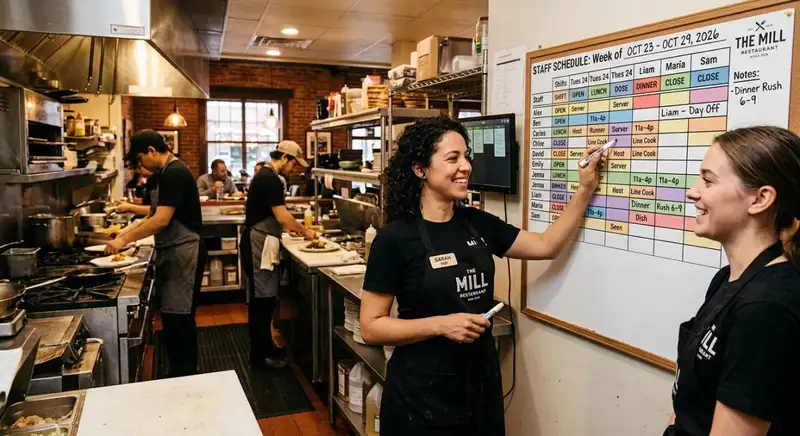
Inconsistent schedules can make restaurant jobs difficult to sustain over the long term. Employees may receive too few hours one week and too many the next, making it harder to manage household expenses and personal commitments. Last-minute shift changes, unexpected extensions, and frequent requests to cover absent coworkers can create additional frustration.
Scheduling problems can also affect employee morale when workers believe shifts are distributed unfairly. For example, some employees may consistently receive desirable shifts while others are assigned inconvenient hours or repeatedly asked to work weekends. If employees cannot communicate their availability or request reasonable adjustments, they may feel that management does not respect their time.
Poor scheduling can be especially challenging for employees who work multiple jobs or attend school. A restaurant that regularly changes shift times may force these workers to choose between their current position and an opportunity with more predictable hours.
How to Prevent Employees from Leaving Because of Scheduling Problems
Restaurant owners can improve retention by making scheduling more consistent, transparent, and responsive to employee availability.
1. Publish schedules in advance - Give employees sufficient notice to organize their personal commitments. Follow any applicable state or local scheduling requirements.
2. Respect employee availability - Collect availability information during hiring and review it periodically. Consider reasonable requests for adjustments whenever operationally possible.
3. Establish clear shift-swapping procedures - Allow employees to exchange shifts through an approved process that maintains appropriate staffing levels and ensures qualified coverage.
4. Limit last-minute changes - Make schedule adjustments when necessary, but avoid treating unexpected changes as a routine management practice. Communicate changes promptly and explain the reason.
5. Distribute shifts fairly - Establish transparent guidelines for assigning weekends, closing shifts, opening shifts, and overtime opportunities.
6. Use demand-based scheduling - Review sales patterns, reservations, expected customer traffic, and historical labor needs to align staffing with business demand.
7. Monitor scheduled versus actual hours - Compare planned shifts with actual clock-in and clock-out records to identify repeated extensions, understaffing, or inconsistent workloads.
Restaurant workforce management tools can help managers organize availability, prepare schedules, communicate changes, and monitor labor hours. These capabilities can reduce administrative work and give employees better visibility into their upcoming shifts.
However, technology alone cannot resolve every scheduling problem. Managers must still respect employee preferences, communicate clearly, and respond fairly when conflicts arise.
Predictable scheduling benefits both employees and restaurant owners. Employees gain greater control over their personal lives, while restaurants can improve attendance, reduce last-minute staffing gaps, and create a more stable workforce.
Empower Your Workforce!
Ensure Compliance with Altametrics!
Limited Career Growth, Recognition, and Development
Employees are more likely to consider leaving when they cannot see a future with their current employer. A server who has developed strong customer service skills may want to become a shift supervisor. A line cook may want to advance to a sous chef position. If management does not communicate promotion requirements or provide opportunities to develop new skills, employees may assume that advancement requires changing jobs.
A lack of recognition can contribute to the same problem. Restaurant employees often work through demanding service periods, resolve customer complaints, train new coworkers, and help maintain operational standards. When managers overlook these contributions or only provide feedback when something goes wrong, employees may feel that their efforts are not valued.
Insufficient training can also encourage turnover. Employees who receive little guidance may struggle to perform their duties confidently or feel unprepared for additional responsibilities. Without ongoing development, even experienced staff members may become disengaged or believe their skills are no longer progressing.
How to Prevent Employees from Leaving Because of Limited Growth
Restaurant owners can improve retention by showing employees how they can develop their skills and advance within the business.
1. Create clear career progression paths - Explain the qualifications, experience, and performance standards required to move into roles such as shift leader, assistant manager, or general manager.
2. Provide ongoing training - Offer instruction in food preparation, customer service, inventory management, food safety, leadership, and other skills relevant to employees' roles.
3. Use cross-training opportunities - Allow employees to learn additional stations or responsibilities when appropriate. Cross-training can improve flexibility while helping workers expand their experience.
4. Recognize employee contributions - Acknowledge strong performance, reliability, teamwork, and improvements in a timely and specific manner. Recognition can include verbal appreciation, additional responsibilities, or appropriate financial rewards.
5. Conduct regular development conversations - Ask employees about their professional goals and identify realistic steps they can take to reach them.
6. Make promotions transparent - Communicate available positions and use consistent criteria when evaluating candidates. Employees should understand how advancement decisions are made.
Restaurant owners should also recognize that career development does not always require creating new management positions. Employees may value opportunities to specialize in a particular role, learn new skills, mentor coworkers, or take responsibility for specific operational tasks.
A workplace that supports professional development gives employees a reason to invest in their future with the business. By combining fair recognition, consistent training, and realistic advancement opportunities, restaurant owners can retain valuable experience and reduce the disruption caused by frequent resignations.
How to Identify Why Restaurant Staff Are Leaving
Collecting employee feedback and tracking turnover patterns helps restaurant owners identify the underlying causes of resignations. Instead of relying on assumptions, managers should combine direct conversations with operational data to determine which problems require attention.
Use Exit Interviews to Understand Resignations
Exit interviews provide an opportunity to ask departing employees about their experiences. Questions should focus on the factors that influenced their decision, including compensation, management, scheduling, workload, training, and career opportunities.
Useful questions include -
- What was the main reason you decided to leave?
- Were your workload and working hours manageable?
- Did you feel supported by your manager?
- Were your pay and benefits consistent with your expectations?
- What changes would have made you more likely to stay?
Keep these conversations professional and avoid pressuring employees to change their decisions. Honest feedback is more valuable than a conversation designed to defend existing policies.
Conduct Stay Interviews and Regular Check-Ins
Restaurant owners should not wait until employees resign to ask about their workplace experience. Stay interviews allow managers to understand what employees value, what frustrates them, and what might cause them to look for another job.
Regular check-ins can reveal concerns such as repeated scheduling conflicts, insufficient training, or disagreements with supervisors. Anonymous surveys can also help employees share sensitive feedback when they are uncomfortable speaking directly with management.
The important step is to act on the feedback. If employees repeatedly identify the same problem, managers should communicate what they plan to change and follow up to determine whether the solution is working.
Track Employee Turnover and Related Metrics
Employee feedback becomes more useful when combined with workforce data. Restaurant owners should monitor several indicators to identify recurring problems.
1. Voluntary turnover rate - Measures the percentage of employees who leave by choice during a specific period.
2. Employee tenure - Shows how long employees typically remain with the restaurant and whether resignations occur early in employment.
3. Absenteeism - Helps identify potential staffing or engagement concerns when considered alongside other information.
4. Overtime and extended shifts - Can reveal whether particular employees or departments regularly experience excessive workloads.
5. Turnover by role or location - Helps determine whether problems are concentrated among servers, kitchen staff, supervisors, or specific restaurant locations.
For a basic voluntary turnover calculation, divide the number of voluntary departures during a period by the average number of employees during that period, then multiply by 100.
For example, if a restaurant averages 50 employees and 5 voluntarily leave during a month, its monthly voluntary turnover rate is 10%.
Turn Findings Into Corrective Action
Once the main causes are identified, prioritize them according to their frequency, impact on employees, and operational consequences. Assign responsibility for each improvement, establish a timeline, and review the results regularly.
For example, recurring complaints about last-minute schedule changes may indicate a need for earlier schedule publication and better demand forecasting. Repeated concerns about management behavior may require supervisor training and clearer accountability standards.
By combining employee feedback with reliable workforce data, restaurant owners can move beyond replacing departing employees and begin addressing the conditions that cause turnover. This creates a stronger foundation for long-term staff retention.
How to Build a Restaurant Staff Retention Strategy
An effective staff retention strategy focuses on the workplace issues that matter most to employees while supporting the restaurant's operational and financial goals. Rather than introducing multiple changes at once, owners should prioritize the problems contributing most to resignations and monitor whether their actions produce meaningful improvements.
Prioritize the Most Important Retention Issues
Start by reviewing employee feedback, exit interviews, turnover data, and scheduling records. Identify recurring problems and determine which ones require immediate attention.
For example, a restaurant experiencing frequent resignations among kitchen employees may need to review workload distribution, staffing levels, and shift lengths. If employees consistently report poor communication with supervisors, management training and clearer workplace policies may be more effective than introducing new benefits.
Prioritize improvements based on their expected impact, cost, and feasibility. Establish clear responsibilities so managers understand which issues they must address and when progress will be reviewed.
Improve Scheduling and Workforce Planning
Scheduling problems, excessive overtime, and inconsistent staffing can contribute to employee dissatisfaction. Restaurant owners should use historical sales, expected customer traffic, and employee availability to prepare schedules that balance business demand with reasonable working conditions.
Workforce management tools can help centralize scheduling, track employee hours, monitor attendance, and identify differences between planned and actual labor. These capabilities make it easier to spot recurring staffing problems before they contribute to additional resignations.
Accurate timekeeping also helps managers review overtime, identify extended shifts, and maintain reliable payroll records. However, these tools should support fair scheduling practices rather than simply focus on reducing labor expenses.
Strengthen Management and Employee Communication
Managers have a direct influence on the daily employee experience. Provide supervisors with clear expectations for communication, conflict resolution, performance feedback, and fair treatment.
Schedule regular check-ins to discuss employee concerns, workload, training needs, and career goals. When employees raise problems, communicate the next steps and follow up to confirm whether the issue has been resolved.
Consistent communication helps employees understand workplace expectations and makes it easier for managers to identify dissatisfaction before it leads to resignation.
Establish Measurable Retention Goals
Restaurant owners should evaluate whether retention initiatives are improving employee stability. Useful measures include -
1. Voluntary turnover rate - Track the percentage of employees who resign over a consistent reporting period.
2. 90-day retention rate - Measure how many new hires remain employed after their first three months.
3. Average employee tenure - Monitor whether employees are staying longer over time.
4. Absenteeism and overtime - Review changes alongside turnover data to identify potential workload or scheduling concerns.
5. Employee satisfaction - Use regular surveys or check-ins to evaluate management, compensation, scheduling, and development opportunities.
Set realistic targets based on the restaurant's current performance, staffing needs, and business conditions. Review the results monthly or quarterly, depending on the size of the operation, and adjust the strategy when improvements are not producing the expected results.
Make Employee Retention an Ongoing Priority
Restaurant staff retention is not a one-time project. Employee needs change, managers encounter new challenges, and business demand can fluctuate throughout the year. Owners should regularly review workplace policies, compensation practices, staffing plans, and employee feedback to ensure their approach remains effective.
Retaining restaurant employees does not always require expensive incentives. Fair treatment, predictable schedules, manageable workloads, recognition, and opportunities for growth can make a meaningful difference in employees' decisions to stay.
By identifying why restaurant staff quit and addressing those causes systematically, restaurant owners can build more stable teams, reduce the disruption associated with frequent resignations, and maintain more consistent day-to-day operations.
Take Charge of Your Schedule
Smarter Scheduling Made Easy with Altametrics
Frequently
Asked Questions
How can restaurant owners improve employee morale?
Can technology help reduce restaurant staff turnover?
How does scheduling affect restaurant staff retention?
What is the most common reason restaurant employees leave?
Must-Read Content
How to Maintain Hiring Compliance Across Multiple Restaurant Locations
Restaurant groups can maintain hiring compliance by standardizing processes, centralizing records, assigning ownership, training managers, adapting to local laws, auditing regularly, and using technology for ongoing monitoring.

10 Employee Retention Strategies for Restaurant Owners
Restaurant owners can cut turnover by paying fairly, onboarding well, scheduling flexibly, promoting growth, recognizing effort, offering meaningful benefits, listening to feedback, and hiring carefully for fit.

Employee Time Tracking Tips for Restaurants
Use these time tracking tips to improve restaurant employee timekeeping, reduce payroll errors, monitor overtime, track breaks, and simplify workforce management.

