



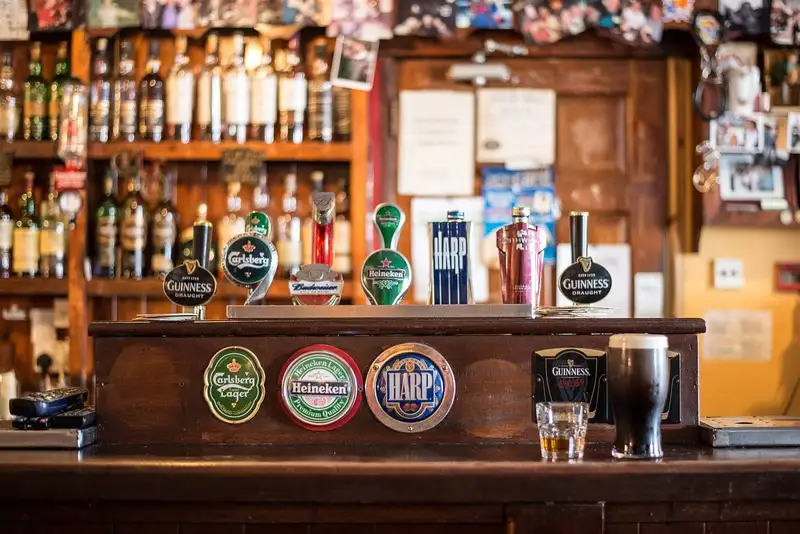
Managing Bar Inventory
Par levels short for "parity levels"represent the minimum quantity of each product a bar should always have on hand. This benchmark is meticulously calculated based on historical consumption data, allowing managers to replenish their stock just in time before it dips below the set threshold. Establishing par levels is akin to creating a customized safety net that ensures your bar remains equipped to serve every customer's request, from the standard beer to the most exotic cocktail, without delay or disappointment.
The significance of par levels extends beyond just preventing stockouts. In the bustling environment of a restaurant's bar, where every second counts, having an efficient system to manage inventory can dramatically improve operations. Par levels streamline the ordering process, reduce the risk of over ordering (and thus, waste), and help maintain a healthy cash flow. This balance is particularly crucial in the hospitality industry, where profit margins can be slim and customer satisfaction is paramount.
Moreover, setting par levels contributes to a more organized and less stressful working environment. Bartenders and staff can operate with the confidence that they have all the necessary ingredients at their disposal, allowing them to focus on crafting perfect beverages and delivering exceptional service. Additionally, this level of organization and efficiency reflects well on the establishment, fostering a professional image that customers appreciate and trust.
Understanding Par Levels

Par levels can be defined as the predetermined quantity of each item that a bar should maintain in stock at all times. These levels are not arbitrary but are instead meticulously calculated based on factors such as historical sales data, consumption patterns, and anticipated demand. By establishing par levels, bar managers can ensure that they always have a sufficient supply of ingredients, beverages, and other essential items to meet customer orders promptly.
The importance of setting par levels cannot be overstated when it comes to maintaining efficient bar operations. Establishing these levels is crucial for several reasons. Firstly, par levels serve as a buffer against stockouts, ensuring that the bar never runs out of essential items during peak operating hours. This helps prevent disruptions to service and ensures a positive customer experience.
Secondly, establishing par levels is essential for minimizing waste and controlling costs. Overstocking can lead to spoilage, expiration, or obsolescence of inventory, resulting in unnecessary losses for the bar. Conversely, understocking can lead to missed sales opportunities and dissatisfied customers. By maintaining optimal par levels, bars can strike the right balance between ensuring adequate inventory levels and avoiding excess waste.
Moreover, setting par levels facilitates more efficient inventory management practices. It streamlines the ordering process by providing clear guidelines for when and how much to reorder, reducing the risk of human error or guesswork. Additionally, it helps maintain a healthy cash flow by preventing excessive tying up of capital in excess inventory.
Elevate Your Restaurant's Operations
Swift Inventory Solutions with Altametrics!
Factors Influencing Par Levels
One of the primary factors influencing par levels is the popularity of beverages among customers. Different drinks have varying levels of demand, and understanding which items are the best-sellers can help managers allocate resources more effectively. By closely monitoring sales data and identifying the most popular drinks, managers can adjust par levels accordingly to ensure that they always have an adequate supply of the items in highest demand.
Seasonality also plays a significant role in determining par levels. The demand for certain beverages may fluctuate throughout the year due to factors such as weather, holidays, or local events. For example, during the summer months, there may be a higher demand for refreshing cocktails, while warmer beverages like whiskey or mulled wine may be more popular during the winter. By anticipating these seasonal fluctuations and adjusting par levels accordingly, bars can ensure that they are prepared to meet customer demand during peak periods.
Customer preferences are another critical factor to consider when setting par levels. Different demographics may have distinct preferences when it comes to beverage choices, and understanding these preferences can help bars tailor their inventory accordingly. For example, a bar located in a trendy urban neighborhood may have a higher demand for craft cocktails, while a sports bar in a college town may prioritize beer and mixed drinks. By taking into account the preferences of their target demographic, bars can ensure that their par levels are aligned with customer expectations.
Analyzing historical sales data and trends is essential for accurately setting par levels. By reviewing past sales performance, managers can identify patterns and trends that can inform their decision-making process. This analysis can help managers forecast future demand, anticipate fluctuations, and adjust par levels accordingly to ensure that they always have the right amount of inventory on hand.
Calculating Par Levels
Step 1. Gather Historical Sales Data
The first step in calculating par levels is to collect data on how much of each type of beverage you sell over a given period. This data should be as detailed as possible, covering daily, weekly, and monthly sales volumes.
Step 2. Determine Average Consumption Rate
Next, calculate the average consumption rate for each beverage. This can be done by dividing the total sales volume of each beverage by the number of days in the period analyzed. The result is a daily average that reflects how quickly each type of beverage moves.
Example
If you sold 300 bottles of a particular beer over 30 days, your average consumption rate for that beer is 10 bottles per day (300 bottles / 30 days).
Step 3. Consider Reorder Frequency and Delivery Time
Consider how often you reorder stock (reorder frequency) and how long it takes for orders to arrive (delivery time). These factors influence how much stock you need to have on hand to avoid running out before the next delivery.
Step 4. Calculate Par Level
The par level for each type of beverage can be calculated with the following formula-
Par Level = ( Average Consumption Rate Delivery Cycle ) + Safety Stock
Where -
- Average Consumption Rate is the daily average consumption calculated in Step 2.
-Delivery Cycle is the number of days from one order to the next.
-Safety Stock is additional stock held to prevent stockouts due to unexpected spikes in demand or delays in delivery. A common practice is to set safety stock as a certain percentage of the average consumption rate or based on past experiences of demand variability.
Example
If your average consumption rate for a wine is 5 bottles per day, you reorder every 7 days, and you want to keep a safety stock of 10 bottles to cushion against unexpected demand, your par level calculation would be-
Par Level=(5bottles/day7days)+10bottles= 45bottles
This means you should always aim to have 45 bottles of this wine in stock.
By following these steps and applying the formula provided, bar managers can calculate precise par levels for various beverages, ensuring the right balance between meeting demand and maintaining optimal inventory levels. This process, while it may seem detailed, is crucial for efficient inventory management and can significantly impact the profitability and operational efficiency of a bar.
Implementing Par Levels in Your Bar

Practical Tips for Implementation
1. Start with Accurate Data - Begin by conducting a thorough inventory audit to establish baseline par levels. Use this data as a foundation for setting initial par levels for each beverage category.
2. Regular Monitoring - Implement a system for regularly monitoring inventory levels. This can be done manually or through the use of inventory management software that tracks sales data and provides real-time updates on stock levels.
3. Set Clear Reordering Triggers - Establish clear thresholds that trigger reorder points for each item based on its par level. This ensures that orders are placed in a timely manner to avoid stockouts.
4. Centralize Ordering - Centralize the ordering process to ensure consistency and prevent overordering or duplicate orders. Designate specific individuals responsible for placing orders and monitoring inventory levels to avoid confusion.
Strategies for Maintenance
1. Adjust Par Levels Based on Demand - Regularly review sales data and adjust par levels as needed to reflect changes in customer demand or seasonal trends. Be proactive in anticipating fluctuations and adjust par levels accordingly to optimize inventory levels.
2. Minimize Stockouts - Implement strategies to minimize stockouts, such as maintaining safety stock levels or establishing alternative suppliers for high-demand items. This ensures that you can continue to serve customers even during periods of unexpected demand.
3. Mitigate Excess Inventory - To prevent excess inventory, consider implementing strategies such as promotions or menu adjustments to encourage the sale of slow-moving items. Additionally, monitor inventory turnover rates and adjust par levels for items with low turnover to prevent overstocking.
Incorporating Bar Inventory Keyword
To ensure effective implementation of par levels, it's crucial to integrate bar inventory management practices seamlessly into daily operations. Regularly updating par levels based on inventory audits and sales data helps maintain optimal stock levels, preventing both stockouts and excess inventory accumulation. By implementing clear reordering triggers and centralizing the ordering process, bar managers can streamline inventory management and ensure that their establishments are always well-stocked to meet customer demand.
Transform Your Restaurant Operations Now!
Effortless Inventory Tracking with Altametrics!
Tools and Resources for Par Level Management
Overview of Tools and Resources
1. Inventory Management Software - These comprehensive solutions offer features such as real-time tracking of stock levels, automatic reorder alerts, and analytics to help bar managers make informed decisions about inventory management.
2. Mobile Apps - Many mobile apps are specifically designed for inventory management, allowing bar managers to track inventory levels, create purchase orders, and manage suppliers on the go. These apps often sync with cloud-based platforms for seamless data access.
3. Point-of-Sale (POS) Systems - Some POS systems include inventory management functionalities, enabling bar managers to track sales, monitor stock levels, and generate reports from a single platform.
4. Spreadsheet Templates - For smaller bars with simpler inventory management needs, customizable spreadsheet templates can be a cost-effective option for tracking par levels and inventory movements.
Comparison and Recommendations
When choosing the right tool for your bar, several factors should be considered -
1. Features - Evaluate the features offered by each tool and assess whether they align with your bar's specific inventory management needs. Look for features such as real-time tracking, customizable reporting, and integration with existing systems.
2. Ease of Use - Consider the user-friendliness of the tool and how easily your staff can learn to use it. Intuitive interfaces and simple navigation can streamline the implementation process and reduce training time.
3. Scalability - Choose a tool that can grow with your business. Consider whether the tool offers scalability options to accommodate changes in your bar's size or operations over time.
4. Cost - Compare the pricing structures of different tools, taking into account factors such as upfront costs, subscription fees, and additional charges for features or support services.
5. Support and Training - Look for tools that offer robust customer support and training resources to assist you in implementing and optimizing the software for your bar's specific needs.
When it comes to inventory management, selecting the right tool is crucial for maintaining accurate par levels and optimizing stock control. By carefully comparing the features, usability, scalability, cost, and support options of different tools, bar managers can choose a solution that meets their needs and helps streamline their inventory management processes.
Best Practices for Par Level Maintenance
Regular Inventory Audits
Regular inventory audits are essential for ensuring accuracy and identifying any discrepancies in stock levels. Conducting audits at regular intervals, such as weekly or monthly, allows bar managers to track inventory movements, identify trends, and adjust par levels as needed. These audits should involve physically counting stock, comparing counts to recorded levels, and investigating any discrepancies to ensure accuracy.
Inventory Rotation Strategies
Implementing inventory rotation strategies helps prevent waste and ensure that products are used before they expire. FIFO (First In, First Out) and FEFO (First Expired, First Out) are common rotation methods used in bars to ensure that older stock is used before newer stock. This helps minimize waste and ensures that inventory is kept fresh and in optimal condition.
Waste Reduction Strategies
Minimizing waste is crucial for maintaining profitability and sustainability in a bar environment. Implementing strategies such as portion control, inventory tracking, and menu optimization can help reduce waste and maximize efficiency. By closely monitoring inventory levels and usage patterns, bar managers can identify areas where waste can be reduced and take proactive steps to address them.
Staff Involvement and Accountability
Involving staff in par level management fosters a culture of accountability and ensures that everyone is committed to maintaining optimal stock levels. Provide training to staff on the importance of inventory management and how to accurately track and report inventory levels. Encourage open communication and feedback from staff members, as they are often the ones directly involved in day-to-day operations and can provide valuable insights into inventory management practices.
Key Points
Par levels act as a safeguard against the unpredictable nature of the hospitality industry, providing a buffer that allows bars to adapt to sudden changes in customer preferences, seasonal trends, or external challenges. By maintaining optimal stock levels, bars can ensure that they are always prepared to offer a consistent customer experience, which is vital for building customer loyalty and maintaining a competitive edge. Moreover, efficient inventory management through par levels significantly contributes to minimizing waste, reducing costs, and enhancing profitability.
The role of beverage control in this context is especially critical. Effective beverage control ensures that every aspect of bar inventory, from procurement to sale, is monitored and optimized for efficiency. By employing strategies such as regular inventory audits, implementing inventory rotation practices, and engaging staff in the management process, bars can achieve a level of control that not only optimizes stock levels but also maximizes the use of every item on the inventory list. This comprehensive approach to inventory and beverage control can lead to substantial savings and operational efficiencies.
In conclusion, the practice of setting and maintaining par levels is a fundamental aspect of successful bar management. It requires a dedicated effort and a strategic approach to ensure that inventory levels are always aligned with the bar's operational needs and customer demands. By embracing the tools, strategies, and best practices outlined in this guide, bar managers can achieve a level of inventory management that supports efficient operations, reduces waste, and drives profitability.
Get Accurate Inventory Valuations
Manage Your Workforce with Altametrics
Frequently
Asked Questions
How do par levels contribute to beverage control?
What happens if my par levels are set too high?
How do I calculate par levels for different beverages?
What tools can help manage par levels?
Must-Read Content

Why Do Restaurant Staff Quit? Common Reasons and How to Prevent Them
Restaurant staff quit because of low wages, poor management, burnout, and scheduling issues. Learn practical strategies to improve retention and reduce turnover.

How to Get More Customers in a Restaurant
Learn how to get more customers in a restaurant through local marketing, social media, promotions, customer reviews, loyalty programs, and retention strategies.
How to Maintain Hiring Compliance Across Multiple Restaurant Locations
Restaurant groups can maintain hiring compliance by standardizing processes, centralizing records, assigning ownership, training managers, adapting to local laws, auditing regularly, and using technology for ongoing monitoring.

