What are the most common OSHA violations in restaurants?
Common workplace safety issues can include slip and fall hazards, improper chemical handling, unsafe equipment, inadequate hazard communication, electrical hazards, and insufficient employee safety training.
The Complete Guide to OSHA Regulations for Restaurants

Understand OSHA Regulations for Restaurants
The Occupational Safety and Health Administration (OSHA) establishes workplace safety requirements designed to protect employees from hazards on the job. Restaurants face a wide range of workplace risks, from hot cooking equipment and sharp knives to slippery floors, cleaning chemicals, electrical equipment, and heavy lifting. Understanding which OSHA requirements apply to your restaurant is an important first step toward maintaining a safe workplace.
Restaurant owners are responsible for providing a workplace that is free from recognized hazards that could cause serious physical harm. This includes identifying potential hazards, maintaining safe equipment and working conditions, providing appropriate training, and taking reasonable steps to correct safety problems.
OSHA requirements can cover several areas of restaurant operations, including -
1. Workplace safety - Restaurants should identify and address hazards such as slips, falls, burns, cuts, electrical risks, and unsafe equipment.
2. Employee training - Employees need appropriate information and training about the hazards they may encounter while performing their jobs.
3. Hazard communication - Restaurants that use hazardous chemicals must follow requirements for labeling, Safety Data Sheets (SDS), and employee awareness.
4. Personal protective equipment - Where appropriate, employees must have access to suitable PPE and understand how to use it properly.
5. Emergency preparedness - Restaurants should have procedures for responding to workplace emergencies and serious incidents.
6. Recordkeeping and reporting - Certain employers must maintain records of qualifying work-related injuries and illnesses and report specific serious incidents to OSHA within required timeframes.
It is also important to recognize that OSHA requirements can vary depending on the restaurant's location, operations, and workforce. States with OSHA-approved state plans may have requirements that differ from federal OSHA standards. Restaurant owners should therefore determine which federal or state requirements apply to their specific business.
Common Workplace Hazards
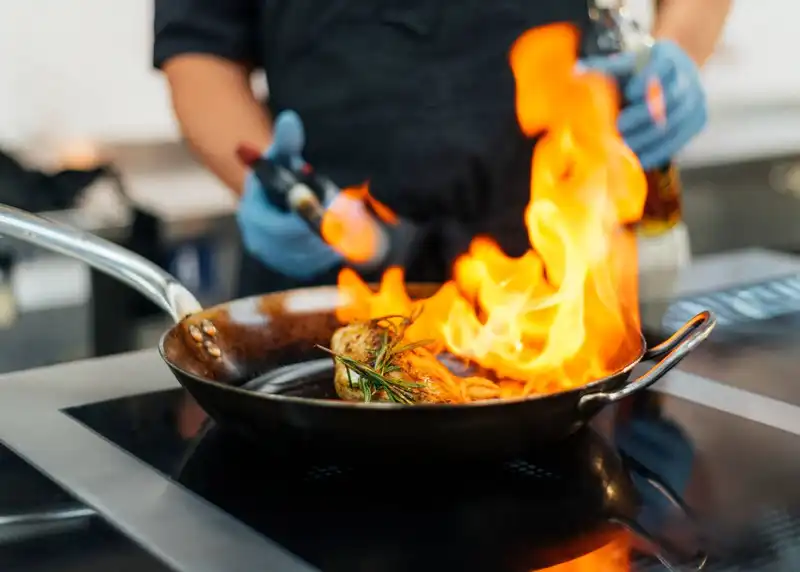
Restaurant kitchens and dining areas present a unique mix of hazards that don't always exist in other industries. Understanding where these risks come from is the first step toward preventing them. Below are the most common categories of workplace hazards restaurant owners need to actively manage.
Slips, Trips, and Falls
This is consistently one of the leading causes of injury in food service. Kitchens generate grease, water, and food debris throughout a shift, and floors can become dangerously slick in a matter of minutes. Common contributing factors include -
- Wet or greasy floor surfaces near cooking stations and dish pits
- Cluttered walkways from boxes, mats, or equipment left in high-traffic areas
- Poor lighting in storage rooms or walk-in coolers
- Loose flooring, mats, or uneven transitions between kitchen and dining areas
Burns and Fire Hazards
Kitchens run hot - literally. Fryers, grills, ovens, and stovetops create constant exposure to burn risks, and grease is a significant fire hazard if not properly managed. Key concerns include -
- Contact burns from hot surfaces, pans, and equipment
- Steam burns from dishwashers, steamers, or boiling liquids
- Grease fires from fryers and stovetops, especially without proper suppression systems
- Improper storage or disposal of hot oil
Cuts and Lacerations
Sharp tools are unavoidable in a working kitchen, but injuries from them are largely preventable with proper training and equipment maintenance. Common sources include -
- Knives used improperly or left in unsafe locations (like submerged in a sink)
- Meat and vegetable slicers without proper guarding
- Broken glassware or dishware
- Can openers and other small kitchen tools
Ergonomic Injuries
These injuries build up over time rather than happening in a single incident, which makes them easy to underestimate. Restaurant staff are especially prone to -
- Lower back strain from lifting heavy stock boxes, kegs, or equipment
- Repetitive strain injuries from prolonged chopping, mixing, or carrying trays
- Prolonged standing, which contributes to fatigue and musculoskeletal issues
Chemical Exposure
Restaurants rely on a range of cleaning and sanitizing agents, many of which carry their own handling risks. This includes -
- Skin and eye irritation from degreasers, sanitizers, and dish detergents
- Respiratory irritation from mixing incompatible cleaning chemicals
- Improper storage of chemicals near food prep areas
Before diving into compliance paperwork, it's worth walking through your own restaurant with this list in hand and honestly assessing where these risks show up in your daily operations. That assessment becomes the backbone of your broader safety plan.
Elevate Food Safety, Simplify Compliance!
Experience Seamless Food Safety with Altametrics!
Hazard Communication Standard
Every restaurant uses chemicals - degreasers, sanitizers, dish detergents, oven cleaners, drain treatments - often multiple times throughout a single shift. OSHA's Hazard Communication Standard (HazCom), sometimes referred to as the "Right to Know" law, exists to make sure employees understand exactly what they're working with and how to handle it safely.
At its core, HazCom requires employers to communicate information about chemical hazards clearly and consistently. For restaurant owners, this breaks down into three main obligations -
1. Maintaining Safety Data Sheets (SDS)
Every hazardous chemical used in your restaurant - from industrial degreasers to certain sanitizing solutions - should have a corresponding Safety Data Sheet on file. These documents outline the chemical's properties, health hazards, safe handling procedures, and emergency response steps. SDSs should be -
- Readily accessible to all employees during their shifts (not locked in a manager's office)
- Kept up to date, matching the exact products currently in use
- Organized in a way staff can quickly find during an emergency, such as a labeled binder or digital system
2. Proper Labeling
Every chemical container needs a label that identifies the substance and communicates its hazards, typically using standardized pictograms, signal words (like "Danger" or "Warning"), and hazard statements. This applies not just to original manufacturer containers but also to secondary containers - like spray bottles filled from a bulk supply - which are easy to overlook but still require proper labeling under OSHA rules.
3. Employee Training on Chemical Hazards
Employees who handle or work near hazardous chemicals must be trained to understand -
- How to read labels and Safety Data Sheets
- The specific hazards of the chemicals they work with
- Proper handling, storage, and disposal procedures
- What to do in the event of exposure or an accidental spill
Common HazCom Pitfalls in Restaurants
A few issues tend to come up repeatedly during OSHA inspections of food service establishments -
- Unlabeled spray bottles or secondary containers used for diluted cleaning solutions
- Missing or outdated SDS binders that don't reflect current products in use
- New employees who haven't received chemical safety training before starting shifts
- Chemicals stored near food prep or food storage areas, creating cross-contamination risk
A practical approach includes keeping a master list of every chemical product used in the restaurant, maintaining a corresponding SDS for each one, ensuring every container (original or secondary) is properly labeled, and reviewing hazard communication training during new hire onboarding as well as whenever new products are introduced.
Employee Training Requirements
Even the best safety policies are only as effective as the training behind them. OSHA places significant emphasis on ensuring employees understand workplace hazards and know how to protect themselves - and for restaurants, that means building a training program that goes beyond a single onboarding session.
While specific requirements vary depending on your restaurant's operations, most food service establishments should cover the following areas -
1. Fire Safety and Emergency Procedures - Employees should know how to respond to a kitchen fire, including when and how to use a fire extinguisher, how to activate suppression systems near fryers and grills, and evacuation procedures in case of a larger emergency.
2. Safe Equipment Operation - Anyone operating slicers, mixers, grills, fryers, or other kitchen equipment should be trained on proper use, including safety guards, shutoff procedures, and manufacturer-specific safety features.
3. Chemical Handling and HazCom - As covered in the previous section, employees need training on reading SDS documents, understanding labels, and safely handling cleaning and sanitizing chemicals.
4. Safe Lifting and Ergonomics - Basic training on proper lifting techniques can meaningfully reduce back injuries and strain, especially for staff regularly handling stock deliveries or heavy equipment.
5. Slip, Trip, and Fall Prevention - Staff should understand the importance of promptly cleaning spills, using wet floor signage, and wearing appropriate non-slip footwear.
6. Bloodborne Pathogens (When Applicable) - If employees may be exposed to blood or other bodily fluids - such as through workplace injuries requiring first aid - OSHA's Bloodborne Pathogens Standard may apply, requiring specific training and precautions.
Training Frequency and Documentation
OSHA doesn't always specify an exact frequency for every training topic, but general best practice - and in some cases, explicit requirement - includes -
- Initial training before an employee begins work in a role involving specific hazards
- Refresher training on a regular basis (often annually), especially for high-risk tasks
- Additional training whenever new equipment, chemicals, or procedures are introduced
- Documentation of every training session, including date, topics covered, and employee signatures
This documentation matters more than many restaurant owners realize. In the event of an OSHA inspection or an injury claim, training records are often the first thing reviewed to determine whether an employer met their obligations.
Personal Protective Equipment (PPE) and Safety Equipment

Personal protective equipment serves as a critical last line of defense against the hazards covered earlier in this guide. While engineering controls and proper training reduce risk, PPE helps protect employees when hazards can't be fully eliminated from the environment.
Unlike industries such as construction or manufacturing, restaurant PPE tends to be less about heavy protective gear and more about task-specific equipment suited to kitchen work -
1. Cut-Resistant Gloves - Recommended for employees using knives, mandolines, or slicers, particularly during high-volume prep work. These gloves reduce the severity of lacerations without significantly limiting dexterity.
2. Non-Slip Footwear - Given how common slip-and-fall injuries are in restaurant settings, slip-resistant shoes are one of the most impactful and cost-effective PPE investments a restaurant can require.
3. Heat-Resistant Gloves and Oven Mitts - Essential for handling hot pans, trays, and oven equipment to prevent burns.
4. Aprons and Protective Clothing - Beyond hygiene, aprons can offer a layer of protection against splashes from hot liquids or chemical cleaners.
5. Eye Protection - Recommended when handling certain cleaning chemicals or operating equipment that could cause splashing or debris.
6. Hearing Protection - Less common, but relevant in restaurants with particularly loud equipment (large ventilation systems, industrial dishwashers) over extended periods.
Employer Responsibilities Around PPE
OSHA's general PPE standard places clear responsibility on employers to -
- Assess the workplace to determine what PPE is necessary for specific tasks
- Provide required PPE to employees, in most cases at no cost to the employee
- Ensure PPE fits properly and is maintained in good condition
- Train employees on when PPE is required and how to use it correctly
- Enforce consistent PPE use, rather than treating it as optional
A common compliance gap in restaurants is inconsistent enforcement - for example, providing cut-resistant gloves but not requiring or monitoring their use during high-risk tasks like slicing or mandoline work.
Fire Suppression and Extinguisher Requirements
Fire safety equipment deserves particular attention given how central heat and grease are to restaurant operations. Key requirements typically include -
- Fire extinguishers rated appropriately for kitchen fires (Class K extinguishers are specifically designed for fires involving cooking oils and fats), placed in accessible, clearly marked locations
- Automatic fire suppression systems installed above fryers, grills, and other high-heat cooking equipment, professionally inspected and serviced on a regular schedule
- Clear access to fire extinguishers and suppression system controls, free from obstruction
- Employee familiarity with extinguisher locations and basic operation, reinforced through training
The most effective approach treats PPE not as an afterthought, but as a standard part of daily kitchen operations - built into onboarding, reinforced through visible signage, and consistently modeled by shift leaders and management. When PPE use becomes routine rather than optional, compliance tends to follow naturally.
Create, Implement, and Execute Multiple Daily Checklists
Streamline Your Operations with Altametrics
Recordkeeping and Reporting Obligations
Beyond preventing injuries, OSHA requires many employers to formally track and report workplace incidents. This recordkeeping serves two purposes - it helps identify patterns that can inform safety improvements, and it ensures serious incidents are reported to OSHA in a timely manner.
Do All Restaurants Need to Keep OSHA Records?
Not necessarily. OSHA's recordkeeping requirements (specifically, maintaining the OSHA 300 Log) generally apply to employers with more than 10 employees, unless the business falls under a specific low-risk industry exemption. It's worth noting that food service establishments are not on OSHA's partially exempt industry list, meaning most restaurants with more than 10 employees are required to maintain injury and illness records - even though the work itself may not seem as inherently hazardous as heavy industry.
Restaurant owners should confirm their specific obligations based on current employee count and any applicable state-level OSHA plans, since some states impose additional or slightly different requirements.
The OSHA 300 Log and Related Forms
For restaurants required to maintain records, there are three core forms involved -
1. OSHA Form 300 (Log of Work-Related Injuries and Illnesses). A running log of recordable injuries and illnesses throughout the year, including basic details like the nature of the injury, body part affected, and days away from work.
2. OSHA Form 300A (Summary). An annual summary of the 300 Log, which must be posted in a visible location in the workplace - typically from February 1 to April 30 of the following year - even in years with zero recordable incidents.
3. OSHA Form 301 (Injury and Illness Incident Report). A more detailed report completed for each individual recordable incident, capturing specifics about how the injury occurred.
What Counts as "Recordable"
Not every minor incident needs to be logged. Generally, an injury or illness is recordable if it results in -
- Days away from work
- Restricted work duty or job transfer
- Medical treatment beyond basic first aid
- Loss of consciousness
- A significant injury or illness diagnosed by a healthcare professional
Simple first-aid situations - like a small cut treated with a bandage - typically don't need to be recorded, but employers should understand OSHA's specific first-aid definitions, since some treatments considered "basic" in a general sense (like certain wound coverings) may or may not qualify depending on the specifics.
Reporting Severe Incidents Directly to OSHA
Separate from routine recordkeeping, certain severe incidents must be reported directly to OSHA within strict timeframes, regardless of company size -
- Fatalities must be reported within 8 hours
- Hospitalizations, amputations, or loss of an eye must be reported within 24 hours
These reports can be made by phone to the nearest OSHA office or through OSHA's reporting hotline, and apply to essentially all employers - not just those otherwise required to maintain routine logs.
OSHA requires injury and illness records to be retained for five years following the end of the calendar year they cover. During this period, records must be available for OSHA inspection upon request, and in some cases, accessible to current and former employees or their representatives.
Building a Compliance Plan
Understanding OSHA requirements is one thing - translating that knowledge into a working system inside a busy restaurant is another. This final section brings everything together into a practical approach for building and maintaining compliance over time.
Step 1. Conduct a Workplace Safety Audit
Before writing any policy, walk through your restaurant with a critical eye, ideally using a simple checklist covering the hazard categories outlined earlier in this guide. Look specifically at -
- Floor conditions in kitchen, storage, and dish areas
- Condition and guarding of equipment like slicers and mixers
- Chemical storage and labeling practices
- Fire suppression system status and extinguisher accessibility
- PPE availability and actual usage during shifts
Document what you find. This audit becomes the foundation for prioritizing what needs immediate attention versus longer-term improvement.
Step 2. Create Written Safety Policies and Procedures
Formalize your safety expectations into clear, accessible written policies. At minimum, this should include -
- HazCom procedures, including SDS management and labeling protocols
- Required PPE by role or task
- Emergency procedures, including fire response and evacuation
- Incident reporting process for employees who witness or experience a workplace injury
- Training schedule and documentation process
Written policies matter for two reasons - they create consistency across shifts and managers, and they provide documentation demonstrating a good-faith compliance effort if OSHA ever conducts an inspection.
Step 3. Assign Clear Responsibility
Compliance tends to fall apart when no one owns it. Designate a specific person - often a general manager or dedicated safety coordinator in larger operations - responsible for maintaining SDS binders, tracking training records, scheduling fire suppression inspections, and keeping the OSHA 300 Log current.
Step 4. Build Safety Into Daily Operations
The most sustainable compliance programs treat safety as part of routine operations rather than a separate initiative. This might look like brief safety reminders during pre-shift meetings, visible signage near hazard points, and shift leaders who consistently reinforce PPE use and proper procedures rather than letting standards slide during busy periods.
Most Frequently Cited OSHA Violations in Restaurants
Being aware of common violation patterns can help owners focus their compliance efforts where they matter most. Frequently cited issues in food service include -
- Missing or incomplete Hazard Communication programs (no SDS access, poor labeling)
- Blocked or inaccessible fire extinguishers and exits
- Lack of documented employee training
- Missing or outdated OSHA 300 Log and 300A summary postings
- Unguarded or improperly maintained kitchen equipment
- Electrical hazards, including damaged cords or overloaded outlets
- Staying Current on Regulation Changes
OSHA standards and enforcement priorities can shift over time, and some states operate their own OSHA-approved plans with additional requirements beyond federal standards. Restaurant owners should periodically check OSHA's official website, consult with a workplace safety professional, or work with industry associations that track regulatory updates relevant to food service.

Employee scheduling
Human Resource Management for Restaurants

Employee scheduling
Common Payroll Challenges in Restaurants

Sales forecasting
How to Use Restaurant Analytics to Improve Profitability

Restaurant management
The Complete Guide to Restaurant Reputation Management

Accounting payroll
Restaurant Cash Handling Procedures


Accounting payroll
How to Manage Restaurant Finances

Employee scheduling
How to Motivate Restaurant Staff

Software integration
10 Ways Technology Can Help Control Food Cost in Restaurants
Frequently Asked Questions
What is the OSHA General Duty Clause?
The OSHA General Duty Clause requires employers to provide a workplace free from recognized hazards that are causing or are likely to cause death or serious physical harm when applicable standards do not otherwise address the hazard.
What is OSHA Hazard Communication for restaurants?
OSHA's Hazard Communication Standard addresses workplace exposure to hazardous chemicals. Restaurants that use hazardous cleaning or other chemicals may need proper labeling, Safety Data Sheets, and employee training.
What should be included in a restaurant OSHA checklist?
A restaurant OSHA checklist can cover floors and walkways, cooking equipment, electrical systems, knives and machinery, chemicals, PPE, emergency procedures, employee training, workplace injuries, and required documentation.
How can a restaurant prepare for an OSHA inspection?
Restaurant owners can prepare by regularly identifying and correcting workplace hazards, maintaining required documentation, training employees, reviewing chemical safety procedures, inspecting equipment, and ensuring safety policies are followed consistently.