



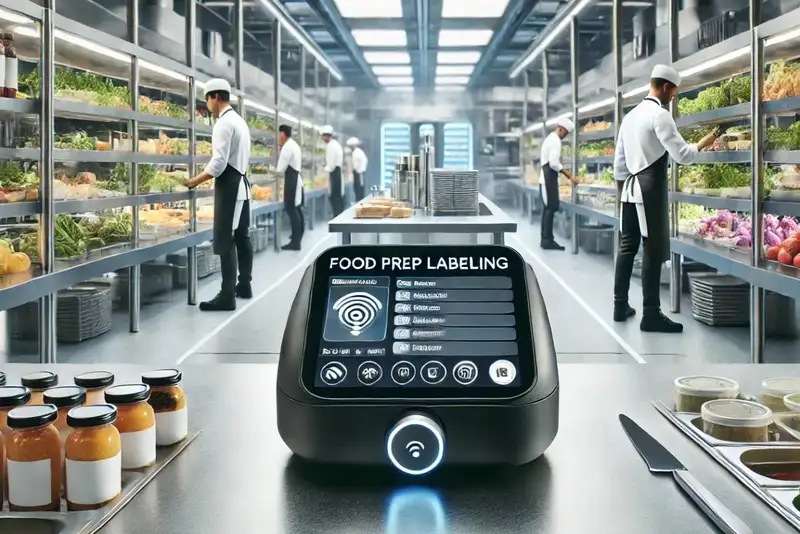
Importance of Efficiency in (QSR) Kitchens
One of the less obvious yet time-consuming tasks in QSR kitchens is food prep labeling. Labeling ensures compliance with food safety regulations by tracking preparation times and expiration dates. However, when done manually, this task can be labor-intensive and prone to errors. Employees must dedicate significant time to writing or printing labels, double-checking information for accuracy, and managing updates as inventory shifts. This not only diverts staff attention from other critical responsibilities but also increases labor costsa growing concern for restaurant owners navigating thin profit margins.
Automated food prep labels present a modern solution to this challenge. By integrating with digital prep systems, automated labels streamline the labeling process, generating accurate and consistent labels in seconds. Automation eliminates the need for repetitive manual tasks, reducing the time and effort required from staff. Moreover, these systems minimize the risk of errors that can lead to food waste or non-compliance with safety regulations.
In addition to saving time, automated food prep labels enable restaurant owners to optimize labor allocation. Staff can focus on higher-value activities, such as food preparation and customer service, rather than getting bogged down in administrative tasks. This shift not only enhances operational efficiency but also contributes to a more productive and satisfied workforce.
In this article, we'll explore how automated food prep labels can significantly cut labor costs in QSR kitchens, driving efficiency and improving the bottom line while maintaining food safety and quality.
The Labor-Intensive Nature of Manual Prep Labeling
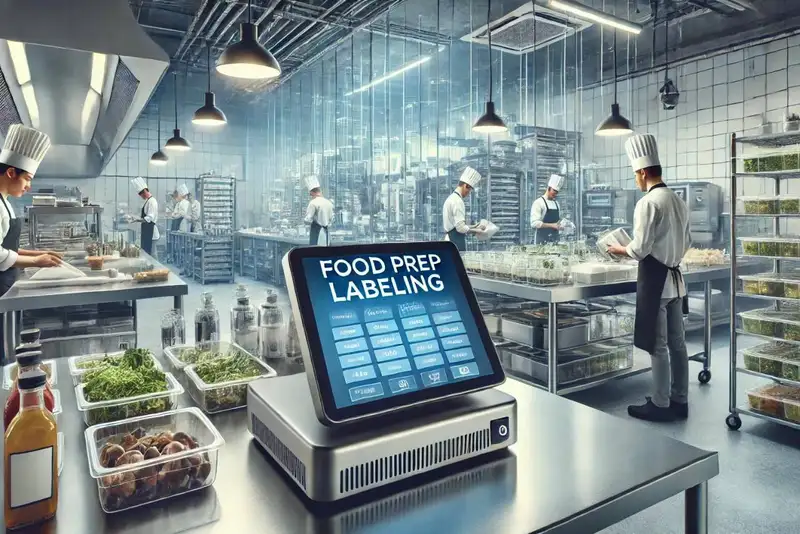
This process may seem simple, but it is deceptively labor-intensive. Employees frequently juggle labeling with other responsibilities, such as cooking or customer service, which can lead to interruptions and delays. Ensuring accuracy further compounds the workload, as staff must double-check that each label corresponds to the correct item and that all required details are included. These repetitive tasks consume valuable time that could be better spent on activities that directly enhance the customer experience or improve operational efficiency.
Manual labeling is also susceptible to errors and inconsistencies. Mistakes such as incorrect dates, missing information, or labels applied to the wrong items can have serious consequences. Mislabeling can result in food waste, as items may be prematurely discarded due to incorrect expiration dates. Worse, it can lead to food safety violations if expired or improperly labeled items are unknowingly served to customers.
Rework is another significant issue. If errors are discovered, staff must repeat the labeling process, further diverting their attention and time. These inefficiencies accumulate, increasing labor costs and reducing overall productivity.
In contrast, automated systems streamline this process, eliminating the repetitive nature of manual tasks and significantly reducing errors. By removing the burden of manual prep labeling, restaurants can allocate their labor resources more effectively, ensuring a smoother operation and ultimately saving both time and money.
Cut Down Prep Time and Boost Accuracy
Automate Your Kitchen with Altametrics!
How Automation Streamlines the Labeling Process
One of the standout features of automation is the ability to update labels automatically. When recipes, preparation dates, or inventory levels change, the system adjusts the label details instantly, ensuring that the information remains accurate and up-to-date. This eliminates the repetitive task of rewriting or reprinting labels whenever adjustments are necessary, freeing up employees to focus on more value-driven tasks.
The speed of automated systems is another significant advantage. Labels can be created and printed in seconds, compared to the time-intensive manual process that requires writing or formatting each label individually. For quick service restaurants (QSRs) operating under tight schedules, this efficiency translates into faster kitchen workflows and reduced bottlenecks during peak hours.
Accuracy is equally important. Automated systems eliminate human error by standardizing the labeling process, ensuring every label contains the correct information. This consistency reduces food waste caused by mislabeling and helps maintain compliance with food safety regulations.
Overall, automation transforms what was once a labor-intensive, error-prone task into a seamless, efficient process. By removing the burden of repetitive manual labeling, automated systems empower restaurant teams to focus on tasks that drive customer satisfaction, enhance operational efficiency, and contribute to the bottom line. For QSR owners, investing in automation is a step toward a more productive, cost-effective kitchen operation.
Labor Cost Savings Through Automation
By integrating automated systems into the kitchen workflow, restaurants can reduce the number of staff hours spent on labeling. For example, a manual process that takes 1015 minutes per shift to create labels for various prep items can be reduced to just a few seconds per item with automation. Over a week, this could save hours of labor, especially in high-volume kitchens where labeling occurs multiple times a day. This time savings translates directly into labor cost reductions.
The labor freed by automation can then be reallocated to higher-value tasks, such as food preparation, quality control, or customer service. Instead of focusing on administrative labeling tasks, employees can contribute to areas that enhance the customer experience or improve kitchen efficiency. For example, a staff member previously dedicated to labeling might now assist in assembling orders during busy periods, ensuring faster service and happier customers.
Consider a typical QSR with 10 employees per shift. If automation saves each staff member 10 minutes per shift, that equates to 100 minutes or nearly two hours of saved labor per shift. Over a week, this amounts to approximately 14 hours, which could be reallocated to critical operations or result in reduced labor costs through optimized scheduling.
In a competitive industry where labor costs represent a significant portion of expenses, automation offers an effective solution. By reducing the need for extensive manual labor and enabling staff to focus on higher-priority tasks, automated food prep labeling contributes to both operational efficiency and profitability.
Improved Accuracy and Its Impact on Labor Efficiency

Accuracy in labeling plays a critical role in minimizing waste. Mislabeling can lead to food items being discarded prematurely due to incorrect expiration dates or uncertainty about their freshness. For instance, a mislabeled item with an expired date might be thrown out despite being safe for use, leading to unnecessary waste and financial loss. Automated systems eliminate such errors, ensuring that every label accurately reflects the preparation date, expiration time, and any other essential information. This not only preserves valuable inventory but also supports compliance with food safety regulations.
The ripple effect of improved accuracy extends to kitchen efficiency. When labels are consistent and reliable, staff spend less time double-checking or correcting errors and more time focusing on their core responsibilities. For example, during peak hours, employees can trust the labeling system to provide accurate information, reducing the time spent searching for items or clarifying uncertainties. This streamlined workflow enhances overall productivity and reduces bottlenecks in the kitchen.
Furthermore, accurate labeling helps maintain a clear inventory system, enabling staff to prioritize items that need to be used first. This improves kitchen organization and prevents overstocking or understocking issues. In the long term, the improved accuracy provided by automated labeling systems contributes to smoother operations, lower labor costs, and a more efficient kitchen environment, ensuring that QSRs can deliver consistent quality to their customers.
Maximize Your Time and Minimize Labor Costs
Simplify Prep with Altametrics!
Return on Investment (ROI) of Automated Food Prep Labels
The initial investment for an automated system typically includes the cost of hardware, software, and training. While these expenses may seem substantial, the savings realized over time often outweigh the costs. By reducing the time employees spend on manual labeling, restaurants can reallocate staff to higher-value tasks or optimize scheduling to reduce labor hours. Additionally, automation minimizes errors that lead to mislabeled or expired food, cutting down on food waste and further enhancing profitability.
Automation pays for itself over time, as the combined savings in labor and food waste directly impact the bottom line. For example, if a QSR spends $5,000 upfront on an automated labeling system but saves $500 monthly in labor costs and $200 in reduced food waste, the ROI can be calculated using this simple formula-
ROI = (Savings Cost of Investment) / Cost of Investment x 100
Using the example above- ROI = (($500 + $200) x 12 $5,000) / $5,000 x 100 = 68% annual ROI
This calculation demonstrates how automation can deliver measurable financial returns while also enhancing operational efficiency. Over the years, as the system continues to operate, the savings will compound, further justifying the initial investment. For QSRs facing slim profit margins, automated food prep labeling systems offer a cost-effective solution to improve labor allocation, reduce food waste, and maximize long-term profitability.
Additional Benefits of Automated Food Prep Labels
Another key benefit is improved staff satisfaction. Manual labeling is a tedious and repetitive task that can be frustrating for employees, especially in fast-paced environments. Automation eliminates this burden, allowing staff to focus on more engaging and meaningful responsibilities, such as food preparation and customer interaction. Happier, less stressed employees are more likely to perform efficiently, contributing to a positive workplace culture.
Automation also enhances overall operational efficiency. By reducing the time spent on labeling, kitchens can operate more smoothly, especially during peak hours when every second counts. Automated systems integrate seamlessly with digital prep sheets and inventory management tools, streamlining workflows and minimizing delays. This efficiency extends to inventory tracking, as accurate labels help staff quickly identify items for use or discard, supporting proper stock rotation and reducing waste.
Customer satisfaction is another indirect but critical benefit. When kitchens operate efficiently and safely, it leads to faster service, better food quality, and a more consistent dining experience. Customers are more likely to return when their meals are prepared and served quickly and safely.
Labor-saving and Cost-efficiency
One of the primary benefits is the significant reduction in labor costs. By automating the time-intensive process of labeling prepared food, restaurants can free up staff to focus on higher-value tasks like food preparation and customer service. This reallocation of labor improves overall efficiency while lowering expenses tied to repetitive and error-prone manual tasks.
Cost-efficiency extends beyond labor savings. Automated systems enhance accuracy, ensuring every label provides correct and consistent information. This reduces food waste caused by mislabeling or missed expiration dates, further improving the restaurant's bottom line. Additionally, compliance with food safety regulations is easier to maintain with automated systems, safeguarding both customers and the business from potential risks.
Moreover, automation boosts operational efficiency by streamlining workflows. Integration with digital prep sheets allows for quick, seamless label creation and updates, saving valuable time during peak hours. Staff morale also improves, as employees can focus on more fulfilling tasks instead of tedious labeling duties, leading to a happier and more productive team.
In conclusion, adopting an automated food prep labeling system is an investment that pays for itself through labor and cost savings, reduced waste, and improved compliance. Beyond these tangible benefits, it contributes to smoother operations, a more satisfied workforce, and a better customer experience. For QSR owners looking to enhance their kitchen efficiency and profitability, now is the time to consider transitioning from manual labeling to automation, reaping the rewards of this modern, streamlined approach.
Streamline Prep, Cut Labor Costs, and Ensure Freshness
Get Digital Prep Sheets with Altametrics!
Frequently
Asked Questions
How does automation reduce food waste?
How do automated food prep labels enhance operational efficiency?
Are automated food prep labels customizable?
Do automated food prep label systems support compliance audits?
Must-Read Content

How to Maintain Hiring Compliance Across Multiple Restaurant Locations
Restaurant groups can maintain hiring compliance by standardizing processes, centralizing records, assigning ownership, training managers, adapting to local laws, auditing regularly, and using technology for ongoing monitoring.

How to Get More Yelp Reviews for Your Restaurant
Learn how to improve Yelp reviews by optimizing your restaurant profile, delivering excellent service, managing feedback, and building a trustworthy online reputation.

10 Employee Retention Strategies for Restaurant Owners
Restaurant owners can cut turnover by paying fairly, onboarding well, scheduling flexibly, promoting growth, recognizing effort, offering meaningful benefits, listening to feedback, and hiring carefully for fit.

