The Value of Effective Time Tracking for Restaurants
Beyond payroll, time tracking plays a vital role in controlling labor costs, which often account for a significant portion of a restaurant's expenses. Restaurants need to match labor supply with customer demand, and accurate time tracking enables owners to make informed scheduling decisions. With a clear view of how much time employees spend on each shift, managers can better plan staffing levels for peak and off-peak times, reducing unnecessary labor costs and maximizing profitability.
Another key benefit of effective time tracking is improved employee accountability. When employees know that their hours are carefully monitored, they are more likely to adhere to scheduled start and end times, reducing instances of late arrivals or early departures. This accountability creates a more disciplined work environment and ensures that each shift has the required staffing levels to provide quality service.
This article aims to guide restaurant owners in selecting the right time-tracking system, comparing traditional punch clocks with modern digital solutions. By understanding the pros and cons of each approach, restaurant owners can make an informed decision that aligns with their operational needs, budget, and goals for growth.
Understanding Traditional Punch Clocks

One of the primary advantages of traditional punch clocks is their simplicity. They don't require much training or technical know-how employees simply punch in and out, and managers collect the cards at the end of the pay period. This hands-on approach appeals to businesses with a tight budget or a workforce that may not be tech-savvy. Additionally, since these machines are physical devices, they don't rely on internet connectivity or software updates, which can make them a steady option for restaurants that prefer low-maintenance solutions.
Another key feature of traditional punch clocks is their tangible record-keeping. Having physical time cards on file provides managers with a clear, paper-based log of each employee's attendance. This record can be helpful during payroll processing or if discrepancies in work hours need to be resolved. While traditional punch clocks don't offer the advanced features of digital systems, such as automated reports or integration with payroll software, their hands-on nature and ease of use make them a practical choice for smaller, budget-conscious restaurants. For owners who prioritize straightforward time tracking without the need for complex tools, traditional punch clocks remain a dependable solution.
All-in-One Workforce Management Solution
Easily Record Every Time Punch with Altametrics
Introduction to Modern Digital Time Tracking Systems
One of the standout features of digital time tracking is biometric verification. Biometric systems use unique employee identifiers, such as fingerprints or facial recognition, ensuring that only the scheduled employee can clock in. This eliminates common issues like buddy punching, where one employee clocks in on behalf of another. By using biometric verification, restaurant owners gain greater confidence in their time tracking data, which translates into more accurate payroll processing.
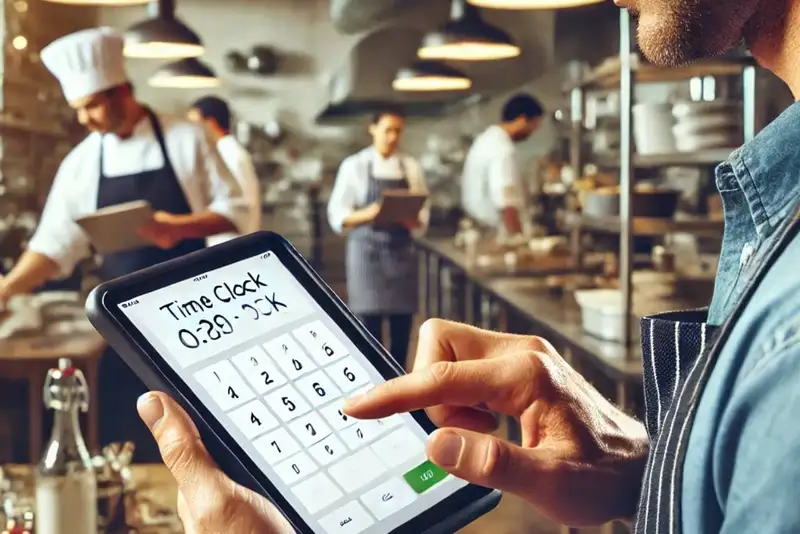
Mobile and web-based time clocking apps are another popular choice among restaurants. These apps allow employees to clock in and out from their personal devices or designated in-store tablets, giving them flexibility and reducing the need for physical devices. With location-based tracking, time clocking apps can verify that an employee is on-site when they log their hours, which is especially useful for multi-location restaurant operations. This feature also provides managers with real-time visibility into staff attendance, making it easier to handle last-minute scheduling adjustments.
Software platforms like Altametrics offer a complete suite of time-tracking and workforce management tools. Beyond just recording hours, these platforms integrate time tracking with payroll, simplifying the process of calculating wages and overtime. Altametrics and similar systems also provide insightful reports, allowing restaurant owners to analyze labor costs, monitor trends, and make data-driven decisions. This level of integration not only reduces administrative workload but also provides valuable insights that can help improve overall efficiency and profitability.
In short, modern digital time tracking systems offer restaurant owners an innovative, flexible, and data-rich way to manage employee hours. By choosing a digital solution, restaurants can enjoy the benefits of accurate, automated time tracking, reducing errors, and making labor management more efficient. This adaptability makes digital time-tracking an attractive option for restaurants aiming to stay efficient and competitive.
Pros of Traditional Punch Clocks
One of the biggest advantages of traditional punch clocks is their ease of use. These devices are simple to operate, requiring minimal setup and training. Employees simply insert a time card into the clock, which stamps the exact time of their arrival and departure. This ease of use means restaurant owners and managers don't need to worry about extensive training sessions, troubleshooting software issues, or teaching employees how to use an app or navigate digital menus. The straightforward nature of these systems makes them accessible for employees of all ages and experience levels, streamlining the clocking-in process.
Another notable benefit of traditional punch clocks is their tangible record-keeping. With physical time cards, managers have a hands-on way to monitor attendance and track hours worked. This appeals to businesses with straightforward payroll needs, as the cards serve as a physical backup, providing a clear audit trail if discrepancies arise during payroll processing. Many small restaurants find comfort in having a physical time clock for work - something that requires no internet connection or complex digital setup, offering reliability and consistency.
Traditional punch clocks also offer a level of dependability, particularly for businesses that don't need the detailed tracking capabilities of a digital solution. For small, budget-conscious restaurants that need only the essentials, traditional punch clocks fulfill time-tracking requirements without added frills. They represent a tried-and-true approach to managing employee hours in a way that is affordable, simple, and functional, making them a solid option for many restaurant owners.
Pros of Modern Digital Time Tracking Systems

Another notable advantage of digital time tracking is seamless integration with payroll and scheduling software. Systems like Altametrics offer a comprehensive approach, allowing data from the employee time clock app to flow directly into payroll and scheduling tools, which eliminates the need for manual data entry. This integration minimizes human error, ensuring that employees are paid accurately for their hours worked while reducing the administrative workload on managers and payroll staff. Digital integration also facilitates faster payroll processing, making it easier for restaurants to adhere to pay schedules without delays.
Real-time visibility is another benefit that makes digital time tracking highly appealing. Unlike traditional punch clocks, which require physical card collection and manual tallying, digital systems provide managers with instant access to time data. This enables more responsive staffing decisions, as managers can monitor attendance and hours worked at a glance. For example, if a restaurant experiences an unexpected rush, managers can quickly identify available employees to call in, helping maintain service levels without overspending on labor. Conversely, if business is slow, managers can make immediate adjustments to the schedule to avoid unnecessary labor costs.
By combining enhanced security, seamless integration, and real-time visibility, modern digital time tracking systems empower restaurant owners with accurate, actionable insights into their labor force. These systems provide a dynamic solution that supports efficient labor management, cost control, and operational adaptability, making them an invaluable asset in today's fast-paced restaurant industry.
Capture Every Punch with Precision
Elevate Your Hospitality Operations with Altametrics
Considerations for Digital Time Tracking Systems
Employee training is another crucial factor. Digital systems come with advanced features that may require some onboarding to use effectively. Managers and staff may need initial guidance on navigating the software, using biometric features, or understanding new clock-in processes through mobile apps. While this might seem like a hurdle, training can increase employees' digital literacy, a valuable skill in today's tech-driven workplaces. Familiarity with digital tools can also empower employees to use other tech-related platforms the restaurant might adopt, enhancing overall operational efficiency.
Lastly, digital time tracking systems often rely on stable internet connections and compatible devices. Reliable internet ensures that data is accurately recorded and accessible in real-time, while compatible devices like tablets, smartphones, or specific biometric devices allow for flexibility in how employees clock in and out. For restaurants with multiple locations, a dependable setup means managers can access time-tracking data remotely, simplifying oversight across branches and allowing owners to respond to labor needs from anywhere.
Why Digital Time Tracking Offers a Strategic Edge
One of the most valuable aspects of digital time tracking is the ability to identify labor trends. By capturing comprehensive data on employee attendance, hours worked, and overtime, these systems allow restaurant owners to see patterns over time. For example, digital time tracking can reveal peak service hours, highlighting times when more staff is needed, or uncover trends in overtime, helping managers address scheduling inefficiencies. With this information, restaurant owners can anticipate staffing needs, reduce labor costs, and enhance customer service by ensuring shifts are always adequately covered.
In addition to tracking labor trends, digital systems support scheduling optimization. Platforms like Altametrics integrate time tracking with scheduling tools, allowing managers to quickly adjust schedules based on real-time data. If business slows, managers can make immediate changes, reducing labor costs without compromising service. Alternatively, if demand spikes unexpectedly, they can quickly bring in additional staff. This flexibility allows restaurants to manage labor with agility, responding effectively to changes in customer flow and maintaining a balanced, efficient workforce.
Another significant advantage of digital time tracking is compliance support. Restaurants are subject to strict labor laws and regulations, including overtime pay, break requirements, and accurate wage reporting. Digital systems automatically record and organize these details, reducing the likelihood of costly compliance errors. Many systems include alerts for potential overtime or missed breaks, allowing managers to address issues proactively. This not only minimizes legal risks but also helps build a positive, fair work environment for employees.
By providing insights into labor trends, streamlining scheduling, and enhancing compliance, digital time tracking systems like Altametrics give restaurant owners unparalleled operational control. This strategic edge can lead to better-managed labor costs, improved staff morale, and ultimately, a more profitable and efficient restaurant.
Choosing the Right Time Tracking Solution for Your Restaurant
For smaller restaurants with straightforward scheduling and payroll needs, a traditional punch clock may offer sufficient functionality at a lower cost. Its simplicity and minimal training requirements make it an attractive option for businesses looking to keep operations basic and cost-effective. However, while traditional systems are affordable, they lack advanced features that can be instrumental as the restaurant grows.
In contrast, digital time tracking solutions provide powerful tools for data analysis, scheduling optimization, and regulatory compliance. Systems like Altametrics offer integrated features, including biometric verification, GPS tracking, and real-time data access, which make them highly effective for restaurants with more complex scheduling needs or multiple locations. Although digital solutions may require a higher initial investment, the long-term savings in terms of reduced errors, streamlined payroll processing, and improved labor management can quickly justify the cost.
Aligning the time tracking system with your restaurant's future goals is essential. If growth, scalability, and operational control are priorities, a digital solution can offer the flexibility and insights needed to support these goals. Additionally, digital systems are typically easier to integrate with other business management tools, enabling a seamless experience as your restaurant's needs evolve.
Ultimately, the right choice balances current operational needs with a vision for the restaurant's future. Whether opting for a traditional punch clock or investing in a modern digital solution, selecting a system that aligns with budget and long-term objectives will help enhance overall efficiency and ensure the restaurant remains competitive in a demanding industry.
Ensure Every Time Punch is Recorded Seamlessly
Perfect Time Management with Altametrics
Frequently
Asked Questions
How does a digital time tracking system support labor cost management?
Are digital time tracking systems reliable if my restaurant has multiple locations?
What are some common features of a digital time tracking system?
How can a digital system help with compliance to labor laws?
Must-Read Content

Why Do Restaurant Staff Quit? Common Reasons and How to Prevent Them
Restaurant staff quit because of low wages, poor management, burnout, and scheduling issues. Learn practical strategies to improve retention and reduce turnover.

How to Get More Customers in a Restaurant
Learn how to get more customers in a restaurant through local marketing, social media, promotions, customer reviews, loyalty programs, and retention strategies.
How to Maintain Hiring Compliance Across Multiple Restaurant Locations
Restaurant groups can maintain hiring compliance by standardizing processes, centralizing records, assigning ownership, training managers, adapting to local laws, auditing regularly, and using technology for ongoing monitoring.