



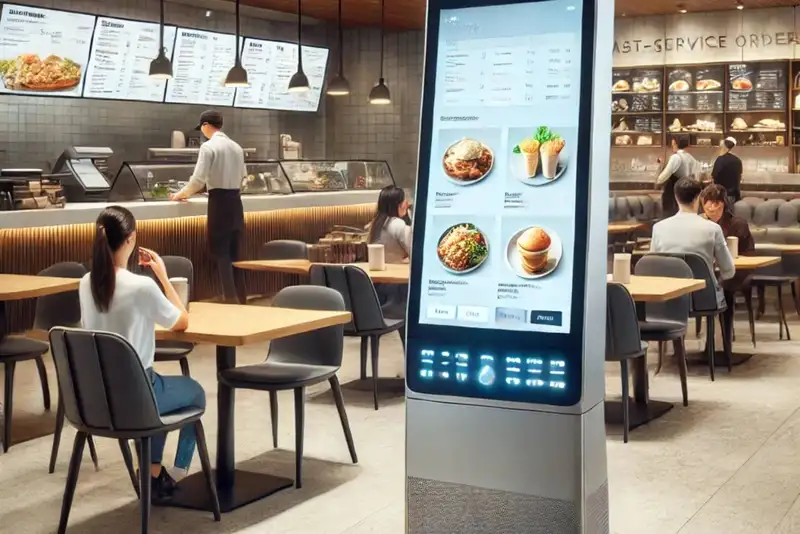
Concept of Ordering Kiosks
The rapid adoption of ordering kiosks has been fueled by the growing consumer demand for speed, convenience, and control over their dining experiences. At the same time, restaurant owners face mounting challenges such as rising labor costs, labor shortages, and the need to provide fast, accurate service in high-volume environments. Ordering kiosks offer a solution that addresses all of these challenges by automating routine tasks and minimizing reliance on manual labor.
The primary focus of this article is to examine how ordering kiosks can help restaurants reduce labor costs while simultaneously streamlining their operations. By exploring the role of kiosks in modern restaurants, their impact on front-of-house labor, efficiency improvements, and the long-term financial benefits, this article will demonstrate how investing in ordering kiosks can be a strategic move for restaurant owners looking to optimize labor usage and reduce operational expenses.
The Role of Ordering Kiosks in Modern Restaurants
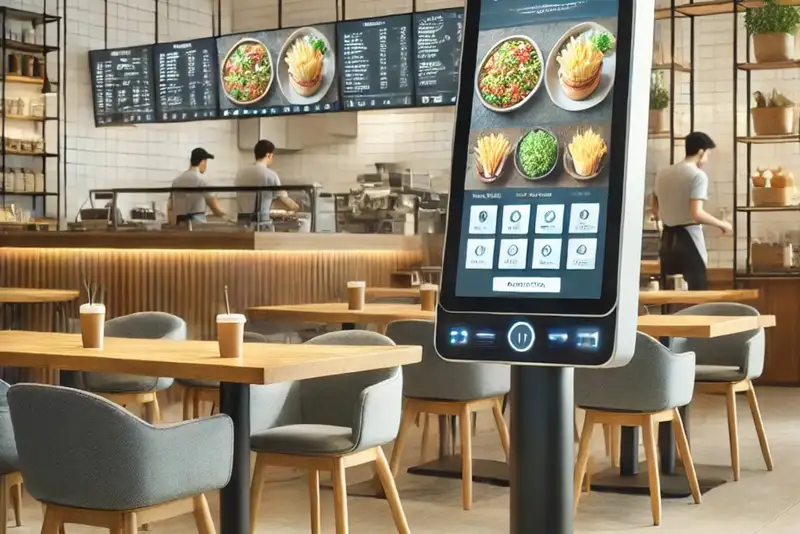
In recent years, there has been a noticeable shift toward self-service technology across various industries, including restaurants. This trend is largely driven by changing consumer preferences, particularly the desire for autonomy and speed in dining experiences. Customers are increasingly expecting to have more control over how they place their orders, customize their meals, and pay for their purchases. Ordering kiosks fulfill these expectations by offering a more flexible and efficient ordering experience.
For restaurant owners, the relevance of self-service kiosks goes beyond catering to customer preferences. The restaurant industry is grappling with several significant challenges, including labor shortages, high employee turnover rates, and rising wages. These factors contribute to increased labor costs, making it difficult for restaurants to maintain profitability while offering quality service. Ordering kiosks help solve this problem by automating front-of-house tasks, reducing the need for staff to manage customer interactions, and ultimately cutting down on labor costs.
Moreover, the integration of ordering kiosks into modern restaurant operations reflects the broader push towards automation and digital transformation within the foodservice industry. As more businesses adopt self serve restaurant models, the role of kiosks will continue to evolve, offering even more sophisticated features that enhance efficiency, reduce costs, and improve the customer experience.
Simplify Multi-Channel Ordering
Get started with Altametrics to streamline your POS!
Reducing Front-of-House Labor with Self-Service
By integrating self-service ordering kiosks into their operations, restaurants can significantly reduce the number of front-of-house staff required to handle these tasks. Kiosks take over the responsibility of order-taking and payment processing, allowing customers to interact directly with the digital interface rather than a staff member. As a result, restaurants can operate with fewer employees, reducing the need for additional hiring, training, and scheduling.
In addition to reducing labor needs, ordering kiosks offer consistency in service. Unlike human employees who may need breaks, take time off, or make errors during the order-taking process, kiosks provide continuous, error-free service throughout the day. This not only ensures smoother operations but also reduces the need for management oversight, further decreasing labor-related expenses.
Moreover, the use of kiosks allows restaurants to optimize their labor force by reallocating staff to higher-value tasks. For example, instead of hiring multiple cashiers or servers to manage customer orders, a restaurant can assign more employees to the kitchen or customer service roles, where they can focus on food preparation or enhancing the overall dining experience. This flexibility in labor allocation enables restaurants to maintain high levels of service while cutting down on labor costs.
Another key factor is the scalability of ordering kiosks. In high-traffic establishments, particularly fast-casual and quick-service restaurants, handling a large volume of customers can strain front-of-house staff and increase labor demands. Ordering kiosks alleviate this pressure by allowing restaurants to process a higher volume of orders without needing to increase staffing levels. This scalability is particularly valuable for restaurants that experience fluctuating customer volumes throughout the day or during specific seasons.
The implementation of ordering kiosks directly reduces the need for front-of-house staff, enabling restaurants to operate with fewer employees while still providing efficient service. This reduction in staffing not only cuts labor costs but also allows restaurants to optimize their workforce for more strategic roles.
More Orders, Fewer Errors
When customers place their own orders through a kiosk, they are responsible for entering the details of their meals, including any modifications or special requests. This level of control ensures that orders are more accurate, as customers can review and confirm their selections before finalizing their purchase. The reduction in order errors has a ripple effect on restaurant operations, minimizing the time and resources spent on correcting mistakes or re-preparing food.
Human errors in order-taking are common, particularly in fast-paced environments where employees may be overwhelmed by high customer volumes or distracted by multiple tasks. These errors can lead to wasted food, increased wait times, and frustrated customers. By automating the order process, kiosks eliminate the potential for miscommunication between customers and staff, resulting in fewer mistakes and a more seamless dining experience.
Additionally, kiosks offer the advantage of faster service. With traditional cashier-based ordering, customers often have to wait in line to place their orders, especially during peak hours. This waiting time can lead to customer dissatisfaction and even lost sales if customers leave before ordering. Ordering kiosks, however, allow multiple customers to place orders simultaneously, reducing wait times and speeding up the entire process.
Moreover, ordering kiosks can be integrated with the restaurant's point-of-sale (POS) system, ensuring that orders are automatically sent to the kitchen in a clear and organized manner. This integration minimizes the chances of miscommunication between the front-of-house and back-of-house teams, further reducing errors and delays. As a result, the kitchen staff can focus on preparing meals efficiently, without having to clarify or correct inaccurate orders.
The efficiency gains from ordering kiosks also extend to payment processing. The Kiosks are equipped with secure payment options, allowing customers to complete their transactions quickly and easily. This eliminates the need for staff to handle cash or process credit card payments, further reducing labor demands and streamlining operations.
Lower Labor Costs and Increased Profit Margins
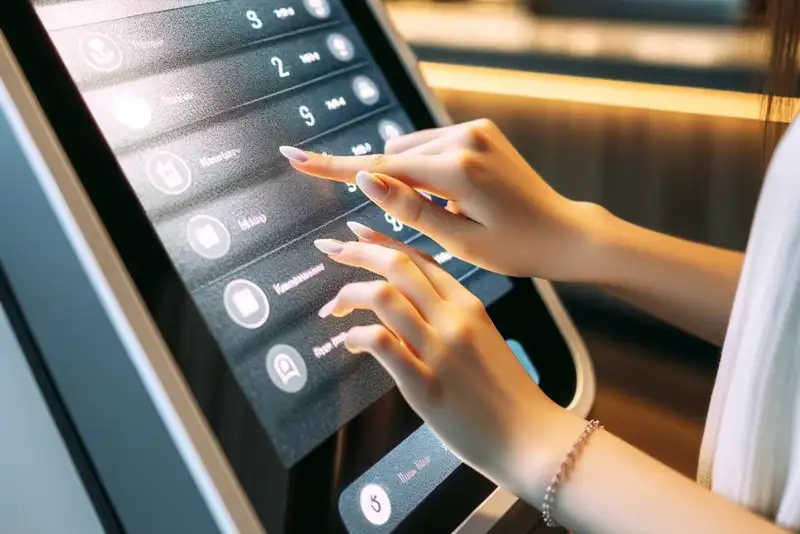
Beyond the immediate savings in labor, ordering kiosks also offer long-term financial advantages that contribute to improved profit margins. For example, kiosks can be programmed to automatically upsell customers by suggesting add-ons, meal upgrades, or complementary items during the ordering process. These upsell prompts are subtle but effective, increasing the average transaction value without requiring additional effort from employees.
The integration of upselling features into the ordering process is particularly valuable in fast-casual and quick-service restaurants, where margins can be slim, and every additional sale counts. By encouraging customers to spend more per order, kiosks help drive revenue growth without increasing labor costs. This ability to boost sales while keeping staffing levels consistent is a key factor in improving overall profitability.
In addition to upselling, ordering kiosks also reduces the financial impact of order errors. As mentioned earlier, mistakes in order-taking can lead to wasted food, lost sales, and dissatisfied customers. By minimizing these errors, kiosks help restaurants avoid unnecessary costs and maintain higher levels of customer satisfaction, which can lead to repeat business and positive word-of-mouth referrals.
Moreover, the use of kiosks reduces the need for extensive employee engagement in managing the ordering process. With kiosks handling the bulk of customer interactions, managers can focus their attention on higher-level tasks such as inventory management, marketing, and strategic planning. This shift in focus allows restaurants to operate more efficiently, further contributing to cost savings and improved profit margins.
The combination of lower labor costs, increased sales through upselling, and reduced order errors makes ordering kiosks a financially sound investment for restaurants looking to improve their bottom line. By optimizing labor usage and maximizing revenue opportunities, kiosks help restaurants achieve higher profitability while maintaining high standards of service.
Streamline Operations
Control Menus, Items, and Prices Seamlessly with Altametrics
Shifting Focus to Back-of-House and Customer Engagement
In many restaurants, particularly during peak hours, managing the front of the house can be a labor-intensive task that requires multiple employees to handle customer orders, process payments, and manage queues. This can result in a misallocation of labor, where too many staff members are focused on low-value tasks while more critical areas, such as food preparation or customer service, are underserved.
By implementing ordering kiosks, restaurants can reallocate their labor more effectively. For example, instead of hiring multiple cashiers to manage the front of the house, a restaurant can assign more staff to the kitchen to ensure that food is prepared quickly and accurately. This reallocation of labor improves overall operational efficiency without increasing labor costs.
Additionally, with fewer staff required to handle orders, remaining employees can focus on providing personalized customer service. For instance, staff members can assist customers with special requests, answer questions about the menu, or ensure that the dining area is clean and comfortable. This level of engagement enhances the overall dining experience and encourages repeat business, all while keeping labor costs in check.
Furthermore, the ability to reallocate labor to the back-of-house is particularly valuable in restaurants that prioritize food quality and speed of service. With more staff available to focus on food preparation, restaurants can reduce wait times and ensure that orders are delivered promptly. This not only improves customer satisfaction but also increases the restaurant's capacity to serve more customers during busy periods.
The flexibility offered by ordering kiosks allows restaurant owners to optimize their labor force and make the most of their available resources. By automating low-value tasks and reallocating staff to higher-value roles, restaurants can improve efficiency, enhance customer service, and maintain profitability.
The Long-Term Cost Savings of Implementing Kiosks
The long-term savings generated by kiosks come from several sources. First, as discussed earlier, kiosks reduce the need for additional hiring, training, and scheduling of front-of-house staff. This means that restaurants can operate with a leaner workforce, saving on wages, benefits, and other labor-related expenses.
Second, kiosks help restaurants avoid the costs associated with order errors. By eliminating miscommunication between customers and staff, kiosks ensure that orders are placed accurately, reducing the need for re-preparation and minimizing food waste. Over time, these savings can have a significant impact on a restaurant's profitability.
Third, kiosks offer durability and reliability. Unlike human employees who may need time off, training, or breaks, kiosks operate continuously without the need for supervision. This consistency ensures that restaurants can maintain a high level of service without the risk of downtime or staffing shortages.
Additionally, as kiosks become more advanced, their features and capabilities will continue to improve. For example, future iterations of ordering kiosks may include enhanced AI-driven upselling algorithms, customer preferences tracking, and even voice recognition technology. These advancements will further enhance the value of kiosks, making them an even more attractive investment for restaurants looking to stay ahead of industry trends.
In the long run, the cost savings generated by ordering kiosks make them a smart investment for any restaurant looking to improve efficiency, reduce labor costs, and enhance the overall dining experience. As technology continues to evolve, kiosks will remain a valuable tool for optimizing operations and maintaining profitability in a competitive marketplace.
A Strategic Move for Restaurants
The long-term financial benefits of ordering kiosks, including improved profit margins and ongoing cost savings, make them a strategic investment for restaurants of all sizes. As the restaurant industry continues to embrace self-serve restaurant models and self-service technology, the role of ordering kiosks will only become more prominent in shaping the future of dining.
For restaurant owners looking to stay competitive in a challenging market, investing in ordering kiosks represents a forward-thinking approach to managing labor costs and optimizing operations. By leveraging the power of automation, restaurants can achieve higher profitability while maintaining high standards of service, making kiosks an essential tool for success in the modern restaurant landscape.
Centralize Your Menus Today!
Manage Everything In One Place with Altametrics
Frequently
Asked Questions
Do ordering kiosks replace all front-of-house staff?
Can ordering kiosks handle payments as well?
Are ordering kiosks suitable for all types of restaurants?
How do kiosks improve restaurant efficiency overall?
Must-Read Content

Why Do Restaurant Staff Quit? Common Reasons and How to Prevent Them
Restaurant staff quit because of low wages, poor management, burnout, and scheduling issues. Learn practical strategies to improve retention and reduce turnover.
How to Get More Customers in a Restaurant
Learn how to get more customers in a restaurant through local marketing, social media, promotions, customer reviews, loyalty programs, and retention strategies.
How to Maintain Hiring Compliance Across Multiple Restaurant Locations
Restaurant groups can maintain hiring compliance by standardizing processes, centralizing records, assigning ownership, training managers, adapting to local laws, auditing regularly, and using technology for ongoing monitoring.

