



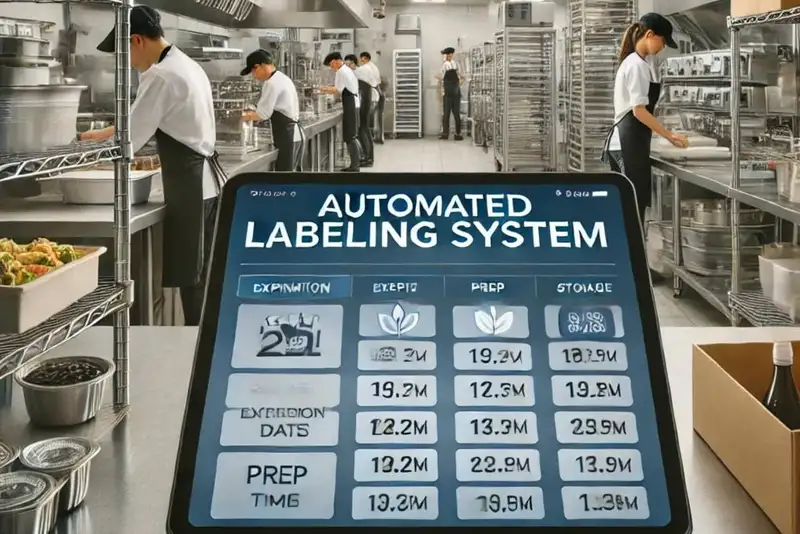
Introduction to Automated Prep Labeling Systems
The demand for automated labeling is growing among quick service restaurants due to increased regulatory pressures, rising labor costs, and a focus on food safety. In a fast-paced kitchen environment, maintaining accurate records for every ingredient and prepped dish can be challenging, especially when done manually. Human error in labeling can lead to food waste from expired items, potential health risks, and inefficient inventory management. With automated systems, these risks are minimized as labels are generated and printed based on pre-set criteria, ensuring that nothing is overlooked.
The concept of expiration to efficiency is at the heart of automated labeling's appeal. Traditional expiration management relies on staff to remember dates and manually mark each item, which is prone to inconsistency. Automated systems eliminate this uncertainty by setting precise expiration tracking and reminders. With accurate expiration labels, quick service restaurants can better manage their inventory, reducing waste and ensuring customers are served fresh, safe food. Efficiency, in this context, means more than just speed - it represents a more reliable, structured approach to kitchen management, reducing the time and labor spent on labeling tasks.
In addition, automated labeling aligns with growing food safety standards, making it easier to ensure compliance with health regulations. As restaurants face increased scrutiny over food safety practices, having an automated system provides an extra layer of confidence that safety protocols are followed consistently. In sum, automated prep labeling systems enable quick service restaurants to achieve higher standards of accuracy, safety, and efficiency, making them an essential tool for modern kitchens.
Current Challenges in Manual Labeling for Quick Service Restaurants

Human error is another major concern with manual labeling. In a busy kitchen, even the most diligent employees can make mistakes, such as forgetting to update expiration dates, mislabeling items, or incorrectly marking allergens. These errors can have serious repercussions, as incorrect labels could lead to the use of expired ingredients or accidental cross-contamination, impacting both food quality and safety. Small mistakes in manual labeling are costly, often resulting in wasted ingredients or, worse, customer health risks. These issues become even more complex as quick service restaurants frequently handle high volumes of inventory, making it difficult to track all items accurately.
Inconsistency is an additional challenge, as manual labeling relies on each team member's attention to detail and understanding of labeling protocols. Variations in labeling practices, such as handwriting differences, unclear date formats, or forgotten information, can create confusion among kitchen staff and disrupt the flow of operations. Inconsistent labeling makes it difficult for team members to quickly identify items, leading to delays and inefficiencies in food preparation.
These challenges directly impact a restaurant's ability to operate smoothly and meet food safety standards. Without a standardized and reliable labeling system, quick service restaurants are more likely to experience inventory waste, compliance issues, and food safety risks. In today's competitive landscape, where customer expectations for quick, safe, and quality food are higher than ever, the inefficiencies of manual labeling can be a significant disadvantage. This is why many quick service restaurants are turning to automated labeling systems to overcome these hurdles and achieve a higher standard of operational efficiency and food safety compliance.
Maximize Your Time and Minimize Labor Costs
Simplify Prep with Altametrics!
The Role of Automated Labeling in Expiration Tracking
One of the primary benefits of using an automated labeling system for expiration tracking is its ability to minimize food waste. By ensuring that expiration dates are automatically tracked and updated, restaurants can prevent ingredients from going unused past their safe consumption date. With clear labels generated by a label printer, staff can quickly identify which items should be used first, reducing the likelihood of discarding expired food. This feature directly contributes to cost savings, as better inventory management leads to fewer wasted resources and a more sustainable approach to food handling.
Furthermore, accurate expiration tracking through automated labeling enhances food safety by reducing the risk of using expired or spoiled ingredients. When labels are consistently applied and easily readable, kitchen staff are less likely to overlook expiration information, which is critical for maintaining food quality. The automated system reduces the reliance on memory or manual updates, ensuring that all items are stored and used within their safe consumption window. This helps to protect customers from potential health risks associated with expired food and reinforces the restaurant's commitment to food safety.
Automated expiration tracking also helps quick service restaurants comply with health standards and regulations. Many health authorities mandate proper labeling for food storage, including clear expiration dates. By using an automated labeling system, restaurants can demonstrate that they are following best practices in food safety and handling, which may help during inspections or audits. With a label printer that produces standardized, accurate labels, quick service restaurants can meet these compliance requirements more effectively, ensuring both operational efficiency and food safety. In a competitive industry, the role of automated labeling in expiration tracking is essential for restaurants aiming to maintain high standards of quality, safety, and sustainability.
Enhancing Food Safety with Automated Labeling
One of the primary ways automated labeling supports food safety is by ensuring that each ingredient is clearly marked with an accurate expiration date. In a fast-paced kitchen environment, it can be challenging for staff to track the freshness of every item manually, especially when dealing with a high volume of products. Automated systems eliminate this difficulty by providing precise, consistent labels that alert staff to items nearing expiration. This reduces the likelihood of expired ingredients being used in food preparation, protecting customers from potential health risks and reducing waste.
Automated labels also support strict adherence to food safety protocols by helping to prevent cross-contamination. Labels generated by a food label printer can include allergen information, cooking instructions, and storage requirements, which help ensure that each item is handled correctly. By clearly displaying this information, automated labels guide staff in storing and preparing food according to safety guidelines, thereby reducing the risk of contamination. For example, labeling raw and cooked ingredients separately helps prevent accidental mixing and ensures safe food handling practices.
Furthermore, digital labeling systems provide a standardized approach to food labeling, which is vital for quick service restaurants. Consistent labeling practices help maintain uniformity across shifts and locations, ensuring that all employees follow the same food safety protocols. This is especially important for businesses with multiple locations, as automated labeling systems enable them to uphold the same food safety standards across all outlets.
Improving Kitchen Accuracy and Efficiency

One of the most significant benefits of automated labeling systems is how they enable faster and more precise prep work. When food labeling software is used to produce labels, each item is marked with essential information, such as preparation time, expiration dates, and storage requirements, without the need for manual input. This automation speeds up the preparation process, allowing staff to focus on their primary tasks rather than spending valuable time on repetitive labeling. In a fast-paced kitchen, this time-saving factor can be the difference between meeting demand during rush hours and falling behind.
Increased efficiency in labeling directly impacts the overall operations of a quick service restaurant. With automated systems in place, staff can quickly identify ingredients and prepped items, ensuring that the correct components are used at each stage of food preparation. This minimizes mistakes in the kitchen, leading to more accurate and consistent menu items, which enhances customer satisfaction. Additionally, because labels are clear and consistent, staff can easily locate ingredients and track items nearing expiration, further improving the flow of kitchen operations.
The efficiency gained through automated labeling also improves service speed, as faster prep work means orders can be completed and delivered to customers more quickly. This is particularly valuable in the quick service industry, where customer satisfaction often hinges on timely service. By simplifying the labeling process, food labeling software allows restaurant teams to stay organized, work faster, and maintain high standards in both speed and quality.
Cut Down Prep Time and Boost Accuracy
Automate Your Kitchen with Altametrics!
Labor Savings with Automated Labeling Systems
One of the key advantages of automated labeling is its ability to reduce labor costs. In busy kitchens, especially during peak hours, the demands on staff can be intense. Automated food prep labeling reduces the burden of manual labeling, allowing staff to complete their tasks more quickly and accurately. This, in turn, reduces the need for additional staff solely dedicated to labeling tasks, ultimately helping the restaurant lower its labor costs. With an automated system in place, the restaurant can operate more efficiently with a smaller or more optimized team, allocating resources where they're needed most without sacrificing productivity or accuracy.
Moreover, by reducing the time spent on labeling, automated systems help minimize mistakes associated with human error, such as mislabeling expiration dates or allergen information. These errors can be costly, potentially leading to wasted ingredients, food safety risks, or customer dissatisfaction. Automated systems ensure that each label is accurate and consistent, thereby reducing the risk of costly mistakes and improving the overall efficiency of kitchen operations.
In addition to saving on labor costs, automated labeling systems help boost staff morale by relieving them of tedious tasks. Employees can focus on more engaging responsibilities, making their work environment more satisfying and potentially reducing turnover rates. When staff are empowered to work efficiently and focus on their core duties, the quality of service improves, benefiting the restaurant's operations and customer satisfaction.
Key Features to Look for in an Automated Prep Labeling System
1. First, easy-to-use software is crucial. The labeling system should have an intuitive interface that allows staff to operate it with minimal training. A user-friendly system ensures that team members can quickly access and print labels without navigating complex menus or settings, which is particularly valuable during peak hours when time is of the essence.
2. Customizable templates are another important feature, enabling the restaurant to design labels that meet specific requirements. Custom templates allow restaurants to include information such as ingredient names, prep times, expiration dates, storage instructions, and allergen warnings. This customization not only ensures consistency but also allows the restaurant to comply with any regulatory labeling requirements for food safety.
3. Automated expiration tracking is a vital feature that enhances food safety and inventory management. By automatically generating expiration dates based on the type of food prepared, this feature reduces the risk of using outdated ingredients, helps prevent foodborne illnesses, and minimizes waste. Automated expiration tracking also makes it easier for staff to follow first-in, first-out (FIFO) protocols, which helps maintain the freshness of ingredients.
4. Integration with kitchen management systems is another valuable feature in an automated labeling system. When the labeling system can sync with inventory or kitchen management software, it creates a cohesive system that tracks ingredients from storage to prep to service. This integration provides greater visibility into stock levels and usage rates, helping the kitchen operate more efficiently.
5. Finally, consider durability and label quality. In a fast-paced food preparation environment, labels need to withstand various conditions, including refrigeration and moisture. High-quality labels reduce the chance of smudging or peeling, ensuring that the information remains legible and accessible.
An ideal automated prep labeling system should offer easy-to-use software, customizable templates, automated expiration tracking, and integration with kitchen management systems. These features collectively improve food preparation efficiency, enhance food safety, and contribute to a well-organized, streamlined kitchen environment.
Why Automation is the Future of Quick Service Restaurant Labeling
One of the standout advantages of automated labeling is its ability to enhance expiration tracking, a key component in reducing food waste and maintaining freshness. With automated systems, expiration dates are generated and applied automatically, minimizing the risk of human error and helping staff follow first-in, first-out (FIFO) protocols. This level of accuracy prevents expired or spoiled ingredients from entering the preparation process, ensuring that customers receive high-quality, safe meals. Furthermore, the precision offered by automation supports quick service restaurants in adhering to strict food safety regulations, an essential factor in today's health-conscious consumer market.
Labor savings is another substantial benefit, as automated labeling reduces the time and effort spent on manually creating and applying labels. By freeing up employees from repetitive tasks, restaurants can optimize staff productivity, allowing them to focus on higher-value responsibilities, such as food preparation, customer service, and maintaining a clean environment. The reduction in labor costs can offset the investment in an automated labeling system, making it a cost-effective solution that improves both efficiency and profitability.
In conclusion, an automated labeling system is a smart investment for quick service restaurants aiming to enhance their operational performance and uphold consistent food safety practices. From accurate expiration tracking to labor savings, automation provides a reliable, streamlined approach to labeling that meets the high standards of the industry. As the demand for speed, accuracy, and compliance grows, automated labeling positions quick service restaurants to operate more efficiently, deliver safer food, and maintain a strong reputation in a highly competitive market. Embracing automation in labeling is not just a step forward in technology but a crucial strategy for sustainable success in the quick service industry.
Streamline Prep, Cut Labor Costs, and Ensure Freshness
Get Digital Prep Sheets with Altametrics!
Frequently
Asked Questions
How does an automated labeling system improve expiration tracking?
Can automated labeling systems help prevent food waste?
What types of information can be included on an automated label?
Can automated labeling systems integrate with inventory management?
Must-Read Content

Why Do Restaurant Staff Quit? Common Reasons and How to Prevent Them
Restaurant staff quit because of low wages, poor management, burnout, and scheduling issues. Learn practical strategies to improve retention and reduce turnover.

How to Get More Customers in a Restaurant
Learn how to get more customers in a restaurant through local marketing, social media, promotions, customer reviews, loyalty programs, and retention strategies.

How to Maintain Hiring Compliance Across Multiple Restaurant Locations
Restaurant groups can maintain hiring compliance by standardizing processes, centralizing records, assigning ownership, training managers, adapting to local laws, auditing regularly, and using technology for ongoing monitoring.

