



The Challenges of Manual Labeling
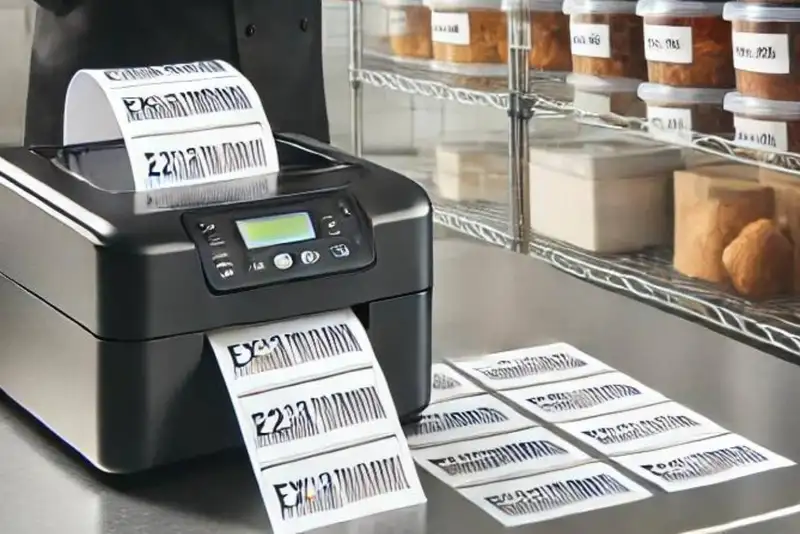
Manual labeling requires meticulous attention to detail, which can be challenging to maintain during busy periods. Errors, such as incorrect expiration dates, illegible handwriting, or missing allergen warnings, can lead to serious consequences. These include food safety violations, customer dissatisfaction, wasted inventory, and even legal repercussions. Moreover, the bottlenecks created by manual processes slow down the overall kitchen workflow, diverting staff from more critical tasks.
Addressing these challenges is not just about improving operational efficiency - it's about creating a safer, more reliable system that supports both staff and customer needs. This is where technology steps in to revolutionize kitchen operations.
The Role of Automation in Modern Restaurant Kitchens
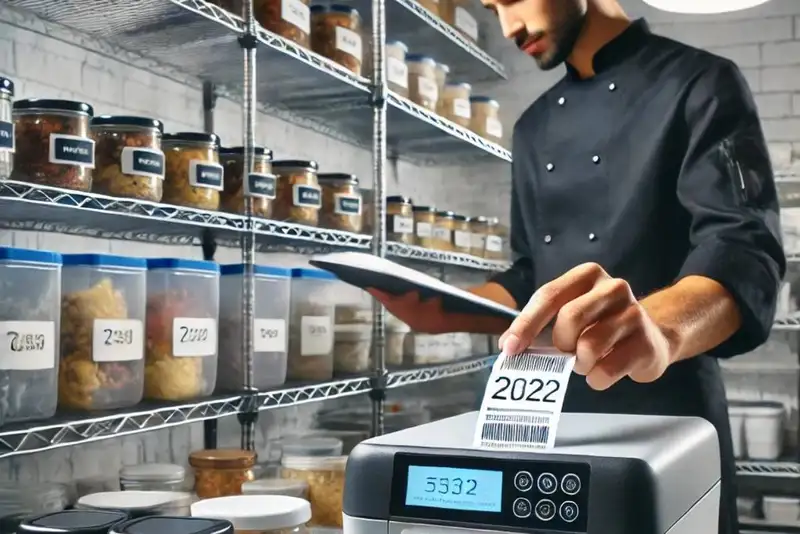
The benefits of automation extend far beyond simple convenience. In fast-paced kitchen environments, where efficiency is paramount, automation simplifies repetitive tasks, reduces the reliance on manual effort, and ensures consistency across operations. For quick service restaurants, embracing automation is no longer a luxury but a necessity to stay competitive in a market that demands accuracy, speed, and adherence to strict food safety protocols.
Automated food label printers exemplify how technology can revolutionize day-to-day restaurant operations. These devices integrate seamlessly with digital systems, creating a cohesive network that automates the entire labeling process. Unlike traditional manual methods, which rely heavily on human input, automated label printers generate labels with precise details such as expiration dates, storage instructions, and allergen information. This level of precision not only minimizes errors but also enhances compliance with food safety regulations, reducing the risk of customer dissatisfaction or health hazards.
By streamlining the labeling process, automated printers save significant time and effort for restaurant staff. Tasks that once consumed hours, such as manually writing labels for prepared items, are completed in seconds with the push of a button. This efficiency allows employees to shift their focus to more critical, value-added tasks, such as food preparation and customer service.
Moreover, automation ensures reliability and consistency, eliminating the variability that often accompanies manual tasks. This leads to improved operational quality and a smoother workflow, enabling restaurants to meet peak-hour demands with ease. In a competitive industry where customer expectations are high, the role of automation and tools like food label printers continues to grow, solidifying their importance in modern restaurant kitchens.
Cut Down Prep Time and Boost Accuracy
Automate Your Kitchen with Altametrics!
Simplifying Prep Work with Automated Digital Prep Sheets
Imagine a scenario where your kitchen staff no longer needs to calculate expiration dates or manually write out labels. Instead, they simply input data into a digital prep sheet, and the food label printer does the rest. This seamless integration reduces the time spent on labeling, ensuring that every food item is accurately marked without the risk of errors.
For example, a digital prep sheet can automatically calculate expiration dates based on the date of preparation and the type of food. The information is then sent directly to the label printer, which produces a precise, clear label in seconds. This process eliminates repetitive manual tasks and boosts productivity, allowing staff to focus on core responsibilities like food preparation and customer service.
The time savings from this automation are substantial. During peak hours, when every second matters, the ability to quickly label food items without interrupting workflow is invaluable. Furthermore, digital prep sheets ensure consistency across all labels, reinforcing operational standards and supporting a more organized kitchen.
Reducing Labeling Errors for Improved Accuracy
Automating the labeling process with food label printers provides a reliable solution to these challenges. These devices are designed to ensure both accuracy and consistency in labeling. Features like automatic date and time stamping eliminate the guesswork associated with manual labeling, reducing the risk of mistakes. Staff can simply input the necessary data into the system, and the printer generates a clear, legible label in seconds. This automation not only saves time but also guarantees that every label meets required standards.
For example, food label printers can standardize allergen warnings, ingredient lists, and storage instructions. This consistency ensures compliance with food safety regulations and boosts customer confidence in the restaurant's commitment to quality and safety. By removing the variability of manual labeling, these devices help restaurants maintain a strong reputation and reduce liability risks.
Accurate labeling also has a direct impact on inventory management. Clearly marked expiration dates make it easier to track stock and use items in the correct order, reducing food waste. This improves inventory turnover and ensures that customers are always served fresh, high-quality meals. In a competitive industry, the precision provided by food label printers is not just an operational advantageit's a critical component of success.
Enhancing Workflow Efficiency

When labeling tasks are automated, kitchen staff can move through prep work more quickly and efficiently. For example, instead of pausing to write out labels, employees can simply apply pre-printed labels generated by the printer. This reduces interruptions and keeps the workflow moving smoothly.
Streamlined workflows also lead to faster order preparation, reducing wait times for customers. During busy periods, when every second matters, the ability to quickly and accurately label food items is a competitive advantage. Moreover, automation eliminates bottlenecks caused by manual processes, ensuring that the kitchen operates at peak efficiency.
In addition to improving speed, automation supports better resource allocation. Staff members who previously handled labeling can now focus on tasks like food preparation, quality control, and customer interaction. This redistribution of labor not only enhances productivity but also improves the overall dining experience for customers.
Maximize Your Time and Minimize Labor Costs
Simplify Prep with Altametrics!
Supporting Food Safety Compliance
One of the standout features of food label printers is automatic date and time stamping. This functionality guarantees accurate labels for perishable items, eliminating the risk of serving expired or improperly stored food. By automating this critical aspect, food label printers protect customers from potential health hazards and shield businesses from penalties and legal complications. Compliance isn't just about avoiding fines - it's about building trust with customers, demonstrating a commitment to their safety, and maintaining operational integrity.
Additionally, food label printers simplify the often-daunting process of audits and inspections. Labels generated by these devices are uniform, legible, and easy to verify, making it straightforward to demonstrate adherence to health and safety standards. Regulatory inspectors can quickly review and approve labeled items, reducing the stress and complexity of compliance checks.
A comprehensive labeling system powered by automation supports a restaurant's broader food safety initiatives. It ensures that every step, from preparation to storage and service, aligns with safety protocols. In today's competitive market, where customers increasingly prioritize transparency and quality, maintaining a reputation for food safety is essential. By leveraging the capabilities of food label printers, quick service restaurants not only meet regulatory requirements but also enhance customer confidence and loyalty, securing their position as reliable and trustworthy dining establishments.
Cost Savings Through Labor Efficiency
Food label printers streamline the labeling process by eliminating the need for manual input. With just a few clicks, labels are generated automatically, saving hours of repetitive work each week. This automation allows staff to shift their focus from labeling to more critical, revenue-generating activities, such as preparing food, maintaining quality standards, or providing better customer service. By reallocating labor in this way, restaurants can optimize staff productivity and reduce labor costs without compromising operational efficiency.
In addition to labor savings, food label printers contribute to better inventory management by ensuring precise and accurate labeling of expiration dates. This accuracy reduces the risk of prematurely discarding usable food due to unclear or incorrect labels, directly cutting down on food waste. With improved inventory tracking, restaurants can maximize the use of their stock, further lowering costs associated with over-ordering or spoilage.
The initial investment in a food label printer is quickly offset by the long-term financial benefits it provides. Reduced waste, improved labor allocation, and enhanced operational efficiency all contribute to a more sustainable and profitable business model. For quick service restaurant owners, adopting automation is a strategic decision that not only lowers operating costs but also elevates the quality and consistency of services, ensuring customer satisfaction and long-term success.
The Future of Kitchen Operations with Automation
A robust labeling system is a cornerstone of modern kitchen operations. It not only simplifies tasks like food labeling but also ensures compliance with safety regulations, enhances workflow efficiency, and supports better resource allocation. For restaurant owners looking to stay competitive in a fast-paced industry, investing in automation is a smart, forward-thinking decision.
Food label printers are more than just a convenience - they are a powerful tool for transforming kitchen operations. By adopting this technology, quick service restaurants can achieve greater efficiency, accuracy, and profitability, setting the stage for long-term success.
Streamline Prep, Cut Labor Costs, and Ensure Freshness
Get Digital Prep Sheets with Altametrics!
Frequently
Asked Questions
Do Food Label Printers support automation across multiple locations?
How do Food Label Printers handle bulk labeling needs?
Can Food Label Printers label hot and cold items differently?
Are Food Label Printers compatible with POS systems?
Must-Read Content

10 Employee Retention Strategies for Restaurant Owners
Restaurant owners can cut turnover by paying fairly, onboarding well, scheduling flexibly, promoting growth, recognizing effort, offering meaningful benefits, listening to feedback, and hiring carefully for fit.
How to Reduce Supply Costs in Your Restaurant
Cut restaurant supply costs by understanding spending, auditing expenses, engineering menus, negotiating with suppliers, controlling inventory, reducing waste, and using technology to monitor everything continuously.

The Ultimate Guide to Managing Food Allergens in Restaurants
Food allergens require accurate labeling, employee training, cross-contact prevention, safe food handling, and consistent procedures to protect customers and improve restaurant safety.

