




Overview
Restaurants often face challenges that make onboarding tricky. There are many different jobs - cooks, servers, hosts - each needing different skills and knowledge. Plus, the restaurant world is fast and sometimes hectic. On top of that, many restaurants deal with staff leaving and new people coming in regularly. Without a good system, this can lead to wasted time, unhappy employees, and slower service.
That's why having a simple, clear onboarding plan is so important. It saves time for owners and managers, helps employees learn faster, and creates a better work environment. In this article, you'll learn five easy steps to make your restaurant's employee onboarding process faster and more effective. These practical tips will help you welcome new team members and get them ready to contribute with confidence.
Step 1. Standardize Your Onboarding Workflow

Start by listing out all the important steps your new hires need to go through. This usually includes filling out paperwork like tax forms and employee agreements, reviewing restaurant policies, completing safety training, and learning about their specific job duties. Once you have this list, put it in the order that makes the most sense. For example, paperwork should be done early, so everything is official before the new employee starts work.
To keep things consistent, use simple tools like checklists or printed guides. You can even create a welcome packet that includes all the forms and information your new hires will need. Having these resources ready helps new employees feel prepared and shows that you have a professional process in place.
A standardized workflow also makes it easier to train managers or team leaders who help with onboarding. Everyone will know the steps to follow, making the process faster and less stressful. When onboarding is clear and organized, your new employees can focus on learning their job instead of worrying about what comes next.
Make a Great First Impression on Your Staff
Onboard Like a Pro with Altametrics
Step 2. Automate Administrative Tasks
Automation means using software or digital tools to handle parts of the onboarding process without manual work. For example, instead of handing out paper forms, you can use an online system where new hires fill out all their documents before their first day. This not only speeds things up but also keeps everything organized and easy to access. You won't have to worry about lost paperwork or missing signatures.
Using digital checklists is another way to automate. These tools can guide new employees step-by-step through what they need to complete, send reminders if something is missing, and even notify managers when tasks are done. This makes sure nothing falls through the cracks.
For restaurant owners, automating admin tasks means you can focus more on training and helping new hires settle into the team. It also creates a better experience for the employee, who won't have to deal with piles of paperwork on their first day. Plus, automation reduces errors, like incorrect forms or missed deadlines, that can cause headaches later.
Step 3. Prioritize Role-Specific Training
Start by identifying the key duties for each position. For example, servers need to learn the menu, understand how to use the point-of-sale system, and practice customer service skills. Kitchen staff should focus on food safety, proper cooking techniques, and equipment use. Once you have this list, break down the training into clear, manageable steps. Avoid overwhelming new employees by giving them too much information at once. Instead, introduce one topic at a time and allow them to practice under supervision.
Hands-on training is especially important in restaurants because many tasks require physical skills and attention to detail. Pair new employees with experienced team members who can show them how things are done. This on-the-job learning helps reinforce instructions and builds confidence.
Set clear goals and timelines for each training phase. For instance, a new server might spend the first day shadowing a coworker, then gradually take on more responsibilities over the next week. Keeping training structured but flexible lets employees learn at a comfortable pace without slowing down restaurant operations.
By tailoring training to the role, you ensure that each new hire gains the right skills to succeed. This not only improves performance but also makes employees feel valued and supported, which encourages them to stay longer.
Step 4. Foster Early Engagement and Connection

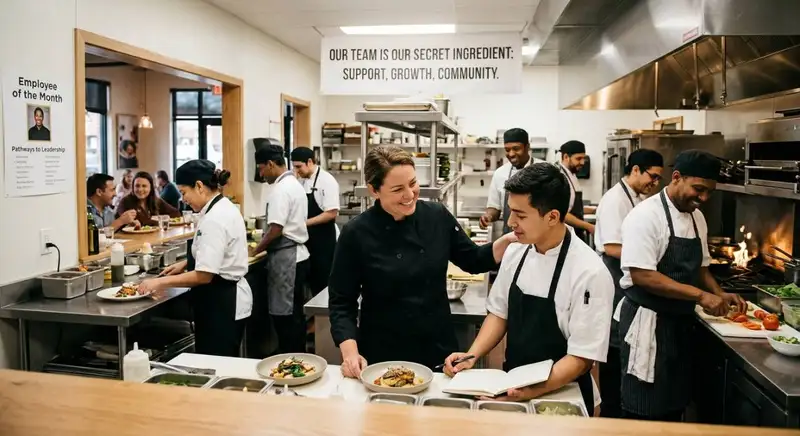
Simple gestures can make a big difference. Begin by introducing new hires to their coworkers and managers right away. A quick team welcome or a brief meet-and-greet helps break the ice and creates a friendly atmosphere. When people know the faces and names around them, they feel more comfortable asking questions and fitting in.
Clear communication is also key. Make sure new employees understand their job duties, schedules, and what's expected of them. Use easy-to-understand language and check in regularly to see how they're doing. This shows you care about their success and are available for support.
Encourage team members to include new hires in daily routines, like team huddles or breaks. Feeling included helps build trust and a sense of belonging, which leads to stronger teamwork. When employees feel valued, they're more likely to take pride in their work and contribute positively.
Finally, create a positive and respectful work environment from the start. Setting the right tone encourages new employees to stay engaged and grow with your restaurant. Taking the time to build these connections early not only improves job satisfaction but also helps reduce turnover in the long run.
Make a Great First Impression
Elevate Your Employee Onboarding with Altametrics
Step 5. Measure and Iterate Your Onboarding Process
Start by tracking basic numbers like how long it takes new hires to feel confident in their roles or when they start working independently. You can also monitor turnover rates to see if fewer employees leave soon after starting. If you notice problems, it may be a sign your onboarding needs changes.
Collect feedback from new employees. Ask them what parts of the onboarding worked well and where they struggled. This can be done through simple surveys or informal conversations. Hearing directly from your team helps identify gaps you might not see from the management side.
Keep an eye on how quickly new employees reach performance goals or meet standards. For example, are servers handling orders smoothly within their first week? Are kitchen staff following safety rules properly? These indicators show if training and onboarding steps are effective.
Once you have this information, use it to adjust your process. Maybe paperwork can be moved online to save time, or training sessions can be broken into smaller, easier steps. The goal is to create a cycle of continuous improvement, so onboarding gets better and better with each new hire.
By measuring and refining your onboarding, you ensure your restaurant runs smoothly, employees feel supported, and turnover decreases - all of which are critical for a successful business.
Common Pitfalls to Avoid
One major mistake is overwhelming new employees with too much information at once. New hires need time to absorb rules, procedures, and job duties. Dumping all this on their first day can lead to confusion and stress, which lowers confidence and productivity. Instead, spread out training and provide clear, simple instructions.
Another pitfall is relying too much on automation or paperwork without enough personal attention. Digital tools are helpful, but they can't replace the value of a manager or coworker who takes time to answer questions and offer support. New hires often feel more comfortable and engaged when someone shows they care and is available to guide them.
Neglecting to gather feedback or ignoring what employees say is another common error. Onboarding should be a two-way process. If you don't listen to new hires, you might miss important issues that make the process less effective. Encourage honest feedback and use it to make improvements.
Finally, sticking with outdated methods because it's always been done this way can hold your restaurant back. The restaurant industry changes, and so do employee needs. Being open to new ideas and adapting your onboarding process keeps it relevant and efficient.
Summary
Remember the five key steps - standardize your onboarding workflow, automate administrative tasks, focus on role-specific training, foster early engagement, and regularly measure and improve the process. Each step plays an important role in making onboarding faster and more effective without losing the personal touch that helps new hires feel part of the team.
It's also important to understand that onboarding is not a one-time event but an ongoing effort. As your restaurant grows or changes, your onboarding process should evolve too. Keep asking for feedback from new employees and managers, track the results, and be ready to make changes where needed. Small improvements over time can add up to big benefits.
Starting small is okay - implement one or two steps first and build from there. The goal is to create a clear, simple, and supportive experience that helps new employees get comfortable and confident quickly.
By committing to a sustainable onboarding process, you'll build a stronger team, improve employee retention, and ultimately create a better experience for your guests. A smooth start for your employees means a smoother operation for your entire restaurant.
Experience Hassle-free Onboarding!
Simplify Your Onboarding with Altametrics!
Frequently
Asked Questions
What are common mistakes to avoid when onboarding new restaurant employees?
How long should the onboarding process last for restaurant employees?
What should be included in a new employee welcome packet?
What are simple ways to help new hires feel welcomed?
Must-Read Content
10 Employee Retention Strategies for Restaurant Owners
Restaurant owners can cut turnover by paying fairly, onboarding well, scheduling flexibly, promoting growth, recognizing effort, offering meaningful benefits, listening to feedback, and hiring carefully for fit.

Employee Time Tracking Tips for Restaurants
Use these time tracking tips to improve restaurant employee timekeeping, reduce payroll errors, monitor overtime, track breaks, and simplify workforce management.
7 Scheduling Mistakes Restaurant Owners Should Stop Making
Avoid common scheduling mistakes by improving labor forecasting, balancing shift coverage, respecting employee availability, controlling overtime, and using scheduling software to optimize restaurant operations.

