What is Labor Inaccuracy ?
Labor Inaccuracy occurs when employee hours, schedules, or payroll data don't align with actual work performed, leading to higher labor costs, compliance risks, and poor staffing decisions.
The Hidden Cost of Labor Inaccuracy And Why It Explodes in Q1

Overview
Running a restaurant means living inside a constant balancing act. You are not just cooking food. You are managing people, numbers, emotions, expectations, late nights, broken equipment, and everything else that comes up when the doors open in the morning AM and the last customer walks out somewhere close to midnight.
Restaurant owners often say that it feels like they pour everything into their business, yet something still slips through the cracks. What most operators don't realize is that one of the biggest leaks in their business sits quietly in the background a problem at the core of effective restaurant workforce management- labor inaccuracy. It's not dramatic. It's not as obvious as a broken fridge or a negative review.
Instead, it looks like the five extra minutes an employee clock in early. It looks like a missed break that becomes a compliance issue. It looks like being understaffed on a Friday night or overstaffed on a slow Tuesday afternoon all of which are early signs of inaccurate labor data and the hidden cost of labor inaccuracy most operators overlook.
And when these things pile up, especially in the Q1, the consequences show up on your financial reports long before anyone notices the cause. Q1 report exposes labor inaccuracy in a way no other period does and here is why.
Why Q1 Makes Every Labor Mistake Hurt More
January to March brings a perfect combination of pressure. Many restaurants raise wages on January 1 due to new state laws. Some operators discover that their labor percentage suddenly jumps by 1 to 5 percent and others experience a much harsher increase of up to 14 percent.
Q1 also brings unpredictable sales patterns.
- Weather swings, post-holiday spending slowdowns,
- Fluctuating dines in traffic and a spike in delivery orders all affect demand.
Many restaurants also begin Q1 in financial recovery mode. They have spent heavily during the holiday season. They now face rising food prices, rising wages and tighter margins. More than 89% of restaurant operators reported rising labor costs in 2025. At the same time 91% saw food cost increases.
Do you know? So, when labor mistakes happen in Q1, they do not just affect schedules. They affect survival.

What Labor Inaccuracy Actually Looks Like Behind the Scenes
Labor inaccuracy feels harmless because it appears in tiny moments.
- Buddy punching without identity checks
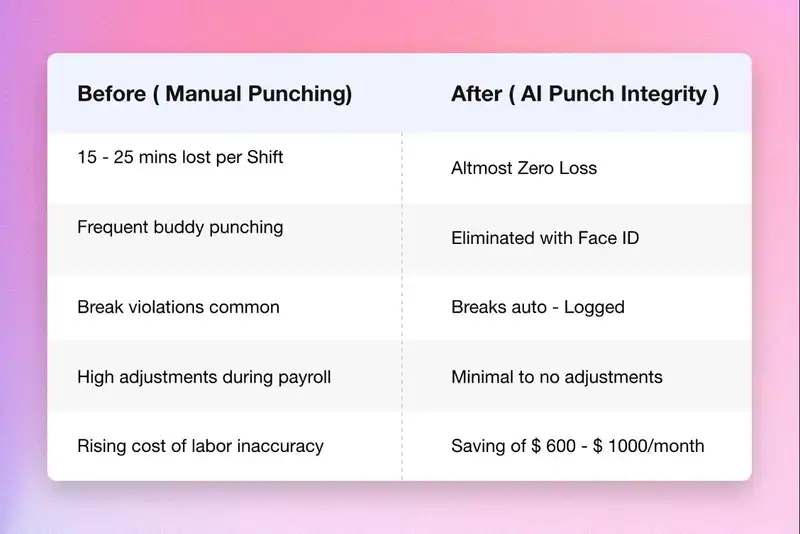
Buddy punching happens when employees clock in for each other. It may start as a small favor, but in a team of 2030 people, it quickly becomes a major cost of labor inaccuracy. It's still one of the biggest ways restaurants lose money without noticing. Without biometric checks, operators can lose 1525 minutes of paid time every shift adding up to $300$800 a month per store. A simple fix like face verification can stop this problem immediately. - Early and late punches
Employees arriving a few minutes early or leaving a few minutes late can add 30 to 60 unnecessary paid hours per month classic labor cost errors that quietly drain cash. - Missed punches and manual edits
Manual corrections often lead to break violations, wrong job codes, and unexpected overtime all symptoms of inaccurate labor data. - Forecasting mistakes
If your forecast is even 5 to 10 percent off, the schedule becomes inaccurate. You either overstaff slow hours or understaff peak hours. Both scenarios cost money but in very different ways. - Disconnected systems
When your POS, scheduling and payroll systems are not synced, employees appear in the wrong roles or hours do not match sales patterns. Managers then rely on spreadsheets, and labor cost errors grow silently.
When you add up all these small issues, the financial impact becomes enormous which is the true hidden cost of labor inaccuracy.
The Real Cost of Labor Inaccuracy Is Bigger Than Most Operators Expect
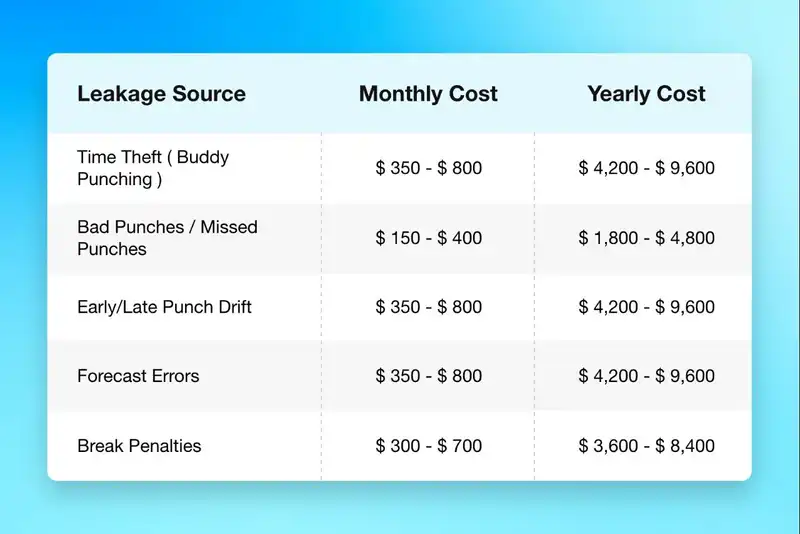
Overstaffing burns wages. Understaffing burns revenue. Both destroy margin.
Here is what a typical store loses every year due to labor inaccuracy.
Average preventable loss per store per year- 12,000 to 38,000 dollars
If a brand has 40 locations, that is a loss of nearly half a million to more than one and a half million dollars and these all are from labor inaccuracy and inaccurate labor data.
Why Labor Inaccuracy Leads to Cash Flow Problems and Closures?
Here is the part most operators never hear clearly enough. More than 72,000 restaurants closed in the United States in 2024.
And the 1 reason they failed was not food quality, ratings or location. 82% of business failures were because of cash flow problems. Restaurants fail when cash leaves faster than it returns.
Labor inaccuracy causes this because it leads to-
- Inflated payroll
- Unexpected overtime
- Understaffing that reduces sales
- Compliance penalties
- Turnover costs
- Higher training expenditure
- Unreliable forecasting
Restaurants do not fail suddenly. They fail through daily, unnoticed patterns that Q1 magnifies.

How Top Operators Fix Labor Accuracy in Q1
When operators talk about tightening labor accuracy in Q1, most of them rely on three simple control levers. These are not complicated ideas. They are practical habits supported by tools that make everyday restaurant life easier. And the truth is many brands are already using them because they actually work.
Lever 1- Using smart AI Clock to clean up punch integrity
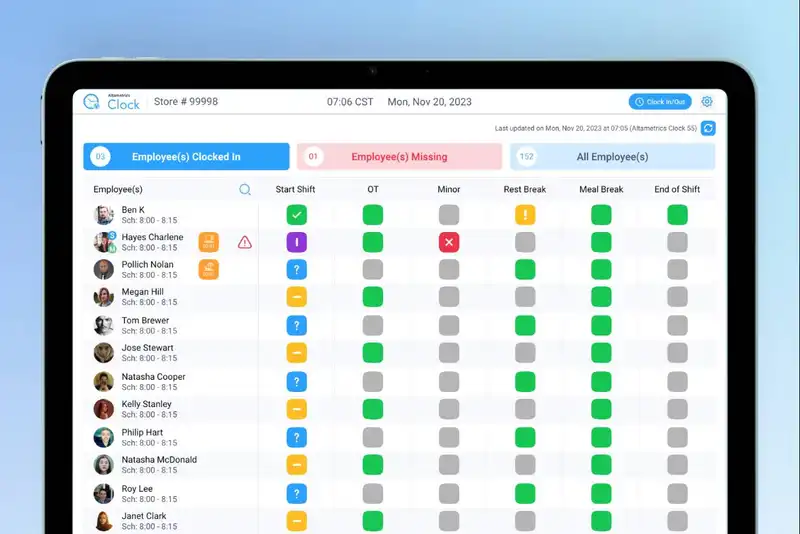
Fixing punch accuracy is the first step operators take when trying to reduce labor inaccuracy. Most of the hidden cost of labor inaccuracy comes from small gaps like early punches, buddy punching, and missing breaks. Tools like a Patented AI Clock help teams stay honest without making anyone feel policed.
What problems it solves-
- Buddy punching
- Early and late punches
- Missed breaks
- Geofence violations
- Inaccurate labor data
- Higher accuracy in payroll
- Reduced labor cost errors
- Happier managers because they fix less manually
- Clean, trustworthy timesheets
Lever 2- AI Forecasting for Labor Planning
Forecasting is where most labor inaccuracy begins because human predictions miss patterns that AI sees. When operators switch from manual methods to AI forecasting, they finally understand real sales behavior and schedule with confidence.
How AI Forecasting works-
- POS trends
- Weather patterns
- Seasonality
- Corporate and Local Events
- Sports Events
- Delivery spikes
- Daypart flow
- 512-point forecasting improvement
- 13 percent labor savings
- Fewer labor cost errors from bad schedules
- Better alignment of labor and sales
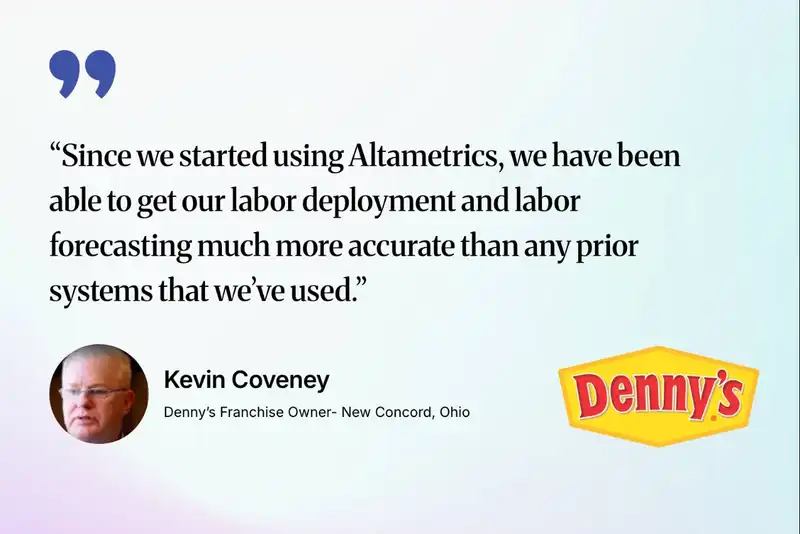
Here's what one of our operators had to say about switching to AI forecasting.
Lever 3- Real-Time Labor Dashboards

Most operators discover labor cost errors too late. Real-time dashboards help them see what's happening right now instead of waiting for payroll day. This is where operators catch problems before they grow.
What operators monitor-
- Overtime risk
- Sudden labor spikes
- Understaffed hours
- Punch exceptions
- Compliance gaps
- Issues fixed instantly, not days later
- Labor stays predictable
- Managers feel more in control
- Fewer surprises in Q1, when every mistake is magnified
Altametrics makes this even easier with Data Visualization, Real-Time Reporting, and meaningful insights that help managers make decisions based on what's happening in the moment. It's not about selling a tool. It's about giving operators information they can actually use during a busy shift. You can even check the snapshot of the dashboards to see how simple and actionable the view really is.
Your 90-Day Roadmap to Fix Labor Inaccuracy
| Timeline | What to Focus On | Why It Matters |
| First 30 Days | Focus on punch integrity. Make sure every punch is real, accurate and compliant. | This cleans up hidden labor leaks and sets a strong foundation for the quarter. |
| Days 31 to 60 | Rebuild your labor forecast using AI. Align schedules with real data instead of old patterns. | Better forecasting reduces overstaffing, understaffing and unexpected overtime. |
| Days 61 to 90 | Automate compliance and enable real time alerts. Fix issues as they happen instead of during payroll. | This prevents last minute surprises and keeps labor on target every single week. |
What Operators Should Focus on in Q1
If you want Q1 2026 to be your most controlled labor quarter, here's a simple plan to follow.
- January- Focus on tightening punch accuracy and reducing time theft. Even small improvements can cut labor costs within weeks.
- February- Work on improving your forecasting. A 90-day accuracy push can stabilize schedules and prevent the surprises Q1 usually brings.
- March- Introduce tools that stop buddy punching and clean up timekeeping. This is where most preventable labor loss disappears.
Wrapping Up-
As we reach the end of this Q1 breakdown, one thing becomes clear. Labor inaccuracy isn't a dramatic problem, but it quietly affects almost every part of a restaurant's daily operations. The good news is that operators don't need big changes to fix it. Small improvements in punch accuracy, better forecasting and real-time visibility can create a huge difference in both labor control and cash flow. With a few focused steps, Q1 can shift from a stressful quarter to a much more predictable and manageable one. Let this be the year operators take back control of their labor and protect the margins they work so hard to earn.


Employee scheduling
Human Resource Management for Restaurants

Employee scheduling
Common Payroll Challenges in Restaurants

Sales forecasting
How to Use Restaurant Analytics to Improve Profitability

Restaurant management
The Complete Guide to Restaurant Reputation Management

Accounting payroll
Restaurant Cash Handling Procedures


Accounting payroll
How to Manage Restaurant Finances

Employee scheduling
How to Motivate Restaurant Staff

Software integration