What is a par level in a restaurant?
A par level is the target amount of an item you want to keep on hand to get through normal business until your next delivery (plus a small buffer).
How to Set Up Par Levels in a Restaurant

Understanding Par Levels
A par level is your restaurant's "comfort zone" for inventory. It's the target amount you want on hand so you can run service smoothly until your next order arrives. Think of it like setting the right fuel level for your business - too low and you stall - too high and you waste money and space.
Here's the simplest way to understand it - par is not the amount you order - it's the amount you want to end up with. Ordering is just the action you take to get back to par after you count what you already have.
Par levels matter because most inventory problems fall into one of two buckets -
1. Stockouts (running out) - This is when you 86 menu items, scramble with substitutions, send staff to a store, or disappoint guests. Stockouts also create hidden costs - extra labor, rushed prep, lower ticket averages, and more mistakes under pressure.
2. Overstocks (ordering too much) - This ties up cash in product sitting on shelves. It crowds your storage areas, makes counts harder, increases the chance of spoilage, and can lead to "use it before it goes bad" decisions that hurt food quality and consistency.
Par levels help you avoid both because they create a repeatable routine - (1)count (2) compare to par (2) order what you need. Once that routine is in place, ordering becomes less emotional and more consistent.
Par levels apply to more than just food. You should set pars for -
- Core ingredients (proteins, produce, dairy, dry goods)
- Prep items (sauces, portioned sides, dough, batters)
- Beverages (soda syrup, coffee, bar inventory)
- Disposables (to-go boxes, cups, lids, bags, gloves)
- Cleaning and chemicals (sanitizer, detergent, paper towels)
When you set pars across these areas, you don't just "manage inventory." You protect your sales, your team's workflow, and your guest experience - every single shift.
What You Need Before You Set Pars
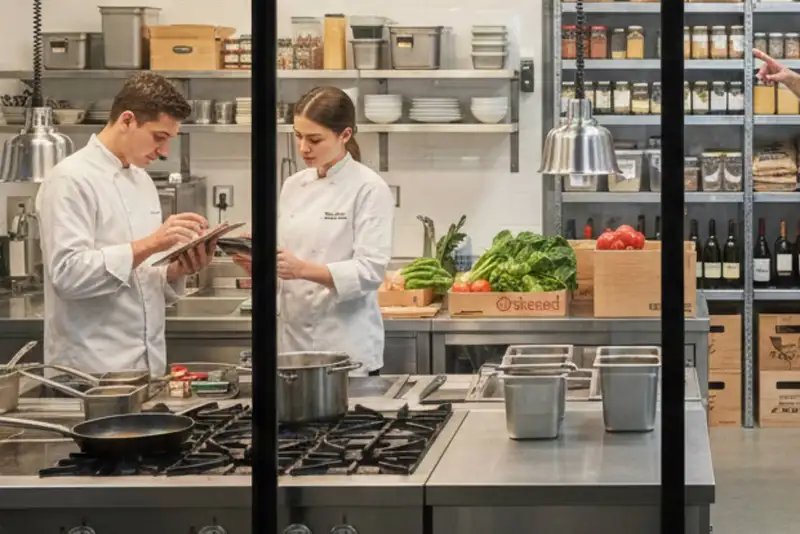
Before you start calculating par levels, you need a clean foundation. If you skip this part, your pars will look "right" on paper but won't work in real life - because the item list is messy, units don't match, or deliveries don't follow a predictable rhythm.
Here's what to get in place first -
1) A clean item list (only what you actually order)
Start with every product you buy regularly - ingredients, beverages, disposables, and cleaning supplies. Remove duplicates (example, Tomatoes - Roma vs. Roma Tomatoes), and make sure each item has one clear name. If the same item comes from two vendors, still keep it clean - either list them separately by vendor or standardize to one primary vendor.
2) Consistent units of measure
This is where many restaurants get stuck. You can't set a par if you count in "each" but order in "cases," or you count in "pounds" but the invoice is in bags. Choose a standard unit for each item and stick to it -
- Chicken. Case
- Ground beef. Case or pounds (but be consistent)
- Lettuce. Case
- Flour. Bag
- Gloves. Box
- To-go containers. Case
Also record pack size (example. "1 case = 6 -10 cans" or "1 case = 4 x 1-gallon jugs"). This makes ordering math simple and prevents under-ordering.
3) Your delivery rhythm and vendor rules
Write down -
- Delivery days (Mon/Thu, etc.)
- Order cutoff times
- Typical lead time (same day? 2 days? 5 days?)
- Minimum order requirements
- Common substitutions and out-of-stocks
Par levels depend heavily on how many days you need to cover between deliveries. A restaurant with daily delivery will have very different pars than one that gets a truck twice a week.
4) A storage map (where items live)
Par levels work best when your storage is organized. Assign each item a home location- walk-in, freezer, dry storage, bar, paper goods shelf, chemical cage. If items constantly move around, counts become inaccurate and pars stop being reliable.
5) One person responsible for the system
Par levels fail when "everyone kind of owns it." Assign ownership by area (kitchen manager, bar lead, GM, etc.). That doesn't mean one person does every count - it means one person is accountable for keeping pars updated and followed.
Once these pieces are in place, the actual par setup becomes simple and repeatable.

Step 1. Group Items the Right Way
If you build par levels as one giant list, you'll hate using it - and your team will avoid it. The easiest way to make pars workable is to group items the same way you store them and the same way you count them. That way, par checks feel quick and natural instead of overwhelming.
Here's a simple, restaurant-friendly way to group inventory -
1) Group by storage area first
Start with the physical flow of your restaurant. Most places have -
- Walk-in cooler
- Freezer
- Dry storage
- Bar / beverage
- Paper goods / disposables
- Chemicals / cleaning
This is the fastest way to count because you can walk the space in order and avoid jumping between areas.
2) Then group by category within each area
Inside each storage area, break items into categories that match how you think and prep -
- Proteins (chicken, beef, seafood)
- Produce
- Dairy
- Dry goods (rice, flour, spices)
- Sauces/condiments
- Frozen items
- Bakery/bread
This helps you spot problems faster. For example, if produce is constantly under par but proteins are always over, you'll see that pattern quickly.
3) Separate "menu-critical" items from "flex" items
Not every item carries the same risk. Flag your menu-critical items - the products that directly cause an 86 if you run out. Examples -
- Your main protein (chicken, beef patties)
- Signature sauce
- Buns/tortillas
- Fries or rice (depending on concept)
Then identify flex items - things you can substitute without breaking the menu (within reason). This doesn't mean you ignore them; it just means your buffer and review attention should be higher on menu-critical items.
4) Flag high-risk items
High-risk items deserve extra structure because mistakes cost more. Mark items that are -
- High cost (steaks, seafood, specialty spirits)
- High waste (berries, fresh herbs, dairy-heavy items)
- Long lead time (specialty products, vendor-brought items)
- High volume (fries, chicken, to-go containers)
For these items, your par should usually include a more intentional buffer and more frequent checks.
5) Assign "par ownership"
A par system works when someone feels responsible for keeping it accurate. Assign an owner by group -
Kitchen manager. walk-in + freezer
Lead cook. prep items + sauces
Bar lead. liquor + wine + beer
Shift lead. paper goods/disposables
Maintenance/manager. chemicals/cleaning
When you group items this way, your par sheet becomes a tool your team can actually use - fast counts, fewer misses, and clear accountability. Now you're ready to set starting pars without guesswork.
Step 2. Calculate a Starting Par Level
This is the part most owners overcomplicate. You don't need perfect forecasting - you just need a reasonable starting point based on what you actually use. Your first par level is a baseline, and you'll adjust it as you learn.
Start with a simple timeframe
Use a recent window that reflects normal business -
- Last 2-4 weeks is a solid starting point
- Avoid weird weeks (major holidays, a one-time catering event, shutdowns) unless that's your typical reality
If you don't have clean inventory usage data, you can still estimate using purchase history, prep sheets, or POS mix (you'll refine later).
Step A. Find your average daily usage
Pick an item (example- chicken thighs, burger buns, fries). Estimate how much you go through per day.
Basic method -
- Total used over the period / number of days = Average Daily Usage
Example -
- You used 12 cases of burger buns in 14 days
- Average daily usage = 12 / 14 = 0.86 cases/day
If cases feel too clunky, convert to a unit that's easier -
- 1 case = 120 buns
- 0.86 cases/day = 103 buns/day (roughly)
The goal isn't perfection - it's "close enough to stop guessing."
Step B. Determine your coverage window
Your par needs to cover the time between deliveries plus a buffer.
Coverage window =
- Days between deliveries (including weekends if vendors don't deliver)
- Safety buffer (usually 10-25% or 1 extra day for critical items)
Example -
- You get deliveries twice per week (every 3-4 days)
- Your practical coverage window might be 4 days + 1 buffer day = 5 days
Step C- Use the starting par formula
Starting Par = Average Daily Usage x (Days of Coverage + Safety Buffer)
Example -
- Average daily usage. 0.86 cases/day
- Coverage + buffer. 5 days
- Starting par. 0.86 x 5 = 4.3 cases
Round to something usable- 4 or 5 cases, depending on pack sizes and risk.
What if you don't have history?
If you're new, launching a menu item, or switching vendors, estimate pars using -
- Similar item usage (swap "new sauce" with old sauce demand)
- Recipe usage + projected sales
- Conservative starting pars + more frequent checks the first 2 weeks
Once you do 2-3 order cycles, you'll have real patterns - and that's when pars get powerful.
Step 3. Set Reorder Points and Order-To Targets

Once you have a starting par, the next step is making it usable during ordering. That's where reorder points and order-to targets come in. These two numbers keep you from waiting too long to order (stockouts) or ordering too early (overstock).
Par (Order-To) vs. Reorder Point - the simple difference
Par / Order-To Level - The amount you want to have after your order arrives and gets put away. This is your target "full tank."
Reorder Point (ROP) - The amount where it's time to place an order so you don't run out before the next delivery hits.
In many restaurants, owners set a par and stop there - but without a reorder point, you end up ordering inconsistently based on how busy you "feel."
How to set a reorder point
A reorder point should cover your expected usage during the vendor's lead time (plus a small buffer).
Reorder Point = Average Daily Usage x Lead Time Days (+ buffer for critical items)
Example -
- You use 10 gallons of fryer oil per week = 1.4 gallons/day
- Lead time is 2 days
- ROP = 1.4 x 2 = 2.8 gallons
- Round up. 3 gallons
- Meaning. if you're at 3 gallons on hand, it's time to reorder.
For menu-critical items, add a little extra (or use one extra day). For items you can substitute (like some dry spices), you can keep the buffer smaller.
Ordering math that actually works
When it's time to order, use a simple "order-to" approach -
Order Quantity = Par (Order-To) On-Hand On-Order
On-Hand. what you count right now
On-Order. what you already placed but haven't received yet (very important to avoid double-ordering)
Example -
Par level for chicken. 10 cases
On hand. 6 cases
On order. 2 cases
Order quantity = 10 - 6 - 2 = 2 cases
This is the core of a par-based ordering system. It removes guessing.
Handling pack sizes and rounding rules
Vendors sell in cases, bags, boxes, and jugs - not in "2.3." Your par system needs a consistent rounding rule -- If it's a high-risk stockout item, round up (better to have a little extra than 86)- If it's a high-waste item, round down and count more often
When you set reorder points and order-to targets correctly, you're not just "doing inventory." You're building a repeatable ordering process that protects sales and cash flow.
Transform Your Restaurant Operations Now!
Effortless Inventory Tracking with Altametrics!
Step 4. Build Your Par Sheet
A par system only works if your team can use it quickly during real shifts. That's why the best par sheet is not fancy - it's clear, organized, and consistent. Whether you build it in Excel, Google Sheets, or inside your inventory tool, the goal is the same - make counting and ordering simple.
Start by building the sheet around how you count
Don't build one massive list that mixes walk-in items with paper goods and bar inventory. Instead, set it up in sections that match your storage areas -
- Walk-in cooler
- Freezer
- Dry storage
- Bar / beverage
- Disposables
- Chemicals / cleaning
Most restaurants find it easiest to create one tab per storage area, or at least one section per area. That way, a manager can walk the space top-to-bottom and fill it out fast.
Use a "minimum required" set of columns
These columns cover 95% of what you need without clutter -
1. Item name
2. Storage location (walk-in, freezer, dry, etc.)
3. Unit (case, bag, lb, each, box)
4. Pack size (ex. 6 x 10 cans, 4 x 1-gal)
5. Vendor (optional but helpful)
6. Par / Order-To level
7. Reorder point (optional but recommended)
8. On-hand (counted quantity)
9. On-order (already ordered, not received)
10 Order quantity (calculated)
11. Notes (yield, substitutions, "count partial cases as decimals," etc.)
Make the math automatic (if you're using a spreadsheet)
If you're in Excel/Sheets, you can calculate order quantity automatically -
Order Qty = Par - On-Hand - On-Order
Then add a simple rule -
- If the result is negative, order 0
- If the item must be full-case, round up to the next whole case
Even basic automation makes your ordering more consistent and reduces mistakes.
Add small details that prevent big errors
A few simple touches keep par sheets from falling apart -
- Standard counting rules (ex. "open case = 0.5 case" or "count by pounds")
- Item naming standards (avoid duplicates that confuse ordering)
- Pack-size reminders (so someone doesn't order "10" thinking it's each when it's cases)
- Ownership labels by section (who counts it, who approves it)
Keep it short and focused
A par sheet is not an inventory encyclopedia. If an item is rarely used or only ordered once a month, consider keeping it on a separate "low-frequency" list. Your main par sheet should focus on items that impact weekly ordering and daily service.
Once your par sheet is built and matches how you store/count, the system becomes easy to follow - counting gets faster, ordering gets cleaner, and pars become something your team actually trusts.
Step 5. Count, Order, and Receive Using the Same System
This is where par levels either become a real operating system - or they turn into a spreadsheet nobody trusts. The key is consistency - counting, ordering, and receiving must follow the same rules every time. If you count one way, order another way, and receive with zero checks, your on-hand numbers will drift and your pars will stop working.
1) Set a counting routine that matches your operation
You don't need to do full inventory every day. Most restaurants do best with a two-layer approach -
Daily quick counts (5-10 minutes). Focus on your most critical items - primary proteins, fries/rice, buns/tortillas, signature sauces, and key disposables. This prevents mid-week stockouts and emergency orders.
Weekly full counts (30-90 minutes). Count everything on your par sheet by storage area. Do it on the same day/time each week so the data is comparable.
If your deliveries come twice per week, you may also do a count right before ordering each time.
2) Standardize how you count (so everyone counts the same way)
Create simple "count rules" and train to them - How to count partial cases (0.25, 0.5, 0.75)
- Whether you count in cases, pounds, or each
- What to do with items pulled for catering, staff meals, or manager comps
- How to count items stored in multiple locations (ex. cheese in prep line + walk-in)
This prevents the common problem where two managers count the same shelf and get completely different numbers.
3) Order using the par math - no gut feeling
Once counts are done, ordering should be mechanical -
- Confirm on-hand
- Confirm what's already on-order (to avoid double-buying)
- Use Order Quantity = Par - On-Hand - On-Order
- Round to pack sizes and vendor rules
If someone overrides the math, they should write a quick note ("big weekend event," "vendor out last week," "promo starting Friday"). That keeps adjustments intentional instead of random.
4) Receive like it matters (because it does)
Receiving is where inventory accuracy is won or lost. Use a quick receiving checklist -
- Verify quantity matches the invoice (and your order)
- Check quality and temps (especially proteins and dairy)
- Note substitutions and shorted items
- Confirm credits are documented if something is missing or damaged
5) Put-away discipline keeps pars accurate
Finally, items must go to their assigned locations. If product gets scattered, your next count will be wrong, and your par system will "feel broken" even though the math is fine.
When counting, ordering, receiving, and put-away are aligned, par levels become reliable - and your team stops fighting the system.
Step 6. Review and Adjust Pars Every Week
Par levels aren't "set it and forget it." Your restaurant changes constantly - sales patterns shift, vendors run short, menu items rotate, prices jump, and seasons impact demand. If you don't review pars regularly, they drift. Then you're back to emergency orders, extra waste, and inconsistent counts.
The good news - you don't need a huge process. A simple weekly review keeps pars accurate and protects your cash.
1) Pick a consistent weekly review time
Most restaurants do best with a quick review right after -
- A weekly full count, or
- A major order cycle (especially if you order 2x/week)
Block 15-30 minutes on the same day each week. Consistency is more important than a perfect process.
2) Know what should trigger a par change
Adjust pars when you see any of these -
- Frequent stockouts (same items running out before delivery)
- Too much backstock (walk-in packed, product expiring, shelves overflowing)
- Waste spikes (spoilage, expired product, trim waste, over-prep)
- Menu changes (new items, removed items, recipe changes, portion changes)
- Promotions and catering (temporary demand increase)
- Seasonality (weather, school schedule, holidays, local events)
- Vendor changes (different pack size, longer lead times, less reliable fill rates)
3) Use simple "red flag" questions
You can diagnose most par problems quickly -
- Did we 86 anything this week? Why?
- Did we throw away anything because it expired or went bad?
- Did we do any emergency runs or last-minute add-ons?
- Are we consistently ordering the same items early (before the normal order day)?
-Are there items we're counting but never using?
If the answer is "yes" repeatedly for the same item, the par needs adjustment.
4) Adjust in small steps, not big swings
Avoid doubling pars based on one crazy weekend. Instead -
- Increase or decrease par by 10-20% at a time, or
- Add/remove one day of coverage for items that swing a lot
Then re-check after the next order cycle. Small, controlled changes keep the system stable.
5) Tie pars to a few operational signals
You don't need complex KPIs, but it helps to watch -
- Waste levels (are you over-par on perishables?)
- Stockout frequency (are critical items under-par?)
- Storage capacity (is par realistic for your space?)
- Cash flow (are you tying up money in slow movers?)
When you review and adjust pars weekly, your ordering becomes predictable, your inventory stays cleaner, and your team spends less time putting out fires - and more time running service smoothly.

Inventory management
How to Conduct a Food Waste Audit in Your Restaurant

Software integration
Smart Ways to Use AI in Your Restaurant

Employee scheduling
Employee Time Tracking Tips for Restaurants

Employee scheduling
7 Scheduling Mistakes Restaurant Owners Should Stop Making

Employee scheduling
Human Resource Management for Restaurants
Employee scheduling
Common Payroll Challenges in Restaurants

Sales forecasting
How to Use Restaurant Analytics to Improve Profitability

Restaurant management
The Complete Guide to Restaurant Reputation Management

Accounting payroll
Restaurant Cash Handling Procedures

Frequently Asked Questions
What's the difference between par level and reorder point?
Par (order-to level) is where you want inventory to land after receiving an order. A reorder point is the on-hand level that tells you it's time to place an order so you don't run out before delivery.
How do I calculate a starting par level?
A simple method is, Average Daily Usage x (Days Between Deliveries + Safety Buffer). Start with the last 2-4 weeks of normal sales/usage.
Should I set pars for prep items like sauces and portioned sides?
Yes. Prep items cause major issues when they run out mid-shift. Set pars for high-usage prep (sauces, dressings, portioned sides) and count them on a daily or shift-based routine.
How do I avoid over-ordering with par levels?
Make sure you always subtract on-order quantities, round appropriately, and review items that consistently expire or sit untouched. Over-ordering usually comes from bad units, bad counts, or not tracking on-order items.