How can I reduce food waste?
You can reduce food waste by setting accurate par levels, enforcing FIFO and date labeling, prepping smaller batches, monitoring holding times, improving temperature control, and training staff to discard unsafe food promptly instead of reworking or over-holding products.
The Ultimate Guide to Food Quality and Safety for Restaurant Owners

Why Food Quality and Safety Must Be Managed Together
Food quality and food safety are often treated like two separate projects - one owned by the chef or kitchen lead, the other owned by a manager trying to "stay compliant." In reality, they're tightly connected. When quality slips, teams start improvising - holding food longer than they should, rushing prep, skipping temperature checks, or reworking products in ways that increase risk. And when safety systems are messy or overly complicated, people stop using them - meaning you lose visibility into what's happening on the line and in storage. The result is usually the same - inconsistent guest experiences, higher waste, more refunds or comps, and greater exposure to foodborne illness or inspection issues.
You want a kitchen that produces the same plate, the same way, every shift, with simple routines that protect your guests and your brand. The best operators build a system that makes the "right way" the easiest way- clear standards, smart station setup, quick checks at the right times, and accountability that doesn't rely on one superstar employee.
Set the Standard
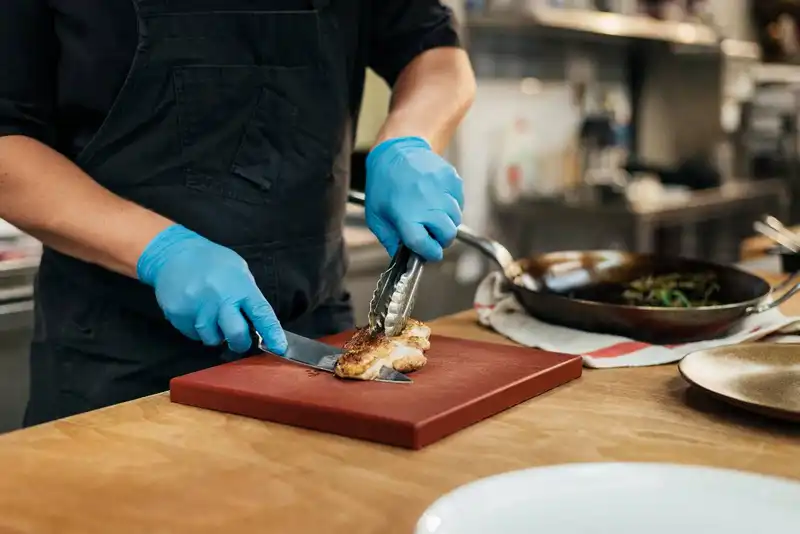
Before you can improve food quality and safety, you have to define what "good" looks like in a way your team can actually follow. Most restaurants run into problems because standards live in someone's head. The owner knows what the burger should look like. The lead cook knows how the sauce should taste. But when that person isn't working, the team fills in the gaps with guesses - and that's where quality drops and safety shortcuts start.
Start by building gold standards for your top-selling items (usually the 10-20 products that drive most of your sales). For each one, write a simple one-page spec that includes - target portion size, plating or build order, ideal finish temp, hold time limits, and what a "fail" looks like (too dark, soggy, under-filled, wrong garnish, etc.). Add photos if you can, but keep it simple - one picture of "correct" is more valuable than a long paragraph.
Next, translate safety requirements into critical limits your team can remember. These are the non-negotiables that prevent risk- approved cooking temps, time limits for holding, cooling steps for batches, storage rules (raw below ready-to-eat), and allergen handling procedures. Don't bury these inside a binder. Put them where decisions happen - on prep walls, station guides, and manager checklists.
Finally, decide what can flex and what can't. Guests will forgive a small plating variation; they won't forgive inconsistent taste, cold food, or a safety incident. Define your "musts" (portion, core flavor, temperature, safe handling) and your "nice-to-haves" (minor garnish placement). When the team knows the priorities, they stay consistent under pressure without cutting corners that put quality or safety at risk.
Elevate Food Safety, Simplify Compliance!
Experience Seamless Food Safety with Altametrics!
Receiving, Storage, and Inventory
Most food quality and safety problems don't start on the line - they start at the back door. If receiving is rushed, storage is disorganized, or inventory rotation is inconsistent, your kitchen spends the rest of the week fighting preventable issues- spoilage, off-flavors, temperature abuse, and cross-contamination risk. Owners who want consistent outcomes treat receiving and storage like a gatekeeping process, not a quick handoff.
Receiving should follow a simple routine every time. Assign a specific role (manager, shift lead, or trained receiver) to check deliveries immediately. The goal is to verify that product arrives in good condition and at safe temperatures before it ever touches your shelves. Confirm packaging integrity (no tears, leaks, dents, or swollen vacuum packs), check dates and labels, and spot-check temperatures on high-risk items like poultry, ground meats, seafood, dairy, and prepared foods. If something doesn't meet your standards, document it and reject it - accepting questionable product nearly always costs more later in waste, comps, or risk.
Once product is accepted, storage discipline keeps it safe and usable. Set up a "home" for everything - labeled shelves, containers, and zones. Separate raw and ready-to-eat foods, and use an easy shelf-order rule so the team doesn't have to think about it in the moment. Use sealed, food-safe containers and avoid open bags or unlabeled bins - those lead to mystery product, cross-contact, and quality degradation.
Inventory systems are where quality and safety meet cost control. Make FIFO (first in, first out) non-negotiable with clear date labeling. Use simple labels that show item name, prep/open date, and discard date, and make it part of opening and closing checks. Pair rotation with par levels so you don't over-order and push product past its best quality window. When receiving, storage, and rotation are consistent, you reduce spoilage, protect food quality, and remove the pressure that causes teams to "make it work" with product that should've been tossed.
Temperature Control
Temperature control is where most restaurants either protect guests - or quietly build risk into their operation. The challenge isn't that teams don't "know" temperatures matter. It's that, during a rush, the temperature chain breaks in small ways - product sits out too long, a cooler gets overloaded, hot holding drifts, or reheats get rushed. Owners need a system that makes temperature checks routine, fast, and tied to clear corrective actions.
Start with cooking verification. The only reliable way to confirm safety is by using a calibrated probe thermometer, not guesswork based on time or appearance. Build the habit by making checks predictable - verify the first batch of each protein at opening, after shift changes, and anytime a new cook takes over a station. Keep the standard simple - (1) check (2) record (if required) (3) correct immediately if off. If temps are low, the fix is not "serve it anyway." The fix is continue cooking and re-check - every time.
Next, protect hot holding and cold holding. Most quality complaints (dry food, soggy fries, lukewarm plates) show up before a safety incident does, so use quality as an early warning sign. Establish quick line checks on a cadence that fits your volume (for many restaurants, hourly is realistic). Train staff on what to do when a unit is out of range - adjust settings, stir or rotate product, move to a functioning unit, or discard if time/temperature limits were exceeded. The key is consistency - one missed hour can turn into a whole shift of drift.
Cooling and reheating are where risk spikes, especially with soups, sauces, rice, beans, proteins, and bulk-prepped items. Cooling must be treated as a process, not an afterthought at close. Use shallow pans, portion large batches into smaller containers, allow airflow, and avoid putting hot product directly into the cooler in deep, covered containers. Reheating should be fast and complete - heat to the required level, then transfer to hot holding correctly. The best systems are simple - a thermometer, a short log or checklist, and clear rules for corrective action so no one has to "debate" safety during a rush.
Cross-Contamination and Allergen Control

Cross-contamination is one of the easiest ways to turn a great kitchen into a risky one - because it usually happens in small, everyday moments. A knife that moves from raw chicken to a cutting board used for produce. A gloved hand that touches a phone, then touches lettuce. A scoop shared between containers. These aren't "bad employee" problems; they're system problems. Owners reduce risk by designing workflows and station rules that make the safe choice automatic.
Start with separation by zone and sequence. Your kitchen should have clear "raw" and "ready-to-eat" areas, even if the space is tight. Use visual cues like labeled shelves, dedicated prep tables, and container standards to reinforce the separation. Keep raw proteins stored below ready-to-eat foods and produce. On the line, prevent tool-sharing by assigning utensils to specific products (and staging backups so staff aren't tempted to grab the nearest spoon during a rush). If you can, use color systems for cutting boards and knives, but don't rely on color alone - pair it with simple labels and a reset routine.
Next, lock in handwashing and glove habits with rules that are easy to follow. Gloves don't replace handwashing; they can actually spread contamination faster when staff forget to change them. Train your team on clear "glove change triggers" such as touching raw product, handling trash, switching tasks, leaving the station, touching face/hair, cleaning chemicals, or using devices. Make handwash sinks easy to access, stocked, and treated as non-negotiable.
Allergen control requires even more precision because cross-contact can harm guests quickly. Build a basic allergen policy that covers - how orders are flagged (POS notes and verbal callouts), who is responsible for verification (often a manager or lead), and how the kitchen prevents cross-contact (clean surface, clean tools, fresh gloves, and separate prep when possible). For high-risk allergen orders, implement a "double-check" step- one person prepares, another verifies the build before it leaves the kitchen.
Finally, standardize FOH-to-BOH communication. Your team should use the same language every time - "Allergen order - clean prep, clean tools, manager verify." When these habits are consistent, you protect guests, reduce remakes, and keep your kitchen calm - even on the busiest shifts.
Create, Implement, and Execute Multiple Daily Checklists
Streamline Your Operations with Altametrics
People and Training
Food quality and safety systems only work if your team can execute them when it's busy. Owners often treat training like a one-time event during onboarding, but restaurant reality is different - turnover, schedule changes, and varying experience levels mean training has to be ongoing, simple, and built into the week. The goal isn't to make everyone a food safety expert. The goal is to build habits that hold up on a Friday night.
1. Define Week One roles - Don't overload new hires with everything at once. Create a short list of must-know behaviors for each role. BOH basics usually include handwashing/glove rules, thermometer use, holding temps, labeling/FIFO, cross-contamination prevention, and allergen protocol. FOH basics include allergen communication, safe beverage/ice handling, cleanliness standards, and what to do when a guest reports an issue.
2. Use micro-training - A 10-15 minute huddle once or twice a week beats a quarterly training session that no one remembers. Teach one topic at a time (cooling, reheating, hot holding checks, labeling rules, allergen workflow), do a quick demo, then set one clear expectation for the shift.
3. Assign ownership - Make responsibilities explicit - who receives deliveries, who checks and logs line temps, who audits labels, who confirms sanitizer setup, and who verifies the close-down. Clear ownership removes guessing and improves consistency across shifts.
4. Coach in the moment - When a standard is missed, focus on the fix - re-check temps, relabel and rotate, reset the station with clean tools, or remake a dish correctly. Calm, consistent coaching reduces shortcuts and builds confidence instead of fear.
Track a few behaviors that indicate the system is working - training completion, temp check compliance, label accuracy, allergen order verification, and repeat issues by station. When you measure the basics, you protect the brand and reduce remakes, waste, and guest complaints.
Checklists, Audits, and Corrective Actions
Food quality and safety don't stay strong because people "care more." They stay strong because the operation runs on a few repeatable routines that catch problems early - before they become guest complaints or inspection issues. The mistake many restaurants make is creating long checklists that feel like paperwork. What you want instead is a minimum effective system- short, time-based checks tied to clear corrective actions.
Start with three checklists that match how restaurants actually run - opening, shift change, and closing. Opening should confirm the basics are ready to operate safely - cooler temps in range, sanitizer setup correct, hand sinks stocked, date labels in place, and the first batch cooking temps verified. Shift change is where standards often drift, so use a fast reset - wipe and sanitize key surfaces, swap utensils, verify holding temps, and confirm labeled backups are staged correctly. Closing should focus on storage discipline - label and date everything, rotate product to FIFO, cool hot foods properly, and leave stations in a condition that prevents contamination the next day.
Next, build a simple approach to quality control at the pass. This doesn't mean slowing service or "inspecting every plate." It means establishing 3-5 non-negotiable checks for your highest-volume items - portion, appearance, correct build, and serving temperature expectation. If something fails, the corrective action should be immediate and standard - remake, re-fire, or re-portion - no debating during a rush. Over time, this reduces comps and protects consistency because the line learns what will and won't pass.
Corrective actions are the backbone of real systems. A temperature log that says "too low" without a fix is useless. For each common failure - out-of-range holding temp, missing labels, dirty sanitizer buckets, raw product stored incorrectly - define the exact response - adjust/relocate/re-check, label immediately or discard, remix sanitizer and verify, re-store correctly and sanitize the area. Finally, add a quick weekly internal audit (10-15 minutes) led by a manager or owner. Look for repeat patterns, not perfection. The point is to identify where the system breaks and tighten that one link - every week.
Tools, Records, and Inspection Readiness
Strong food quality and safety isn't about having more paperwork - it's about having the right visibility at the right time. Owners need a system that proves standards are being followed, helps managers catch drift early, and makes it easy to coach and correct issues during the week (not after something goes wrong). The best approach is simple - document what protects guests, track what protects consistency, and make it part of your daily rhythm.
Start with core records that matter- temperature checks for cooking/holding/cooling, sanitizer verification, receiving checks for high-risk deliveries, and basic training acknowledgements for new hires. Avoid building logs for everything; people stop using them. Instead, choose a small set of "high impact" checks and make them fast to complete. Whether you use paper or digital tools, the standard should be the same - when something is out of spec, you capture the corrective action right then and there. That's what builds accountability and keeps your team aligned.
Next, focus on inspection readiness as a routine - not an event. Restaurants get into trouble when they "prep for inspections" once they hear someone is coming around. A better approach is a weekly walkthrough and a few daily checkpoints that ensure you're always ready - storage organization, date labels, hand sink supplies, cooler temps, allergen procedures, and general cleanliness. If your operation can pass an internal check on any random Tuesday, you're also protecting quality because the fundamentals are stable.
Finally, use a basic owner scorecard to monitor whether the system is working. You don't need 30 metrics - just a handful that signal risk and inconsistency - repeat temperature exceptions, label compliance issues, waste/spoilage trends, comps for food quality, and recurring station failures from audits. When those numbers improve, guest satisfaction improves, costs drop, and teams feel less chaos.
Simplify Compliance and Improve Consistency With Altametrics
Food quality and safety come down to execution - every shift, across every location. Altametrics helps restaurant operators turn standards into daily habits by giving managers the tools to stay consistent, accountable, and inspection-ready without adding operational friction.With Altametrics, you can -
- Standardize routines with consistent daily processes across managers, shifts, and locations
- Improve accountability by aligning teams around clear expectations and operational visibility
- Reduce operational drift with better structure for managers to coach, follow up, and stay on track
- Run a tighter operation that supports safer execution, fewer mistakes, and more consistent guest experiences
If you're ready to strengthen your operation with an all-in-one workforce platform built for multi-unit restaurant teams, explore Altametrics by clicking "Request a Demo" below.

Employee scheduling
Human Resource Management for Restaurants
Employee scheduling
Common Payroll Challenges in Restaurants

Sales forecasting
How to Use Restaurant Analytics to Improve Profitability

Restaurant management
The Complete Guide to Restaurant Reputation Management

Accounting payroll
Restaurant Cash Handling Procedures

Accounting payroll
How to Manage Restaurant Finances

Employee scheduling
How to Motivate Restaurant Staff

Software integration
10 Ways Technology Can Help Control Food Cost in Restaurants
Frequently Asked Questions
What are the most common causes of food quality and safety issues in restaurants?
The biggest causes are inconsistent standards, poor receiving and storage habits, temperature drift during holding or cooling, cross-contamination from shared tools or surfaces, and unclear allergen procedures. These issues usually come from missing systems - not bad intentions - so simple routines and clear ownership solve most problems.
How can I improve inventory rotation to prevent spoilage?
Make FIFO non-negotiable with clear date labels (item name, prep/open date, discard date). Use labeled shelf "homes" and set par levels so you don't over-order. Add a quick daily label check into opening or closing so rotation stays consistent even on busy weeks.
How do I prevent cross-contamination in a small kitchen?
Use zones and sequencing - separate raw and ready-to-eat prep, store raw below ready-to-eat, and dedicate tools where possible. Reduce tool sharing by staging backups, labeling containers, and resetting stations at shift change. Tight spaces can be safe if workflows are clear and consistent.
What's the simplest way to improve food quality consistency?
Pick your top 5 sellers and standardize them first - recipe/portion tools, plating/build order, and "pass checks." Small improvements on your highest-volume items create the biggest quality lift fast.