How can technology help with restaurant training?
CBT/LMS platforms help deliver consistent training, assign role-based modules, track completion, and roll out updates quickly across shifts and locations.
Restaurant Staff Training Checklist

Overview
Staff training is the set of skills, standards, and habits your team needs to run shifts the same way every day - no matter who is working. For restaurant owners, the goal is simple - protect the guest experience, keep the workplace safe, and make operations consistent.
At a minimum, staff training should cover three things -
1) Standards. These are the rules that protect quality and reduce risk - food safety basics, sanitation, allergen awareness, safe knife and chemical handling, cash handling boundaries, and what requires a manager. Standards also include the basics of professionalism - showing up on time, communicating schedule issues early, and following uniform and hygiene expectations.
2) Role skills. For FOH, that means service steps, pacing, guest recovery, menu knowledge, and POS accuracy. For BOH, it means station setup, recipe and portion control, ticket flow, labeling and dating, and cleaning routines. Role skills are where most mistakes happen when training is rushed - ringing items wrong, missing modifiers, inconsistent portions, slow handoffs, or unclear communication during a rush.
3) The workflow. Training should explain how orders move from guest to kitchen to table, what happens when something goes wrong, and how to escalate issues fast. When staff understand the workflow, they make better decisions under pressure because they see what their choices affect downstream.
When you get staff training right, you reduce the biggest silent costs in a restaurant - comps, remakes, waste, slow ticket times, safety incidents, and constant manager firefighting. The rest of this checklist breaks down what to teach by topic and by role so training is repeatable, not improvised.
Day 1 Foundations
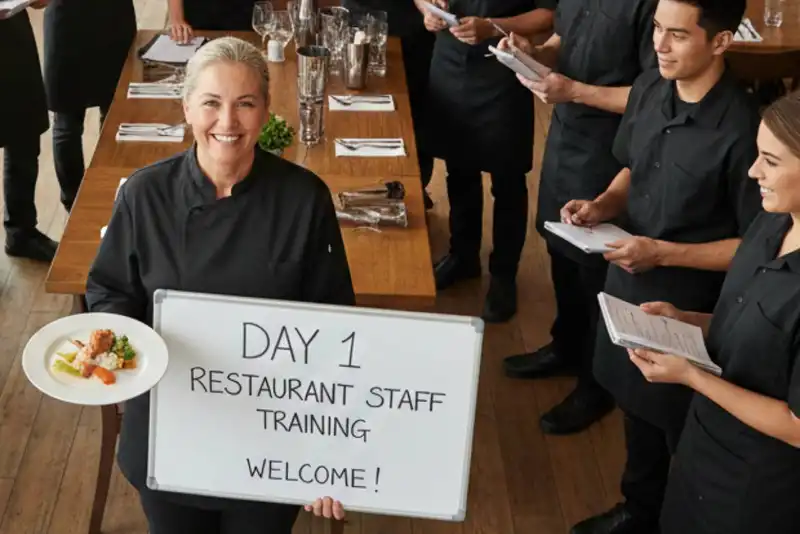
Day 1 training should give new hires a clear understanding of how your restaurant operates before they touch a table, a register, or a station. Most early turnover happens because expectations are unclear or inconsistent, so the goal is to remove guessing. Keep it simple, direct, and tied to real examples they'll face on shift.
1) Culture and the standard you expect. Explain what your restaurant is trying to be known for (speed, friendliness, accuracy, hospitality, quality, consistency) and how each role supports that. Then define the everyday behaviors you expect- communicate early, ask questions quickly, and follow standards even when it's busy.
2) Role expectations and shift basics. Make sure they understand their job duties, who they report to, and what good performance looks like in the first two weeks. Cover the basics they need to start a shift - where to clock in, where to store personal items, where schedules are posted, and how shift swaps work. Set clear rules on punctuality and attendance- what counts as late, how to call out, and how much notice you expect.
3) Appearance and hygiene rules. Keep this practical and specific - uniform requirements, slip-resistant shoes, hair restraints, and what is/isn't allowed (nails, jewelry, fragrances). Include the hygiene basics that reduce risk - handwashing expectations, glove use (if required), and what to do if they feel sick. If you have strict "do not work when..." rules, state them clearly.
4) Workplace conduct and escalation path. New hires should know your standards for respect and professionalism. Be direct - harassment, discrimination, and retaliation are not tolerated. Then give a clear reporting path - who to talk to first, who to contact next, and how to report issues if the manager on duty is involved.
5) Timekeeping, breaks, and basic compliance - Show them exactly how to clock in/out and how missed punches are handled (and who can approve edits). Explain that breaks must be taken and tracked, and they should speak up immediately if a break is being missed. If you employ minors, confirm any limits on hours or tasks and who they should ask when unsure.
Close with a short tour - exits, restrooms, first aid kit, fire extinguisher, and where key supplies are stored. End with one simple rule that prevents most early mistakes - ask before acting on anything involving safety, cash handling, discounts/comps, refunds, or policy exceptions. This sets the tone for consistent training and fewer preventable issues.
Looking for Training Your Employees Effectively?
Elevate Your Training and Development with Altametrics LMS
Safety and Compliance Essentials
Safety and compliance training should be taught to every employee - FOH, BOH, managers, and support staff - because one mistake can create a guest issue, an injury, or a costly violation. The goal is to make sure everyone knows the basics, follows the same rules, and understands when to stop and ask for help.
1) Food safety basics. Train the non-negotiables first - proper handwashing, when to change gloves (if you use them), and how to avoid cross-contamination. Staff should know how raw proteins are handled, where they can be stored, and what surfaces must be cleaned and sanitized after use. Teach "time and temperature" at a practical level - hot food stays hot, cold food stays cold, and anything left in the danger zone too long becomes unsafe. Even FOH needs this - servers handle garnishes, ice, drinks, and plated food.
2) Allergen awareness. Teach staff to take allergy statements seriously, avoid guessing, and follow your process every time. That includes marking allergy tickets correctly, preventing contact with shared tools or surfaces, and confirming with a manager or kitchen lead when needed. FOH should know what they can promise and what they cannot.
3) Workplace safety. Cover the most common restaurant injuries - slips and falls, cuts, burns, and strains. Teach simple prevention habits - keep walkways clear, clean spills immediately and post a wet floor sign, carry knives safely, and never leave sharp tools in a sink. Review safe lifting and stocking basics to reduce back injuries. If chemicals are used for cleaning, teach where they are stored, how they are labeled, and never to mix them.
4) Equipment basics and PPE. Employees should know what equipment they are allowed to use and what requires approval or training (slicers, fryers, certain prep tools). Reinforce PPE where needed - oven mitts, cut gloves, non-slip shoes, and aprons - and when to use it.
5) Emergency procedures and incident reporting. Teach what to do for fires, injuries, power outages, and severe weather. Everyone should know exit routes, where the first aid kit is, and who the manager on duty is. Train staff to report incidents immediately, even if the injury seems minor.
6) Responsible alcohol service. If you serve alcohol, cover ID checking, signs of intoxication, and how to refuse service calmly while involving a manager. Keep it simple- when in doubt, pause service and escalate.
This section should end with a clear message - safety is part of the job, and stopping to ask a question is always the right call.
Guest Service and Service Steps
Front of house training should teach staff how to deliver a consistent guest experience, even when the restaurant is busy or short-staffed. The goal is to build repeatable habits- greet quickly, stay organized, communicate clearly, and fix problems before they turn into complaints.
1) The basic service steps. Start by teaching the standard steps of service your team is expected to follow. This usually includes- greeting, drink order, menu guidance, taking the food order, checking back, pre-bussing, dessert/after-dinner, and closing out the check. Be specific about timing. For example- how quickly guests should be greeted, how long before checking on food, and when to offer another drink. New hires do best when you give them a simple sequence to follow every shift.
2) First impressions. Teach what a good greeting looks like in your restaurant. This includes eye contact, a friendly tone, and a clear opening line. Also cover the basics of professionalism - no phones on the floor, no side conversations near guests, and staying calm during rushes. Small habits here drive reviews and repeat visits more than most owners realize.
3) Menu knowledge that matters. Instead of asking staff to memorize the entire menu, train them on the "high impact" knowledge first - top sellers, common modifications, allergens, and items guests ask about most. Teach simple guiding language - how to describe a dish in one sentence, how to recommend add-ons, and how to answer "What do you like?" without guessing or overpromising.
4) Pacing and table management. Train staff how to read the table - guests who want fast service vs guests who want a slower pace. Teach how to manage coursing, coordinate with the kitchen, and avoid stacking tickets in a way that causes long waits. Include the basics of pre-bussing and resetting so the dining room stays clean and turns stay smooth.
5) Guest recovery. Mistakes happen. FOH training should include what to do when food is late, an order is wrong, or a guest is unhappy. Teach a simple process- listen, apologize, confirm the issue, communicate with the kitchen/manager quickly, and follow up. Make it clear what staff can do on their own (refill, remake request, manager notification) and what requires approval (discounts, comps, refunds).
6) Payments and tipping basics. Cover the basics of handling checks- splitting, gift cards, discounts, and when to involve a manager. Also set expectations for tip handling and honesty. The key message- accuracy and integrity matter as much as friendliness.
When FOH training is clear, staff follow a repeatable service pattern that protects the guest experience.
Front of House Checklist
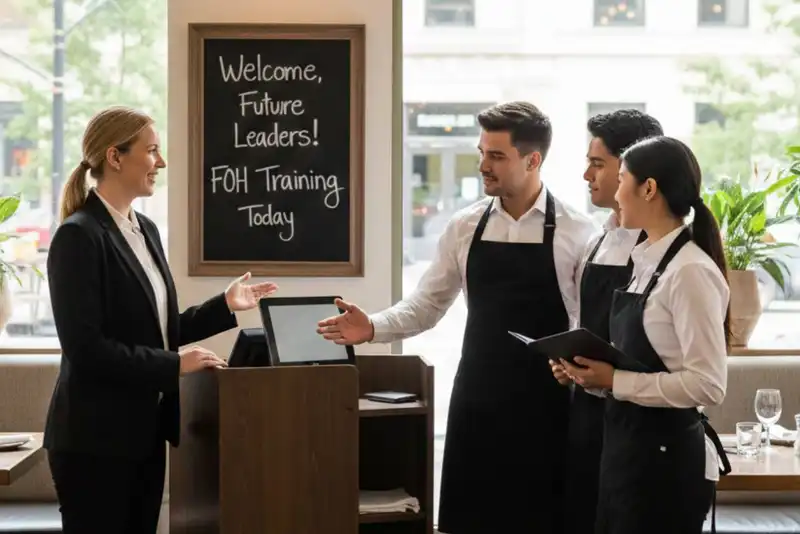
Systems training is where a lot of FOH mistakes begin - wrong modifiers, missed seat numbers, incorrect discounts, messy handoffs, and refunds handled the wrong way. The goal is to teach staff how your systems work in real situations, not just where buttons are located. Keep training hands-on, and focus on the actions that protect accuracy, speed, and cash control.
1) POS basics. Start with the fundamentals every shift depends on - selecting the correct order type (dine-in, takeout, delivery), assigning the right table, and using seat numbers if your restaurant requires them. Teach how to enter modifiers correctly (temps, sides, allergy notes), and stress that "close enough" is not good enough - small POS errors become kitchen errors and guest complaints. Have trainees ring a few practice tickets and compare them to what the kitchen should receive.
2) Voids, comps, discounts, and refunds. This is a high-risk area for both loss and conflict. Train a simple rule - if they're not authorized, they don't do it. Explain what a void is vs a comp vs a discount, and when each is appropriate in your restaurant. Make it clear what requires manager approval and how to request it. Also cover refund basics- never argue, involve a manager early, and document what happened.
3) Order accuracy habits that prevent remakes. Teach the habits that reduce mistakes - repeat orders back, confirm modifiers, verify allergy notes, and check the screen before sending. If you use coursing, teach when to fire apps and entrees. If you run food by seat number, train staff to keep that discipline - especially during rushes.
4) Host stand flow. Host training should cover how you manage the door. Teach how to quote wait times realistically, how to use the waitlist/reservation system, and how seating rotation works so one server doesn't get crushed. Include the basics of handling walk-ins, large parties, and special requests. Also train what to do when things back up- communicate with the floor manager and update guests early.
5) Takeout and delivery. Takeout and delivery mistakes damage reviews quickly, so teach a consistent routine. Train staff how to quote times based on kitchen reality, not optimism. Teach the packing checklist- correct items, sauces, utensils, napkins, labels, and allergy notes. For delivery, cover how orders are staged, how drivers pick up, and what to do if a driver is late or an order is missing.
6) End-of-shift and basic troubleshooting. Show staff the basic steps for closing checks, running reports if needed, and handling common issues like printer errors or missing modifiers. The goal is confidence - when something goes wrong, they know the first steps and when to escalate.
Strong systems training protects your restaurant from avoidable errors, waste, and cash risk - while keeping service moving.
Back of House Checklist
Back of house training should make one thing clear - speed only matters if the food is correct, safe, and consistent. New kitchen employees need a repeatable way to set up their station, follow recipes, communicate during service, and clean as they go.
1) Station setup and readiness. Start by teaching how the station should look before service begins. This includes where products are stored, what pans and tools are needed, par levels for the shift, and how to stock backups. Teach the "ready line" concept - items should be labeled, dated, portioned, and placed in the same location every time. A consistent station setup reduces mistakes and cuts ticket times because the cook is not searching for ingredients mid-rush.
2) Labeling, dating, storage, and rotation. Train the basics of safe storage and organization- label and date everything, store raw proteins correctly, and follow FIFO rotation. New hires should know which containers and labels to use, where to store items, and what to do with products that look or smell questionable. This is both a safety and cost-control topic.
3) Recipes, portion control, and plating standards. Teach cooks to follow your recipes and specs exactly - especially portions. Most food cost problems start with "a little extra" becoming a habit. Train the tools that make portions consistent (scales, scoops, ladles, portion bags) and how to use them correctly. If you have plating photos or build charts, train staff to use them as the standard, not memory. When portions and plating are consistent, quality improves and guest complaints drop.
4) Ticket flow and communication during service. Train how to read tickets, call back orders, and communicate with expo and other stations. Teach timing basics - what items take longest, when to start sides, and how to coordinate pickups so the window doesn't get stuck. Stress that communication is part of the job - calling "behind," "hot," and "corner," and speaking up early if they're falling behind.
5) Quality checks and re-fire rules. Show cooks what "done" looks like - proper temps, texture, seasoning, and presentation. Train the re-fire process- what to do if an item is wrong, how to remake quickly, and how to prevent the same mistake next time. The key is speed with accountability - fix the issue, then learn from it.
6) Cleaning as you go and closing standards. Train the cleaning routines expected during the shift and at close- wiping surfaces, changing sanitizer, sweeping, cleaning equipment, and properly storing food. Closing checklists matter because the next shift's success depends on a clean, stocked, organized kitchen.
When BOH training is structured by station and standard, cooks don't "wing it" - they follow a system that protects food quality and service speed.
Speed, Quality, and Waste Control
Once cooks understand basic station standards, the next step is teaching how to hold speed and quality under pressure - without creating waste. In most restaurants, waste is not caused by one big mistake. It's caused by repeated small habits - over-portioning, overcooking, remakes from misreads, poor prep planning, and sloppy storage. Training should focus on the behaviors that prevent waste while keeping ticket times moving.
1) Speed standards. Define the speed targets that matter in your kitchen - ticket time goals, how quickly the station should be set, and what the correct pacing looks like during a rush. Teach practical speed habits- keep the station stocked, batch smartly when appropriate, and reset between tickets. Also teach the difference between "fast" and "rushed." Rushed work creates remakes, which is slower than doing it right once.
2) Prioritizing tickets and staying organized. Train cooks to work the rail in a consistent way- read the full ticket, identify long-cook items first, and coordinate pickups with expo. Teach how to handle modifiers and special instructions without missing them. A simple rule helps - "slow items start first, then build the rest around the pickup time." When cooks learn how to prioritize, they stop getting buried when the screen fills up.
3) Quality checks that prevent re-fires. Quality is not just taste - it's doneness, portion accuracy, appearance, and consistency. Teach cooks what to check before food leaves the station- correct item, correct modifier, correct temp, correct garnish, clean plate. If you use thermometers, train when to use them and what temperatures matter. A 5-second check prevents a 5-minute remake and a disappointed guest.
4) The remake and escalation process/ Remakes happen. Train what to do immediately- communicate to expo, start the re-fire quickly, and identify why it happened (misread ticket, missing modifier, incorrect portion, timing issue). Teach cooks to escalate problems early instead of hiding them. The earlier the team knows, the better the guest experience and the smoother the line stays.
5) Waste control behaviors. Teach the most common waste drivers and how to prevent them -
Over-portioning - use the right tools every time (scale, scoop, ladle).
Over-prepping - prep to par, not to guesswork.
Bad storage - label/date, cover correctly, rotate FIFO.
Overcooking - follow cook times and hold rules, don't "just make extra."
6) Simple tracking that makes waste visible. Even basic tracking helps. Teach what should be logged (burned items, dropped food, wrong tickets, spoilage) and where it gets recorded. The purpose isn't blame - it's pattern spotting. When staff see waste as a measurable cost, they're more likely to protect it.
Training speed + quality + waste control together is what protects margin without sacrificing the guest experience.
How Technology Improves Training
Technology helps restaurant owners solve the hardest part of training - consistency. Even a strong trainer can't be in every shift, at every store, coaching every new hire. A digital training platform - like a CBT (computer-based training) library or an LMS (learning management system) - gives you a repeatable way to teach the same standards, track progress, and prove completion across your whole team.
1) Role-based learning paths. Instead of giving everyone the same packet, an LMS lets you assign training by role. FOH can get modules on service steps, guest recovery, menu knowledge, and POS basics. BOH can get modules on food safety, labeling and dating, station setup, recipes, and waste control. Managers can get coaching modules on scheduling expectations, shift leadership, safety enforcement, and documentation. When training is role-based, it's faster and less overwhelming.
2) Short lessons that fit real restaurant schedules. Digital training works best when it matches the way restaurants actually run. The most effective setups use short lessons (5-10 minutes), quick knowledge checks, and "watch + do" assignments that tie to a real shift. New hires can complete training during onboarding windows, slower parts of the day, or split across the first week - without needing a long classroom session.
3) Proof of training. One of the biggest benefits of a CBT/LMS is visibility. You can track who completed what, when they completed it, and where they scored low on quizzes. That helps you catch gaps early (like an employee struggling with allergens or cash handling) and assign targeted follow-up before mistakes happen on the floor.
4) Faster updates when things change. Menus change. Promos launch. Policies update. With digital training, you can push an update once and assign it to the right roles immediately. That prevents the common problem of "some shifts know, some shifts don't," which leads to inconsistent guest experiences and avoidable comps/remakes.
Over time, training becomes more useful when you connect it to real outcomes- fewer voids, fewer refires, fewer safety incidents, better ticket times, and stronger guest feedback. The point isn't to overwhelm staff with metrics - it's to use data to confirm training is working and to focus coaching where it's needed most.
Altametrics
If you want training that's easier to roll out, easier to track, and more consistent across every location and shift, take a look at Altametrics. Altametrics helps restaurant operators streamline back-office operations - including tools that can support structured onboarding, accountability, and operational consistency - so training doesn't live in someone's notebook or depend on one great trainer. Learn more about Altametrics by clicking "Schedule a Demo" below.
Perfect Solution for Your Training and Development Needs
Teach Your Staff with Altametrics LMS

Employee scheduling
Human Resource Management for Restaurants
Employee scheduling
Common Payroll Challenges in Restaurants

Sales forecasting
How to Use Restaurant Analytics to Improve Profitability

Restaurant management
The Complete Guide to Restaurant Reputation Management

Accounting payroll
Restaurant Cash Handling Procedures

Accounting payroll
How to Manage Restaurant Finances

Employee scheduling
How to Motivate Restaurant Staff
Software integration
10 Ways Technology Can Help Control Food Cost in Restaurants
Frequently Asked Questions
How long should restaurant training take for a new hire?
Most new hires need structured training across their first week, then continued coaching over the next 2-4 weeks to build speed and confidence.
What safety topics should every employee learn (FOH and BOH)?
Food safety basics, allergen awareness, slip/cut/burn prevention, chemical handling, equipment rules, emergency procedures, and incident reporting.
What should FOH staff learn about the POS system?
How to ring items correctly (modifiers, seat numbers, order types), prevent errors, and understand what requires manager approval (voids, comps, discounts, refunds).
What should be included in restaurant staff training?
Staff training should cover core standards (safety, policies), role skills (FOH service steps or BOH station execution), and workflow (how orders move and how issues get escalated).