What is Forecasting Errors ?
Forecasting errors occur when predicted demand, sales, or staffing don't match reality, leading to inefficiencies, higher costs, and poor operational decisions.
Why Forecasting Errors Spike in Q1 and How Top Operators Fix Them in 90 Days

Overview
If you run a multi-unit restaurant, you already know that Q1 behaves differently. One week is busy, the next week is unexpectedly slow. Weather changes your plans overnight. Digital orders spike at random hours. School schedules and local events make patterns disappear.
This is why so many operators see Q1 forecasting issues long before they see solutions. Small shifts turn into big problems. Prep becomes unpredictable. Staffing becomes guesswork. And before you know it, the quarter is filled with unnecessary forecasting errors that affect labor, food and service.
But top operators do not accept this as normal. They fix it. And most see meaningful improvements in accuracy within ninety days by using smarter forecasting methods or a modern restaurant management system.
This guide shows why Q1 breaks so many forecasts, what it costs, and how top operators close the accuracy gap in a matter of weeks.
Why is forecasting in Q1 so difficult for restaurants?
Q1 behaves differently compared to all other quarters. Operators feel it every year but rarely get the chance to understand what is happening underneath.
Here are the 6 forces that create Q1 forecasting issues in almost every restaurant.
1. Post holiday traffic swings
Guest behavior changes drastically after December.
- Dine in slows down
- Digital traffic jumps at random times
- Weekend patterns become inconsistent
2. Weather chaos
Snow, rain, warm spikes and cold snaps all hit between January and March. A simple warm day can shift demand from delivery to dine in a matter of hours. A storm can wipe out your dinner traffic completely.
Traditional spreadsheets cannot process these sudden changes, which lead to frequent demand forecasting mistakes during Q1.
3. School calendars and local schedules
Mid-winter breaks, early spring breaks, exam weeks and holiday closures shift breakfast and lunch traffic. Old forecasting methods miss these details which cause labor forecasting errors on the schedule.
4. Events come back to life
Playoffs, concerts, festivals, and community events return after the holiday break. These events impact staffing, prep levels and delivery vs dine in mix. If your forecast is not pulling event data, you will see forecasting errors every weekend.
5. Digital behavior changes
DoorDash promotions, Uber promotions, free delivery days and loyalty pushes create unpredictable spikes. Digital demand often peaks at a different hour than in store demand. When both channels are combined as a single forecast, it results in major sales forecasting errors.
6. Last-Year Forecasting Just Doesn't Hold Up Anymore
Many operators still rely on last year's trends, gut instinct, spreadsheet exports, or the classic LY + X% rule, but Q1 never behaves the same way twice. From 2022 to 2025, January traffic swung from 18% to +27%, making it impossible for any static or manual forecasting method to keep up.

How do these forecasting errors turn into real operational losses?
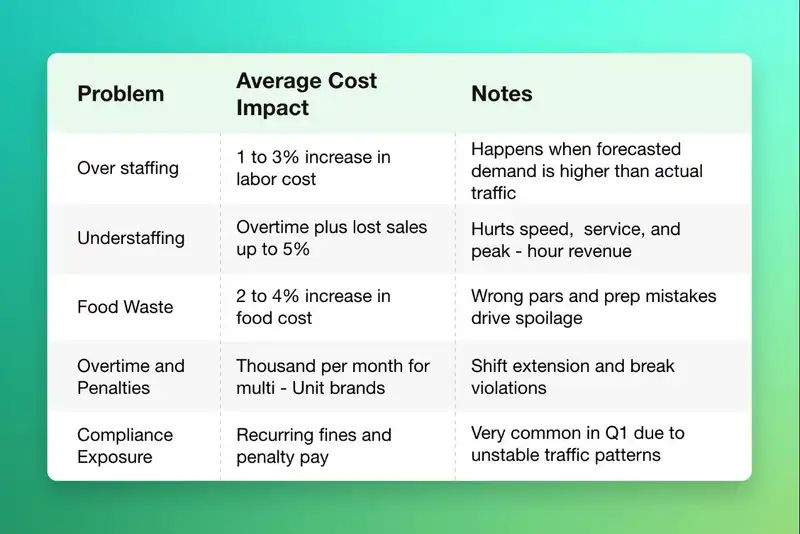
Forecasting isn't just a planning exercise. It shapes daily labor, food prep, guest experience, and even compliance. When it's off, the costs show up immediately.
1. Overstaffing (Labor Cost Inflation)
When forecasts run high, stores end up paying for labor they don't actually need. That means money leaves the business without adding any value.
What does this look like-
- Extra people on the floor with nothing to do
- Wage bills rising without matching sales
- Predictive scheduling issues from over-published hours
2. Understaffing (Guest Experience Damage)
Low forecasts lead to stretched teams and frustrated guests. Service slips, mistakes increase, and revenue walks out the door.
Common outcomes-
- Long waits and slower service
- Staff rushing, leading to remakes and comps
- Emergency shift extensions that trigger overtime
3. Food Waste
Bad forecasting drives incorrect prep, spoilage, and over-ordering all of which eat into margins.
You'll see-
- Prep lists that don't match real demand
- Batches made too early or too late
- Ingredients expiring before use
4. Overtime Spikes
When labor and sales fall out of sync, stores scramble and that scramble is expensive.
It often means-
- Unplanned shift extensions
- Last-minute schedule changes
- Premiums or penalties in regulated states
5. Compliance Exposure
Staffing shortages make it easy to miss breaks, mispay premiums, or violate predictability rules. Forecasting accuracy is a direct line to compliance stability.
Risk areas-
- Break and meal violations
- Predictable scheduling breaches
- Payroll inconsistencies
Why does traditional forecasting break down in Q1?
Traditional forecasting works only when patterns stay predictable. But Q1 is the opposite. Traffic shifts without warning, weather disrupts demand, and digital orders behave differently every week. Old methods simply cannot keep pace with how fast Q1 changes.
What does traditional forecasting rely on
- Intuition and manual judgment
- Spreadsheets and basic formulas
- Last year's POS trends
- Simple seasonal tweaks

What do traditional methods fail to capture
- Hourly microtrends and unpredictable dips
- Fast-moving weather changes
- Event-driven surges
- Digital order spikes and marketplace promotions
- How each store behaves differently in a multi-unit brand
Did You Know?
Restaurants that still rely on spreadsheets experience up to 2x more Q1 forecasting errors because manual models can't react to daily shifts in weather, events, and digital orders.
What AI Forecasting Understands That Humans Can't
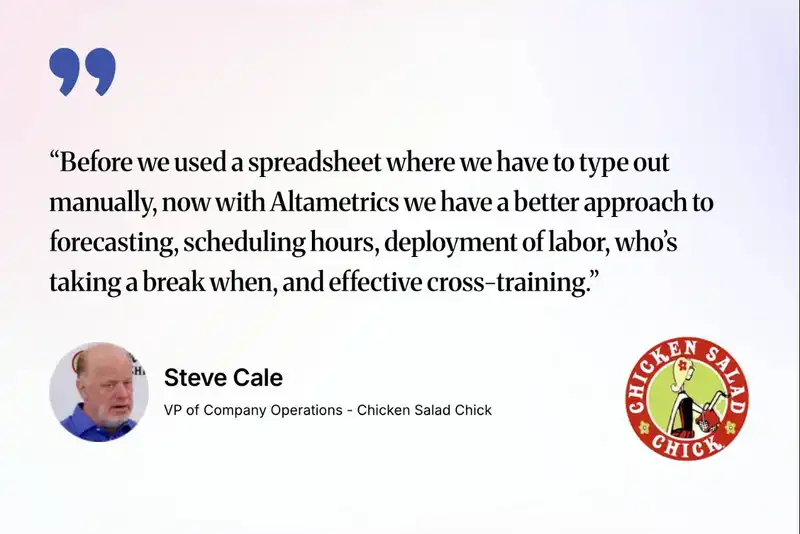
AI forecasting engines pick up signals that manual forecasting cannot capture. They read live demand, react instantly, and help operators avoid the costly forecasting errors that show up the most in Q1. This means fewer surprises, faster adjustments, and more confidence in every shift.
1. 15 Minute Demand Intervals
Studies show demand in very small-time windows instead of full shifts. This gives managers a clearer picture of when business truly rises and falls so staffing becomes more precise.
Benefits
- Accurate Labor Alignment
- Higher Sales Per Labor Hour
- Smoother Shift Flow
Weather changes everything in Q1 and manual forecasts cannot react fast enough. AI forecasting updates demand instantly when rain, heat, storms, or temperature drops appear.
Benefits
- Smarter Prep Decisions
- Reduced Food Waste
- Fewer Last Minute Staffing Fixes
Digital orders behave differently than dine in traffic and usually peak at unpredictable times. AI Forecasting separates both patterns so stores are ready for sudden mobile and marketplace surges.
Benefits
- Balanced Team Workload
- Faster Order Throughput
- Better Guest Experience
4. Local Events and Community Activity
Events like sports games, concerts, school activities and festivals can shift demand dramatically. AI forecasting adjusts forecasts as soon as event signals appear, so teams are never surprised.
Benefits
- Predictable Traffic Swings
- Better Schedule Planning
- Lower Overtime Risk
Seasonal behavior often hides inside bigger patterns that humans cannot detect manually. AI forecasting separates these trends, so operators understand what is normal, what is temporary and what needs action.
Benefits
- Clearer Sales Patterns
- More Stable Q1 Forecasting
- Stronger Inventory Control
No two locations behave the same even within the same brand. AI forecasting treats each store as its own engine, so forecasts stay accurate across all units.
Benefits
- Location Specific Insights
- Consistent Multi Unit Performance
- Better Local Decision Making
After major holidays, demand does not return to normal instantly. AI forecasting maps the recovery curve, so teams do not overstaff or over prep during the first slow days.
Benefits
- Smoother Week After Holidays
- Better Prep Accuracy
- Lower Labor Waste
What happens when accuracy improves by 5 to 12 points?
Brands that adopt modern forecasting methods see fast results.
- Labor savings
Schedules match demand and wasted hours drop. This reduces labor forecasting errors and cuts one to 3% of labor cost. - Lower food waste
Prep lists become accurate, which improves yield and reduces spoilage. - Better guest throughput
Staffing aligns with real peaks. Wait time shrink. Guests get a smoother experience. - A calmer team
When the schedule reflects reality, the team stops feeling crushed during surprise rushes. - More stable compliance
Predictable staffing means fewer violations. This accuracy never stops at Q1. The improvements continue throughout the year.
The 90 Day Plan Top Operators Follow to Fix Forecasting Errors
| Phase | Timeline | What Happens in This Phase | Key Actions |
| Phase 1 | Day 1 to 30 | Build the baseline so teams understand where the forecasting errors are coming from and what needs to be corrected. | Ingest POS And Store Data Measure Current Forecasting Errors Add Weather and Event Signals Separate Digital and In Store Patterns |
| Phase 2 | Day 31 to 60 | Train and optimize the forecasting model using real operational patterns from your stores. | Retrain The Forecasting Model Adjust Daypart Patterns Align Prep Logic with Forecast Rebuild Labor Templates |
| Phase 3 | Day 61 to 90 | Deploy the system, monitor accuracy and lock in the improvements across labor, prep and scheduling. | Move To Fifteen Minute Interval Forecasting Review Weekly Variance Connect Forecasting to Scheduling Audit Food and Labor Savings |
What happens after 90 days?
Most teams see their accuracy rise by 5 to 12 points, easing the usual Q1 forecasting issues and bringing much more stability for the rest of the year.
What Should Operators Really Focus on this Q1?
If you want Q1 to finally feel accurate and manageable instead of unpredictable, here is where you can start.
Step 1- Join the 90 Day Altametrics Forecast Accuracy Challenge
This gives your team a clear path to improve accuracy quickly. If the model doesn't outperform your baseline, you receive two months free, so there is no risk in trying.
Step 2- Request a Free Forecast Audit
You will get a clear view of the five to seven biggest reasons your forecasts are missing the mark. Many operators say this is the moment everything starts to make sense.
Step 3- Connect Forecasting with Labor and Prep
A forecast only helps when it directly influences schedules, prep lists and daily decisions. Once everything works together, accuracy improves much faster.
Step 4- Clean Up Punch Noise with AI Clock
Incorrect punches lead to incorrect data. Fixing this makes your forecasting variance far easier to measure, track and improve week by week.
Summary
Q1 doesn't have to be the quarter that catches everyone off guard year after year. When operators rely on the right tools and a structured process, the usual demand forecasting mistakes, labor forecasting errors, and sales forecasting errors become far easier to control. The moment forecasting becomes more accurate, everything else falls into place.
The big takeaway is simple. Q1 will always be unpredictable, but your response doesn't have to be. With smarter forecasting, tighter workflows, and real-time signals guiding your decisions, you set your restaurants up for a stronger, calmer, and more profitable year ahead.


Sales forecasting
How to Use Restaurant Analytics to Improve Profitability

Restaurant management
The Complete Guide to Restaurant Reputation Management

Accounting payroll
Restaurant Cash Handling Procedures


Accounting payroll
How to Manage Restaurant Finances

Employee scheduling
How to Motivate Restaurant Staff

Software integration
10 Ways Technology Can Help Control Food Cost in Restaurants


Restaurant management
How Much Should a Restaurant Spend on Marketing?

Inventory management