What equipment should be checked daily for food safety?
Thermometers (clean/working), coolers and freezers (temps), hot holding units (holding temps), dish machine or 3-comp sink setup, and hand sinks (supplies/hot water).
Food Safety Checklist for Restaurants

Overview
A food safety checklist is a repeatable set of steps your team follows to reduce the most common causes of foodborne illness and health-code violations. In a restaurant, food safety problems usually come from a few predictable areas - time and temperature control, cross-contamination, poor personal hygiene, unsafe receiving/storage, and incomplete cleaning and sanitizing. A good checklist focuses on these "high-risk, high-frequency" points and turns them into simple actions that can be verified every shift.
A checklist should cover the full flow of food through your operation - from delivery at the back door to storage, prep, cooking, holding, service, cooling, reheating, and closing procedures. It should also include the tools that make safety measurable, such as temperature logs (walk-ins, hot holding, cooked items), sanitizer concentration checks, date labeling and discard rules, and basic equipment verification (thermometers, dish machine or 3-comp sink setup).
Daily Opening Checklist
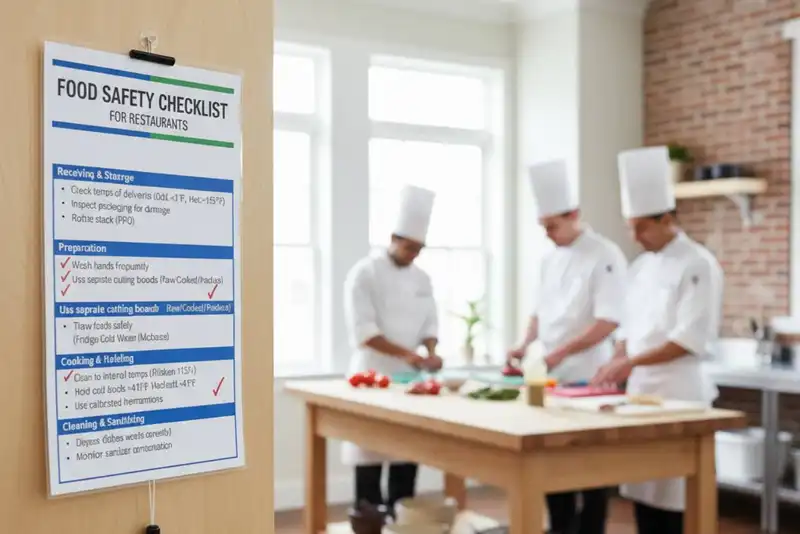
The opening checklist sets the tone for the entire day. If food safety controls aren't in place before the first order hits the kitchen, teams end up reacting during the rush - when shortcuts are most likely. Use this opening routine to prevent time/temperature abuse, cross-contamination, and sanitizing failures before service starts.
1. Handwashing stations ready
- Confirm every hand sink is accessible (not blocked by bins, towels, or prep tools).
- Restock soap and paper towels and verify hot water is available.
- Fix any missing supplies before prep begins.
2. Sanitizer setup and verification
- Mix sanitizer using the product directions (bucket or spray bottle).
- Use test strips to confirm concentration is in the correct range.
- Document the check and replace sanitizer if it's out of spec or visibly dirty.
3. Cold holding temperatures checked
- Check and log temps for walk-ins, reach-ins, and prep coolers.
- If any unit is above the safe range, take corrective action immediately. (1)Move TCS foods to another approved cooler. (2)Minimize door openings and alert management/maintenance.
- Don't begin prep with TCS items if you can't hold them safely.
3. Date labels and discard rules enforced
- Verify ready-to-eat items, prepped ingredients, and leftovers have clear labels (prep date and discard date).
- Discard anything expired, unlabeled, or questionable.
- Confirm FIFO rotation is being followed.
4. Storage order and cross-contamination controls
- Check that raw proteins are stored below ready-to-eat foods.
- Ensure containers are covered, clean, and stored off the floor.
- Confirm allergen items are labeled and stored to reduce mix-ups.
5. Equipment readiness check
- Verify probe thermometers are clean, accurate, and easy to access.
- Confirm dish machine or 3-comp sink is set up properly (wash/rinse/sanitize).
- Restock gloves, wipes, and cleaning supplies needed for the shift.
If you run this opening checklist every day - and require fixes, not just checkmarks - you create a consistent baseline for safe service.
Streamline Prep, Cut Labor Costs, and Ensure Freshness
Get Digital Prep Sheets with Altametrics!
Receiving & Storage Checklist
Receiving and storage is where many food safety issues begin. If unsafe product gets accepted at the back door - or if it's stored incorrectly - everything downstream becomes harder to control. The goal of this checklist is to prevent time/temperature abuse, contamination, and allergen mix-ups before food ever reaches the line.
1. Confirm supplier and delivery conditions
- Accept deliveries only from approved suppliers and scheduled deliveries when trained staff are present.
- Check that the truck looks clean and temperature-controlled, and that frozen and refrigerated items are delivered promptly (not sitting on the dock).
- Reject any items delivered in dirty containers or mixed with chemicals.
2. Inspect packaging and product condition
- Reject torn, leaking, swollen, or dented cans (especially along seams).
- Check seals and tamper-evident packaging for ready-to-eat items.
- Look for signs of thawing/refreezing on frozen products (ice crystals, wet boxes).
3. Verify temperatures on arrival
- Use a calibrated probe thermometer for TCS foods when needed.
- Confirm refrigerated items arrive cold and frozen items arrive solidly frozen.
- If a product is outside safe limits, reject it or follow your approved corrective action policy (do not "cool it down later").
4. Label, date, and store immediately
- Apply receiving date labels if that's your process, and ensure all opened items get prep/discard labels.
- Move product to storage right away - cold foods to refrigeration, frozen foods to freezers, dry goods to dry storage.
5. Store to prevent cross-contamination
- Store raw proteins below ready-to-eat foods and produce.
- Keep foods covered, in food-grade containers, and off the floor.
- Separate cleaning chemicals from all food and food-contact items.
6. Control allergens and special items
- Clearly label allergen-containing ingredients and store them consistently (dedicated bin/shelf when possible).
- Prevent scoops, ladles, and measuring tools from moving between allergen and non-allergen containers.
7. Use FIFO and monitor shelf life
- Rotate stock so the oldest product is used first.
- Do quick "discard checks" daily to remove expired or unlabeled items.
When receiving and storage are controlled, your kitchen starts the day with safer inputs - and fewer surprises during service.
Prep & Production Checklist
Prep is where food safety risk spikes because you're handling raw ingredients, using shared surfaces, and leaving food out while you work. A prep and production checklist keeps the basics consistent - clean hands, clean tools, separation of raw and ready-to-eat foods, and strict control of time and temperature.
1. Set up prep stations correctly
- Start with cleaned and sanitized surfaces, then keep sanitizer buckets or approved spray sanitizer available.
- Use clean cutting boards and knives at the start of prep (not "good enough" from yesterday).
- Keep wiping cloths in sanitizer between uses.
2. Prevent cross-contamination
- Separate raw proteins from ready-to-eat foods at all times.
- Use designated boards/tools (or a clear process for washing/sanitizing between tasks).
- Never place cooked or ready-to-eat food on a surface that held raw product unless it has been washed, rinsed, and sanitized.
3. Control time out of temperature
- Limit how long TCS foods sit on prep tables or carts.
- Stage product in small batches and return it to refrigeration quickly.
- If you use "time as a control," follow a written policy, label the start time, and discard on schedule.
4. Verify cooking temperatures
- Use a calibrated probe thermometer to confirm final cook temps for high-risk items.
- Check the thickest part of the product and document required items (especially for chicken, ground meats, and pooled eggs).
- If a product is below target, continue cooking and re-check - don't guess.
5. Cool food safely
- Cool cooked foods quickly using shallow pans, uncovered cooling (when allowed), ice baths, or blast chilling if available.
- Avoid deep containers that trap heat.
- Label cooling items with start times and verify cooling progress per your policy.
6. Reheat correctly
- Reheat previously cooked foods rapidly to a safe temperature, then place into hot holding.
- Never reheat using hot holding equipment alone if it cannot reheat fast enough.
7. Allergen control during prep
- Use separate tools/containers when possible and clearly label allergen items.
- Change gloves, wash hands, and sanitize surfaces before switching to allergen-free prep.
This checklist keeps prep from becoming a "gray area" and makes safety measurable during busy production periods.
Service Line Checklist
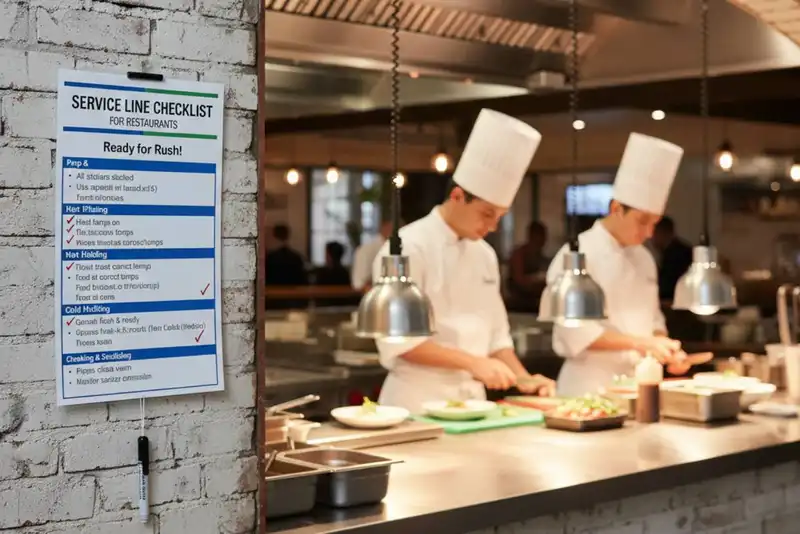
The service line is where food safety can slip fast because speed matters and product is constantly moving. Your goal is to keep food out of the danger zone, prevent cross-contact, and maintain clean food-contact practices during the rush - without slowing service down.
1. Verify hot and cold holding
- Check hot holding units at the start of service and at set intervals (for example, every 2-4 hours).
- Confirm cold wells and refrigerated rails are holding product safely, not just "feeling cold."
- If food is out of range, take corrective action - reheat properly and return to hot holding, rapidly chill and return to cold holding, or discard based on your policy and time out of temp.
2. Protect food on the line
- Keep lids on pans when possible and use sneeze guards correctly.
- Store backup product in refrigeration, not on counters.
- Don't overload cold wells - food must be surrounded by cold air or ice to hold temperature.
3. Manage utensils and glove use
- Store utensils with handles above food and in a clean, protected way.
- Replace utensils on a schedule and whenever they're dropped, contaminated, or used for the wrong item.
- Change gloves between tasks (raw to ready-to-eat, allergen to non-allergen, cleaning to food handling) and wash hands before putting on new gloves.
4. Prevent "topping off" problems
- Avoid topping off pans without controls, because it mixes older product with newer product and hides expired food.
- Use smaller pans and rotate them more often, or fully replace pans while tracking time/temperature.
5. Allergen and special-order controls
- Confirm tickets clearly mark allergen requests.
- Use a clean pan, clean tools, and a cleaned/sanitized surface for allergen-sensitive orders.
- Designate specific squeeze bottles or containers for allergen-related sauces if needed.
6. Guest-facing touchpoint hygiene
- Regularly sanitize high-touch areas (counter edges, handles, POS screens, beverage station levers).
- If you offer self-serve items (condiments, soda, utensils), restock cleanly and monitor for contamination.
A strong line checklist makes food safety part of the flow of service - so the rush doesn't turn into risk.
Cleaning & Sanitizing Checklist
Cleaning and sanitizing are not the same thing, and restaurants need both. Cleaning removes food, grease, and dirt. Sanitizing reduces germs on food-contact surfaces to safer levels. If you skip the cleaning step, sanitizer can't do its job. This checklist helps teams apply the right process at the right frequency - especially during busy shifts.
1. Know what must be cleaned vs. sanitized
- Food-contact surfaces (cutting boards, knives, prep tables, slicers) must be cleaned and sanitized.
- Non-food-contact surfaces (floors, walls, trash areas) still need cleaning to prevent pests and cross-contamination.
2. Set sanitizer correctly and verify it
- Mix sanitizer according to the product label (bucket or spray method).
- Test with sanitizer strips and document results if required.
- Replace sanitizer when it falls out of range, gets cloudy, or after heavy use.
3. Follow a simple surface routine during service
- Wipe spills immediately to prevent buildup and slipping hazards.
- Keep wiping cloths stored in sanitizer between uses (never on shoulders or counters).
- Sanitize high-frequency food-contact areas on a set schedule (for example, every 24 hours and after task changes).
4. Dish machine checklist (if applicable)
- Confirm the machine is on, heated, and running properly before service.
- Check and record required temperatures or chemical sanitizer readings based on your system.
- Keep racks, curtains, and scrap screens clean so the machine can sanitize effectively.
5. Three-compartment sink checklist (if applicable)
- Set up as wash, rinse, sanitize in the correct order.
- Verify water temperature and sanitizer concentration.
- Air-dry all items (do not towel-dry), and store clean items in a protected area.
6. Clean equipment that often gets missed
- Ice machine scoop and holder (scoop stored outside the ice bin).
- Soda nozzles, tea urn spigots, blender gaskets, slicers, can openers.
- Refrigerator handles, drawer pulls, and prep rail lids.
7. End-of-shift reset
- Break down, wash, rinse, and sanitize removable parts.
- Empty and clean sanitizer buckets, replace with fresh solution next shift.
- Take out trash, clean trash cans, and leave floors dry.
When cleaning is scheduled and verified - not "when we have time" - food safety becomes reliable, not reactive.
People, Policies, and Training Checklist
Even with the best logs and equipment, food safety still depends on people. Most breakdowns happen when someone is rushed, unsure of the rule, or doesn't feel accountable. This checklist focuses on clear expectations for hygiene, illness reporting, allergen handling, and training - so safety is built into daily behavior.
1. Employee health and illness reporting
- Require staff to report symptoms like vomiting, diarrhea, fever, sore throat with fever, or jaundice before starting a shift.
- Have a clear "send home" rule and a manager escalation step when symptoms are reported.
- Document exclusions or restrictions when required by your policy and local health rules.
2. Handwashing standards (non-negotiable)
- Train when to wash, before starting work, after restroom use, after handling raw food, after touching face/hair/phone, after taking out trash, and after cleaning tasks.
- Post simple handwashing signage and enforce proper technique (not a quick rinse).
- Ensure managers correct issues immediately and consistently.
3. Glove use and bare-hand contact rules
- Use gloves when required, but treat gloves as a barrier that still needs changing.
- Change gloves between tasks, after touching non-food surfaces, and when switching between raw and ready-to-eat foods.
- Wash hands before putting on new gloves.
4. Allergen awareness and cross-contact prevention
- Make allergen requests obvious on tickets and in verbal handoffs.
- Use clean tools, clean pans, and a cleaned/sanitized surface for allergen-sensitive orders.
- Store allergen ingredients in labeled containers and avoid shared scoops across products (especially flour, nuts, dairy-based sauces).
5. Training and reinforcement plan
- New hire checklist- handwashing, glove rules, time/temperature basics, cross-contamination, and where logs are kept.
- Role-based training- line cooks (temps/holding), prep team (cooling/labeling), dish (sanitizing verification), managers (corrective actions).
- Quick refreshers. 5-minute pre-shift reminders on one topic each week.
6. Accountability and verification
- Assign owners for each checklist/log (by role, not "someone").
- Require managers to spot-check and sign off, and coach in the moment.
- Treat repeat misses as a training or staffing issue - not a paperwork issue.
When policies are simple, visible, and enforced consistently, food safety becomes part of your culture instead of a binder on a shelf.

Employee scheduling
Human Resource Management for Restaurants
Employee scheduling
Common Payroll Challenges in Restaurants

Sales forecasting
How to Use Restaurant Analytics to Improve Profitability

Restaurant management
The Complete Guide to Restaurant Reputation Management

Accounting payroll
Restaurant Cash Handling Procedures

Accounting payroll
How to Manage Restaurant Finances

Employee scheduling
How to Motivate Restaurant Staff
Software integration
10 Ways Technology Can Help Control Food Cost in Restaurants
Frequently Asked Questions
What's the best way to prevent cross-contamination during prep?
Separate raw and ready-to-eat foods, use designated tools/boards (or wash-rinse-sanitize between tasks), sanitize surfaces regularly, and store raw proteins below ready-to-eat foods.
How should we manage date labeling and FIFO?
Label prepared/ready-to-eat foods with prep and discard dates, store items covered, and rotate so the oldest product is used first. Discard anything expired or unlabeled.
How do we control allergens in a busy kitchen?
Make allergen orders obvious, use clean tools and surfaces, avoid shared scoops, label allergen ingredients clearly, and change gloves/wash hands before starting allergen-sensitive prep.
What should be on a restaurant food safety checklist?
Your checklist should cover receiving, storage, prep, cooking temps, hot/cold holding, cooling/reheating, cleaning and sanitizing, employee hygiene, and allergen controls - plus corrective actions when something is out of spec.