What should I include in a restaurant training program?
At minimum - standards/non-negotiables, role checklists, safety + sanitation basics, guest experience steps, station procedures, and sign-offs to verify skill mastery.
Restaurant Staff Training Guide

Importance of Restaurant Staff Training
Restaurant staff training isn't just about teaching someone how to run food or clock in - it's how you protect your brand, your margins, and your sanity. When training is consistent, your restaurant becomes predictable in the best way - guests get the same experience no matter who's on the floor, tickets move smoothly, and managers spend less time putting out fires. When training is inconsistent, the opposite happens - mistakes multiply, standards drift, and your best employees burn out because they're constantly fixing issues that should've been prevented.
Training also has a direct impact on profitability. A well-trained team makes fewer costly errors like comped meals, incorrect orders, over-portioning, wasted product, and missed upsell opportunities. They're also faster - faster at opening and closing duties, faster on the line, faster at turning tables, and faster at solving guest needs before they become complaints. Speed and accuracy together are where restaurants win.
Then there's safety and compliance. Food safety, sanitation, alcohol service rules, and workplace policies aren't optional. Training is how you reduce risk, avoid health-code issues, and ensure your team understands what's expected in real-world scenarios - like allergy requests, temperature logs, cleaning schedules, and incident reporting.
Finally, training is one of the strongest levers you have for retention. People are more likely to stay when they feel confident, supported, and set up to succeed. A clear training plan tells your team - "We take you seriously, and we want you to win here." That mindset creates stronger culture, better performance, and less turnover over time.
Standards, Roles, and the Plan
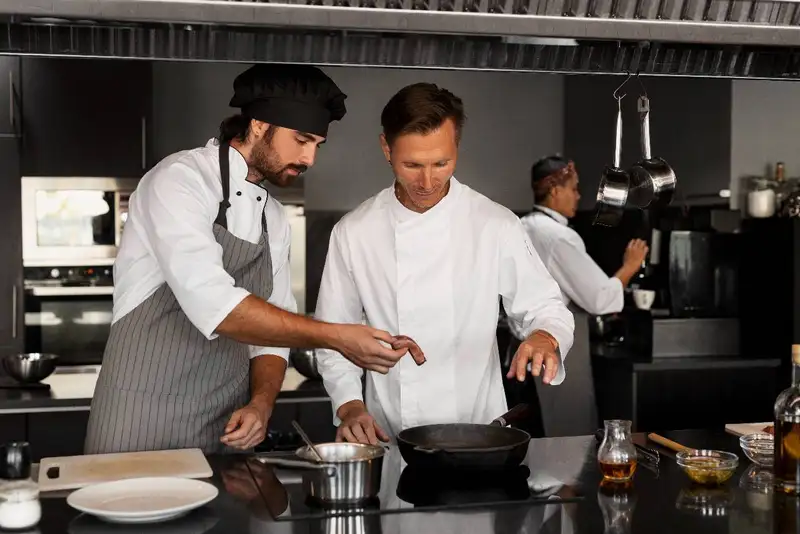
Before you build checklists or training videos, you need a foundation - because training without clear standards becomes "everyone teaches it their way." The foundation is what makes your program consistent across shifts, locations, and trainers. Start by defining your restaurant's non-negotiables. These are the behaviors and standards that must happen every time- how guests are greeted, how tickets are called, how food is handled, how stations are cleaned, how problems are escalated, and what "professional" looks like on your team. Keep the list short and specific so it's actually usable - think 8-12 core standards, not a 30-page philosophy.
Next, map out your roles and what ready means for each one. Instead of treating training as one-size-fits-all, create a simple role ladder - (1) New Hire (2) In Training (3) Certified (4) Cross-Trained (5) Trainer. This instantly solves a common problem - people working solo before they're truly prepared. "Certified" should mean the employee has demonstrated the skills, not just been scheduled for enough shifts.
Now outline your training timeline. Most restaurants benefit from a simple structure -
1. Day 1. Orientation + basics (culture, safety, policies, tour, introductions)
2. Week 1. Core skills + shadowing + limited responsibilities
3. Weeks 2-4. Full station reps + speed/accuracy + real-time coaching
4. 30/60/90 days. Check-ins, advanced skills, cross-training eligibility
Finally, assign ownership. Training fails when it belongs to "everyone," because then it belongs to no one. Decide who owns the program (often the GM), who trains day-to-day (shift leads or certified trainers), and who verifies sign-offs (manager). When you set this foundation first, everything you build next - manuals, modules, checklists - will actually stick and scale.
Perfect Solution for Your Training and Development Needs
Teach Your Staff with Altametrics LMS
Build a Restaurant Training Manual
A training manual doesn't need to be a giant binder that collects dust. The goal is to create a living playbook your team can reference quickly - especially during busy shifts - so training stays consistent even when managers are stretched thin. The best manuals are built around "what people need to do" rather than "what we hope they remember." Think practical, clear, and easy to scan.
Start with a simple structure. Most restaurant training manuals include -
1. Your standards - the non-negotiables from your foundation (service standards, cleanliness expectations, teamwork norms)
2. Policies and basics - attendance, uniforms, breaks, meal policy, cash handling rules, comps/voids expectations, harassment and safety policies
3. Guest experience - steps of service, greeting scripts, how to handle waits, the tone of hospitality, how to recover a guest when something goes wrong
4. Food safety and sanitation - handwashing, glove use, temps, labeling, allergen handling, cleaning schedules, where logs live
5. Role procedures - host stand process, server station duties, expo flow, bartender steps, line station setup, prep standards, closing/opening checklists
Then make it usable. Write in short sections with bold headings, bullets, and checklists. Any task that happens daily should be a checklist - opening, side work, closing, line setup, restroom checks. For anything that requires judgment (like guest complaints), include simple scripts and decision rules - what to say, what to do, when to escalate.
Next, turn the manual into training sign-offs. A manual is only helpful if you can confirm someone can do the job. Create a sign-off sheet for each role with "must demonstrate" items, like -
- "Can greet and seat using the restaurant's script"
- "Can run a station close checklist without missing steps"
- "Can explain allergy process and escalation steps"
- "Can execute a line setup to standard within X minutes"
Lastly, keep it current. Add a version date on the first page and update sections whenever you change a menu item, a POS flow, or a procedure. A small, updated manual beats a perfect manual that's outdated.
Design Your Training System and Delivery Methods
Once your foundation and training manual are in place, the next step is turning training into a repeatable system - not an improvised experience that depends on which trainer is working that day. The most effective restaurant training programs use a mix of learning methods because people learn differently, and the job demands both knowledge and muscle memory. Your goal is to build a training flow that's simple, consistent, and easy to manage during busy operations.
Start with a "crawl, walk, run" structure for every role -
1. Crawl (observe + learn basics) - New hires begin with orientation, safety rules, and a high-level walkthrough of the role. This includes touring the kitchen and storage areas, reviewing key policies, and learning the "why" behind standards like food safety, cleanliness, and guest experience. Pair this with shadowing - watching a strong employee do the job the right way.
2. Walk (guided practice) - Next, the trainee starts performing tasks with supervision. This is where checklists and station guides matter most. For example, a server might practice greeting tables and entering orders while the trainer handles payment and problem-solving. In the kitchen, a trainee might own a small portion of a station (one prep item, one plating step, one section of the line) before running the full station.
3. Run (verified independence) - Finally, the trainee runs the role with the trainer observing and stepping in only if necessary. This phase ends with a sign-off- the trainee demonstrates required skills consistently, not just once.
To support this flow, use multiple delivery methods -
- Shadow shifts (watch and learn)
- Demonstrations (trainer shows, trainee repeats)
- Role-play (guest recovery, upselling, allergy requests)
- Micro-quizzes (menu knowledge, safety steps, POS shortcuts)
- Pre-shift huddles (one training topic per day)
The key is tracking. Use a simple training tracker - paper, clipboard, or digital - to record what was trained, what was practiced, and what still needs work. Each shift should end with a quick feedback loop - what went well, what to improve, and what the trainee will focus on next shift. This structure makes training faster, more consistent, and far less stressful for everyone involved.
Restaurant Manager Training Module

If you want your training program to stick, your managers have to be trained too - because managers set the tone, enforce standards, and coach performance in real time. When manager training is weak, the restaurant relies on personalities instead of systems - one shift runs smooth, the next shift falls apart. A strong manager training module gives your leaders a consistent way to run the floor, develop people, and protect the business.
Start by defining what a "trained manager" can do. Manager readiness is not "they can fill in anywhere." It's the ability to lead a shift with structure, make good decisions under pressure, and coach without escalating drama. Break manager training into five core areas -
1) Shift leadership and execution - Teach managers how to plan and run the shift- pre-shift planning, station assignments, pacing, communication rhythms, and how to spot problems early (ticket times climbing, host stand backing up, line misfires). Include opening/closing leadership, handoffs between shifts, and how to run a clean, accountable close.
2) Coaching and performance feedback - Managers should learn a repeatable coaching method- observe behavior, name the standard, explain the impact, demonstrate the correct method, and confirm understanding. Train them to correct issues fast and privately, and to document patterns without turning every conversation into a write-up.
3) People fundamentals - Cover onboarding expectations, training sign-offs, probation check-ins, conflict resolution, attendance management, and how to build morale. Include how to handle common scenarios- call-outs, interpersonal conflict, disrespectful guest interactions, and poor attitude during rush.
4) Controls and compliance - Managers must understand the "risk" areas - food safety logs, allergy procedures, sanitation standards, responsible alcohol service rules (if applicable), cash handling, comps/voids, and incident reporting. This is where consistency protects the business.
5) Operating discipline - Train managers to use checklists and metrics - labor vs. sales awareness, waste awareness, portion control reinforcement, and simple quality checks (plate appearance, line setup, dining room readiness). The goal isn't to turn managers into accountants - it's to build habits that prevent margin leaks.
Finish with a manager sign-off - the manager runs a shift while being observed, completes required checklists, coaches at least one team member appropriately, and demonstrates control of standards. When managers are trained to lead, your entire staff training program becomes easier to maintain.
Front-of-House Training Modules
Front-of-house training should create one thing above all - a consistent guest experience, no matter who's working. The best FOH modules are role-based, built around real shift situations, and reinforced with checklists and "what to say" scripts. Instead of training by memory ("watch me do it"), train by standards ("this is how we do it here").
Host Training Module
Hosts control the first impression and the flow of the dining room. Train them on -
1. Greeting standards - eye contact, smile, timing, and the exact language you want used
2. Waitlist management - quoting accurate waits, updating guests, and when to escalate issues
3. Seating flow - balancing server sections, pacing the kitchen, and avoiding slam seating
4. Guest recovery basics -what to do when a guest is upset before a manager steps in
Include a host stand checklist - menus stocked, tables status updated, restrooms checked, reservation notes reviewed.
Server Training Module
Servers need a mix of hospitality, accuracy, and urgency. Train them on -
1. Steps of service - greet, beverage order, menu guidance, order taking, check-backs, dessert/coffee, payment
2. Menu knowledge - top sellers, modifiers, allergens, and how to describe items confidently
3. Order accuracy - repeating orders, modifier discipline, and "confirm before send" habits in the POS
4. Upselling and suggestive selling - simple, natural scripts that fit your brand (not pushy)
5. Guest recovery - how to apologize, reset expectations, and involve a manager at the right time
Use a "server readiness" sign-off - can run a section, maintain steps of service, and keep accuracy during a rush.
Bar Training Module (If Applicable)
Bartender training should focus on speed, consistency, and compliance -
1. Drink consistency - recipes, pour standards, garnish standards, glassware
2. Ticket flow - communication with servers, prioritization, and pacing
3. Responsible service - ID checks, cut-off procedures, documentation expectations
4. Cleanliness and close - bar breakdown, restock par levels, sanitation, cash-out steps
Across all FOH roles, reinforce training with daily huddles (one mini-topic), quick quizzes for menu knowledge, and weekly coaching moments tied to measurable outcomes - comps, voids, guest feedback, and ticket times. This turns FOH training into a system - not a one-time event.
Back-of-House Training Modules
Back-of-house training has one job - produce the same food, the same way, every time - safely and at speed. The fastest kitchens aren't "winging it." They're running clear station standards, tight communication, and repeatable habits. Your BOH training modules should be station-by-station, built around prep consistency, line execution, and food safety fundamentals.
Kitchen + Line Training Module (Station-Based)
Start by training each station as its own role. Every station should have -
1. Station setup standards (mise en place) - what's stocked, how it's labeled, where it lives, and the par levels
2. Recipe and build standards - portion sizes, cook times, holding times, plating specs, and garnish rules
3. Ticket flow and communication - call-backs, "heard" expectations, how to communicate refires, how to handle priority tickets
4. Quality checks - what "pass" looks like (temp, appearance, portion, consistency) and when to remake without debate
Training should follow a progression - (1) observe (2) do one task (3) run a portion of the station (4) run the full station during moderate volume - run the station during a rush with a trainer watching. The sign-off should be performance-based - can the person hit speed goals while keeping accuracy and cleanliness?
Prep Training Module (Consistency and Waste Control)
Prep is where margins are won or lost. Train prep teams on -
1. Batching and measurement - scales, scoops, standard containers, and yield awareness
2. Labeling and rotation - date labels, FIFO, and storage locations
3. Knife skills and safety - basic technique, cut glove rules, cleanup habits
4. Waste prevention - trim standards, what to save, what to discard, and how to record waste
Food Safety and Sanitation Module (Non-Negotiables)
Every BOH role must be trained on core safety -
1. Temps - cooking, holding, cooling, reheating (and where to log them)
2. Cross-contamination - raw vs. ready-to-eat separation, board/color systems, sanitizer setup
3. Allergen protocol - dedicated tools/areas as needed, gloves changes, manager escalation
4. Cleaning schedules - what gets cleaned when, how to check it, and who signs off
Cross-Training Plan (Without Burning People Out)
Cross-training is powerful, but only when done intentionally. Set rules like -
1. Cross-train only after certification in the primary role
2. Add one new station at a time
3. Use short training blocks (1-2 shifts/week) until proficiency is proven
With BOH training, clarity beats intensity. Tight station standards and simple checklists create speed, reduce waste, and keep quality consistent - even on the hardest nights.
Certifications, Reinforcement, and Continuous Improvement
The biggest mistake restaurant owners make is treating training as a one-time event - "They finished training, so we're done." In reality, training only works long-term when it's reinforced, measured, and updated as the restaurant changes. This final section is how you keep your program alive after onboarding - so standards don't slowly fade over time.
Build Certifications and Clear Sign-Offs Certifications are simply proof that someone can do the job to standard. Create a certification checklist for each role (host, server, line cook, prep, bartender, manager) with "must demonstrate" skills - then require a manager or certified trainer to observe and sign off. The key is consistency - certification should mean the same thing on every shift. You can also add optional certifications like "Trainer," "Shift Lead Ready," or "Cross-Trained" to create growth paths that keep strong employees engaged.
Reinforce Training on a Rhythm Reinforcement is where real improvement happens. Use a simple cadence -
1. Daily - one mini-topic in pre-shift (2-5 minutes) + one quick reminder tied to today's challenge (rush prep, comps, cleanliness)
2. Weekly - one skills focus (upselling, allergy steps, plating standard, line setup speed) + quick observation coaching
3. Monthly - a short refresher or recertification check (food safety basics, guest recovery, closing standards)
4. Quarterly - update SOPs, review recurring mistakes, refresh manager coaching expectations
Track a Few Training Metrics Pick measurable indicators that show if training is working -
- Time to proficiency (how many shifts until certified)
- Error indicators (voids, remakes, comps, missed modifiers)
- Speed indicators (ticket times, table turns, bar ticket time)
- Safety/compliance checks (temp logs completed, sanitation checks passed)
- Guest feedback patterns (service complaints, repeat praise)
Any time you change a menu item, POS flow, staffing model, or operating procedure, update your training materials and run a short "change training" before the shift. Add version dates to your SOPs so everyone knows what's current. When training is treated like an operating system - updated and reinforced - your restaurant becomes easier to run, standards stay consistent, and performance improves without constant manager intervention.
Looking for Training Your Employees Effectively?
Elevate Your Training and Development with Altametrics LMS
Inventory management
How to Conduct a Food Waste Audit in Your Restaurant
Software integration
Smart Ways to Use AI in Your Restaurant

Employee scheduling
Employee Time Tracking Tips for Restaurants
Employee scheduling
7 Scheduling Mistakes Restaurant Owners Should Stop Making

Employee scheduling
Human Resource Management for Restaurants
Employee scheduling
Common Payroll Challenges in Restaurants

Sales forecasting
How to Use Restaurant Analytics to Improve Profitability

Restaurant management
The Complete Guide to Restaurant Reputation Management

Accounting payroll
Restaurant Cash Handling Procedures
Frequently Asked Questions
What metrics should I track to know training is working?
Track a few key indicators - time to certification, comps/voids/remakes, ticket times, guest feedback trends, and safety/compliance completion (logs, checklists).
Who should be responsible for training in the restaurant?
The GM/owner owns the program, but training should be delivered by certified trainers and shift leads, with managers verifying sign-offs to keep standards consistent.
How do I train FOH staff for better guest experience?
Build FOH modules around steps of service, menu knowledge, POS accuracy, upselling scripts, and guest recovery - then reinforce with quick pre-shift refreshers.
What's the best way to train BOH for speed and consistency?
Train station-by-station with clear mise en place standards, portion/cook specs, ticket communication rules, and safety fundamentals. Certify based on performance during real volume.