What is restaurant supply management?
Restaurant supply management is the process of ordering, tracking, storing, and controlling all items used in daily operations, including food, packaging, and cleaning supplies.
The Complete Guide to Restaurant Supply Management

The Cost of Poor Supply Control
When supplies are managed well, your team has what it needs, waste is easier to control, and operations run with fewer interruptions. When supplies are not managed well, problems show up as stockouts, over-ordering, spoilage, rushed substitutions, and rising food costs.
Every dollar sitting in inventory matters. Ordering too much can lead to expired products, crowded storage, and wasted cash. Ordering too little can force menu changes, delay service, or create missed sales. The goal is to have the right products, in the right amounts, at the right time.
Poor supply management also slows the kitchen. If prep teams are missing ingredients or dealing with inconsistent product quality, execution becomes harder. This can lead to longer ticket times, more mistakes, and extra pressure during busy shifts.
For restaurant owners, supply management is a core operating system. It helps control food cost, reduce waste, improve ordering, and protect consistency. When managed properly, it becomes a tool for stronger profitability and smoother daily operations.
What Supply Management Includes
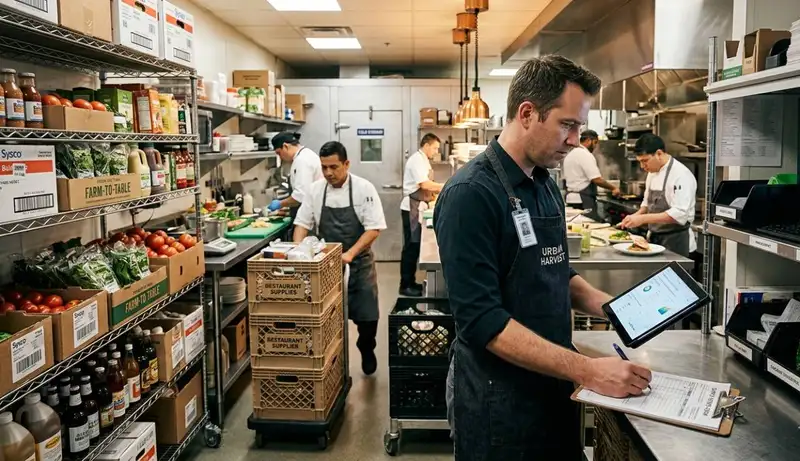
Restaurant supply management goes far beyond ordering food. It is a connected system that covers everything your operation uses to run daily, and how those items move from vendors to storage to the customer. When owners think too narrowly about supply management, they miss where costs, inefficiencies, and risks actually build.
At a high level, supply management includes multiple categories of items -
1. Food and beverage inventory - proteins, produce, dry goods, dairy, beverages, and alcohol
2. Packaging and disposables - takeout containers, cups, lids, utensils, bags, napkins
3. Cleaning and sanitation supplies - chemicals, gloves, paper towels, sanitizers
4. Operational supplies - uniforms, small-wares, kitchen tools, and equipment-related items
Each category carries different risks. Food is perishable and directly tied to waste and food cost. Packaging affects takeout efficiency and customer experience. Cleaning supplies impact compliance and food safety. Ignoring any one category can create operational gaps.
Beyond the physical items, supply management also includes the processes that control them -
1. Vendor management - selecting suppliers, negotiating pricing, and managing delivery expectations
2. Ordering systems - order guides, par levels, and approval workflows
3. Receiving procedures - checking deliveries for accuracy, quality, and pricing
4. Storage and organization - proper labeling, rotation (FIFO), and shelf-life control
5. Inventory tracking - counting, variance analysis, and usage monitoring
These processes are interconnected. For example, inaccurate receiving leads to incorrect inventory counts, which then leads to poor ordering decisions. Similarly, weak storage practices increase spoilage, which inflates food cost without being immediately visible.
Supply management also ties directly into other core areas of your business. It influences menu planning (what you can consistently offer), forecasting (how much you need), and prep execution (how efficiently your kitchen runs). When these systems are aligned, your operation becomes more predictable and easier to control.
For restaurant owners, the key is understanding that supply management is not one task - it is a system of decisions and processes. The stronger and more connected that system is, the easier it becomes to control costs, reduce waste, and maintain consistency.
Efficient Ordering at Your Fingertips
Experience Flawless Inventory Management with Altametrics
Start With Accurate Inventory Tracking
Accurate inventory tracking is the foundation of strong restaurant supply management. Before owners can reduce waste, control food cost, or improve ordering, they need to know exactly what they have on hand. Without accurate inventory, every purchasing decision becomes a guess.
Inventory tracking helps answer three important questions -
1. What do we have? - This includes ingredients, beverages, packaging, cleaning supplies, and other operating items.
2. What are we using? - Usage should be compared against sales, recipes, prep levels, and expected demand.
3. What are we losing? - Losses can come from spoilage, over-prep, incorrect portions, theft, receiving mistakes, or poor storage.
Restaurant owners should focus first on high-cost, high-use, and perishable items. These products usually create the biggest financial impact when they are mismanaged. Proteins, dairy, produce, oils, alcohol, and key packaging items should be counted more frequently than slower-moving supplies.
Par levels are also important. A par level tells your team the minimum and maximum amount of an item needed to operate without overstocking. When par levels are based on actual sales trends instead of habit, ordering becomes more accurate and waste becomes easier to control.
Inventory tracking should also include shelf-life management. Proper labeling, dating, and FIFO rotation help ensure older products are used first. This reduces spoilage and protects food quality.
When counts are accurate, owners can spot waste faster, order with more confidence, and protect margins before small issues become expensive problems.
Build Smarter Ordering Processes
A smarter ordering process helps restaurant owners avoid two costly problems- buying too much and buying too little. Over-ordering ties up cash, increases spoilage, and fills storage with product that may not sell fast enough. Under-ordering creates stock-outs, menu shortages, rushed emergency purchases, and inconsistent guest experiences.
The best ordering decisions are based on real demand, not habit. Owners should review sales trends, forecasted traffic, upcoming events, seasonality, weather patterns, promotions, and menu changes before placing orders. A busy weekend, catering order, holiday, or local event can quickly change what the restaurant needs.
A strong ordering process should include -
1. Updated par levels - Par levels should reflect actual usage, not old routines. Review them regularly as sales volume, menu mix, and delivery schedules change.
2. Standard order guides - Order guides help managers buy the correct items, pack sizes, and quantities. This reduces missed items and unnecessary purchases.
3. Manager approval rules - High-cost items, large orders, or unusual purchases should require approval. This adds control without slowing down normal ordering.
4. Review of standing orders - Standing orders can save time, but they should not run on autopilot. If sales drop or menu demand shifts, standing orders can create waste.
5. Clear ordering deadlines - Teams should know when orders must be placed, who is responsible, and what information must be reviewed first.
Smarter ordering also requires communication between the kitchen, managers, and purchasing team. Prep needs, waste trends, customer demand, and vendor issues should all be considered before orders are finalized.
For restaurant owners, ordering should be treated as a profit-control activity. When ordering is based on accurate data and clear rules, restaurants can reduce waste, prevent shortages, and keep supply costs under better control.
Manage Vendors and Supplier Performance
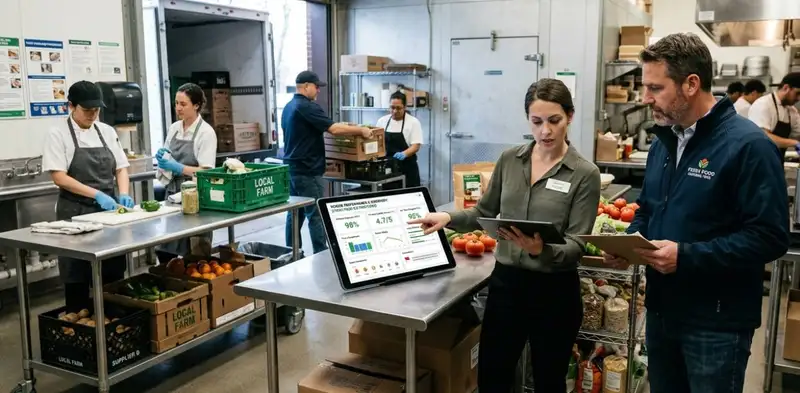
Vendor management is a major part of restaurant supply management because your suppliers directly affect cost, product quality, delivery reliability, and daily operations. Even if your internal ordering process is strong, poor vendor performance can still create stock-outs, inconsistent ingredients, invoice errors, and last-minute operational stress.
Restaurant owners should evaluate vendors on more than price. A low price does not always mean better value if deliveries are late, substitutions are frequent, or product quality changes from week to week. The best supplier relationships are built around consistency, communication, and accountability.
Key areas to track include -
1. Price accuracy - Compare quoted prices, order confirmations, and invoices. Small pricing errors can add up quickly across multiple orders.
2. Delivery reliability - Track whether orders arrive on time, complete, and within the agreed delivery window.
3. Product quality - Inspect items during receiving. Poor-quality produce, damaged packaging, or short shelf-life products increase waste.
4. Substitution control - Vendors should communicate substitutions before delivery when possible. Unapproved substitutions can affect menu consistency and food cost.
5. Credit and issue resolution - Damaged, missing, or incorrect items should be documented and credited quickly.
Receiving procedures also play an important role. Staff should check quantities, temperatures, item condition, pack sizes, and invoice pricing before accepting deliveries. This prevents mistakes from becoming hidden costs.
For restaurant owners, vendor management should be proactive, not reactive. Regular supplier reviews help identify patterns before they hurt profitability. When vendors are held accountable, restaurants gain better control over quality, cost, and supply reliability.
Streamline Your Inventory. Order Smartly.
Start Simplifying Your Orders with Altametrics
Control Waste, Shrinkage, and Supply Variance
Waste, shrinkage, and supply variance are some of the biggest hidden costs in restaurant supply management. These losses often happen in small amounts each day, but over time they can create a serious impact on profit margins. If owners are only looking at purchases and sales, they may miss where product is actually being lost.
Supply variance is the gap between what should have been used and what was actually used. For example, if recipe data shows that 20 pounds of chicken should have been used based on sales, but inventory shows 25 pounds were used, the extra 5 pounds needs to be investigated.
Common causes include -
1. Spoilage - Products expire because of over-ordering, poor storage, or weak rotation.
2. Over-prep - Staff prepare more than demand requires, leading to waste at the end of the day.
3. Incorrect portions - Inconsistent portioning increases food cost and affects menu profitability.
4. Receiving errors - Missing items, wrong pack sizes, damaged goods, or invoice mistakes create cost gaps.
5. Theft or misuse - Untracked product usage can create inventory losses that are hard to detect.
To control these issues, restaurants need simple tracking routines. Waste logs, prep sheets, portion guides, inventory counts, and manager reviews should work together.
For restaurant owners, supply control improves when variance is reviewed regularly. When waste is measured, shrinkage is visible, and usage is compared against sales, owners can make better decisions before small losses become major costs.
Use Technology to Improve Supply Visibility
Technology can make restaurant supply management easier to control because it gives owners faster access to accurate information. Instead of relying on handwritten counts, scattered spreadsheets, or manager memory, restaurant owners can use digital tools to track inventory, ordering, usage, waste, and vendor activity in one place.
A strong supply management system can help with -
1. Inventory accuracy - Digital inventory tools make it easier to count items, update quantities, and compare current stock against expected usage.
2. Smarter ordering - Ordering tools can use sales trends, par levels, and forecasted demand to help managers avoid overbuying or under-ordering.
3. Waste tracking - Waste logs can show which items are being thrown away, why they are being wasted, and how often the issue happens.
4. Invoice and price checks - Technology can help compare vendor invoices against expected pricing, so small cost increases or billing errors are easier to catch.
5. Real-time reporting - Owners can see supply trends across one location or multiple locations without waiting for manual updates.
Technology is especially useful when supply data connects with sales, recipes, prep, and purchasing. For example, if sales increase for a specific menu item, the system can help adjust ordering and prep needs. If waste rises for a certain ingredient, managers can review portioning, storage, or forecast accuracy.
For restaurant owners, the value of technology is visibility. Better visibility leads to faster decisions, stronger accountability, and fewer surprises. When supply data is organized and easy to review, owners can reduce waste, improve ordering, and protect margins more consistently.
If your supply data is still spread across paper logs, spreadsheets, invoices, and manager notes, it may be time to centralize it. Altametrics helps restaurant owners connect inventory, forecasting, purchasing, and reporting so they can see what is happening in real time, reduce waste, and make faster supply decisions. Learn more by clicking "Request a Demo" below.
Inventory management
How to Conduct a Food Waste Audit in Your Restaurant
Software integration
Smart Ways to Use AI in Your Restaurant

Employee scheduling
Employee Time Tracking Tips for Restaurants
Employee scheduling
7 Scheduling Mistakes Restaurant Owners Should Stop Making

Employee scheduling
Human Resource Management for Restaurants
Employee scheduling
Common Payroll Challenges in Restaurants

Sales forecasting
How to Use Restaurant Analytics to Improve Profitability

Restaurant management
The Complete Guide to Restaurant Reputation Management

Accounting payroll
Restaurant Cash Handling Procedures
Frequently Asked Questions
What causes inventory variance in restaurants?
Common causes include spoilage, over-prep, incorrect portioning, theft, and receiving or counting errors.
How can restaurants reduce supply waste?
By tracking waste, improving portion control, using FIFO storage, and aligning ordering with actual demand and sales trends.
What should restaurants look for in a supplier?
Key factors include price accuracy, product quality, delivery reliability, communication, and issue resolution.
How does technology improve supply management?
Technology helps automate inventory tracking, ordering, reporting, and waste monitoring, providing better visibility and faster decision-making.